Nebraska’s Not To Be Registered Notation
It's a common scene in Nebraska: you’ve just invested in a fantastic ATV or UTV, perhaps a shiny new model or a trusty used workhorse, and you’re eager to get it titled. You head to the county treasurer's office, get all your paperwork in order, and finally receive your official Nebraska Certificate of Title. You glance down at it, perhaps with a sense of accomplishment, and then your eye catches a specific phrase: "NOT TO BE REGISTERED." Suddenly, confusion sets in. What does that even mean? Is your machine not truly legitimate? Can you still ride it? This guide is here to unravel the mystery behind that often-misunderstood notation, explaining its history, implications, and what it truly means for you as an ATV or UTV owner in the Cornhusker State.
Understanding the "Not To Be Registered" Notation on Your Nebraska ATV Title
That little phrase, "NOT TO BE REGISTERED," printed right there on your ATV or UTV title in Nebraska, can cause a fair bit of head-scratching. It’s certainly not what many new owners expect to see, especially if they're used to titling and registering cars or trucks. However, understanding this notation is key to legally enjoying your off-road machine in Nebraska.
What the Notation Actually Means
At its core, the "NOT TO BE REGISTERED" notation means one very specific thing: your ATV or UTV, as titled in Nebraska, is not eligible for standard motor vehicle registration for road use. It doesn't mean your machine isn't legally recognized, or that you can't own it, or even that you can't ride it. What it does mean is that the state of Nebraska views ATVs and UTVs primarily as off-road vehicles. Unlike your car or pickup, your quad isn't designed, inspected, or permitted for general use on public highways and streets in the same way.
This notation is a legislative declaration. It’s a clear statement from the state that while they track ownership through a title, they are drawing a hard line on road-legal status for these machines. It aims to prevent confusion and ensure that owners understand the limitations on where and how they can operate their ATVs and UTVs. It’s about managing public safety and maintaining the distinction between vehicles intended for highway travel and those built for trails, fields, and rough terrain.
Why Nebraska Titles ATVs but Does Not Register Them for Roads
The situation in Nebraska is unique compared to some other states. Here, the state absolutely requires you to title your ATV, which establishes legal ownership, much like it does for a car. You'll bring your Manufacturer's Statement of Origin (MSO) or previous title, fill out the necessary forms, and pay your sales tax. This process creates a paper trail for your machine, proving it belongs to you. However, this titling process does not lead to a registration that allows you to drive on public roads with a license plate. This is why you'll never see a traditional license plate on a Nebraska-titled ATV unless it falls under specific city or county ordinances.
The underlying philosophy is that ATVs are built for off-highway adventures, for farm work, or for accessing remote hunting grounds. They lack many of the safety features, like sealed cabins, airbags, or specific crash-worthiness standards, that are mandated for road-going vehicles. The state's titling system exists to prevent theft, track ownership for sales tax purposes, and provide a clear chain of custody, but it deliberately stops short of granting permission for routine road use. For a deeper dive, you can check out [Nebraska Titles ATVs but Does Not Register Them].
Where to Find This Notation on Your Title
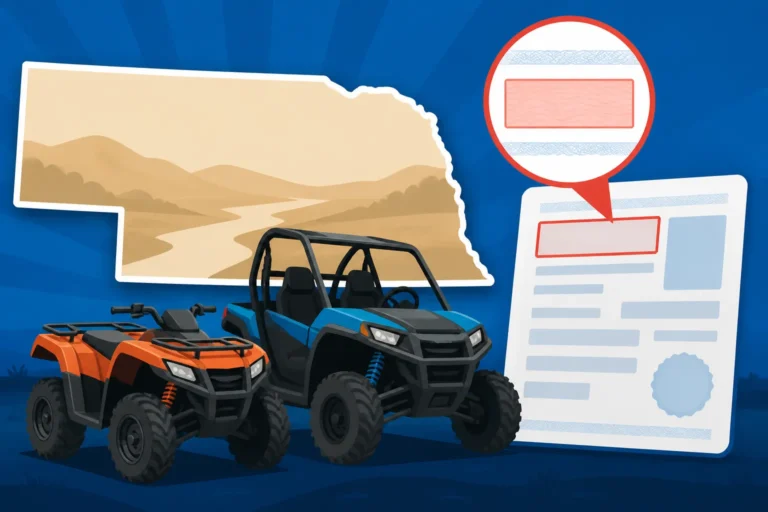
When you receive your physical Nebraska Certificate of Title for your ATV or UTV, take a moment to look it over carefully. You'll typically find the "NOT TO BE REGISTERED" notation prominently displayed. It's not usually buried in fine print. Often, it's printed in a dedicated box or section, sometimes in all capital letters, making it quite clear and unambiguous.
The exact placement can vary slightly depending on the specific title form used by the state at the time your title was issued, but it will always be in an obvious location. It's a critical detail that buyers and sellers should always confirm during a transaction. If you're [Buying From a Private Seller in Nebraska], make sure to physically inspect the title for this notation and understand its implications before you finalize the purchase. This ensures both parties are on the same page regarding the machine's legal status and potential use.
The History Behind Nebraska's ATV Titling Rules
Understanding the present often requires a peek into the past. Nebraska's specific approach to ATV titling, with its distinctive "NOT TO BE REGISTERED" notation, didn't just appear overnight. It's the result of legislative decisions and a clear intent to manage off-road vehicles in a specific way within the state.
When Titling Became Mandatory in Nebraska
The requirement for titling ATVs and UTVs in Nebraska isn't as old as the hills, but it has been in place for a good while now. Specifically, Nebraska law began requiring titles for all-terrain vehicles purchased new after January 1, 2004. This date is a significant watershed moment for ATV owners in the state. If you bought a brand-new quad after that date, you were, and still are, required to obtain a title for it through your county treasurer's office.
This move was largely driven by a need for better ownership tracking, especially given the growing popularity of ATVs. Titling helps to combat theft, provides a clear record for sales tax collection, and ensures a proper chain of custody for machines as they change hands. For machines bought before this cutoff date, the rules are a bit different, and you might find yourself navigating a more complex process if you need to establish a title today. You can learn more about this distinction by looking into [Nebraska Machines Bought New After 2004] and [Nebraska Machines Bought Before 2004].
Why Lawmakers Added the "Not To Be Registered" Language
When the legislation for mandatory ATV titling was being crafted, lawmakers in Nebraska had to contend with a significant question: how would these titles relate to road use? The decision to include the "NOT TO BE REGISTERED" language was a deliberate legislative choice, stemming from several key considerations. One primary concern was public safety. ATVs and UTVs, by their very design, are not built to the same safety standards as passenger vehicles. They lack crucial features like crumple zones, advanced braking systems for high speeds, and occupant protection suitable for collisions with larger, heavier road vehicles. Lawmakers recognized the inherent dangers of mixing these machines freely with highway traffic.
Another factor was the distinction between different types of vehicles. Nebraska wanted to clearly differentiate ATVs from motorcycles or cars, which are registered for road use. By explicitly stating that ATVs are "not to be registered," the intent was to prevent owners from misinterpreting a title for ownership as a license for general road operation. There have been proposals over the years, such as [Lawmakers Proposed Registering Every ATV Statewide], to introduce statewide registration that would allow for more widespread road use, but these efforts have historically stalled, reflecting the state's consistent position on this matter. The notation ensures that, for the foreseeable future, Nebraska's ATVs remain primarily off-road machines in the eyes of state law.
Common Misconceptions and Frustrations for Owners
The "NOT TO BE REGISTERED" notation on a Nebraska ATV title is a frequent source of confusion and even frustration for owners. It's easy to misunderstand, especially if you're new to the world of off-road vehicles or if you've moved from a state with different rules. Let's tackle some of the most common points of contention head-on.
"My ATV Has a Title, Why Can't I Put a Plate On It?"
This is arguably the most common and understandable frustration. In the minds of many vehicle owners, a "title" goes hand-in-hand with "registration" and, by extension, a license plate. When you title your car, you typically register it at the same time, receiving plates that permit you to drive on public roads. So, it feels counterintuitive when you have a title for your ATV, yet you're explicitly told it can't be registered for a plate.
The answer, as we've discussed, lies in the fundamental distinction Nebraska law makes between proof of ownership (the title) and permission for public road use (registration). A title simply certifies that you are the legal owner of the machine. It's a document essential for buying, selling, and proving you didn't, say, just "find" your quad. Registration, on the other hand, is the state's permission slip for your vehicle to operate on its public roadways, ensuring it meets certain safety, insurance, and tax requirements for that specific purpose. Since ATVs don't meet these requirements for general road use in Nebraska, the "NOT TO BE REGISTERED" notation explicitly blocks that avenue, despite you holding a perfectly valid title. This is precisely [Why a Titled ATV Still Has No Plate] in Nebraska.
The Confusion with Other States' Rules
Another significant source of frustration comes from the patchwork of ATV laws across different states. What might be perfectly legal and straightforward in Iowa or Kansas can be entirely different once you cross the border into Nebraska. Some states might offer specific "street legal" kits or special registrations that allow ATVs or UTVs to operate on certain public roads. When owners move to Nebraska or buy a machine from a neighboring state, they often bring these expectations with them.
For example, a rider from a state like South Dakota might be accustomed to a more permissive environment for certain road operations. When they then encounter Nebraska's strict "NOT TO BE REGISTERED" rule, it can be a jarring experience. Even if an out-of-state title doesn't carry such a notation, once that machine is titled in Nebraska, it falls under Nebraska's regulations. This often requires riders to re-evaluate where and how they can ride, potentially limiting their previously accepted routes. You might find it helpful to compare [Nebraska Title Compared to Iowa] or [Nebraska Title Compared to Kansas] to understand these differences better.
Impact on Insurance and Financing
The "NOT TO BE REGISTERED" notation can also cause owners to worry about practical matters like insurance and financing. Some might mistakenly believe that if their ATV can't be registered, it can't be insured or used as collateral for a loan. This isn't true, but it's a valid concern.
From an insurance perspective, you absolutely can and should insure your ATV or UTV, regardless of its road registration status. Insurance companies offer specific policies for off-road vehicles that cover theft, damage, liability for off-road accidents, and sometimes even medical payments. The "NOT TO BE REGISTERED" notation does not prevent this. However, it's crucial to understand that if you illegally operate your ATV on a public road and have an accident, your off-road policy might not cover it, or your claim could be denied because you were operating outside the legal parameters. [Nebraska Insurance Required Only on Roads] is a point worth noting here; if you do use your machine on a road under a legal exception, then liability insurance becomes mandatory.
For financing, a title is precisely what lenders need. Your ATV's title serves as proof of ownership, and the financial institution will record their lien directly on that title. The "NOT TO BE REGISTERED" notation has no bearing on its value as collateral because the title itself proves that a clear, legal owner exists. If you're looking to finance an off-road machine in Nebraska, simply be prepared to work with a lender who understands ATV titles, and you’ll find the process quite similar to financing a car, even without the road registration component.
Legal Implications for Nebraska ATV Owners
The "NOT TO BE REGISTERED" notation isn't just a quirky phrase on a piece of paper; it carries significant legal weight that directly impacts how and where you can operate your ATV or UTV in Nebraska. Understanding these implications is crucial for staying on the right side of the law and avoiding potential penalties.
How the Notation Affects Road Use
The most direct and impactful implication of the "NOT TO BE REGISTERED" notation is its effect on operating your ATV or UTV on public roads. Generally speaking, this notation serves as a legal barrier to widespread street-legal use. In Nebraska, ATVs are typically restricted from public highways, roads, and streets. The notation reinforces the state's stance that these machines are not intended for, nor equipped for, regular road travel alongside cars and trucks.
However, it's not a blanket ban on all road use. Nebraska law does provide very specific, narrow exceptions. The most common exception is for agricultural purposes. Farmers and ranchers can often use their ATVs on public roads for short distances to perform agricultural tasks, such as moving between fields or checking livestock. There are strict conditions, though, including requirements for flags, lighting, and speed limits. Beyond agriculture, some cities and county boards have passed local ordinances that may allow ATVs and UTVs on specific local streets or within unincorporated villages, but these are localized exceptions and require explicit local approval. It's imperative to research and understand these specific exceptions before ever venturing onto a road. For a comprehensive overview, look into [Nebraska's Agricultural Road Exception] and [Three Ways ATVs Can Legally Use Nebraska Roads].
What to Carry When Riding (Even Off-Road)
Even if you're sticking strictly to private property or designated trails, it's a smart practice to carry proof of ownership for your ATV or UTV. While you won't have a registration card in the traditional sense, having your title or a copy of it on hand can save you a lot of hassle. If you encounter law enforcement, or in the unfortunate event of an accident or theft, being able to immediately prove you own the machine is invaluable. This is especially true if the machine has been recently purchased and the title transfer is still pending.
A good bill of sale is also incredibly important, especially if you've purchased your machine privately. This document details the transaction, including buyer and seller information, the machine's VIN, and the purchase price. It serves as temporary proof of ownership until your new title arrives. If you need a reliable template, resources like LawDepot can provide standardized, legally sound forms for creating a bill of sale. For tips on how to properly document your purchase, you might find [Writing a Bill of Sale for a Neighbor's Quad] useful. Always err on the side of caution and carry documentation that links you directly to your machine.
Selling an ATV with the "Not To Be Registered" Notation
When it comes time to sell your ATV or UTV that carries the "NOT TO BE REGISTERED" notation, the process isn't dramatically different from selling any other titled vehicle, but clarity is key. As the seller, your primary responsibility is to sign over the existing title to the new owner, ensuring all the necessary fields are completed accurately. This includes the odometer reading (if applicable and verifiable for your machine type), the sale price, and your signature.
It is also good practice, and often legally wise, to ensure the buyer fully understands what the "NOT TO BE REGISTERED" notation means. Explain that it prohibits standard road registration and discuss the state's specific restrictions on public road use. This transparency helps avoid future disputes and ensures the buyer is aware of their responsibilities under Nebraska law. A clear, well-documented bill of sale, which you can easily generate using a service like LawDepot, can further protect both parties by outlining the terms of the sale and acknowledging the machine's status. The buyer will then take the signed-over title and bill of sale to their county treasurer's office to get the machine titled in their name and pay sales tax, which is handled at the time of titling in Nebraska. You can find more details on this process in [Nebraska Titles After a Private Sale].
Navigating Titling and Transfers in Nebraska
Even with the "NOT TO BE REGISTERED" notation, obtaining and transferring an ATV or UTV title in Nebraska is a required and relatively straightforward process once you know where to go and what to bring. It largely falls under the purview of your local county government, not the state Department of Motor Vehicles.
The Role of the County Treasurer's Office
When it comes to titling an ATV or UTV in Nebraska, forget about the DMV. Unlike cars and trucks, ATV titles are handled exclusively by your local County Treasurer's Office. This distinction can sometimes catch new owners off guard, especially if they're used to a unified state-level department for all vehicle-related tasks. But for quads, side-by-sides, and other all-terrain vehicles, the county treasurer is your go-to authority.
Their office is responsible for processing all the paperwork, collecting sales tax, and issuing the official Nebraska Certificate of Title for your off-road machine. Whether you're titling a brand-new ATV, transferring ownership of a used one, or bringing a machine in from out of state, your first (and usually only) stop for titling will be the treasurer in the county where you reside. It’s always a good idea to call ahead or check their website for specific hours, required documents, and any county-specific procedures. For more on this, check out [Why the County Treasurer, Not the DMV, Titles ATVs]. This is also the place you'll go if you're bringing in [Nebraska Out-of-State Machines Need a Title].
Required Paperwork for Titling
To successfully title your ATV or UTV at the county treasurer's office, you'll need to arrive prepared with a specific set of documents. Having everything in order before you go will save you time and multiple trips. The core documents typically include:
- Manufacturer's Statement of Origin (MSO) or Previous Title: If you bought a new machine, you'll have the MSO from the dealer. If it's used, you'll need the previous owner's signed-over title. Make sure all signatures are present and correct, and that there are no liens on the title (or that any liens have been properly released).
- Bill of Sale: Especially crucial for private sales, a detailed bill of sale establishes the purchase price, which is essential for calculating sales tax. Make sure it includes the machine's VIN, the date of sale, and the names and signatures of both buyer and seller. As mentioned earlier, robust templates from services like LawDepot can ensure this document is legally sound.
- Nebraska Sales Tax Statement (Form 6ATV): This is a mandatory form that you and the seller (for private sales) or the dealer will complete. It details the purchase price, any trade-in value, and calculates the state and local sales tax you owe. The county treasurer will collect this tax at the time of titling. You can find a detailed explanation in [Nebraska Form 6ATV Explained].
- Proof of Identification and Residency: You'll need a valid driver's license or state ID, and sometimes proof of your Nebraska address.
Always double-check with your specific county treasurer's office for their exact requirements, as there might be minor variations.
What if Your Machine Has No Prior Paperwork?
This is where things can get a bit tricky, especially for older ATVs or UTVs that have changed hands multiple times without proper titling. If you acquire a machine that has no Manufacturer's Statement of Origin and no previous Nebraska title, you're not entirely out of luck, but you will face a more involved process. The state understands that machines can get lost in the paperwork shuffle, especially those bought before the 2004 titling mandate.
Generally, you'll need to prove legal ownership as best as possible. This might involve:
- A Bill of Sale: Even a basic, handwritten bill of sale is better than nothing, establishing the transfer from the last known owner. LawDepot can help you generate a clear document if you're the seller.
- Affidavits: You may need to sign an affidavit swearing to the circumstances of how you acquired the machine and its lack of title.
- VIN Inspection: Law enforcement may be required to inspect the Vehicle Identification Number (VIN) to ensure it's not stolen and to verify its identity.
- Bonded Title: In some cases, if proof of ownership is insufficient, you might need to apply for a bonded title, which involves obtaining a surety bond to protect previous owners or lienholders.
This process is designed to protect all parties and prevent the titling of stolen machines. It’s always best to try and obtain a clear title during any purchase, but if you find yourself with [Nebraska Machines With No Paperwork], contact your county treasurer's office directly for guidance on the specific steps required in your situation.
Practical Advice for Nebraska ATV & UTV Enthusiasts
Navigating the unique titling and registration landscape for ATVs and UTVs in Nebraska might seem daunting at first, but with the right information and approach, it's perfectly manageable. Here's some practical advice to help you get the most out of your off-road adventures in the Cornhusker State while staying within the bounds of the law.
Planning Your Rides and Routes
Because of the "NOT TO BE REGISTERED" notation and the general restriction on road use, careful planning is paramount for Nebraska ATV and UTV riders. You can't just hop on your quad and cruise down a county road without checking the rules. Instead, you need to know where you're legally allowed to ride.
This means thoroughly researching designated off-road riding areas. Nebraska offers some fantastic opportunities, such as the [Bessey OHV Trails at Halsey in Nebraska] or Cedar Run ATV Trail. Always confirm their specific rules, fees, and any requirements like spark arrestors before you load up. For local road use, this means diligently checking with city halls or county boards to see if they've passed ordinances opening specific streets or unincorporated villages to ATVs. Never assume; always verify. Relying on local knowledge or rumors without official confirmation can lead to tickets and fines. Plan your entire route from your trailer to the riding area and back, ensuring every mile is legitimate.
Staying Compliant with the Law
Compliance in Nebraska centers on respecting the distinction between titling and registration. The "NOT TO BE REGISTERED" notation is a constant reminder that your ATV is, by default, not a road-legal vehicle. To stay compliant:
- Understand Road Exceptions: If you must use a public road, ensure it falls under a valid exception (e.g., agricultural use, specific city/county ordinance). Familiarize yourself with all the requirements for that exception, including speed limits, flags, lights, and any required insurance. Ignoring these rules can lead to [Nebraska Penalties for Illegal Road Riding].
- Proper Titling: Always title your machine correctly and promptly through your county treasurer’s office, even if it's "not to be registered" for roads. This establishes your legal ownership and fulfills state requirements. [Nebraska's 30-Day Titling Deadline] is important to remember here.
- Proof of Ownership: Always carry your title or a copy, or a solid bill of sale, especially if you're riding far from home. This is your primary proof of ownership.
- Be a Responsible Rider: Even off-road, ride safely, respect private property, and be mindful of noise and environmental impact. The more responsible riders are, the better the public perception of the sport.
Resources for Further Information
No single article can cover every single scenario, and rules can occasionally evolve. Therefore, it's wise to know where to turn for the most current and specific information.
- Your County Treasurer's Office: They are the absolute authority on ATV titling in your specific county. Don't hesitate to call or visit with any questions about documentation, fees, or specific titling situations. Their staff hears a lot of unique scenarios. You might find [Nebraska Title Questions Treasurers Hear] helpful.
- Local Law Enforcement: For questions regarding local road ordinances or general enforcement of ATV laws, your local sheriff's department or city police can provide guidance. They are the ones who will be enforcing any rules in your area.
- Nebraska Game and Parks Commission: While they don't handle titling, they are a great resource for information on public riding areas, trail rules, and any state-managed land access.
- Legal Document Services: For creating clear, legally sound bills of sale or other transaction documents, especially during private sales, consider using reputable online services like LawDepot. They provide templates and guidance that ensure your paperwork is thorough and professional, protecting both buyers and sellers. Their tools can help ensure clarity around the "NOT TO BE REGISTERED" status in your sales agreements.
By staying informed and proactive, you can confidently navigate the world of Nebraska ATV and UTV ownership and enjoy countless hours on the trails and in the fields.
Here's a quick comparison of the key differences:
| Feature | Nebraska ATV Title | Standard Vehicle Registration (Car/Truck) |
|---|---|---|
| Purpose | Proof of ownership | Proof of ownership + Road use permission |
| Notation | "NOT TO BE REGISTERED" | No such notation |
| Road Use | Generally prohibited (exceptions apply) | Generally permitted on public roads |
| License Plate | No traditional license plate | Required |
| Issued By | County Treasurer | County Treasurer (for plates/stickers), State (for title) |
| Sales Tax | Collected at titling | Collected at titling |
| Insurance | Recommended (off-road coverage) | Mandatory (liability for road use) |
Disclaimer
This article is for general informational purposes only and does not constitute professional advice. Laws, prices and regulations vary by location and change over time. Consult a qualified professional for guidance on your specific situation.