Nebraska LB337 and Statewide Registration
There's a lot of chatter and confusion out there amongst Nebraska ATV and UTV owners about statewide registration. Many folks have heard whispers, read headlines, or seen social media posts about legislative attempts to bring a state-wide registration system to our beloved off-road machines, most notably with a bill known as LB337. This guide is here to cut through the noise, clarify what LB337 was all about, why it ultimately didn't pass, and what the current reality is for ATV and UTV owners across the Cornhusker State.
The Lingering Question of Statewide ATV Registration in Nebraska
It's a common frustration for many riders in Nebraska: understanding the rules for their ATVs and UTVs. You buy a machine, you get a title from the county treasurer, and then you hear talk about "registration" and "stickers." It's easy to assume that if a bill about statewide registration was introduced, it must have passed, or at least be in some stage of implementation. This misunderstanding can lead to anxiety, with riders wondering if they're breaking the law simply by taking their machine out for a spin. The reality, however, is often far simpler than the rumors suggest, but it requires a bit of digging to fully grasp.
The state of Nebraska has a unique approach to off-road vehicles. While many states mandate both titling and registration for ATVs and UTVs, Nebraska has historically leaned heavily into titling without a corresponding statewide registration requirement. This creates a disconnect for riders who are used to the typical car or truck model, where a title is always accompanied by plates and registration stickers. It’s no wonder people get confused when they hear about a bill like LB337, which aimed to change this very system. The desire for clarity and a single, unified system is a valid one, especially for those who enjoy riding on a variety of terrains and might occasionally venture onto public lands or roads where rules can feel ambiguous.
The discussions around statewide registration also often tie into broader conversations about funding for trails, enforcement, and even liability. Riders who cherish their outdoor recreation naturally want safe places to ride and clear guidelines to follow. When legislative proposals surface, they often spark hope for improved infrastructure or fear of increased bureaucracy and costs. Understanding the specifics of past proposals, like LB337, helps to contextualize these ongoing discussions and gives riders a clearer picture of what has, and hasn't, happened in Nebraska.
The Source of Confusion: Titling Versus Registration
One of the biggest hurdles in understanding Nebraska's ATV and UTV laws is the distinction between titling and registration. For most vehicles, these two concepts go hand-in-hand. You get a title proving ownership, and you get a registration that allows you to operate the vehicle on public roads, often accompanied by a license plate or sticker. But for ATVs and UTVs in Nebraska, it's a different story. The state requires you to get a title for your machine, a process handled by your county treasurer. This title establishes who legally owns the ATV or UTV and is crucial for buying, selling, or inheriting a machine. However, this title does not come with a registration sticker, nor does it grant you permission to operate on public roads or trails beyond very specific, limited circumstances. This is a critical difference that often trips up new and even experienced riders.
The fact that Nebraska has a titling requirement but no statewide registration system often leads to misinterpretations. People assume that because they titled their ATV, it means it's "registered" in the way a car is, complete with implied road-legal status. This isn't the case. In fact, a Nebraska ATV title explicitly includes a notation: [Nebraska's Not To Be Registered Notation], which is a clear indicator of its status. This notation is there precisely because lawmakers want to ensure that ATV titles are distinct from vehicle registrations that would allow for general road use. It's a system designed to keep off-road machines primarily off-road, with very specific exceptions for agricultural use or local ordinances.
This legal nuance is why any discussion of "statewide ATV registration" immediately grabs the attention of Nebraska riders. It represents a potential shift in how these machines are managed and regulated across the state, bringing them closer to the familiar car-like system. While the current system avoids the bureaucracy and fees associated with widespread registration, it also leaves many riders craving a more straightforward set of rules, particularly for trail access or cross-county travel. The proposals, like LB337, aimed to address this by introducing a more comprehensive, uniform system that, for better or worse, would have changed the landscape for every ATV and UTV owner in Nebraska.
Unpacking LB337: What the Proposed Bill Entailed
LB337 was a legislative bill introduced in the Nebraska Unicameral that aimed to establish a statewide registration system for ATVs and UTVs. This was a significant proposal because, as we've discussed, Nebraska does not currently have such a system. The bill sought to create a uniform framework that would apply to all off-road machines across the state, moving beyond the current titling-only model. For many lawmakers and advocates, the goal was to standardize regulations, provide a dedicated funding mechanism for trail development and maintenance, and potentially enhance safety oversight.
The proposal envisioned a system where, in addition to titling, owners would be required to register their ATVs and UTVs with the state. This would typically involve paying an annual or biennial fee, and in return, machines would be issued a visible sticker or decal. This sticker would serve as proof of registration, similar to how boats or snowmobiles are registered in many places. The funds generated from these registration fees were often proposed to be earmarked specifically for off-road recreation programs, trail construction, and maintenance. This appealed to many in the riding community who yearned for more designated riding areas and improved existing trails, seeing it as a way to ensure their sport had a sustainable future in the state.
A key aspect of LB337 was the intention to bring a level of consistency that currently doesn't exist. With no statewide registration, rules for ATV and UTV use can vary from one county or city to another, especially concerning limited road access. A statewide system would have, theoretically, provided a clearer set of expectations for riders no matter where they were in Nebraska. It also sought to address concerns from law enforcement regarding identifying machines and ensuring compliance with basic ownership and operational rules. The bill truly represented a comprehensive attempt to overhaul how Nebraska handles its booming population of off-road vehicles.
Proposed Fees and Stickers
One of the most immediate and tangible changes proposed by LB337 was the introduction of new fees and the requirement for a physical registration sticker. Under the terms discussed, ATV and UTV owners would have been subject to a registration fee, likely on an annual or multi-year basis. While specific figures are not available from a stalled bill, the intent was to create a revenue stream. This fee would have been separate from the initial titling fee paid to the county treasurer. This new cost was a point of concern for some riders, who worried about the increasing financial burden of owning and operating their machines.
In exchange for this fee, registered ATVs and UTVs would have received a distinctive state decal or sticker. This sticker would have been required to be displayed prominently on the machine, serving as instant visual proof of compliance for law enforcement. Think of it like a boat registration sticker, affixed to the hull. This visual identification was seen as crucial for the enforcement component of the proposed system, making it easier for deputies and other officials to quickly determine if a machine was properly registered. The idea was to create a clear indicator that the owner had met their obligations under the new law. Currently, [Nebraska Has No State Decal] or sticker for ATVs.
The funds collected from these proposed fees were a significant part of the discussion. Proponents argued that these dedicated funds were essential for the development and maintenance of public trails, safety education programs, and other initiatives that would benefit the riding community directly. Without a statewide registration system, securing consistent funding for these types of projects has historically been a challenge. LB337 aimed to solve this by creating a direct link between ATV/UTV owners and the resources needed to support their sport, rather than relying on general tax revenues or grants that might not prioritize off-road recreation.
Estimated Impact and Scope
Lawmakers behind LB337 had projections about the potential impact of a statewide registration system. They estimated that a significant number of ATVs and UTVs would enter the system in its first year. For example, [Lawmakers Estimated 30,000 ATVs Would Register in Year One] if the bill had passed. This wasn't just a random guess; it was based on various factors like existing title records and population densities in different parts of the state. These estimates were crucial for calculating the potential revenue stream from registration fees and for planning the administrative infrastructure needed to handle the influx of registrations. Such a large number would represent a substantial portion of the off-road machines operating in Nebraska.
The scope of LB337 was intended to be broad, encompassing most ATVs and UTVs operated within the state, regardless of whether they were used for recreation, agriculture, or other purposes. While agricultural exemptions are common in many state laws regarding vehicle use, a statewide registration system would still likely apply to all machines, with potential nuances for how farm-specific vehicles might operate or be identified. The goal was truly to create a comprehensive registry that would provide a clearer picture of the total number of off-road machines in Nebraska and bring a consistent regulatory hand to their operation. This would have been a marked departure from the current system, where titling is the primary state-level requirement.
Beyond the initial registration numbers, the long-term impact was also considered. A statewide system could lead to better data collection on ATV and UTV use, accident rates, and popular riding areas. This data could then inform future policy decisions, safety campaigns, and infrastructure investments. It would also likely lead to increased awareness among riders about their responsibilities and the specific laws governing their machines, as the act of registration often comes with information about rules and regulations. The vision was to professionalize and standardize the management of off-road vehicles in Nebraska, moving towards a model seen in many other states that have robust ATV/UTV programs.
Why LB337 Never Crossed the Finish Line
Despite the detailed proposals and the clear intent behind it, LB337 ultimately did not pass the Nebraska Legislature. The path for any bill, especially one that introduces new fees and regulations, is often fraught with challenges, and LB337 faced its share of hurdles. Understanding why it stalled provides valuable insight into the legislative process in Nebraska and the diverse perspectives that shape public policy. It wasn't a simple "yes" or "no" decision but rather a complex interplay of stakeholder concerns, legislative priorities, and the practicalities of implementation.
One significant factor often cited for the bill's failure was the opposition from various groups. While some riders and advocacy groups supported the idea of dedicated funding for trails, others expressed concerns about increased costs, what they perceived as unnecessary bureaucracy, and the potential for over-regulation of private land use. There was also concern from some agricultural interests, who worried about how a broad registration mandate might affect machines primarily used for farm work, even with potential exemptions. This diverse opposition meant that the bill struggled to build a strong, unified coalition of support, which is often essential for passing new legislation in a body as unique as the Unicameral.
Furthermore, the legislative calendar itself played a role. Bills have a limited timeframe to move through committees, undergo debate, and secure votes. If a bill faces strong opposition, requires significant amendments, or simply doesn't gain enough traction early in the session, it can easily get sidelined. [Why the Statewide ATV Registration Bill Stalled in Committee] is often multifaceted, involving both the substance of the bill and the political dynamics of the moment. Without sufficient votes or legislative momentum, even well-intentioned bills can quietly fade away, waiting for a future session or different political climate to potentially be reintroduced in a modified form.
Legislative Challenges and Opposition
The Nebraska Unicameral is a unique legislative body, and navigating its processes can be challenging for even the most seasoned lawmakers. Bills must gain support in committee, withstand public hearings, and then earn enough votes from the full legislative body. LB337, like many bills, encountered significant roadblocks at various stages. One of the primary legislative challenges was securing a broad consensus among senators. With a non-partisan legislature, building coalitions around specific issues requires careful negotiation and compromise, and that was a tough sell for a bill proposing new fees and regulations on a popular recreational activity.
Opposition didn't just come from individual citizens; it also emerged from organized groups. Some advocacy organizations, while supportive of off-road recreation in general, raised concerns about the specifics of LB337. For instance, questions were posed about how the collected funds would truly be allocated, whether administrative costs would eat up too much of the revenue, and if the proposed system would adequately address the needs of all types of riders, from casual weekend enthusiasts to those using ATVs daily for their livelihood. These are valid points that require careful consideration, and if not satisfactorily addressed, can quickly erode support for a bill.
Another aspect of the opposition was the "if it ain't broke, don't fix it" mentality from some corners. Since Nebraska already has a titling system for ATVs, and local communities have some discretion over road access, some argued that a statewide registration was an unnecessary burden. They felt that the existing framework, while perhaps imperfect, was sufficient and that adding another layer of regulation would only create more headaches for owners. This perspective highlights the inherent tension between those who seek greater standardization and those who prefer minimal governmental oversight, a balance often debated in legislative chambers.
Concerns Over Costs and Over-Regulation
A significant portion of the opposition to LB337 stemmed from concerns over the financial implications for ATV and UTV owners. Introducing a new statewide registration fee, even if modest, represents an additional annual expense for individuals and businesses that rely on these machines. For families who own multiple ATVs or UTVs, or for farmers and ranchers who use a fleet of utility vehicles, these costs can quickly add up. Many felt that the proposed benefits, such as potential trail funding, did not outweigh the direct financial burden placed on owners. In a state where many depend on their machines for work, this was a particularly sensitive point.
Beyond the direct fees, there were also worries about what some perceived as governmental over-regulation. The idea of needing a state sticker and potentially facing fines for non-compliance felt like an unnecessary intrusion to some riders. They might have felt that their private property use of an ATV was already sufficiently managed by existing property laws and that an additional layer of state regulation was an overreach. This sentiment is often strong in rural areas where off-road machines are integral to daily life and recreation. The fear was that a registration system might open the door to further restrictions on where and how ATVs could be operated.
The balance between providing public benefits (like new trails) and imposing private costs (like registration fees) is always a delicate one in policy-making. While proponents argued the fees were an investment in the future of the sport, opponents viewed them as an unnecessary tax. This fundamental disagreement, coupled with concerns about the practical implementation and the potential for unintended consequences, ultimately contributed to LB337's inability to garner enough support to become law. It stands as an example of how complex and challenging it can be to legislate new regulations, especially when they affect a broad and diverse group of citizens across the state.
The Current Reality: No Statewide ATV/UTV Registration
So, after all the legislative attempts and discussions, what's the actual situation today for ATV and UTV owners in Nebraska? The most straightforward answer is this: there is no statewide registration requirement for ATVs or UTVs in Nebraska. Despite the efforts with bills like LB337, no comprehensive law has been passed that mandates all off-road machines to be registered with the state, obtain a specific state-issued plate, or display a universal state sticker. This means that if you own an ATV or UTV in Nebraska, you won't be heading to the DMV (or your county treasurer, in this case) to get a "registration" in the way you would for a car or even a boat.
This lack of statewide registration is often a point of confusion because Nebraska does require ATVs and UTVs to be titled. This is a critical distinction. When you purchase an ATV, whether new or used, you are legally obligated to apply for a certificate of title through your local county treasurer's office. This title proves ownership and is necessary for any future sale or transfer of the machine. However, the title itself does not grant any special privileges regarding road use or trail access beyond what is specifically permitted by law or local ordinance. It's simply an ownership document.
For riders, this means that while you need to ensure your machine is properly titled, you don't need to worry about an annual state registration fee or a state-issued decal. Your county treasurer will handle the titling process, which is separate from the concept of ongoing state registration. If you've been wondering about special state stickers or plates, rest assured that [Why No Sticker Exists Yet] is because the legislative efforts to create such a system, like LB337, did not come to fruition.
Titling Remains the Key Requirement
While statewide registration isn't a thing in Nebraska, titling your ATV or UTV absolutely is. It's a non-negotiable step in owning one of these machines legally in the state. [Nebraska Titles Required Since 2004] for all ATVs and UTVs sold new or brought into the state. This means that if you've recently purchased a machine, or even if you've had one for a while and never got around to titling it, you'll need to make a trip to your local county treasurer's office. This office, not the Department of Motor Vehicles, is where all ATV and UTV titling is handled in Nebraska, which can also be a point of confusion for new owners.
The title serves as the official record of ownership. It's a crucial document for several reasons. Firstly, it provides proof that you are the legal owner of the machine, which is essential if your ATV is ever stolen or if you need to resolve any ownership disputes. Secondly, it's a mandatory document for selling your ATV or UTV in the future. Without a proper title, selling a used machine can become a complicated and sometimes legally precarious process. Buyers are (rightfully) wary of purchasing untitled machines, as it can indicate potential theft or unresolved liens. [Selling a Titled Machine in Nebraska] is much smoother than trying to sell an untitled one.
When you go to title your machine, you'll need to bring specific paperwork. If it's a new machine, you'll typically need the Manufacturer's Statement of Origin (MSO) or Manufacturer's Certificate of Origin (MCO). For a used machine bought from a private seller, you'll need the previous owner's properly assigned title. You'll also complete a form, often [Nebraska Form 6ATV Explained], and pay any applicable sales tax and titling fees. [Nebraska County Treasurers Handle ATV Titles] and can provide you with a list of the exact documents you'll need, so it's always a good idea to call ahead and make sure you have everything in order before you visit.
Local Ordinances and Limited Road Use
Even without statewide registration, the question of where you can legally ride your ATV or UTV often boils down to local rules. While Nebraska state law generally restricts ATV and UTV use on public roads, there are specific exceptions. For example, machines used for agricultural purposes often have more leeway to cross or even briefly travel on public roads outside of city limits. However, even these agricultural exemptions come with their own set of rules, such as speed limits, flag requirements, and daylight-only operation. It's important to understand these nuances if you're using your machine for farm work.
Beyond agricultural use, some Nebraska cities and even unincorporated villages have passed their own local ordinances to permit limited ATV and UTV use on certain streets. These ordinances are entirely up to the local governing bodies (city councils or county boards for villages) and vary widely from one community to another. One town might allow ATVs on certain streets during daylight hours for specific purposes, while a neighboring town might have a complete ban. These local ordinances often come with their own set of requirements, such as requiring a city-specific registration or permit, specific safety equipment, and sometimes even local insurance requirements.
Before you plan to ride your ATV or UTV on any public road, even briefly, it's absolutely crucial to check with the specific local authorities in that area. Never assume that because one town allows it, another will too. You could contact the city hall or county clerk's office to inquire about any active ordinances. This research can prevent unwanted tickets or even more serious legal trouble. The absence of a statewide registration doesn't mean a free-for-all on roads; it simply means the regulatory landscape is more fragmented, requiring riders to be diligent in their own research, often on a town-by-town basis.
Future Outlook: Could Statewide Registration Reappear?
Just because LB337 didn't pass doesn't mean the conversation around statewide ATV and UTV registration in Nebraska has ended. Issues that prompt legislative proposals often don't disappear; they tend to resurface in future legislative sessions, sometimes in modified forms. The underlying reasons for considering statewide registration – such as funding for trails, safety concerns, and the desire for uniform regulations – are still present and continue to be discussed among riders, landowners, law enforcement, and policymakers.
The increasing popularity of ATVs and UTVs in Nebraska, both for recreation and work, means that these machines are becoming a more visible part of the state's landscape. As more people own and operate them, the need for clear guidelines and designated riding areas becomes more pronounced. This growing presence naturally leads to more discussions about how best to manage them, and statewide registration remains one of the more comprehensive solutions often considered. Lawmakers are always responding to constituent concerns and evolving societal needs, so it's entirely possible that similar proposals could be drafted and introduced again in the future.
However, any future attempt would likely need to address the concerns that caused LB337 to stall. This might involve more robust stakeholder engagement, clearer exemptions for agricultural use, or a more transparent plan for how registration fees would be collected and allocated. It's a delicate balance to strike between regulation, funding, and individual freedoms. Riders who wish to stay informed or even get involved in these discussions can often find information through local ATV clubs, off-road advocacy groups, or by tracking legislative sessions directly through the Unicameral's website. Being aware of the legislative process and participating in public hearings can be a powerful way to make your voice heard.
Ongoing Discussions and Advocacy
The debate over statewide ATV and UTV registration is part of a larger, ongoing conversation about outdoor recreation and land use in Nebraska. Even without an active bill, various groups continue to discuss the pros and cons of such a system. Off-road clubs and associations, for instance, often advocate for better trail access and funding, and they may see a statewide registration system as a viable means to achieve those goals. They understand that dedicated funding can unlock opportunities for new riding areas and ensure existing ones are well-maintained.
On the other side, some landowners and agricultural groups might continue to express concerns about potential regulations affecting their operations or perceived government overreach. These discussions are essential for a healthy legislative process, as they bring diverse perspectives to the table. Balancing the needs of recreational riders with those of private property owners and agricultural producers is a complex task that requires careful consideration of all viewpoints. The goal is to find solutions that benefit the greatest number of Nebraskans while minimizing negative impacts.
For riders who want to be part of this conversation, joining a local ATV or UTV club is an excellent first step. These groups often have direct lines of communication with lawmakers and can provide updates on legislative developments. They also typically engage in advocacy, organizing members to contact their senators or attend public hearings when relevant bills are introduced. Websites like LawDepot, which offer templates for legal forms, might also be useful for groups or individuals needing to draft formal petitions or detailed statements for legislative submissions, ensuring their concerns are articulated clearly and professionally. Staying informed and participating in these discussions is key to shaping the future of off-road riding in Nebraska.
Potential Triggers for New Legislation
Several factors could trigger new legislative attempts at statewide ATV and UTV registration in Nebraska. One significant driver could be the continued increase in the sheer number of these machines operating in the state. As the population of ATVs and UTVs grows, so too can the demand for more organized riding opportunities, dedicated trails, and clearer rules of engagement. This growth can also lead to more interactions with other land users, which might highlight a perceived need for a more standardized regulatory framework to prevent conflicts or enhance safety.
Another potential trigger could be specific incidents or trends related to ATV and UTV use, such as an increase in accidents, safety concerns, or issues with unauthorized riding on private or public lands. When problems become more pronounced, lawmakers often feel compelled to act to ensure public safety and responsible use. A visible problem can often galvanize support for legislation that might otherwise face resistance. For example, if there were a notable increase in complaints about noise, trespass, or environmental damage, it could spur a renewed push for regulation.
Finally, changes in leadership or shifts in legislative priorities could also open the door for new proposals. A new group of senators or a different legislative agenda might bring a fresh perspective to the issue of off-road vehicle management. Often, bills are refined and reintroduced in subsequent sessions, taking into account feedback and concerns from previous attempts. So, while LB337 is behind us, the idea of statewide ATV and UTV registration in Nebraska is likely a discussion that will continue to evolve, waiting for the right moment and the right approach to potentially reappear on the legislative agenda.
Practical Steps for Nebraska ATV/UTV Owners Today
Given that there's no statewide registration, what should Nebraska ATV and UTV owners be doing right now to ensure they're compliant with current laws and being responsible riders? The focus remains primarily on proper titling, understanding local regulations, and exercising good judgment. It's all about being a smart, informed owner and rider, rather than waiting for a state sticker that doesn't exist.
First and foremost, make sure your machine is properly titled. This is the foundational legal requirement for ATV and UTV ownership in Nebraska. If you've just bought a machine, or if you've been putting it off, head to your county treasurer's office. Bring all the necessary paperwork, such as the Manufacturer's Statement of Origin for new machines or a properly assigned title from the previous owner for used ones. You'll pay sales tax and the titling fee. Remember, [Nebraska Titles Through a County Office], not the DMV. This step is non-negotiable and provides crucial proof of ownership.
Next, familiarize yourself with where you can and cannot legally ride. Nebraska has limited public ATV trails, such as the [Bessey OHV Trails at Halsey in Nebraska] and the [Cedar Run ATV Trail in Nebraska]. Beyond these designated areas, most riding is either on private land (with permission) or under very specific local ordinances or agricultural exemptions. Always get written permission from landowners before riding on private property. For any potential road use, contact the city hall or county clerk in the specific area you plan to ride to understand their local rules. Don't rely on hearsay; get the facts directly from the source.
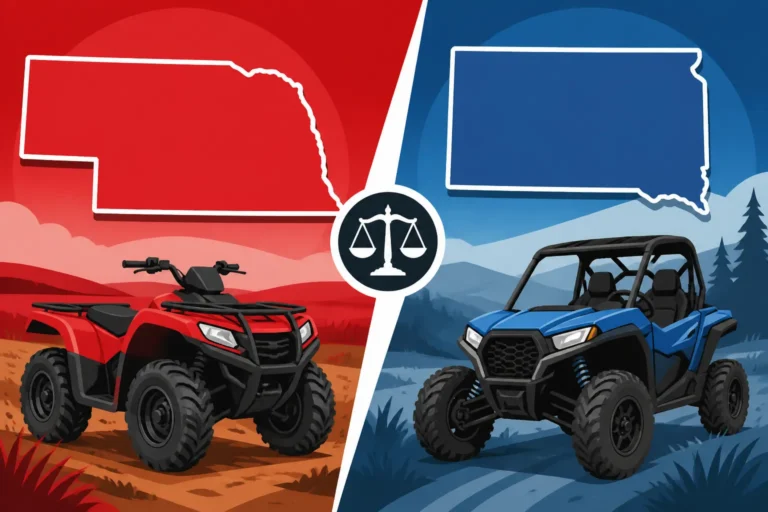
Table: Key Differences: Titling vs. Statewide Registration (LB337 Proposal)
| Feature | Current Nebraska Law (Titling) | LB337 Proposal (Statewide Registration) |
|---|---|---|
| Purpose | Proves ownership, track sales | Public safety, fund trails, track use, prove compliance |
| Administered By | County Treasurer's Office | State (e.g., Dept. of Motor Vehicles or Game & Parks) |
| Cost | One-time title fee + sales tax at purchase | Annual/biennial registration fee (additional to title) |
| Physical Mark | Title document only (no sticker/plate) | State-issued sticker/decal |
| Road Use Implication | Explicitly "Not to be registered" for road use; limited exceptions | Potentially more standardized road use rules/permissions |
| Funding Impact | General revenue from sales tax | Dedicated fund for OHV recreation programs |
| Current Status | REQUIRED | NOT ENACTED (Stalled) |
Ensuring Proper Titling and Documentation
The process of getting your ATV or UTV titled in Nebraska is fairly straightforward, but it requires attention to detail. When you purchase a machine, especially from a private seller, make sure you receive a clear, properly assigned title from the seller. If the title is missing information, has errors, or isn't properly signed over, you could face delays or complications at the county treasurer's office. [Nebraska Titles After a Private Sale] relies heavily on having accurate paperwork from the previous owner. If you're buying a brand-new machine from a dealer, they will typically provide you with the Manufacturer's Statement of Origin (MSO) or Manufacturer's Certificate of Origin (MCO), which you'll then use to apply for your title.
You also need to be aware of the 30-day rule. Nebraska law typically requires you to title your newly acquired machine within 30 days of purchase. Failing to do so can result in late fees. [Nebraska's 30-Day Titling Deadline] is something to keep in mind, so don't procrastinate! When you visit the treasurer's office, be prepared to pay sales tax on the purchase price of the machine (unless it was already paid at a licensed dealership in Nebraska, though this is uncommon for ATVs where county treasurers usually collect). You'll also pay a relatively small titling fee.
It's also a good practice to keep a copy of your title on hand, perhaps in a secure location separate from your physical title, which should be kept safe at home. While you generally don't need to carry your title on the machine while riding, having quick access to the information, like the VIN, can be helpful. Should you ever need to create a bill of sale for a future transaction, using a service like LawDepot can ensure you have a legally sound document that includes all necessary details and protects both the buyer and seller, even if it's not a state-mandated form.
Understanding Where You Can Legally Ride
Navigating the rules of where you can ride your ATV or UTV in Nebraska can feel like a maze, especially without a statewide registration system to provide clarity. The general rule of thumb is that ATVs and UTVs are primarily intended for off-road use. This means private property (with permission) and designated off-highway vehicle (OHV) trails. Don't make the mistake of assuming all public lands are open to ATVs; in fact, [Nebraska State Parks Ban ATVs] and State Recreation Areas often have similar restrictions. You'll need to seek out specific OHV parks or trails.
For those using ATVs and UTVs for agricultural purposes, there are specific exemptions that allow for limited road use. For instance, you might be able to cross a public road at a 90-degree angle or travel briefly on a county road to get from one field to another. However, these agricultural exceptions come with stipulations, such as operating only during daylight hours, adhering to a specific speed limit (often 30 mph), and sometimes requiring a safety flag. It's crucial to understand [Nebraska's Agricultural Road Exception] in detail, as misinterpreting it can lead to tickets or accidents.
The most variable aspect of riding rules comes down to city and county ordinances. Some cities in Nebraska have passed ordinances that permit ATVs and UTVs on certain municipal streets, often with very specific conditions like speed limits, daylight-only use, insurance requirements, and even local registration fees. Similarly, county boards can open streets in unincorporated villages. Before riding in any city or village, it's your responsibility to contact their local city hall or county clerk to inquire about specific ordinances. Always assume roads are closed unless you have explicit confirmation otherwise. This proactive approach will help you avoid legal trouble and ensure you're riding responsibly within the current, often fragmented, legal framework of Nebraska.
Disclaimer
This article is for general informational purposes only and does not constitute professional advice. Laws, prices and regulations vary by location and change over time. Consult a qualified professional for guidance on your specific situation.