Nebraska ATV Title Requirements
Navigating the paperwork for an ATV or UTV in Nebraska can feel like trying to ride through deep sand with two flat tires – it's confusing, frustrating, and often leaves you stuck. Many folks mistakenly think their new quad or side-by-side needs to be registered like a car, only to find a different set of rules. This guide is here to clear up the confusion and walk you through every step of understanding and meeting Nebraska's ATV title requirements, ensuring you're road-ready (for legal uses, of course!) and compliant.
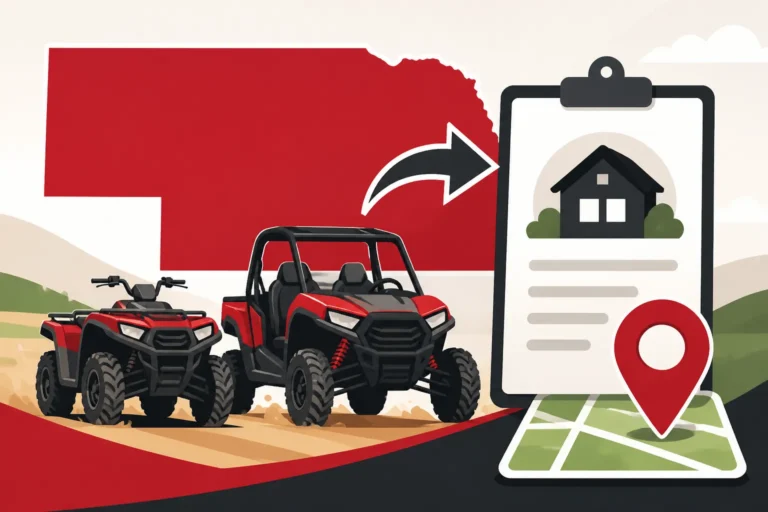
Why Nebraska Titles ATVs but Doesn't Register Them
It's one of the biggest head-scratchers for new ATV and UTV owners in the Cornhusker State: you get a title, but you don't get a license plate. This distinction often trips people up, leading to unnecessary trips to the county office or, worse, riding without the proper documentation. The core difference lies in how Nebraska defines and regulates these off-highway vehicles compared to on-road vehicles. While cars, trucks, and motorcycles are titled and registered for road use, ATVs and UTVs have a unique status.
Think of it this way: a title is proof of ownership, like the deed to your house. It establishes who legally owns the machine and provides a record of its history. Registration, on the other hand, is generally for vehicles that operate on public roadways, allowing for the collection of fees to maintain those roads and track usage. Because ATVs and UTVs are primarily intended for off-road use, Nebraska has chosen a titling-only system, avoiding the complexities and costs associated with statewide registration. This approach reflects the state's agricultural roots and the common use of these machines on farms, ranches, and private lands, where traditional road registration simply isn't needed or practical. Many riders often ask [Do You Need to Register an ATV in Nebraska?], and the answer is generally no, not in the way a car is registered.
The "Not To Be Registered" Notation
When you finally get that shiny new title in your hand, you'll likely notice a specific phrase printed prominently on it: "Not To Be Registered." This isn't a mistake or an oversight; it's a very intentional notation by the State of Nebraska. It's there as a clear indicator that while your ATV or UTV has a legal owner and a traceable history, it is generally not eligible for traditional motor vehicle registration for general public road use. This notation prevents any confusion about putting a license plate on your quad and driving it down Main Street, outside of very specific legal exceptions.
This small but significant detail reinforces the state's stance on ATV and UTV usage. It means that even with a title, your machine is not permitted on most public roads, streets, or highways unless it falls under one of Nebraska's specific statutes for agricultural use, snow removal, or if a local city or county ordinance explicitly permits it. The phrase acts as a constant reminder of the machine's intended purpose and legal limitations. It’s also why many people have questions about [Why an ATV Title Says Not To Be Registered] and [Why a Titled ATV Still Has No Plate] after they receive their documents.
Historical Context: When Titling Became Mandatory
The requirement for titling ATVs and UTVs in Nebraska hasn't always been in place. For many years, these machines were bought and sold with little more than a bill of sale, especially if they weren't changing hands through a dealership. This led to a host of problems, including difficulty tracking stolen machines, resolving ownership disputes, and properly assessing sales tax. To bring more order and accountability to the ATV and UTV market, Nebraska enacted legislation making titling mandatory for all new machines purchased after January 1, 2004. This means that if you bought a brand-new quad in 2005, it absolutely needed a title.
This change aimed to provide a clear chain of ownership, similar to how motor vehicles are tracked. It helped protect both buyers and sellers by creating a verifiable record that could be referenced in case of theft, insurance claims, or resale. For machines purchased before this date, the rules are a bit different, often relying on older documentation or processes for establishing ownership. This shift was a significant step in how Nebraska viewed and regulated off-highway vehicles, ensuring a more standardized system for future transactions. If you're wondering about the specifics, you might want to look into [Nebraska Titles Required Since 2004] for a deeper dive.
Who Handles Titling: County Treasurers, Not the DMV
When it comes to titling your ATV or UTV in Nebraska, you won't be heading to your local Department of Motor Vehicles (DMV) or Driver's License office. This is another point of confusion for many new owners, who naturally assume all vehicle-related paperwork goes through the same state agency. However, in Nebraska, the responsibility for titling ATVs and UTVs falls to the County Treasurer's office in the county where the owner resides. This decentralized system is a hallmark of many rural states, where county-level offices handle a broad range of local administrative tasks.
Each of Nebraska's 93 counties has a County Treasurer, and that's where you'll need to go to submit your paperwork, pay your fees, and ultimately receive your title. This means that the exact procedures, specific hours, and even the local interpretation of some rules might vary slightly from one county to another, though the core state requirements remain the same. It's always a good idea to call ahead to your specific County Treasurer's office to confirm their hours, what payment methods they accept, and any particular requirements they might have. Knowing this distinction can save you a wasted trip and a lot of frustration. For more on this, check out [Why the County Treasurer, Not the DMV, Titles ATVs].
Essential Paperwork for a Nebraska ATV Title
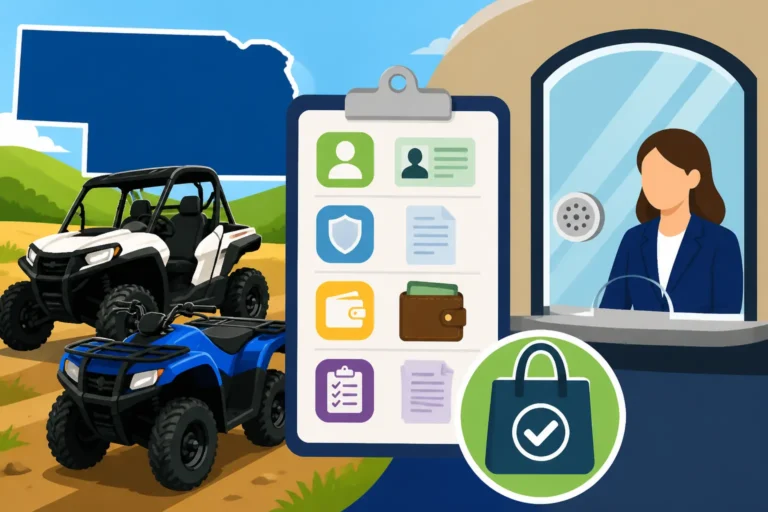
Getting your ATV or UTV titled in Nebraska requires assembling the correct documents. This part can feel like a scavenger hunt, especially if you're buying from a private seller or bringing a machine in from out of state. Having everything in order before you head to the County Treasurer's office will make the process much smoother and prevent delays. The necessary documents vary slightly depending on whether your machine is new, used, or coming from another state, but a few core items are almost always required.
A proper title application hinges on verifiable proof of ownership and the machine's identity. This means you'll need documents that clearly show who currently owns the ATV, where it came from, and its unique identification number. Without these key pieces of information, the County Treasurer's office won't be able to process your title. Understanding exactly what each scenario demands is crucial for a successful titling experience.
New Machines: Manufacturer's Statement of Origin (MSO)
If you've just purchased a brand-new ATV or UTV from a dealership, the most important document you'll receive (besides the keys!) is the Manufacturer's Statement of Origin, often abbreviated as MSO. The MSO is essentially the birth certificate for your machine. It's issued by the manufacturer and certifies that the vehicle meets all federal safety and emissions standards, and it's the first official document proving ownership before a state title is ever issued. The MSO contains vital information such as the machine's Vehicle Identification Number (VIN), make, model, year, and often the engine size.
When you go to title your new machine, you'll need to present the original MSO to the County Treasurer. This document will be "signed over" to you by the dealership, transferring the manufacturer's ownership to you, the first retail buyer. Along with the MSO, you'll typically also need a bill of sale from the dealership and possibly some other dealer-generated paperwork. The County Treasurer will then use the MSO to create your official Nebraska title, recording all the machine's details and your ownership information. This process is standard for all new vehicles and ensures a clear ownership chain from the factory to you. This is crucial for [Bringing the Manufacturer's Statement of Origin to the Treasurer].
Used Machines: Bill of Sale and Previous Title
Buying a used ATV or UTV from a private seller in Nebraska adds a few more layers to the paperwork process. Instead of an MSO, you'll primarily need two key documents: the previously issued Nebraska title (or an out-of-state title if applicable) and a detailed bill of sale. The existing title is paramount because it proves the seller legally owned the machine and has the right to transfer that ownership to you. The seller must sign and date the title in the designated "Assignment of Title" section, transferring it into your name. Make sure the VIN on the title matches the VIN on the machine perfectly.
The bill of sale, while not always strictly required for titling if the original title is correctly signed over, is incredibly important for your protection and for sales tax purposes. A comprehensive bill of sale should include the full names and addresses of both buyer and seller, the date of sale, the purchase price, and a detailed description of the ATV or UTV, including its make, model, year, and VIN. It also serves as a crucial document for calculating [Nebraska Sales Tax on a Private ATV Sale]. You can find templates online through resources like LawDepot, which offers customizable forms to ensure all the necessary details are captured. A well-prepared bill of sale can prevent disputes down the line and clarify the transaction for the County Treasurer's office.
Form 6ATV: Your New Best Friend
Whether you're titling a brand-new machine or a used one, you'll become very familiar with Nebraska Form 6ATV. This is the state-specific "Application for Certificate of Title for an All-Terrain Vehicle (ATV) / Utility Type Vehicle (UTV)" that you'll need to complete and submit to your County Treasurer. This form collects all the pertinent information about you, the buyer, and the ATV or UTV you are titling. It asks for your personal details, the machine's specifications (VIN, make, model, year, color, engine size), and details about the purchase, including the purchase price and any trade-in value.
Completing Form 6ATV accurately is critical. Any omissions or errors could lead to delays in processing your title application. It's often best to fill it out at the County Treasurer's office, as clerks can help answer any questions you might have, or at least have it mostly filled out but leave sections like the sales tax calculation to the clerk. This form also serves as the basis for calculating the sales tax you owe, which is collected by the County Treasurer at the time of titling. So, don't forget to have all your purchase details handy when you tackle this form. Knowing [Why ATV Buyers Fill Out Form 6ATV] can help you understand its importance.
Proof of Address and Identification
Beyond the documents related to the ATV itself, you, as the applicant, will also need to provide personal identification and proof of your Nebraska residency. This is a standard requirement for most official government transactions to verify who you are and where you live. Typically, a valid Nebraska driver's license or state identification card will suffice for both identification and proof of address. If your current address isn't reflected on your ID, you might need to bring additional documents like a utility bill, a lease agreement, or a bank statement that clearly shows your name and current Nebraska address.
The County Treasurer's office needs to confirm your identity to ensure the title is issued to the correct individual and to verify that you are a resident of the county where you are applying. Without proper identification and proof of address, they simply cannot process your application. It’s always a good practice to have at least two forms of identification and one or two proofs of address with you, just in case. This small step ensures that your new title accurately reflects your legal ownership and residency. Remember, this is about [Nebraska Title and Proof of Address].
Specific Scenarios and Timelines
The path to getting a Nebraska ATV title isn't always a straight line, especially with various purchase scenarios and deadlines to consider. Life happens, and sometimes you might buy a machine from a different state, inherit one, or even assemble one from parts. Each of these situations comes with its own set of particular requirements and timelines that you need to be aware of. Missing a deadline or showing up with the wrong documents can lead to extra fees or frustrating delays, so a little planning goes a long way.
Understanding the nuances of these scenarios can save you both time and money. The state has procedures in place for almost every situation, but it's up to you to know which path applies to your unique circumstances. Being prepared for these specific situations ensures a smooth transaction at the County Treasurer's office.
The 30-Day Deadline: What Happens If You Miss It
One of the most critical aspects of titling an ATV or UTV in Nebraska is adhering to the 30-day deadline. This means you have exactly one month from the date of purchase (or the date you become the owner, in cases like inheritance) to apply for your new title at the County Treasurer's office. This isn't just a suggestion; it's a legal requirement, and there are consequences for failing to meet it. The state wants to ensure that ownership changes are recorded promptly to maintain accurate records and facilitate sales tax collection. Many people wonder [What Happens If You Miss the 30-Day Title Deadline].
If you miss this 30-day window, you will be assessed a late titling penalty. While the exact amount can change, it's an avoidable fee that adds to the overall cost of your machine. It serves as a strong incentive to get your paperwork in order quickly after a purchase. Life gets busy, but marking your calendar immediately after buying an ATV or UTV is a smart move. Plan [One Trip to the Treasurer's Counter] to get everything done efficiently within that critical timeframe.
Out-of-State Purchases: Bringing a Machine into Nebraska
Many Nebraska riders find great deals or specific models in neighboring states like Iowa, Kansas, or South Dakota. Bringing an ATV or UTV from another state into Nebraska to title it follows a slightly different protocol than an in-state purchase, but the core principles remain the same. The main difference is the type of ownership document you'll be presenting. Instead of a Nebraska title, you'll need the original title issued by the previous state. This out-of-state title must be properly signed over to you by the seller, just as if it were a Nebraska title.
In addition to the out-of-state title and a bill of sale, the County Treasurer may also require a VIN inspection. This inspection ensures that the Vehicle Identification Number on the machine matches the VIN on the title and that the machine hasn't been reported stolen. This is a protective measure for both you and the state. You'll still need to complete Form 6ATV and provide proof of identification and address. Remember, even if you paid sales tax in another state, Nebraska might still assess its own use tax if the rate was lower, or if no tax was collected. This is an important consideration for [Nebraska Title for a New Resident] or [Nebraska Title for Machines Brought From Away].
Assembled or Salvage Machines: Unique Requirements
For those adventurous individuals who build their own ATVs or UTVs from various parts, or who buy a machine that has been declared "salvage" due to extensive damage, the titling process takes on a specialized route. An "assembled" machine often doesn't have a single Manufacturer's Statement of Origin or a clear previous title. Instead, you'll need to provide documentation for the major components, like the frame and engine, typically in the form of bills of sale or original titles for those parts. A thorough inspection by law enforcement might also be required to verify the machine's safety and to assign a new VIN if one isn't clearly present. [Nebraska Assembled Machine Titles] are certainly a different beast.
Similarly, a "salvage" machine typically has a salvage title issued by the state where it was deemed a total loss by an insurance company. Before it can be titled as a "rebuilt" or "restored" machine and put back into use, it will need extensive repairs and a comprehensive inspection to ensure it's roadworthy (if applicable for limited use) and safe. You'll need proof of all repairs, receipts for new parts, and the salvage title. Once inspected and approved, a new title will be issued, often with a "rebuilt" or "salvage" notation permanently affixed to it. Both of these scenarios require diligent record-keeping and a bit more legwork at the County Treasurer's office. For more details on this, you can look up [Nebraska ATV Salvage Titles].
Private Sales vs. Dealer Purchases
The source of your ATV or UTV – whether it's a private individual or a licensed dealer – significantly impacts the paperwork process. When you purchase from a dealer, they typically handle a substantial portion of the titling paperwork for you. They will provide the MSO (for new machines) or the properly signed-over title (for used machines), prepare your bill of sale, and often even fill out the initial parts of Form 6ATV. Some dealers may even submit all the documents to the County Treasurer's office on your behalf, especially if you finance through them, making the process relatively seamless. They are experts at [Nebraska Dealer Paperwork at Delivery].
However, buying from a private seller puts the onus entirely on you, the buyer, to gather all the necessary documents and submit them to the County Treasurer. This means ensuring the seller has a valid, properly signed-over title, getting a detailed bill of sale (which you can draft using a template from a service like LawDepot), and then taking everything to the county office yourself. While private sales often offer more negotiation room on price, they also come with a greater administrative responsibility for the buyer. It's crucial to confirm the seller has a clear title and that all VINs match before handing over any money. If you're buying from a private seller, you'll want to review [Buying From a Private Seller in Nebraska] closely.
Costs Beyond the Title Fee
When budgeting for a new or used ATV or UTV in Nebraska, it's easy to focus solely on the purchase price. However, there are several other costs associated with becoming a legal owner that you absolutely need to factor in. Beyond the actual title fee (which is typically a relatively small amount), you'll almost certainly be paying sales tax, and potentially other fees depending on where you live or what kind of machine you've purchased. Ignoring these additional expenses can lead to an unwelcome surprise at the County Treasurer's window.
Understanding these costs upfront helps you plan your finances effectively and ensures you have enough cash or the proper payment method ready when you go to title your machine. Being prepared for the full financial picture means no last-minute scrambling and a smoother, less stressful titling experience.
Sales Tax Collection: When and Where You Pay It
One of the most significant costs associated with titling an ATV or UTV in Nebraska is sales tax. Unlike many other retail purchases where the merchant collects the sales tax at the point of sale, Nebraska's system for ATVs and UTVs works differently, especially for private party transactions. For most ATV and UTV purchases, whether new from a dealer or used from a private seller, the sales tax is not collected by the seller. Instead, you, the buyer, are responsible for paying the Nebraska state sales tax (and any applicable local sales tax) directly to the County Treasurer at the time you apply for your title. This has been the rule since October 2014.
The County Treasurer will calculate the sales tax based on the purchase price listed on your bill of sale or other purchase documentation. It's important to be honest about the purchase price, as providing false information can lead to penalties. If you purchased from an out-of-state seller, Nebraska will still assess its sales or use tax. Make sure you understand the nuances of [Nebraska Sales Tax Collected at Titling] and [Nebraska Sales Tax at the Treasurer's Counter] to avoid any surprises.
Local Sales Tax and Trade-In Credits
Beyond the state sales tax rate, you'll also need to factor in any local sales tax applicable to your residential address. Many cities and even some counties in Nebraska have their own local sales tax rates that are added on top of the statewide rate. The County Treasurer will collect this combined state and local sales tax from you. This is why the total percentage you pay can vary depending on which town or area you call home. So, if you live in Lincoln, for example, you'd pay the state rate plus the Lincoln city sales tax.
If you traded in an older ATV or UTV as part of your purchase, Nebraska law allows for a credit against the sales tax. This means you only pay sales tax on the difference between the new machine's purchase price and the trade-in value of your old machine. This can significantly reduce your tax burden. It's crucial that the trade-in value is clearly itemized on your bill of sale or dealer invoice for the County Treasurer to apply the credit properly. This is an excellent way to save money, so make sure all trade-in details are explicitly listed on your paperwork. Knowing about [Nebraska Local Sales Tax on a Machine] and [Nebraska Trade-In Credit at Titling] can save you some cash.
Other Potential Fees: Dealer Doc Fees, City Registration
While the title fee and sales tax are the primary costs, there can be other fees to consider. If you purchased your ATV or UTV from a dealership, you might encounter "dealer documentation fees" or "doc fees." These are charges for the dealer's administrative costs in preparing paperwork, handling financing documents, and submitting title applications. While they are often negotiable to some extent, they are a standard part of the purchase process at many dealerships. Ensure you ask about all dealer fees upfront when negotiating your purchase.
Furthermore, while Nebraska doesn't have statewide ATV registration, some individual cities within the state have passed ordinances requiring local registration for ATVs and UTVs used on designated city streets or for specific purposes within their city limits. These local registrations usually come with their own annual fees. If you plan to use your machine in a city that has such an ordinance, you'll need to budget for these additional yearly costs and comply with their specific rules. Always check with your local city hall or the city's website if you plan to use your ATV within municipal boundaries. This is different from the state's titling, but critical for legal use in those areas.
| Document Type | New Machine (Dealer) | Used Machine (Private Seller) | Out-of-State Purchase | Assembled / Salvage Machine |
|---|---|---|---|---|
| Primary Ownership Proof | Manufacturer's Statement of Origin (MSO) | Previous Nebraska Title (signed over) | Out-of-State Title (signed over) | Bills of Sale for Major Components / Salvage Title |
| Proof of Transaction | Dealer Bill of Sale | Private Party Bill of Sale (e.g., LawDepot template) | Bill of Sale | Receipts for Repairs / Parts |
| Application Form | Nebraska Form 6ATV | Nebraska Form 6ATV | Nebraska Form 6ATV | Nebraska Form 6ATV |
| Personal ID & Address | Nebraska Driver's License/ID, Proof of Address | Nebraska Driver's License/ID, Proof of Address | Nebraska Driver's License/ID, Proof of Address | Nebraska Driver's License/ID, Proof of Address |
| Sales Tax Payment | Yes, to County Treasurer | Yes, to County Treasurer | Yes, to County Treasurer | Yes, on materials/parts, or as assessed |
| VIN Inspection (Potential) | No | No (unless questionable title) | Yes, often required | Yes, often required for safety/VIN assignment |
| Additional Info | Dealer will assist with paperwork | Buyer responsible for all paperwork | May incur use tax differences | Requires special approval/inspections |
Disclaimer
This article is for general informational purposes only and does not constitute professional advice. Laws, prices and regulations vary by location and change over time. Consult a qualified professional for guidance on your specific situation.