Nebraska Machines Stored Over Winter
As the days shorten and the crisp Nebraska air hints at the colder months ahead, many of us who cherish our ATVs and UTVs face a common dilemma: how do we properly store these machines for winter? It’s not just about parking it in the corner; neglecting proper winterization can lead to frustrating and expensive headaches come spring. This guide will walk you through everything you need to know to protect your off-road investment and ensure a smooth start when the riding season returns.
Why Proper Winter Storage is Essential for Your Nebraska ATV/UTV
When you live in a state like Nebraska, you know that winter can be unforgiving. From biting cold to heavy snow and ice, these conditions are far from ideal for an ATV or UTV that thrives in warmer, drier weather. Leaving your machine exposed or improperly prepared for months of inactivity can lead to a host of problems that are easily preventable with a little foresight and effort.
Protecting Your Investment from Nebraska's Harsh Winters
Think of your ATV or UTV as a significant investment. Whether it's a trusty workhorse on the farm or your weekend warrior for hitting the trails at Halsey, it represents time, money, and countless memories. Nebraska winters bring extreme temperature fluctuations, which can wreak havoc on fluids, rubber components, and even the structural integrity of your machine. Metals can corrode, plastics can become brittle, and seals can degrade if not properly cared for. The effort you put into winter storage now directly translates into preserving the lifespan and resale value of your machine. It’s about more than just keeping it clean; it’s about safeguarding its mechanical heart against the elements. You want your machine to be ready for action, not stuck in the shop, when the first warm spring day calls you to the trails.
Avoiding Common and Costly Spring Surprises
There’s nothing quite as deflating as pulling out your ATV in the spring, eager for that first ride, only to find it won't start, or worse, runs poorly. These spring surprises are almost always a direct result of improper winter storage. Issues like a dead battery, clogged carburetors from stale fuel, seized brakes, or dry-rotted tires are not just annoyances; they are costly repairs that could have been avoided. Replacing a battery, having a carburetor rebuilt, or fixing a rusted fuel tank can quickly add up, turning your anticipation into frustration. Taking the time for proper winterization ensures that when you finally uncover your machine, it's ready to go with minimal fuss, saving you both money and precious riding time. A little preparation now means less downtime later, letting you enjoy the [Nebraska Riding in Spring] without a hitch.
Your Step-by-Step Winterization Guide for Nebraska Machines
Winterizing your ATV or UTV doesn't have to be an overwhelming chore. It's a methodical process that, when broken down into manageable steps, ensures every critical component is protected. This isn't just about covering it up; it's about preparing the internal systems for months of dormancy, a practice that savvy riders in Nebraska swear by.
Fuel System Preparation and Engine Safeguards
One of the most critical aspects of winterizing involves the fuel system. Modern gasoline, especially blends with ethanol, can degrade surprisingly quickly, leading to gumming and corrosion that wreaks havoc on carburetors and fuel injectors. Your first step should be to add a high-quality fuel stabilizer to a full tank of fresh fuel. A full tank minimizes air space, reducing condensation that can lead to rust in the tank. After adding the stabilizer, run the engine for 10-15 minutes. This ensures the treated fuel circulates throughout the entire fuel system, from the tank to the fuel lines, carburetor or injectors. If your machine has a carburetor and no fuel shut-off valve, some riders opt to drain the carburetor float bowl after stabilization. This prevents any residual fuel from evaporating and leaving behind deposits.
Beyond the fuel, consider your engine's internal health. An oil and filter change before storage is highly recommended. Used oil contains contaminants and acids that can corrode internal engine components over time. Fresh oil provides maximum protection. While you're at it, check your air filter. If it's dirty, clean or replace it. A clean air filter prevents critters from nesting in it and ensures proper airflow when you fire it up in the spring. Finally, to prevent moisture and pests from entering the exhaust, consider stuffing a rag or a dedicated exhaust plug into the tailpipe. This simple step can save you from finding unwelcome guests or rust inside your muffler come spring.
Battery, Tires, and Exterior Care
Your battery is particularly vulnerable to cold temperatures and inactivity. Lead-acid batteries can discharge slowly over months, and cold amplifies this effect, potentially leading to permanent damage. The best practice for [Storing an ATV Through a Long Cold Winter] is to remove the battery, clean its terminals, and store it in a cool, dry place above freezing temperatures. Connect it to a trickle charger or battery maintainer. This device will monitor the battery's charge and keep it topped off without overcharging, ensuring it's ready to go when spring arrives.
Tire care is also crucial to prevent flat spots and cracking. Inflate your tires to the manufacturer's maximum recommended pressure – check the sidewall, not your owner's manual for riding pressure. This extra pressure helps maintain their shape during long periods of sitting. If possible, get the tires off the ground entirely by placing the machine on stands. This completely eliminates pressure points and prevents flat spots.
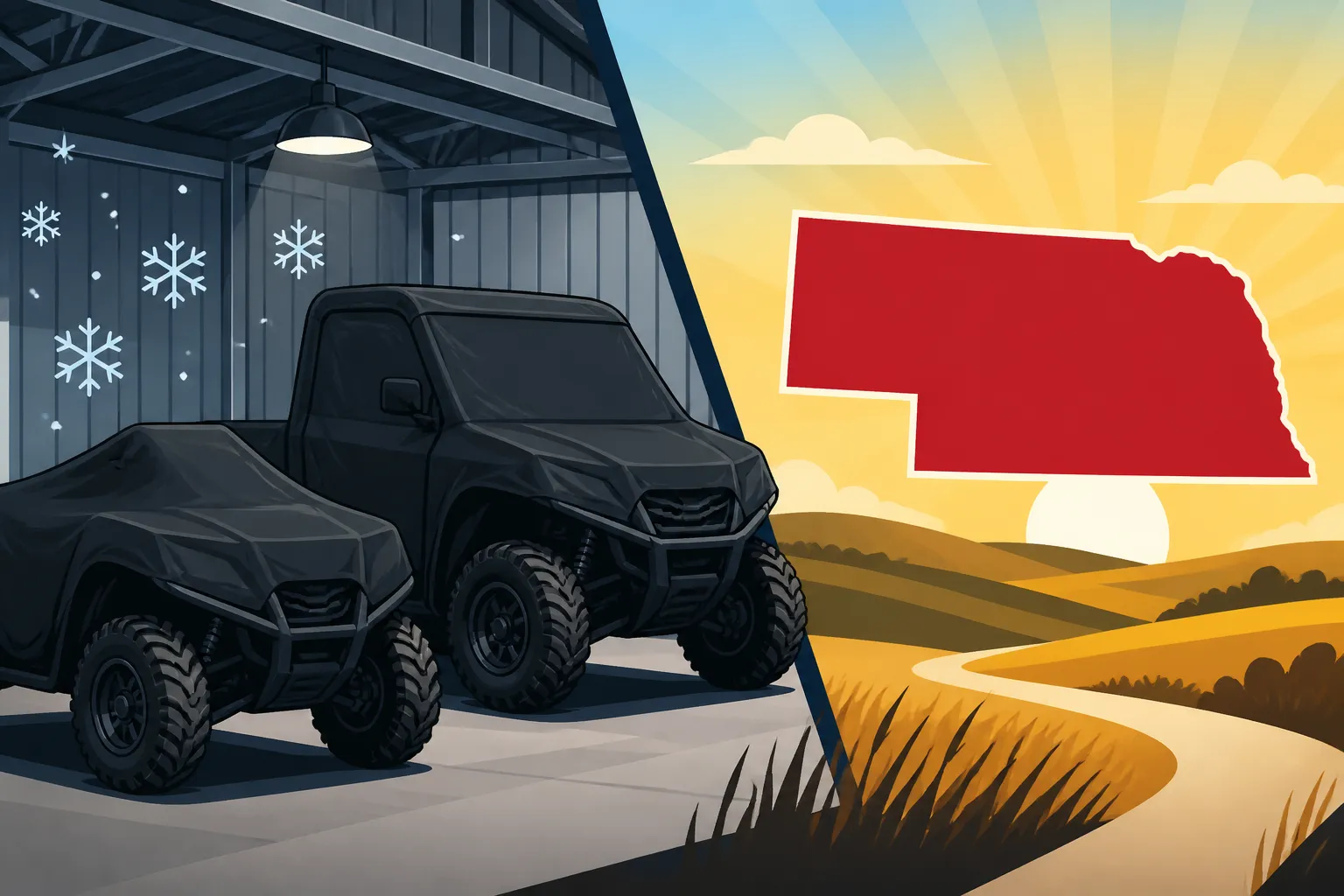
Finally, give your ATV or UTV a thorough cleaning. Wash off all mud, dirt, and grime, especially from the undercarriage and suspension components. Dry it completely to prevent rust. Consider applying a good quality wax or protectant to painted and plastic surfaces. For exposed metal parts, a light spray of silicone lubricant or WD-40 can help prevent rust. Pay special attention to pivot points, cables, and linkages. Once clean and dry, cover your machine with a breathable, waterproof cover. Avoid tarps that don't breathe, as they can trap moisture and promote mildew and rust. A well-fitted, breathable cover will protect your machine from dust, pests, and accidental bumps while allowing any trapped moisture to escape.
Storage Options and Essential Legalities for Nebraska Off-Roaders
Deciding where to stash your ATV or UTV for the winter is a significant choice, influencing both its protection and your peace of mind. From the cozy confines of a garage to more exposed outdoor options, each has its considerations. Moreover, understanding the ongoing legalities of ownership, even when your machine is hibernating, is key for any Nebraska rider.
Choosing the Best Storage Spot for Your Machine
Ideally, your ATV or UTV would spend its winter in a climate-controlled garage or shed. This offers the best protection from temperature extremes, moisture, and pests. A concrete floor is preferable to dirt, which can contribute to humidity. If you're lucky enough to have this option, ensure the area is secure and free from potential hazards. Keeping it indoors also means you can easily check on your battery and generally monitor its condition throughout the colder months. Many Nebraska homeowners utilize their existing garage space or invest in a small shed for this very purpose, providing a safe haven for their machines.
For those without indoor space, outdoor storage is an option, but it requires more diligence. A sturdy, breathable, and waterproof cover is absolutely non-negotiable. Ensure the cover is tied down securely to prevent wind from tearing it off. Parking on a concrete or paved surface is better than grass or dirt, which can hold moisture. If possible, park it under an overhang or a temporary carport for an extra layer of protection from snow and ice. While not ideal, with proper preparation and a good cover, your machine can endure the elements.
If neither of these options works, consider a rental storage unit. These facilities often offer various sizes and sometimes even climate-controlled options. While it adds a recurring cost, it provides security and protection for your valuable investment, particularly if you have a high-value machine or simply lack space at home. When making an agreement for storage, whether with a facility or a friend, a written contract, perhaps even a simple one created with a service like LawDepot, can clarify terms and responsibilities.
Understanding Nebraska Titling When Your ATV is in Hibernation
Even if your ATV or UTV is tucked away for the winter, gathering dust in the garage, the legal aspects of its ownership remain just as important as when it's tearing up the trails. In Nebraska, ATVs and UTVs are titled, but they are generally not registered for road use. This distinction is crucial. Your Nebraska title serves as proof of ownership, a vital document that should be kept safe and accessible, even if the machine isn't actively being ridden. For instance, if you were to sell your machine, whether before or after winter, you would need the title to transfer ownership properly, just as outlined in guides like [Nebraska Titles After a Private Sale].
The Nebraska Department of Motor Vehicles handles vehicle registration for cars and trucks, but ATVs and UTVs are titled through your local County Treasurer's office. This is a common point of confusion for new owners. The title document itself will even include a notation stating that the machine is "Not To Be Registered" for highway use, reinforcing Nebraska's specific rules for these vehicles. So, even though your machine might be silent for several months, its title is not. Make sure it's stored securely with other important documents, perhaps in a fireproof safe or safety deposit box.
Remember that while there's no state registration fee or annual renewal for ATVs in Nebraska, there are still costs associated with the initial titling process. These include a title fee and sales tax collected at the time of titling, which is explained further in resources like [Nebraska ATV Title Cost] and [Nebraska Sales Tax Collected at Titling]. These are one-time costs associated with ownership, not an annual fee for riding. If you have any questions about your specific titling situation, especially for machines bought new after 2004, your County Treasurer's office is the best resource, and you can find general guidance in articles like [Nebraska Title Questions Treasurers Hear]. It's always wise to stay informed, as laws can change, even if Nebraska currently has [Nebraska Has No State Decal] or mandatory statewide registration for ATVs. You'll want to be familiar with your [Nebraska ATV Title Requirements] if you ever need to transfer or duplicate your title, no matter the season.
| Winterization Step | Why It's Important | Supplies/Action |
|---|---|---|
| Fuel System | Prevents fuel degradation, clogs, and corrosion. | Fuel stabilizer, fresh fuel, run engine, (drain carb). |
| Battery Care | Avoids discharge, damage, and ensures spring start. | Remove, clean, trickle charger, warm storage. |
| Tire Preservation | Prevents flat spots, cracking, extends tire life. | Over-inflate, use stands, inspect for damage. |
| Cleaning & Protection | Stops rust, corrosion, pest nesting, preserves finish. | Wash, dry, wax/protectant, rust preventative spray. |
| Engine Oil | Eliminates contaminants, prevents internal corrosion. | Change oil and filter. |
| Air Filter | Prevents pest nesting, ensures good airflow. | Clean or replace filter. |
| Exhaust Plug | Keeps out moisture and pests. | Rag or dedicated exhaust plug. |
| Covering | Protects from dust, pests, moisture, and impact. | Breathable, waterproof cover. |
Spring Revival: Getting Your Machine Ready After Winter Storage
After months of patiently waiting through the cold, gray days, the promise of spring finally arrives in Nebraska. Now it's time to bring your ATV or UTV out of hibernation. The beauty of proper winterization is that the "spring un-winterization" process is far less daunting, but still requires a careful approach to ensure everything is in top working order for your first ride.
Pre-Ride Checks and Reassembly
The first step in reviving your machine is a thorough visual inspection. Take off the cover and check for any signs of pest activity – nests, chewed wires, or other unwelcome surprises. Remove any exhaust plugs. If you removed your battery for storage, clean the terminals again, ensuring they are free of corrosion, and reinstall it securely. Connect it, and then check all electrical connections, making sure they're snug. If your battery was on a trickle charger, it should be fully charged and ready to go.
Next, address your tires. Reduce the air pressure from the elevated storage pressure to the manufacturer's recommended riding pressure, usually found in your owner's manual. Inspect the tires for any cracks, dry rot, or unusual wear. If your machine was on stands, carefully lower it. Give all fluid levels a check: engine oil (if you didn't change it before storage, now is the time!), coolant, and brake fluid. Top off as needed. Check your brakes for proper function, making sure they aren't seized and have good pressure. Lubricate all pivot points, cables, and linkages that might have dried out over the winter. Give the steering a good check for smooth movement, and confirm all lights and horn are working correctly.
Addressing Overlooked Winter Issues
Even with the best winterization efforts, sometimes things can be missed or unexpected issues arise. One common oversight is the fuel. While stabilizer helps, if you left your tank less than full or didn't run the engine long enough, you might still have stale fuel. If you suspect old fuel, it's best to drain it and replace it with fresh, high-octane gasoline. This will prevent performance issues and potential engine damage. You might also consider replacing the spark plug, especially if it's been a while, as a fresh plug can make a big difference in starting ease and engine performance.
Listen carefully when you first start your machine. Any unusual noises, smells, or leaks should be investigated immediately. Check for any fuel leaks around the carburetor or injectors, and watch for any signs of fluid drips under the machine. Take a slow, easy test ride, paying attention to braking, steering, and engine response. It's much better to discover and fix a minor issue in your driveway than out on the trail. If you stored your machine somewhere like a shared shed or a facility, and you encounter damage that isn't from wear and tear, having documentation from when you put it away, or even an agreement created through a service like LawDepot, could be useful.
After your first successful ride, give your machine another quick once-over. The vibrations and movements of riding can sometimes reveal loose bolts or minor leaks that weren't apparent while sitting static. Being proactive with these checks means you'll spend more time enjoying the beautiful Nebraska scenery and less time troubleshooting in the garage.
Disclaimer
This article is for general informational purposes only and does not constitute professional advice. Laws, prices and regulations vary by location and change over time. Consult a qualified professional for guidance on your specific situation.