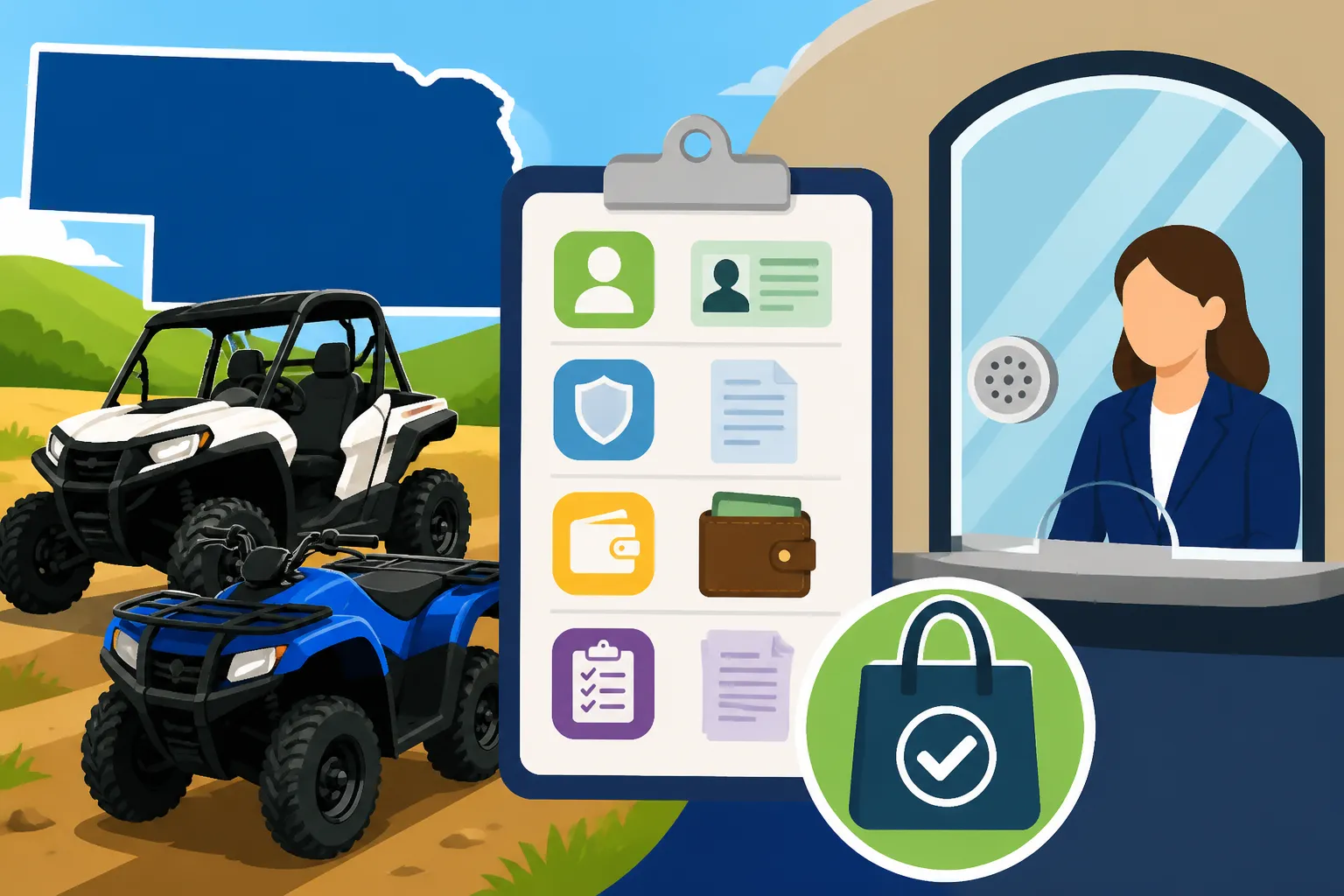
What to Bring to the County Treasurer’s Window
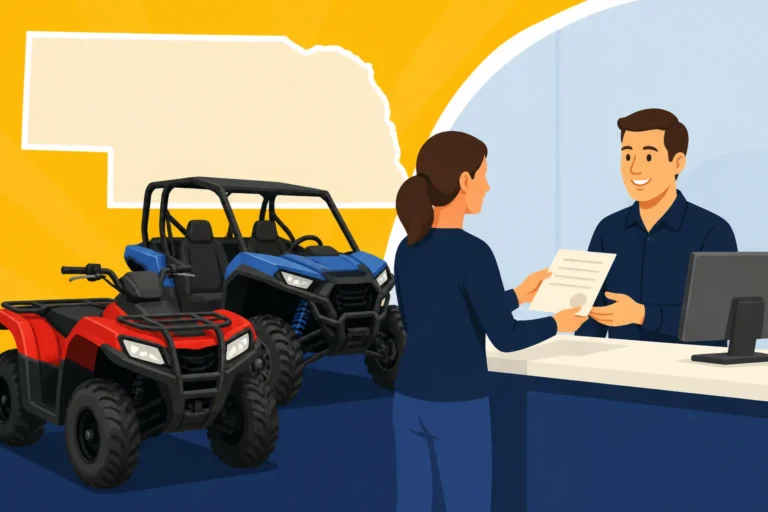
There’s nothing quite like the excitement of bringing home a new-to-you ATV or UTV, whether it’s a gleaming new model from the dealer or a trusty workhorse you picked up in a private sale. But that excitement can quickly turn into frustration when it’s time to head to the County Treasurer’s office for titling, only to find you’re missing a crucial piece of paper. You've made the trip, waited in line, and now you're being told you need to come back, and that's just a waste of your precious riding time. This guide is designed to help you gather every single document you'll need so your visit to the Nebraska County Treasurer's window is as smooth and efficient as possible.
The Core Documents Every Nebraska ATV/UTV Buyer Needs
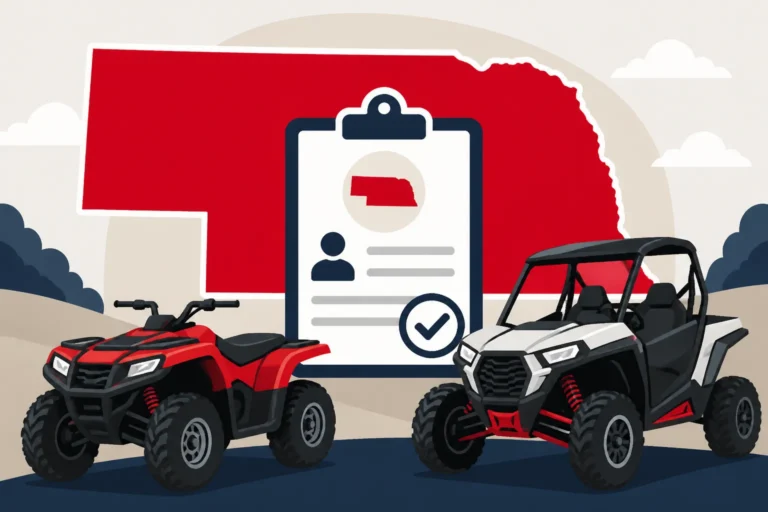
Getting your new quad or side-by-side titled correctly in Nebraska starts with a few foundational pieces of paperwork. These are the absolute essentials that the County Treasurer's office will require, regardless of whether you're buying new or used, or from a dealer or a private individual. Knowing exactly what to lay out on the counter will save you immense hassle.
Manufacturer's Statement of Origin (MSO) or Existing Title
When you purchase a brand-new ATV or UTV from a dealership, the most critical piece of paper you’ll receive—and need to bring to the Treasurer—is the Manufacturer’s Statement of Origin, often abbreviated as the MSO. Think of the MSO as the birth certificate for your machine; it's the document that proves it's never been titled before and is coming directly from the manufacturer into its first ownership. This document will contain all the vital information about your machine, including its Vehicle Identification Number (VIN), make, model, and year. Ensure the MSO is signed over correctly to you by the dealer, as any errors here will cause delays. [Bringing the Manufacturer's Statement of Origin to the Treasurer] is a vital step in establishing your machine's first legal ownership.
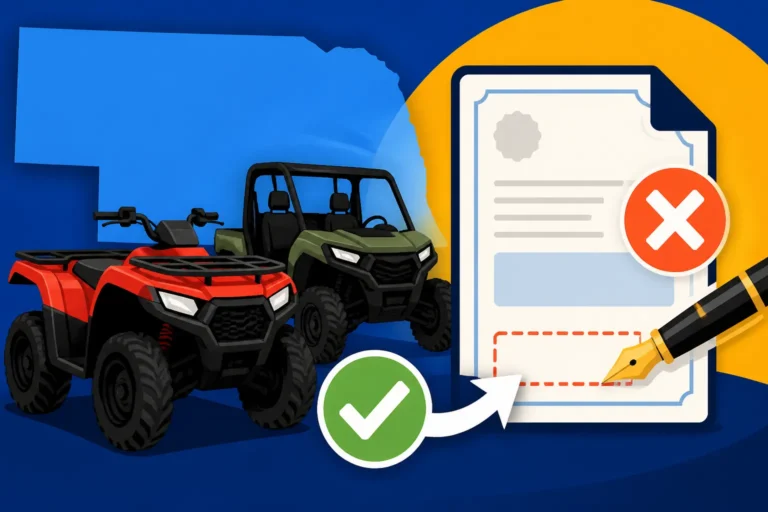
If you’re buying a used machine, however, the MSO is no longer applicable. In this scenario, you'll need the existing title from the previous owner. This document serves as proof of prior ownership and is what the County Treasurer will use to transfer the ownership into your name. It's absolutely crucial that the previous owner has properly signed and dated the "seller's signature" or "assignment" section on the back of the title. If there was a lien on the machine—meaning it was financed—you’ll also need to ensure the lienholder has officially released their interest on the title, or provide a separate lien release document. Without a properly executed title, the Treasurer cannot complete the transfer, and you'll be sent back to the seller to get it corrected.
Carefully inspect the existing title for any smudges, erasures, or alterations. These can raise red flags and may require additional paperwork or verification. It's not uncommon for titles to be misplaced or damaged over time, especially with older machines. If the seller doesn't have a clear, legible title, that's a problem that needs to be resolved before you head to the Treasurer's office, as you won't be able to title the machine without it. Always make sure the VIN on the title matches the VIN physically stamped on the machine itself—a mismatch is a major hurdle.
The Bill of Sale (or Sales Contract)
Another non-negotiable item for your trip to the County Treasurer is a comprehensive bill of sale, or a sales contract if you're buying from a licensed dealer. This document is much more than just a receipt; it's the legal record of your transaction. It should clearly state the date of the sale, the full names and addresses of both the buyer and the seller, a detailed description of the ATV or UTV (including its make, model, year, and crucially, the Vehicle Identification Number or VIN), and the agreed-upon purchase price. The bill of sale also serves as proof that you acquired the machine legally and helps establish the taxable value.
For private sales, a well-written bill of sale protects both parties. It formalizes the transaction and provides clarity on the terms of the sale. You can find templates online through resources like LawDepot if you need to create one for a private transaction, ensuring all necessary fields are included. Having a robust bill of sale helps avoid disputes later and provides the necessary documentation for the Treasurer to assess sales tax. Without it, or if it's incomplete, the Treasurer may have to rely on an estimated value, which could result in you paying more tax than necessary. [Writing a Bill of Sale for a Neighbor's Quad] is a good practice even among friends.
Even if you're buying from a dealer, you'll receive a sales contract that functions similarly to a bill of sale. This contract will detail the purchase price, any trade-in value, fees, and of course, the sales tax collected (though for ATVs/UTVs in Nebraska, the dealer typically doesn't collect state sales tax, the county does, but it will be itemized). Make sure you receive a final, signed copy of this contract for your records and to present to the Treasurer. It's your definitive proof of how much you paid and ensures the transaction is clearly documented for tax purposes.
Proof of Identity and Residency
When you step up to the counter, the County Treasurer's staff needs to verify who you are and where you live. This is standard procedure to ensure the title is issued to the correct individual at the correct address. The most common and accepted form of identification is your valid Nebraska driver's license or a state-issued identification card. Make sure it's current and hasn't expired. The name on your identification should match the name you want on the title precisely to avoid any complications.
Your driver's license or state ID typically also serves as proof of residency, as it displays your current address. However, if you've recently moved and haven't updated your ID, or if the address on your ID doesn't match where you currently live (for example, if you moved to Nebraska from out of state), you might need to bring additional documents. Acceptable secondary proofs of residency can include a current utility bill (like electric, gas, or water), a bank statement, or a lease agreement, all showing your name and current Nebraska address. It’s always best to call ahead if you have any doubts about your address verification. [Nebraska Title and Proof of Address] are intrinsically linked, and having clear, up-to-date documentation makes the process seamless.
Remember that the address you provide for the title will be the official mailing address for all correspondence related to your ATV or UTV. If you have a different mailing address than your physical residence, be prepared to clarify this with the Treasurer's staff. They want to ensure your official title certificate reaches you without any issues once it's processed and mailed out. Taking a few moments to confirm your address details before your visit can prevent future headaches related to lost mail or delayed documents.
Navigating Sales Tax and Fees at the Treasurer's Counter
Beyond the fundamental ownership documents, a significant part of your visit to the County Treasurer's office involves financial transactions. Understanding Nebraska's sales tax rules and what fees to expect will help you budget appropriately and avoid any surprises.
Understanding Nebraska Sales Tax Collection
One of the most crucial things to know when titling an ATV or UTV in Nebraska is that the sales tax is generally collected by the County Treasurer at the time of titling, not by the dealer at the point of sale. This often catches first-time buyers off guard, especially if they're used to purchasing other vehicles where the dealer handles all tax collection. Nebraska charges a state sales tax rate, and many cities and counties add their own local sales tax on top of that. This means the total percentage you pay can vary slightly depending on where you reside. The tax is calculated based on the purchase price you declare on your bill of sale. [Nebraska Sales Tax Collected at Titling] is a core responsibility of the county office.
To facilitate this collection, you'll be asked to complete Nebraska Form 6ATV, known as the "Sales and Use Tax Statement for All-Terrain Vehicles." This form requires you to state the purchase price of your machine, information about the seller and buyer, and details about the ATV or UTV itself. It's absolutely critical to accurately report the purchase price, as providing false information can lead to penalties. The Treasurer's office may use valuation guides if they suspect the declared price is significantly lower than market value, especially for used machines sold privately. [Why ATV Buyers Fill Out Form 6ATV] is all about ensuring proper tax collection.
The good news is that by collecting the sales tax directly, the County Treasurer streamlines the process and ensures compliance with state revenue laws. However, it means you need to be prepared to pay this amount out of pocket during your visit. Make sure you've budgeted for both the state and any applicable local sales tax before you head to the counter. If you've purchased a machine out-of-state, Nebraska's use tax rules will apply, which essentially mean you pay the Nebraska sales tax equivalent when you bring the machine into the state and title it here.
Accounting for Trade-Ins and Rebates
Many buyers opt to trade in an older ATV or UTV when purchasing a new one, whether from a dealer or sometimes even in a private transaction. Nebraska law provides a sales tax credit for the value of a trade-in, which can significantly reduce the amount of sales tax you owe. To take advantage of this, the trade-in must be clearly itemized on your bill of sale or sales contract. The Treasurer will subtract the value of your trade-in from the purchase price of your new machine before calculating the sales tax due. It's important that the trade-in is part of the same transaction as the purchase to qualify for this credit. [Nebraska Trade-In Credit at Titling] can save you a good chunk of money.
Similarly, if you received any manufacturer rebates when purchasing a new ATV or UTV, these can also impact your sales tax calculation. Generally, if a rebate reduces the actual cash price you pay for the machine, then the sales tax will be calculated on that lower, post-rebate price. However, if the rebate is a separate incentive that you receive back after paying the full price, it might not reduce the taxable amount. Always ensure that any rebates are clearly documented on your sales agreement or provided as an official rebate form from the dealer or manufacturer. Clarity on these points before you visit the Treasurer can prevent confusion and ensure you get all the tax benefits you're entitled to.
Consider a hypothetical scenario: you purchase a UTV for $15,000, trade in your old quad for $5,000, and receive a $1,000 manufacturer's rebate. Your taxable amount would be $15,000 (purchase price) – $5,000 (trade-in) – $1,000 (rebate) = $9,000. The sales tax would then be calculated on that $9,000. This is why having all these figures clearly laid out on your paperwork is so critical when you're at the Treasurer's counter. Don't leave it to guesswork; confirm with the seller how these figures will be presented on your official purchase documents.
Payment Methods for Taxes and Fees
Once all your paperwork is reviewed and the sales tax and titling fees are calculated, you'll need to pay up. The fees you'll encounter typically include a modest title fee for the issuance of your new title and, of course, the potentially larger sales and use tax amount. The exact title fee amount is set by the state, while the sales tax amount will depend on your purchase price and local rates. It's a good idea to know these figures in advance, or at least have a solid estimate, so you're not caught off guard.
Most Nebraska County Treasurer's offices accept a variety of payment methods. Cash is almost always accepted, but for larger sums like sales tax, carrying a significant amount of cash might not be ideal for everyone. Personal checks are generally accepted, provided they are drawn on a local bank and you have sufficient funds. Many Treasurer's offices also accept debit and credit cards, which offers convenience. However, be aware that credit card transactions often come with a small processing fee, which is added to your total. [Nebraska Title Payment Methods] vary by county, so it's always prudent to be prepared.
To avoid any last-minute stress, it's highly recommended to call your specific County Treasurer's office beforehand to confirm their accepted payment methods and inquire about any credit card processing fees. This simple call ensures you arrive prepared with the right form of payment, preventing a potential second trip. Having a backup payment method, such as a check even if you plan to pay with a card, can be a smart move in case of unexpected technical issues with card readers or other unforeseen circumstances.
Special Circumstances and Additional Documentation
While the core documents cover most situations, certain scenarios involving your ATV or UTV might require additional paperwork or special steps. Being aware of these exceptions can save you from a frustrating delay.
Titling an Out-of-State Machine
If you're a new resident to Nebraska and are bringing an ATV or UTV that you already own and have titled in another state, or if you purchased a machine from a seller outside of Nebraska, there are specific requirements you'll need to meet. The primary document will still be the original title from the previous state. Just like with an in-state used purchase, ensure the seller (if applicable) has properly signed off on their section of that title, and any liens are released. [Nebraska Out-of-State Machines Need a Title] requires careful attention to detail.
Beyond the out-of-state title, Nebraska often requires a Vehicle Identification Number (VIN) inspection for machines brought in from other states. This inspection verifies that the VIN on your paperwork matches the VIN on the machine and helps deter theft. This inspection can typically be performed by a law enforcement officer or, in some cases, by an authorized dealer. You'll receive a signed verification form that you must bring to the Treasurer's office. [Nebraska Title for a New Resident] often involves this extra layer of verification. Always confirm with your local County Treasurer if a VIN inspection is needed for your specific situation.
Remember, even if you paid sales tax on the machine in another state, you might still owe use tax to Nebraska if the tax rate in your previous state was lower than Nebraska's. The County Treasurer will assess this difference. It's a common misconception that paying tax once means you're done; states like Nebraska often collect the difference to ensure fairness. Gather all your purchase receipts and out-of-state tax payment proofs to present to the Treasurer so they can accurately calculate any remaining tax liability.
Dealing with Missing or Damaged Paperwork
It's an unfortunate reality that sometimes crucial documents like the MSO or an existing title can get lost, damaged, or were simply never provided by a previous owner. If you're in this predicament, don't despair, but be prepared for a slightly more involved process. If the MSO for a new machine is lost, your first step should be to contact the dealership where it was purchased. They can often request a duplicate MSO from the manufacturer, though this might involve a fee and take some time.
For a used machine with a lost title, the process usually requires the seller to apply for a duplicate title in their name from the state where it was last titled. They would then sign over this duplicate title to you. It's extremely difficult, and often impossible, for a buyer to get a duplicate title for a machine they don't yet legally own. This is why it's always best practice to ensure the seller has the title in hand before you finalize the purchase. If you've inherited a machine with no title, you might need to go through a probate process or present other legal documents to establish ownership. [Nebraska Machines With No Paperwork] present a challenge, but often have solutions.
What if you bought an older machine in a private sale and never received a formal bill of sale? For very old machines, or those that have changed hands many times informally, you might need to complete an Affidavit of Ownership (sometimes called a Statement of Fact). This is a sworn statement detailing how and when you acquired the machine. The Treasurer’s office will review this, and in some cases, might require additional documentation or a bond to issue a title. Always consult with your County Treasurer about their specific requirements for "no paperwork" situations, as these can vary.
Specific Scenarios: Inherited, Gifted, or Assembled Machines
Life happens, and sometimes you acquire an ATV or UTV through circumstances other than a straightforward purchase. If you've inherited a machine, the titling process will require legal documentation proving your right to ownership. This typically includes a copy of the death certificate, a will, or if there's no will, Letters of Administration or Testamentary from the probate court. These documents demonstrate that you are the legal heir or executor authorized to take possession and transfer the title. [Nebraska Titles for an Inherited Machine] involves navigating legal estate processes.
For machines received as a gift, you'll still need to complete a bill of sale, even if the purchase price is $0. This "gift affidavit" or bill of sale should clearly state that the machine was a gift and include all relevant details of the machine and the giver/recipient. While no sales tax is typically due on a bona fide gift between close family members, if the Treasurer suspects it's an attempt to avoid sales tax on a sale, they may still assess tax based on the machine's fair market value. Always be transparent about the nature of the transaction.
If you've built an ATV or UTV from scratch or assembled one from various parts, the process to obtain a title is even more specialized. You'll typically need receipts for all major components, an affidavit detailing the construction process, and a VIN assignment from the state (as your machine won't have a manufacturer's VIN). A thorough inspection will also be required to verify the components and ensure it meets safety standards. [Nebraska Assembled Machine Titles] are a unique category and require significant upfront documentation. This is not a process to tackle lightly, and contacting the Treasurer's office well in advance is highly advisable.
Making Your Trip to the Treasurer's Office Efficient
Your time is valuable, and nobody wants to make multiple trips to the County Treasurer's office. With a little planning and preparation, you can ensure your titling experience is a quick, one-and-done affair.
Before You Go: A Pre-Flight Checklist
Before you even get in the car, take a few minutes to conduct a thorough "pre-flight check" of all your documents. Lay everything out on a table and go through it piece by piece. Do you have the original MSO or the properly signed existing title? Is the bill of sale complete and accurate, with all names, dates, VINs, and prices filled in? Does your driver's license match the name you want on the title, and is the address correct? If anything looks incomplete or incorrect, now is the time to fix it, not when you're standing at the counter.
It’s also incredibly wise to make a quick phone call to your specific County Treasurer's office. Ask about any unique local requirements, confirm their hours of operation, and double-check their accepted payment methods. Every county can have slight variations, and a five-minute phone call can save you hours of frustration. This is also a great opportunity to ask about specific situations, like what to do if you have a trade-in or if your machine is an older model with limited paperwork. [Nebraska Title Questions Treasurers Hear] are common and they are usually very helpful.
Finally, gather all your necessary funds, whether it's cash, a check, or a credit card. Make copies of all your documents for your own records before you hand over the originals. These copies can be invaluable if there's ever a question about the transaction or if you need to reference something later. Having everything organized in a folder or envelope will not only impress the clerk but will also make your entire visit smoother and faster. [Planning One Trip to the Treasurer's Counter] truly pays off.
What to Expect at the Counter
When you arrive at the County Treasurer's office, you'll likely take a number and wait your turn. Once called, you'll present all your carefully prepared documents to the clerk. They will review each piece of paper, verifying signatures, dates, VINs, and the accuracy of the information. They'll likely ask you to fill out or confirm details on Nebraska Form 6ATV, the sales tax statement. Be prepared to answer any questions they might have about your purchase.
The clerk will then calculate the total amount due, which includes the title fee and the sales and use tax. Once you've paid these fees, they will process the ownership transfer. You'll usually receive a temporary ownership document or a receipt that serves as proof of your application. Your official, physical title certificate will then be printed and mailed to the address you provided, typically within a few weeks. It’s important to keep your temporary paperwork with you or in your machine until the official title arrives.
If, for any reason, the clerk identifies a problem with your paperwork—a missing signature, an incorrect date, or an issue with the VIN—they will inform you what needs to be corrected. While this can be frustrating, remember that they are following state regulations. Be polite, ask clear questions about what exactly is needed, and get specific instructions on how to resolve the issue. Most Treasurer's staff want to help you complete the process successfully.
Here's a quick overview of what to bring:
| Item Type | New Purchase (Dealer) | Used Purchase (Private) | Out-of-State Machine |
|---|---|---|---|
| Ownership Proof | Manufacturer's Statement of Origin (MSO) | Previous Owner's Signed Title | Out-of-State Signed Title |
| Purchase Proof | Dealer Sales Contract | Bill of Sale (both signed) | Bill of Sale |
| Identity/Residency | Valid Nebraska ID/DL | Valid Nebraska ID/DL | Valid ID/DL, Proof of NE Residency |
| Sales Tax Form | Nebraska Form 6ATV | Nebraska Form 6ATV | Nebraska Form 6ATV |
| Payment for Fees/Tax | Cash, Check, Card | Cash, Check, Card | Cash, Check, Card |
| Additional (if applicable) | Rebate documentation | Lien release, Odometer statement | VIN Inspection Form |
Disclaimer
This article is for general informational purposes only and does not constitute professional advice. Laws, prices and regulations vary by location and change over time. Consult a qualified professional for guidance on your specific situation.