Two Names on One Nebraska-Style Title
So, you and your riding buddy, spouse, or family member are going in on an ATV or UTV together in Nebraska. It's a fantastic idea, but the titling paperwork can feel murky when two names are involved. This guide will demystify how to title an ATV or UTV with two names in Nebraska, helping you navigate the process smoothly so your path to the trail is clear.
Understanding Joint Ownership for Your Nebraska ATV or UTV
Deciding to share the thrill of an off-road machine is exciting, but it also brings up practical questions about ownership. When two or more people want to be officially recognized as owners of an ATV or UTV in Nebraska, they enter the world of joint ownership. This isn't just a casual agreement; it's a legal designation that affects everything from who can sell the machine to what happens if one owner is no longer able to claim it. Getting this right from the start can save a lot of headaches down the line.
The Different Flavors of Joint Ownership: "And" vs. "Or"
When you’re putting two names on a title, how those names are joined makes a huge difference. In Nebraska, like many places, the key distinction often comes down to the word linking the names: "and" versus "or." While they might seem like small words, their legal implications are anything but. Understanding this nuance is crucial for any co-owner of an ATV or UTV.
If the names on your Nebraska title are joined by "and" (e.g., "John Doe AND Jane Smith"), it generally means that both individuals must agree and sign off on any major transaction involving the ATV or UTV. This typically implies a tenancy in common or a joint tenancy without explicit right of survivorship. For instance, if you decide to sell the machine, both John and Jane would need to sign the transfer of title. If one owner passes away, their share of the ATV typically becomes part of their estate, and it would then be distributed according to their will or state probate laws. This can lead to a more complex process if one owner becomes unavailable or unwilling to cooperate.
On the other hand, if the names are joined by "or" (e.g., "John Doe OR Jane Smith"), this usually signifies joint tenancy with right of survivorship. This means that either owner can act independently when it comes to certain actions, such as selling the machine. More importantly, upon the death of one owner, the surviving owner automatically inherits full ownership of the ATV or UTV, bypassing the probate process for that specific asset. This simplifies matters considerably in the event of a tragic loss, ensuring the machine's ownership transitions seamlessly. It's a popular choice for spouses or close family members who intend for the machine to stay within the immediate family regardless of who is still living.
Here's a quick rundown to help you visualize the differences:
| Feature | "And" on a Title (Typically Tenancy in Common) | "Or" on a Title (Joint Tenancy with Right of Survivorship) |
|---|---|---|
| Ownership Share | Can be equal or unequal, often specified. | Equal shares implicitly assumed. |
| Selling/Transfer | Requires all named owners' signatures. | Either owner may be able to sell/transfer independently. |
| Inheritance | Deceased owner's share passes to their estate. | Deceased owner's share automatically passes to surviving owner. |
| Creditor Claims | Creditors of one owner might claim against their share. | Generally offers more protection against individual owner's creditors for the machine itself. |
| Complexity | Can be more complex if one owner becomes unavailable. | Generally simpler for transfer upon death. |
Why Riders Choose to Co-Own: Common Scenarios
There are many fantastic reasons why two people might decide to put both their names on a Nebraska ATV or UTV title. Often, it boils down to shared passion, practical considerations, or familial bonds. This kind of arrangement allows more people to enjoy the off-road lifestyle without the burden falling entirely on one person.
One of the most common scenarios involves spouses or domestic partners. For many couples, an ATV or UTV is a joint investment, just like a car or a home. Titling it in both names reflects this shared asset and ensures both parties have an equal say in its use, maintenance, and eventual sale. It’s a straightforward way to keep things equitable and prevent any single person from acting unilaterally. Plus, it simplifies matters if one spouse is away or unavailable when paperwork needs to be signed for things like repairs or insurance claims.
Another frequent situation involves family members, such as siblings, parents and adult children, or even close friends who are more like family. Perhaps a parent wants to share the fun of riding with their adult child, or two siblings are pooling resources to buy a high-end side-by-side for their shared hunting trips or ranch work. Co-ownership can make an expensive purchase more affordable and ensure everyone feels invested. For groups of friends, it might be a shared machine for weekend adventures, allowing them to split the cost of the machine itself, plus accessories, maintenance, and storage. It’s a great way to make those big purchases more manageable.
What Joint Ownership Means for Your Rights and Responsibilities
When you put two names on a Nebraska ATV or UTV title, you're creating a legal bond that carries distinct rights and responsibilities for both parties. It’s much more than just sharing the fun; it’s sharing the legal ownership of an asset. Understanding this foundational aspect can prevent disagreements and ensure both owners are on the same page from day one.
Firstly, both owners typically have an equal right to possess and use the ATV or UTV. This means neither owner can prevent the other from using the machine, assuming there isn't a separate written agreement stating otherwise. While this sounds straightforward, it can become a point of contention if one owner feels they are using it more or maintaining it disproportionately. It’s always a good idea to discuss usage expectations and create a clear understanding of how the machine will be shared, especially for recreational use.
Beyond usage, joint ownership also means shared responsibilities. This includes the financial obligations associated with the machine, such as insurance, maintenance, and storage costs. Even if one person uses it more, both are generally considered responsible for its upkeep and any associated expenses. Furthermore, if the machine is financed, both owners are typically signatories on the loan, making them both legally liable for repayment. For those considering titling an ATV or UTV with two owners, it's wise to consider drawing up a co-ownership agreement that clearly outlines these responsibilities. Resources like LawDepot offer templates for such agreements, which can be invaluable for setting expectations and providing a roadmap for conflict resolution.
The Step-by-Step Titling Process for Co-Owners in Nebraska
Titling an ATV or UTV in Nebraska, even with one name, requires a visit to your local County Treasurer's office. When you’re dealing with two names, the process mostly follows the same path, but with a few crucial additions and considerations. It’s all about making sure all legal owners are properly identified and accounted for on the official record. Remember that [Nebraska Titles Required Since 2004], so this isn't an optional step for newer machines.
Assembling Your Documents: What Both Owners Need
Before you even think about heading to the County Treasurer's office, it’s critical to have all your ducks in a row. For joint ownership, this means not just double the identification, but also ensuring all transaction paperwork correctly reflects both parties. Missing a single piece of paper or having incomplete information can lead to frustrating delays and multiple trips. This is why being meticulous upfront can save you a lot of time and hassle.
First and foremost, you'll need the Manufacturer's Statement of Origin (MSO) if the ATV or UTV is brand new. This document, sometimes called a Manufacturer's Certificate of Origin (MCO), is essentially the birth certificate for your machine and proves it hasn't been titled before. If you're buying a used machine, you'll need the existing title, properly signed over by the previous owner(s). Ensure that any assignments on the back of the title are correctly filled out, especially the buyer information, where both your names should be clearly printed as they will appear on the new title.
Both owners will need to bring valid identification, such as a driver's license or state-issued ID. The County Treasurer's office will need to verify the identity of everyone listed on the title. Additionally, if you've purchased the machine from a private seller, you’ll need a bill of sale. This document should clearly list both buyers, the purchase price, and a description of the ATV or UTV. While not always strictly required for titling, having a detailed bill of sale protects both buyer and seller and helps establish the taxable value of the machine. Make sure to bring your proof of address as well, as this is often needed for titling. Knowing [What to Bring to the County Treasurer's Window] beforehand can greatly streamline your visit.
Navigating [Nebraska Titles Through a County Office]
In Nebraska, unlike passenger vehicles, ATVs and UTVs are titled exclusively through your local County Treasurer's office, not the Department of Motor Vehicles (DMV). This is a common point of confusion for new owners, but it’s an important distinction to remember. So, when you're ready to get that title in both your names, your destination will be the Treasurer's office in the county where at least one of you resides. For many, this will be a familiar location, but for others, it might be a new experience.
Upon arriving at the County Treasurer's office, you'll typically take a number or wait in line, just like any other government office. It’s highly recommended that both co-owners are present for this initial titling process. While it might be possible for one owner to act on behalf of the other with a power of attorney, it often simplifies things immensely to have both individuals there to present their IDs, answer any questions, and sign necessary forms in person. This also ensures there are no disputes about the form of ownership ("and" vs. "or") or other critical details. Don't forget, [Why the County Treasurer, Not the DMV, Titles ATVs] is just one of those quirks of Nebraska law!
The staff at the Treasurer's office are there to guide you through the paperwork, but having everything ready on your end will make their job—and your experience—much easier. They will verify your documents, collect the necessary fees and taxes, and process your application. Don't hesitate to ask questions if anything is unclear; they deal with these scenarios frequently and can offer valuable insights. This step is where all your preparation pays off, transitioning from a pile of papers to an official record of your joint ownership.
Filling Out the Forms: Special Attention for Two Names
Completing the actual title application forms is where you'll make the critical decisions about how your two names are officially recorded. This isn't just a formality; it has real legal consequences, especially concerning future transactions or unexpected events. Paying close attention to how you fill out these sections can prevent complications down the road.
The primary form you'll encounter is [Nebraska Form 6ATV Explained], which is the official application for certificate of title for an ATV, UTV, or mini-bike. On this form, you'll find sections to list the owner(s) of the machine. This is where both of your names will be entered. Crucially, you'll need to decide how those names are linked: "John Doe AND Jane Smith" or "John Doe OR Jane Smith." As we discussed earlier, this choice dictates many of your rights and responsibilities, so ensure you both agree on the format before submitting the form. If you're unsure, ask the Treasurer's clerk for clarification; they can explain the implications of each option.
Both owners will need to sign the application form where indicated. This signature legally certifies that the information provided is accurate and that both parties agree to the terms of ownership. It’s another reason why both owners being present is ideal. If one owner cannot be there, a properly executed power of attorney will be necessary, authorizing the present owner to sign on their behalf. Make sure any power of attorney document meets Nebraska's legal requirements. Once all signatures are gathered and verified, the County Treasurer's office will officially process your application for your joint-named title.
Financials, Logistics, and Legalities of Co-Titling in Nebraska
Getting the title with two names is a significant step, but it’s only one part of the overall financial and logistical picture of owning an ATV or UTV. There are costs involved, ongoing responsibilities, and proactive measures you can take to protect your investment and ensure a harmonious co-ownership experience. Thinking through these aspects before you hit the trails will benefit everyone involved.
The Costs Involved: Fees, Taxes, and Your Budget
Just like titling any vehicle in Nebraska, there are specific fees and taxes you'll need to pay when putting two names on an ATV or UTV title. It's not a free process, and understanding these costs upfront helps avoid any surprises at the Treasurer's window. These fees contribute to the administration of the titling system and state revenue, so budgeting for them is a non-negotiable part of the purchase.
The most significant cost you'll face (besides the machine itself!) is the sales tax. In Nebraska, state sales tax is collected on the purchase price of the ATV or UTV at the time of titling. This means that even if you bought it from a private seller, you're responsible for paying the tax to the County Treasurer. On top of the state sales tax, many localities also impose their own local sales tax, which will be added to the total. This can significantly increase the final cost, so make sure to factor in both the state and any applicable local rates based on where you reside. [Nebraska Sales Tax Collected at Titling] is a crucial part of the process.
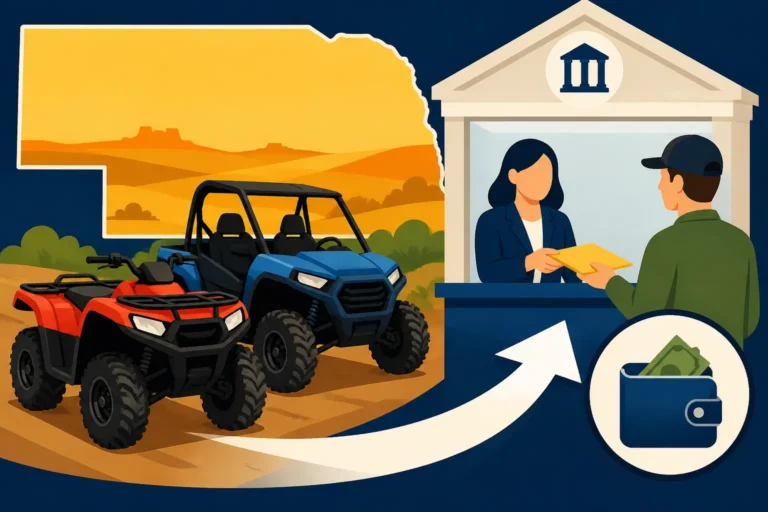
Beyond sales tax, there's the actual title fee itself. While the sales tax can be a substantial sum, the title fee is usually a much smaller, fixed amount. Additionally, you might encounter small processing fees. It's a good idea to check with your specific County Treasurer's office beforehand to get the most accurate current figures for all these costs. They can tell you exactly [What a Nebraska County Charges to Title a Quad] and what [Nebraska Title Payment Methods] they accept, whether it's cash, check, or card. Bringing all the necessary funds, or knowing how you'll pay, ensures your visit is productive.
Beyond the Initial Title: What Happens Next?
Once your new title with two names is processed and you've paid all the associated fees and taxes, you're officially co-owners of your Nebraska ATV or UTV! While the immediate paperwork is done, there are a few things to keep in mind regarding your new title and the road ahead. It's not just a piece of paper; it's a living document that may need attention over time.
First, you'll typically receive a physical title document in the mail, or in some counties, it might be printed on the spot. Keep this document in a safe, secure place, as it is your proof of ownership. Do not carry the original title on the machine itself, as it could be lost or stolen. A photocopy is fine for carrying with you, but the original should be protected. If you ever decide to sell the machine, you will need that original title, signed by both owners, to transfer ownership.
Regarding the timeline, [Nebraska Title Processing Time] can vary slightly, but generally, if all your paperwork is in order and submitted correctly, the process at the County Treasurer's office is fairly quick for immediate title issuance or for receiving the official document within a few weeks. Remember, Nebraska also has a [Nebraska's 30-Day Titling Deadline] from the date of purchase, so don't delay your trip to the Treasurer's office! Falling outside this window can result in penalties, so being prompt is always the best course of action.
Protecting Your Investment: Agreements and Legal Preparedness
While the official title outlines legal ownership, it doesn't always cover the day-to-day practicalities or potential disagreements between co-owners. This is especially true for non-spouses or complex family situations. Protecting your investment – and your relationship with your co-owner – often requires proactive planning beyond just the state-issued title.
One of the smartest moves you can make as co-owners is to create a formal written agreement outlining your responsibilities and expectations. This co-ownership agreement can cover everything from who pays for what (fuel, insurance, maintenance) to how usage will be scheduled, where the machine will be stored, and what happens if one owner wants to sell their share. It's essentially a prenuptial agreement for your ATV or UTV. While it might seem overly formal for a recreational vehicle, such an agreement can prevent major disputes and provide a clear framework for resolution if issues arise. Resources like LawDepot can provide templates for co-ownership agreements, making it easier to draft a document tailored to your specific situation and needs.
This agreement should also address what happens in unforeseen circumstances, such as one owner moving away, becoming unable to pay their share, or even passing away. If your title is "John Doe AND Jane Smith," the death of one owner can complicate matters significantly as their share enters probate. A comprehensive co-ownership agreement, perhaps coupled with a will, can stipulate how the deceased owner's share is handled, offering a smoother transition. Even with an "OR" title, clarifying usage and financial responsibilities in an agreement is wise. Discussing these tough "what-if" scenarios upfront, while everyone is in agreement and before any stress points emerge, is a sign of good planning and respect for your shared investment.
Common Questions and Troubleshooting for Dual-Named Titles
Even with the best preparation, questions and unique situations can arise when dealing with joint ownership of an ATV or UTV. The world of titles and ownership can sometimes throw curveballs, and it’s helpful to know how to respond. Understanding common scenarios and potential pitfalls can save you time and stress, ensuring your off-road adventures remain enjoyable.
What to Do If Circumstances Change: Adding, Removing, or Selling
Life happens, and sometimes the circumstances around your ATV or UTV co-ownership change. Maybe you want to add a new partner to the title, one owner wants to be removed, or you both decide it's time to sell the machine. Each of these situations requires specific steps at the County Treasurer's office to ensure the title accurately reflects the current ownership.
If you need to add a second owner to an existing single-owner title, this essentially involves a title transfer. The original owner would "sell" or "gift" a share of the ATV to the new co-owner. You would typically fill out a new [Nebraska Form 6ATV Explained], listing both names as owners, and the original owner would sign off on the previous title, effectively transferring it. Sales tax may still be due on the gifted portion if it's not a full sale. Similarly, if you need to remove an owner, that individual would typically need to sign off on the existing title, transferring their share to the remaining owner(s). This is essentially a partial transfer or sale, and it’s important both parties agree and sign the necessary paperwork.
When it comes time to sell an ATV or UTV with two names on the title, the process depends on how the names are linked. If the title says "John Doe AND Jane Smith," both John and Jane must sign the title over to the new buyer. If the title says "John Doe OR Jane Smith," generally either John or Jane can sign the title to complete the sale, though it's always best practice and often expected for both to sign if available, to avoid any potential disputes. This is a critical point to remember, especially for [Nebraska Titles After a Private Sale]. Always double-check your title's wording and ensure all necessary parties are present or have provided proper authorization when conducting a sale.
Addressing Potential Roadblocks at the Treasurer's Office
Even with all your documents meticulously prepared, you might encounter a snag or two at the County Treasurer's office. It’s not uncommon, and knowing how to troubleshoot or prevent these issues can make your visit much smoother. The key is often clear communication and having fallback options.
One of the most common roadblocks is incomplete or incorrect paperwork. This could be a missing signature, a typo in a name or VIN, or an improperly filled-out bill of sale. If you're relying on a power of attorney for one owner, make absolutely certain it's valid and complete according to Nebraska law. Any discrepancies will likely send you back to correct the issue before the title can be processed. Always double-check everything before you leave home, and if you used a service like LawDepot for a bill of sale, ensure all fields are thoroughly completed.
Another issue can arise if there's a lien on the ATV or UTV that hasn't been properly released. If you're buying a used machine, ensure the seller has provided proof that any outstanding loans have been paid off and the lienholder has officially released their interest. The County Treasurer cannot issue a clean title with two names if there’s an unreleased lien. Finally, confusion over the "and" versus "or" on the title is common. If you and your co-owner have different ideas about how the title should be structured, resolve that discussion before you get to the counter. The Treasurer’s staff can only process what you instruct them to do, and changing it later can incur additional fees and paperwork.
Key Takeaways for a Smooth Joint Ownership Experience
Navigating the joint ownership of an ATV or UTV in Nebraska doesn't have to be a headache. By understanding the rules, preparing thoroughly, and communicating openly with your co-owner, you can ensure a smooth titling process and a harmonious riding experience for years to come. It’s all about laying a solid foundation from the very beginning.
Remember the critical distinction between "and" and "or" on the title. This single word can have profound effects on your rights and responsibilities, especially concerning selling the machine or inheritance. Make sure you and your co-owner are completely aligned on this choice before you submit your paperwork for your [Nebraska Title With Two Owners]. Don't be afraid to ask questions at the County Treasurer's office if you need clarification; they are there to help.
Finally, proactive communication and preparedness are your best friends. Gather all required documents for both owners, ensure your bill of sale or MSO is accurate, and be ready to pay the necessary fees and taxes. Consider a formal co-ownership agreement, perhaps utilizing resources like LawDepot, to clearly define expectations and responsibilities. By taking these steps, you’ll not only get your Nebraska ATV or UTV titled correctly with two names but also set the stage for many enjoyable, shared adventures on the trails and pastures of our great state.
Disclaimer
This article is for general informational purposes only and does not constitute professional advice. Laws, prices and regulations vary by location and change over time. Consult a qualified professional for guidance on your specific situation.