Financing an ATV Through the Selling Dealer
There's nothing quite like the thrill of imagining yourself cruising across a wide-open Nebraska pasture or tackling a challenging sand dune in the Halsey National Forest on a brand-new ATV or UTV. But let's be real, for most of us, these incredible machines represent a significant investment, and having all the cash upfront isn't always an option. That's where financing comes into play, and often, the first place folks look is right at the dealership. This guide is here to walk you through the ins and outs of financing your new off-road machine directly through the selling dealer, helping you navigate the process with confidence and clarity.
Navigating Dealer Financing for Your Nebraska ATV or UTV
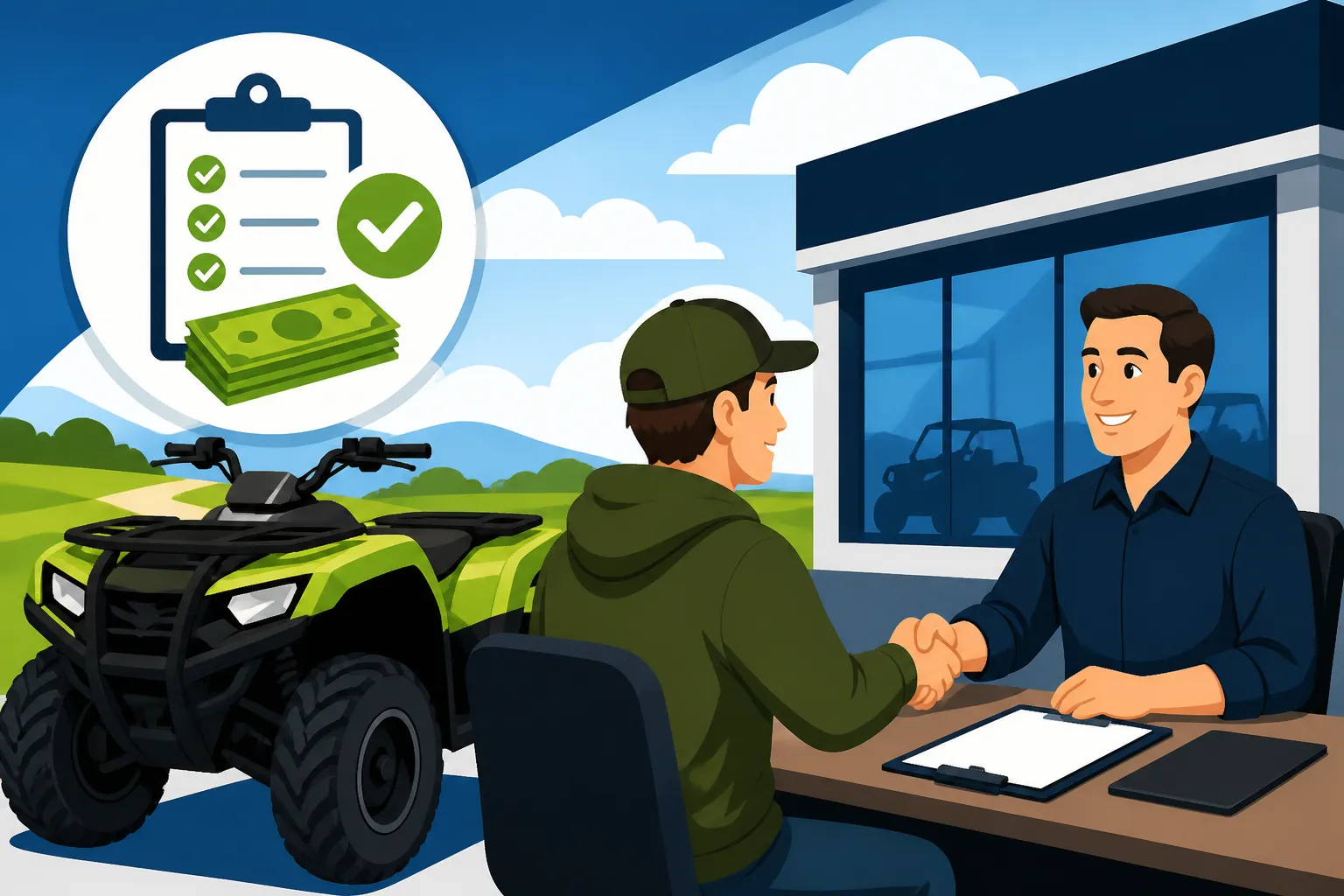
Walking into a dealership, you're not just looking at machines; you're also looking at a comprehensive buying experience. For many, that includes the convenience of in-house financing. It’s designed to be a one-stop shop, streamlining the path from admiring a shiny new quad to signing on the dotted line and hitting the trails. But like any significant financial decision, it pays to understand the mechanics behind it.
How Dealership Financing Generally Works
When you decide to finance your ATV or UTV through a dealership, you'll typically work closely with their finance manager. This individual acts as a go-between, connecting you with various lenders rather than directly lending you money from the dealership's own pocket. These lenders can range from major national banks to specialized finance companies, including "captive" finance arms associated with specific ATV or UTV manufacturers.
The process usually starts with a credit application. You'll provide personal and financial information, which the finance manager then submits to their network of lenders. Each lender will review your credit history, income, and debt-to-income ratio to determine your creditworthiness and the terms they're willing to offer. The beauty of this system is its speed; often, you can get approved for a loan on the spot, sometimes even within minutes, allowing you to drive (or haul) your new machine home the same day. This convenience is a huge draw for many buyers who want to avoid the hassle of visiting multiple banks or credit unions themselves.
Advantages and Disadvantages of Financing Through the Dealer
Dealer financing certainly has its appeal, but it's important to weigh both the good and the less-than-ideal aspects before making a commitment.
Advantages:
- Convenience: This is perhaps the biggest draw. You can pick out your machine, get approved for a loan, and complete all the paperwork in one location. No need to run around town to different financial institutions.
- Special Offers and Promotions: Dealerships often partner with manufacturers to offer promotional interest rates, deferred payment plans, or cash-back incentives that are only available if you finance through them. These can sometimes translate into significant savings or more manageable initial payments.
- One-Stop Shopping: Everything from the sales agreement to the financing contract, and even adding on accessories or extended warranties, can be handled by a single point of contact.
- Streamlined Process: Finance managers are experts at navigating the paperwork and dealing with various lenders, which can make the whole experience smoother, especially if you're new to financing large purchases.
Disadvantages:
- Potentially Higher Interest Rates: While promotional rates exist, sometimes the standard interest rates offered through a dealership's network might be higher than what you could secure from a local credit union or bank if you shopped around independently.
- Limited Lender Options: A dealership will only work with its established network of lenders. This means you might not get access to every potential loan product or the absolute lowest rate available in the broader market.
- Pressure to Add Extras: Finance managers often have incentives to sell additional products like extended warranties, GAP insurance, or aftermarket accessories, which can inflate your loan amount and monthly payment. It's crucial to understand what you're paying for and whether you truly need it.
- Focus on Monthly Payment: Sales and finance teams often focus on the monthly payment figure. While important, a low monthly payment achieved through a longer loan term can mean paying significantly more interest over the life of the loan. Always look at the total cost.
Understanding Loan Terms and Agreements
Once you're approved for financing, you'll be presented with a loan agreement. This document is the bedrock of your financial commitment, and understanding its components is absolutely critical. You'll see terms like the Annual Percentage Rate (APR), which is the true cost of borrowing, expressed as a yearly rate. It includes your interest rate plus any fees. The loan term (e.g., 36, 48, 60 months) dictates how long you'll be making payments. A longer term generally means lower monthly payments but more interest paid overall.
You'll also see the total amount financed, the monthly payment, and the total cost of the loan over its entire term. Take the time to read every line, ask questions about anything you don't understand, and never feel rushed. This is a legally binding contract, and once you sign, you're committed. While the dealer provides all the necessary documentation, the sheer volume can be daunting. For individuals who want to feel more empowered by understanding the legal structure of contracts or need to prepare their own simple legal documents for other aspects of their life, resources like LawDepot offer templates and guides. Familiarity with general legal forms can make reviewing your loan agreement feel less like reading a foreign language.
The Application Process and What to Prepare
Getting approved for a loan to buy your dream ATV or UTV doesn't have to be a stressful ordeal. Like many things, preparation is key. Knowing what to expect and what documents to bring can smooth the path to financing success.
Essential Documents to Bring
When you head to the dealership, it’s always a good idea to have certain documents ready. This will speed up the application process and show the finance manager that you're a serious and organized buyer.
Here's a checklist of what you'll typically need:
- Valid Photo Identification: Your current driver's license or state ID is essential for verifying your identity. Remember, [Nebraska Requires a Class O License or Farm Permit] to operate certain machines on public roads, so having a valid license is often part of the identification process for financing.
- Proof of Income: Lenders want to ensure you can comfortably make your payments. This might include recent pay stubs (typically two or three), tax returns if you're self-employed, or bank statements showing regular deposits.
- Proof of Residency: Documents like a utility bill, a lease agreement, or a mortgage statement that clearly shows your current address will verify where you live.
- Trade-in Information (If Applicable): If you're trading in an existing ATV, UTV, or even a different vehicle, bring its title. The title needs to be clear of any liens, or you'll need to know the payoff amount for your current loan. A quick call to your current lender can get you that figure.
- Insurance Information: While often arranged after purchase, having your current auto insurance policy details handy can sometimes help, as some providers offer multi-vehicle discounts, and lenders often require proof of insurance before you can take possession of the machine, especially if you plan on using it on a public road where [Nebraska Requires Liability Insurance on Roads].
Beyond these documents, your credit history plays a huge role. Lenders will pull your credit report to see your payment history, outstanding debts, and overall credit score. A strong credit score generally opens the door to better interest rates and more favorable loan terms. If your credit isn't perfect, don't despair – many lenders work with a range of credit profiles, though your terms might not be as competitive.
What Happens After You Submit Your Application
Once you've handed over your information, the finance manager gets to work. They'll typically submit your application to several different lending partners in their network. This results in a "hard inquiry" on your credit report, which can temporarily lower your score by a few points, though the impact is usually minimal.
What you're hoping for is a quick decision. Many approvals are instantaneous or happen within a few hours. Lenders will evaluate your application based on your credit score, debt-to-income ratio, and the loan amount requested. You might receive conditional approval, meaning the loan is approved but contingent on a few final details, such as proof of income or a valid trade-in title.
Sometimes, if your credit profile is on the border, the finance manager might need to do some extra legwork, negotiating with lenders on your behalf to find an acceptable offer. This is where their experience and relationships with various financial institutions can truly benefit you.
The Role of Trade-Ins and Down Payments
When financing a new ATV or UTV, trade-ins and down payments can significantly impact your loan structure and overall cost.
Trade-Ins: Trading in your existing machine or another vehicle can be a fantastic way to reduce the amount you need to finance. The value of your trade-in is applied directly to the purchase price of the new machine. This not only lowers your monthly payments but also reduces the amount of sales tax you'll pay in Nebraska, as the sales tax is calculated on the net price after the trade-in. Make sure you understand how [Nebraska Trade-In Credit at Titling] works when discussing values with the dealer.
Down Payments: Even if you have a trade-in, making a cash down payment is almost always a smart move. A larger down payment reduces the principal amount of the loan, which means you'll pay less interest over the loan's life. It can also lead to lower monthly payments, a shorter loan term, and potentially even qualify you for better interest rates because you're seen as less of a risk to the lender. Think of it as a clear signal of your commitment to the purchase. For those considering their total financial commitment, factoring in the down payment alongside other initial costs like [Nebraska ATV Title Cost] and insurance is crucial.
Beyond the Basics: Important Considerations Before You Sign
Before you get swept up in the excitement of taking your new off-road machine home, it's vital to step back and examine the full picture of your purchase. Dealer financing involves more than just the monthly payment; there are other costs and options to consider that will affect your wallet for years to come.
The "Out-the-Door" Price and Hidden Costs
One of the biggest pitfalls for new buyers is focusing solely on the sticker price or the monthly payment without understanding the true "out-the-door" price. This is the total cost of the machine, including all fees and taxes, that you'll pay before you drive away.
Here are some common additional costs to look out for:
- Sales Tax: In Nebraska, you'll pay state sales tax on your ATV or UTV purchase, and sometimes local sales tax depending on where you live. This tax is typically collected by the County Treasurer when you go to title the machine, not by the dealer directly. It's a significant amount, so be sure to budget for it. [Nebraska Sales Tax Paid at Titling] will give you more details on this.
- Titling and Registration Fees: Every ATV and UTV in Nebraska needs a title. There's a fee for this, along with potential fees if you choose to register it in certain cities that have local ordinances. This might seem like a small amount compared to the machine itself, but it adds to your total. For more on this, check out [Nebraska Title Cost in Your Total].
- Dealer Documentary (Doc) Fees: Many dealerships charge a "doc fee" to cover the cost of preparing and processing all the paperwork associated with your purchase. While these fees are common, their amounts can vary significantly. It's perfectly acceptable to ask what this fee covers. Understanding [Nebraska Dealer Documentary Fees] is key to recognizing what you're paying for.
- Freight and Setup Charges: If you're buying a new machine, there are often charges for shipping it from the manufacturer to the dealership (freight) and for assembling it, performing pre-delivery inspections, and filling it with fluids (setup or prep). These should be itemized.
- Extended Warranties: Dealers will often offer extended service plans or warranties. While these can provide peace of mind, they come at an additional cost and aren't always necessary. Evaluate the manufacturer's standard warranty first.
- GAP Insurance: Guaranteed Asset Protection (GAP) insurance covers the "gap" between what you owe on your loan and what your insurance company will pay if your ATV or UTV is stolen or totaled. It's often recommended if you're financing a large portion of the machine's value, especially if it depreciates quickly.
Always ask for a detailed breakdown of all costs to ensure there are no surprises. Get the full "out-the-door" price in writing before you commit.
Comparing Dealer Offers to Outside Lenders
While dealer financing offers convenience, it's wise to shop around. Getting a pre-approval from your personal bank or a local credit union before you visit the dealership puts you in a stronger negotiating position.
Credit unions, in particular, often offer very competitive rates because they are member-owned. You can learn more about these options by looking into [Nebraska Credit Union Loan Rates]. Having an outside offer in hand gives you a benchmark. If the dealership can beat or match it, great! If not, you have an alternative. This strategy allows you to separate the buying decision from the financing decision, empowering you to choose the best option for both your machine and your budget. Remember, a financing offer from an outside lender might also provide insight into [Financing With Fair Credit in Nebraska] for future reference.
Protecting Your Investment: Insurance and Warranties
Once you've decided on your financing, don't overlook the importance of protecting your new asset. Insurance and warranties are key components of responsible ATV/UTV ownership.
- Insurance: While not required for all ATV use, if you plan to operate your machine on any public roads in Nebraska, liability insurance is a must. Even if you only ride on private land, comprehensive and collision coverage can protect your investment against theft, damage, or accidents. Since your machine is financed, the lender will likely require you to carry full coverage to protect their interest. This is a recurring cost that should be factored into your [Nebraska Cost of Ownership Year One].
- Warranties: New ATVs and UTVs come with a manufacturer's warranty, which covers defects for a specific period. Extended warranties, offered by dealers or third parties, can prolong this coverage. Consider the cost versus the potential repair expenses. For example, a reliable machine might not need an expensive extended warranty, but one known for specific issues might benefit from it.
Life After Financing: Managing Your ATV/UTV Loan
Congratulations, you've got your new machine and a financing plan in place! But the journey doesn't end there. Understanding how to manage your loan, what happens with your title, and what your options are down the road is just as important as the initial purchase.
Understanding Your Lien and Title
When you finance an ATV or UTV, the lender holds a lien on the machine. This means they have a legal claim to the property until the loan is fully paid off. In Nebraska, this lien will be noted directly on your ATV's title, identifying the lending institution as the lienholder. This is a critical detail, as the lender retains the right to repossess the machine if you fail to make your payments.
You won't receive a "clean" title (one without a lien) until the loan is satisfied. When the loan is paid off, the lender will send a lien release, which you'll then need to take to your local County Treasurer's office to get a clear title issued in your name. For more detailed information on this, check out [Nebraska Title and Lien Records]. It's a good practice to keep track of your loan statements and ensure the lien is removed promptly once you've made your final payment.
Early Payoffs and Refinancing Options
Life changes, and so can your financial situation. You might find yourself in a position to pay off your ATV or UTV loan early, or you might discover a better interest rate elsewhere.
- Early Payoffs: Most ATV/UTV loans do not have prepayment penalties, meaning you can pay off the loan ahead of schedule without incurring extra fees. Paying off your loan early saves you money on interest charges over the remaining term. It's a great way to reduce your debt and gain full ownership of your machine sooner. Always confirm with your lender if there are any prepayment penalties when you sign your loan agreement.
- Refinancing: If interest rates drop, or your credit score significantly improves after you've taken out your initial loan, you might be able to refinance. Refinancing involves taking out a new loan, often with a lower interest rate, to pay off your existing loan. This can lower your monthly payment or reduce the total interest you'll pay. It's worth exploring if you see a substantial improvement in market rates or your personal credit profile.
What Happens When You Sell a Financed Machine
Selling an ATV or UTV that still has a lien on it is a common process, but it requires a few extra steps compared to selling a machine with a clear title. The key is coordinating with your lender.
Typically, when you sell a financed machine, the buyer's funds (or a portion of them) are used to pay off your outstanding loan balance. Once the lender receives the full payoff amount, they release the lien, and then a clear title can be issued to the new owner. This often involves a three-way transaction: the buyer pays the seller, the seller immediately pays the lender, and the lender then sends the lien release. Sometimes, the buyer's lender will send funds directly to your lender to simplify the process.
It's crucial to ensure that the lien is fully released and the title transferred correctly to avoid any legal headaches for both you and the buyer. This is a point where clear documentation, like what LawDepot offers templates for, can be helpful if you're ever involved in a private sale where you need to clearly document the exchange and lien release process. Understanding this process is also why [Nebraska Buying From a Private Seller in Nebraska] can sometimes have its own unique set of paperwork requirements. Planning ahead and communicating clearly with your lender and the buyer will ensure a smooth transaction.
Disclaimer
This article is for general informational purposes only and does not constitute professional advice. Laws, prices and regulations vary by location and change over time. Consult a qualified professional for guidance on your specific situation.