Hauling a Machine to the National Forest at Halsey
Hauling your ATV or UTV out to the vast, sandy trails of the Bessey National Forest at Halsey is an exciting prospect, promising wide-open spaces and unforgettable rides. But let's be real: the logistics of getting your machine there, especially if you're traveling from across the state, can feel like a daunting puzzle. There are so many questions that pop up, from how to properly secure your pride and joy on a trailer to what paperwork you absolutely need to have on hand. This guide is here to untangle all those worries, breaking down everything you need to know to ensure your journey to Nebraska's only national forest is as smooth and stress-free as the ride itself.
Getting Your Machine Road-Ready for the Haul to Halsey
Before you even think about hitching up the trailer, a little proactive preparation of your ATV or UTV can save you a world of trouble and potential damage on the road. It's not just about protecting your machine; it's about ensuring a safe journey for everyone on the highway. Think of this as your pre-flight checklist, making sure every component that matters for transport is buttoned down and secure.
Essential Pre-Trip Checks for Your ATV/UTV
Just like you'd check your truck before a long road trip, your ATV or UTV needs its own once-over before it hits the highway on a trailer. Start with the tires – not just the trailer tires, but your machine's tires too. Make sure they’re properly inflated to the manufacturer’s recommendations. While they won't be spinning on the asphalt, correctly inflated tires help the machine sit properly on the trailer, reducing bounce and strain on your tie-downs. Plus, you’ll want them ready to roll once you unload at Halsey. Inspect the tread for any damage or excessive wear, especially if you’re planning on tackling the sand dunes; a blown tire on the trail is no fun at all.
Next, give your machine a quick look-over for any fluid leaks. A small puddle of oil or coolant under your ATV at home might be an easy fix, but imagine that dripping down the highway onto someone’s windshield. It’s an avoidable mess and a sign something might need attention before subjecting your machine to hours of vibrations. Check your oil level, coolant, and brake fluid just to be sure everything is topped off. If you spot any suspicious drips, it's a good idea to address them before your trip. You'll also want to make sure your battery is securely fastened in its tray and fully charged. Road vibrations can loosen connections, leading to electrical issues or even a dead battery when you're ready to start riding.
Lastly, and this is a big one, identify all the secure points on your ATV or UTV where you can attach tie-down straps. Manufacturers usually design frames with strong points specifically for transport. Avoid hooking straps onto control arms, plastic bodywork, or anything that isn’t a solid, structural part of the frame. Any loose items on your machine should be removed or securely stowed. This includes things like fuel cans, toolboxes, coolers, or even spare helmets. Imagine hitting a bump at 70 mph and a cooler flying off your trailer – not only is it a hazard, but it’s a costly loss for you. A little time spent securing everything beforehand saves you a massive headache later.
Securing Your ATV or UTV for the Journey
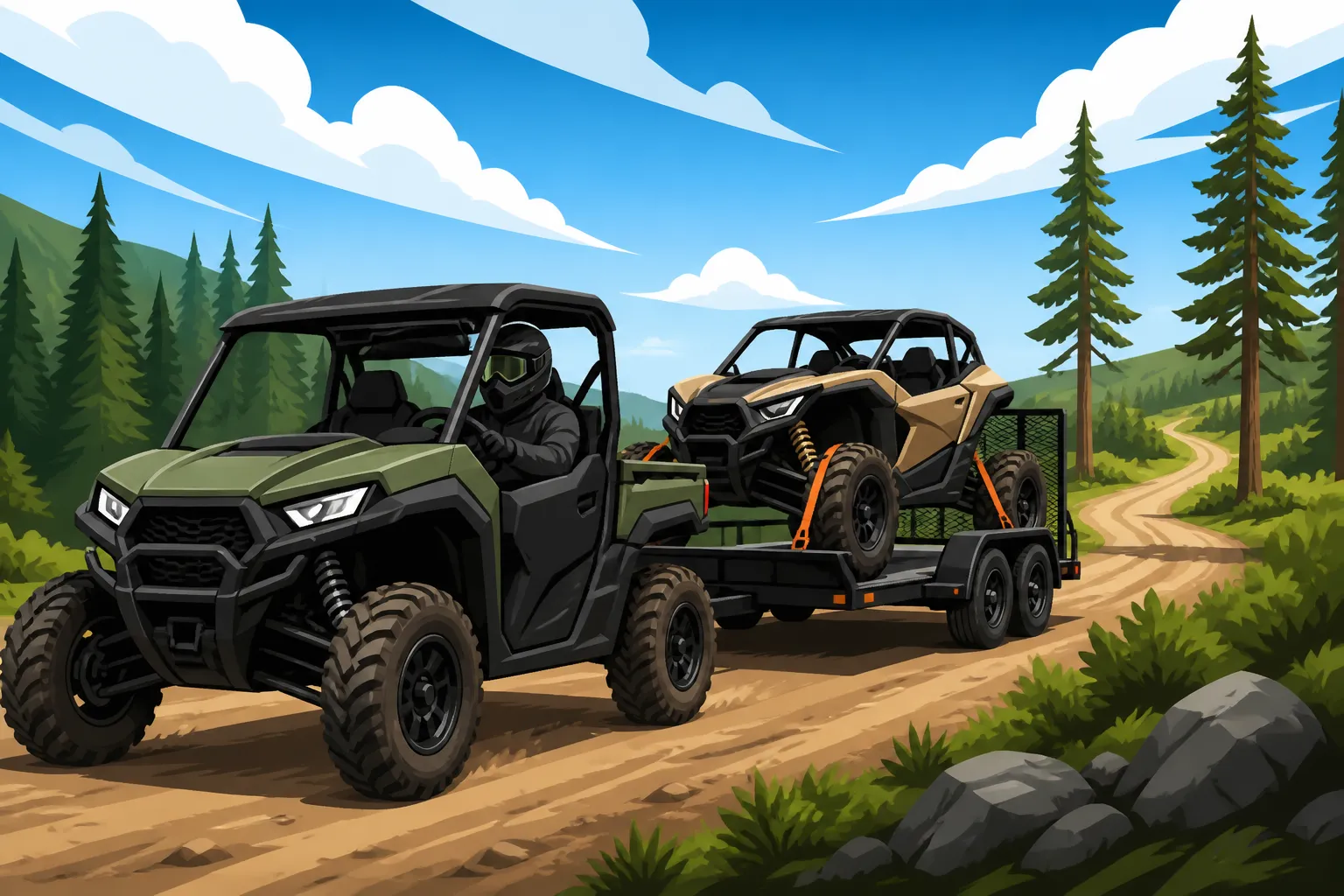
Once your machine is prepped, it's time to get it onto the trailer and locked down tight. The type of trailer you use – whether an open utility trailer or an enclosed cargo trailer – will influence your specific tie-down strategy, but the principles of secure transport remain the same. For open trailers, which are very popular for ATVs and UTVs, ensure it's in good condition. Check the trailer tires for proper inflation and tread depth, and test all the trailer lights – brake, turn signals, and running lights – before you leave. A burned-out bulb could earn you an unwanted roadside chat with law enforcement. Don’t forget to check your hitch connection and safety chains, making sure they’re properly crossed under the hitch and secured to your tow vehicle.
When it comes to tie-downs, invest in high-quality ratchet straps with a sufficient working load limit for your machine's weight. Don't skimp here; cheap straps can fail, leading to disaster. Load your ATV or UTV onto the trailer, aiming for proper weight distribution. Generally, about 60% of the weight should be in front of the trailer’s axle(s) to create positive tongue weight on your tow vehicle, which helps prevent trailer sway. Secure the machine from all four corners, pulling the straps outward and downward at opposing angles. This "cross-strapping" technique locks the machine in place, preventing it from shifting side-to-side or front-to-back.
Many experienced riders recommend compressing the suspension slightly when securing your machine. This minimizes the ATV's own suspension movement during transit, reducing the stress on the straps. You don't want to bottom out the suspension, but a slight compression means less bouncing and less chance for straps to loosen. Double-check all your straps once they’re tightened. Give them a good tug and look for any slack. It’s also wise to pull over after the first 10-15 miles of driving to re-check everything. Straps can settle and loosen slightly with initial road vibrations, and a quick re-tighten ensures peace of mind for the rest of your drive. Remember, your ultimate goal is for the ATV or UTV to become one with the trailer, moving as a single unit down the highway.
Navigating Nebraska's Rules for Transporting Off-Road Machines
While the focus might be on the fun of riding, getting your machine legally to its destination involves understanding a few Nebraska laws regarding trailers and towing. These aren't just suggestions; they're legal requirements that keep everyone safe on the road and help you avoid unnecessary fines or delays.
Understanding Trailer Licensing and Titling in Nebraska
One of the most common questions folks have when hauling their ATV or UTV is about the trailer itself. In Nebraska, utility trailers, which is what most people use to haul their off-road machines, do need to be titled and registered. This isn't like your ATV, which Nebraska titles but does not register for road use. The state sees the trailer as a road vehicle in its own right, and as such, it requires its own plate and registration. You'll need to head to your local County Treasurer's office to take care of this, much like you would for a car or truck. The process involves presenting proof of ownership for the trailer – typically a Manufacturer's Statement of Origin (MSO) for a new trailer or a previous title for a used one – and paying the applicable fees and sales tax.
The specific rules can sometimes vary slightly depending on the trailer's weight. However, for most trailers capable of hauling an ATV or UTV, you can expect to need a valid title and registration. This means displaying a current license plate on the rear of the trailer. It’s a good idea to check with your County Treasurer if you have any specific questions about your particular trailer, especially if it’s an older model or one you've brought in from out of state. Having the correct documentation for your trailer is just as important as having it for your tow vehicle. Imagine getting pulled over for a simple check and finding out your trailer isn't legally on the road – that could definitely put a damper on your Halsey riding plans. For more specifics, you might find information on [Does a Utility Trailer Need Its Own Plate?] helpful.
Beyond the plate, consider insurance for your trailer. While your tow vehicle's liability insurance typically extends to cover damage caused by a trailer, it usually won't cover damage to the trailer itself or its contents (your ATV/UTV). If you've invested in a nice enclosed trailer, or if you're hauling a brand-new side-by-side, you might want to consider adding specific coverage for the trailer and its cargo to your auto or even your ATV insurance policy. A quick chat with your insurance agent can clarify your options and ensure you're fully protected against unforeseen events on your journey to the [Bessey OHV Trails at Halsey in Nebraska]. It’s all part of being a responsible owner and rider.
Vehicle Requirements for Towing
Your tow vehicle is the workhorse of this operation, and making sure it's up to the task is paramount for safety and legality. First and foremost, you need to know your vehicle's towing capacity. This figure, usually found in your owner's manual or on a sticker inside the driver's side door jamb, is the maximum weight your vehicle can safely tow. This isn't just the weight of your ATV/UTV; it includes the weight of the trailer itself, all your gear, and anything else loaded onto the trailer. Exceeding this limit can put undue stress on your engine, transmission, and brakes, potentially leading to costly damage or, worse, a dangerous situation on the road.
For heavier trailers, especially those with more than one axle or those carrying heavier UTVs, a brake controller might be a necessity. Many modern trucks come with integrated brake controllers, which allow you to activate the trailer's brakes from your tow vehicle, providing much-needed stopping power and stability. If your truck doesn't have one and your trailer has electric brakes, you'll need to have one installed. This isn't just a comfort feature; it's a critical safety device, especially when descending hills or in emergency braking situations. Always test your brake controller and trailer brakes before you head out on a long trip.
Lastly, don't overlook visibility. When you're towing a wide ATV or UTV, especially on an open trailer, your standard side mirrors might not give you an adequate view of what's behind and alongside your trailer. This is where towing mirrors come in handy. These extended mirrors provide a broader field of vision, allowing you to see vehicles in your blind spots and safely change lanes. Many accessory mirrors simply clip onto your existing mirrors, making them an easy and relatively inexpensive safety upgrade. Remember, seeing clearly around your entire rig is crucial for safe driving, particularly on busy highways or when navigating tight turns on county roads leading to Halsey.
What to Expect When You Arrive at the Bessey Ranger District
The journey is a big part of the adventure, but the real fun begins when you pull into the Bessey Ranger District. Knowing what to expect upon arrival, from where to park to what permits you might need, will make your transition from traveler to rider seamless.
Parking and Staging at the Bessey OHV Trails
The Bessey Ranger District is well-equipped to handle OHV enthusiasts, offering designated parking areas specifically for trucks and trailers. When you pull in, look for signs directing you to these staging areas. They are typically spacious, allowing plenty of room to maneuver your trailer and safely unload your ATV or UTV. The last thing you want to do after a long drive is struggle to find a spot or block traffic while you're unstrapping your machine. Plan to arrive a bit earlier if you can, especially on a busy weekend, to give yourself ample time and space to get set up without feeling rushed.
Once you’ve found your spot, carefully unload your machine. This is where all that careful strapping pays off – unratchet the straps and ease your ATV or UTV off the trailer. Make sure your tow vehicle is parked in a spot that isn't obstructing any trails or other parking areas. It's common courtesy and helps maintain a smooth flow of traffic for other riders. While Bessey is primarily focused on OHV trails, it is still a national forest, so expect to see other users like campers or hikers. Sharing the space respectfully is key.
Regarding fees and permits, there's often a parking fee for day use at the Bessey Recreation Complex. This fee helps maintain the trails and facilities you're about to enjoy. You can usually pay at a self-service kiosk or a ranger station if one is open. Consider whether an annual pass might be more economical if you plan on visiting Halsey multiple times throughout the year. While your ATV itself won't need a state permit to ride here, your tow vehicle will likely need a Nebraska Park Permit if you plan to use areas beyond just the trailhead parking. However, the forest itself generally has its own fee structure for recreation. Be sure to check the specific requirements for the Bessey Ranger District before you go, as things can sometimes change. [What the Bessey Parking Fee Covers] can shed more light on this. Also, be aware that while Nebraska doesn't register ATVs, you still need to be mindful of all the rules and regulations for riding in the [Bessey's 36 Miles in Nebraska] trail system.
Essential Documents and Safety Gear for Riding
Once your machine is off the trailer and you're ready to hit the dirt, there are a few final checks and items to consider. First, always carry some form of proof of ownership for your ATV or UTV. While Nebraska doesn't require registration for off-road use, having a copy of your title or a bill of sale can be crucial if questions arise about ownership. While you typically won't be asked for it unless there's an incident, it's always better to be prepared. A simple printed copy stored in a waterproof bag in your machine’s storage compartment is usually sufficient. Think of it as your machine’s identification. You might find our post on [Carrying Your Title Copy on a Ranch Road] useful for understanding why this is important even off the pavement.
Next, prioritize safety gear. While Nebraska doesn't have a statewide helmet law for ATVs on private land or designated trails, it is an absolute must for your protection. A DOT-approved helmet, eye protection (goggles or a face shield), sturdy boots, long pants, and long sleeves are highly recommended. The sand at Halsey can kick up a lot, and a stray branch can whip you at speed. Proper gear not only protects you from injury but also from the elements. Don't let a preventable injury cut your riding day short.
Lastly, make sure your ATV or UTV is equipped with a spark arrestor. This is a common requirement for off-road machines operating on public lands, including national forests. A spark arrestor is a device that prevents hot carbon particles from exiting your exhaust and potentially igniting dry vegetation – a critical fire prevention measure, especially in Nebraska's dry conditions. Check your exhaust to ensure it has one, and that it's in good working order. Rangers do perform checks, and riding without one can result in a fine. For more details, see [Does a National Forest Check Your Spark Arrestor?]. Remember, while [Nebraska Has No OHV Permit or Sticker] for the machine itself, these safety and ownership precautions are still vital.
Tips for a Great Riding Experience at Halsey
You've made the journey, you've prepped your machine, and you're ready to explore. To make your time at the Bessey National Forest truly memorable, a few extra tips on trail etiquette and safety planning will go a long way.
Trail Etiquette and Environmental Responsibility
Riding at Halsey is a privilege, and preserving this unique resource for everyone means adhering to good trail etiquette and environmental responsibility. One of the golden rules is to always stay on marked trails. The Bessey National Forest has a well-established trail system, and riding off-trail can damage fragile ecosystems, disturb wildlife, and lead to erosion. It also helps prevent you from getting lost in unfamiliar terrain. Follow all posted signs and respect any areas that are designated as closed or restricted.
Another crucial aspect of responsible riding is the "pack it in, pack it out" principle. Whatever you bring onto the trails – water bottles, snack wrappers, fuel containers – must leave with you. Do not leave any trash behind. Litter detracts from the natural beauty of the forest and can be harmful to wildlife. Consider carrying a small trash bag with you to collect any refuse you generate, or even a bit that you might find left by others. Every little bit helps keep our trails clean.
Be mindful of noise. While ATVs and UTVs certainly aren't silent, excessive revving or aftermarket exhausts that exceed legal sound limits can be disruptive to other trail users, campers, and wildlife. [Nebraska Sound Limits on Public Land] are in place for a reason, aiming to strike a balance between recreation and preserving the peaceful enjoyment of the forest. Ride respectfully, especially when passing hikers, horseback riders, or other OHV groups. Always yield to non-motorized users, giving them plenty of space and reducing your speed. A friendly wave goes a long way in fostering good relations between different types of trail enthusiasts.
Planning Your Ride and Staying Safe
Before you head out on the trails, take a few minutes to plan your route. Even with designated trails, it's easy to get turned around, especially in the sprawling, sandy landscape of Bessey. Always check the current [Nebraska Trail Conditions Before You Tow] and any specific closures. Conditions can change rapidly due to weather, so knowing what to expect can help you choose appropriate trails for your skill level. Pick up a paper map from the ranger station if available, or download one to your phone that works offline. Don't rely solely on cell service out there; large parts of the National Forest have spotty or non-existent coverage. Being prepared for [Planning for No Cell Service on a Forest Ride] is a smart move.
Pack wisely for your ride. Even a short loop can turn into a longer adventure, and having essentials makes all the difference. Carry plenty of water, snacks, and a basic first-aid kit. Even if you're riding with a group, each person should have at least some personal supplies. Consider what you would need if you were separated from your group or if your machine broke down far from the trailhead. A multi-tool, tire repair kit, and a small shovel can be invaluable. For more detailed advice, read our article on [Packing a First Aid Kit for a Long Loop]. Dressing in layers is also a good idea, as temperatures can fluctuate throughout the day in Nebraska.
Finally, never ride alone, especially in an unfamiliar area like Bessey. Riding with a buddy or in a small group is much safer. If something goes wrong, you have immediate help. Before you leave the staging area, let someone know your general route and your expected return time. This is a basic but critical safety measure. Always ride within your skill level, and don't push yourself or your machine beyond its limits. The goal is to have a fantastic time exploring the unique beauty of the Nebraska National Forest, and a little planning and common sense will ensure you do just that.
Disclaimer
This article is for general informational purposes only and does not constitute professional advice. Laws, prices and regulations vary by location and change over time. Consult a qualified professional for guidance on your specific situation.