Insuring a Machine That Has No Plate
It’s a common moment for many folks around Nebraska: you’ve just brought home your shiny new (or new-to-you) ATV or UTV, and you’re buzzing with excitement. But then a thought niggles at the back of your mind: "Hold on, this thing doesn't have a license plate. How in the world do I even go about insuring a machine that seemingly doesn't have official 'road' status?" This guide is here to untangle that very question, helping you understand the unique insurance landscape for off-road vehicles in the Cornhusker State, and ensuring you’re protected whether you’re hitting the trails, working the farm, or just enjoying a weekend ride.
The Nebraska Reality: Why Your ATV/UTV Doesn't Get a Plate
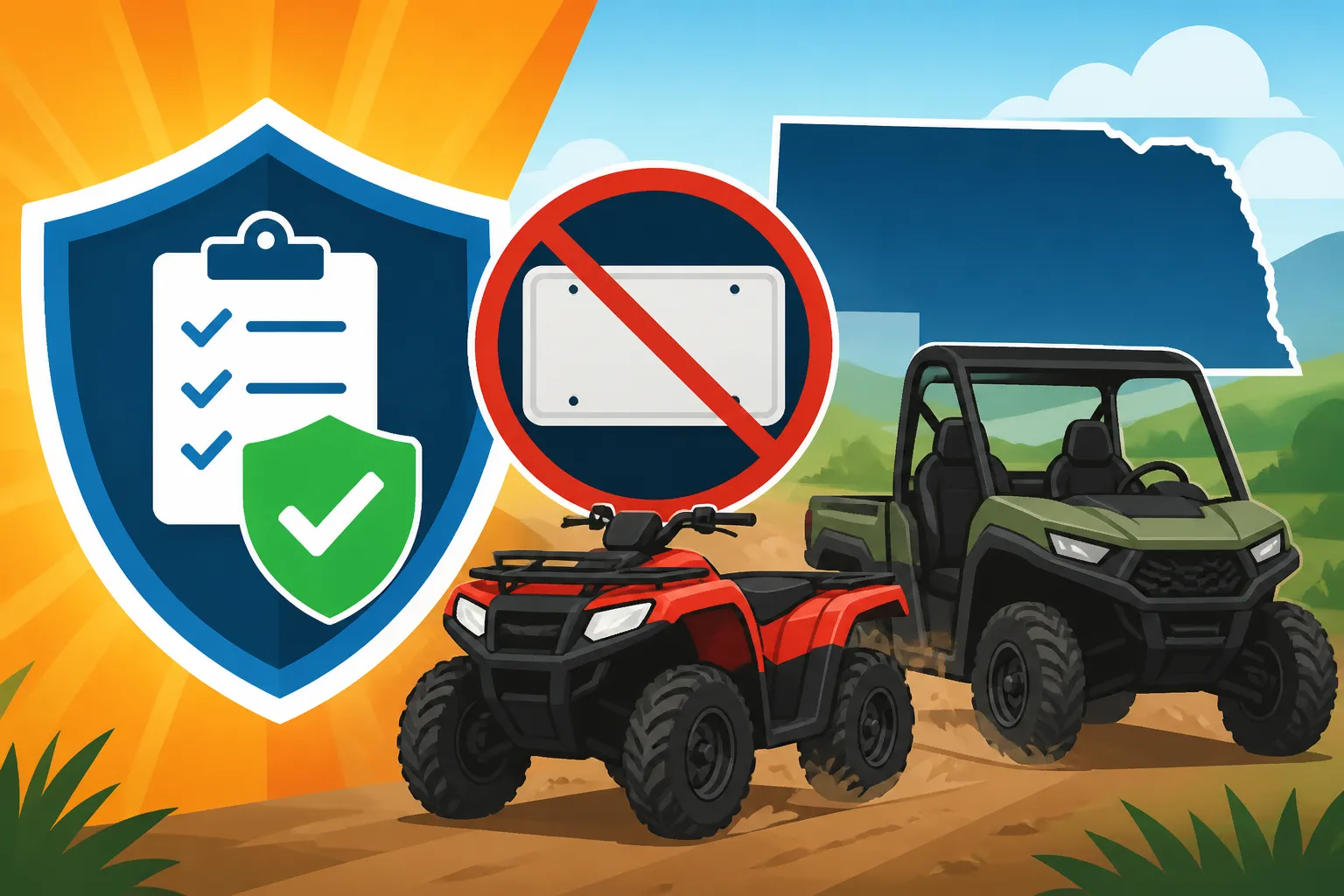
First things first, let’s clear up a major point of confusion for many new ATV and UTV owners in Nebraska. Unlike your car or truck, your all-terrain vehicle or utility terrain vehicle does not, under normal circumstances, receive a traditional license plate for street use from the state. This is a consistent aspect of Nebraska law, which often surprises those moving from other states or those new to the off-road vehicle world. You see, while your machine absolutely needs a title – and yes, [Nebraska Titles ATVs but Does Not Register Them] – that title doesn't come with a corresponding registration sticker or metal plate like a regular road vehicle.
The distinction between titling and registration is critical here. Titling is about establishing legal ownership. It's proof that the machine belongs to you, much like a deed for a house. This process is handled by your local county treasurer's office, and it's where you'll also pay any applicable sales tax, as [Nebraska Sales Tax Collected at Titling] outlines. Without a title, proving ownership can become a nightmare, especially if your machine is ever stolen or involved in an incident. But this titling process doesn't magically grant your ATV or UTV permission to cruise down Main Street with a license plate.
The reason for this "no plate" status boils down to how Nebraska generally classifies these machines. For the most part, ATVs and UTVs are considered off-highway vehicles (OHVs), intended for recreational or utility use off of public roads. This primary designation means they aren't equipped or designed for consistent, legal road travel, and thus, don't fall under the same registration requirements as a car. This is why [Why a Titled ATV Still Has No Plate] is such a fundamental concept for Nebraska riders to grasp. It's not an oversight; it's a deliberate legal framework.
Understanding Nebraska's "Not To Be Registered" Notation
When you finally receive your shiny new Nebraska ATV title, you might notice a specific notation on it. It often states something to the effect of "Not To Be Registered" or "Not For Highway Use." This isn't a mistake; it's a direct reflection of the state's stance on these vehicles. This notation serves as a clear indicator that the vehicle is not intended for regular road registration and subsequent plate issuance.
This specific wording can sometimes be a bit alarming for new owners, making them wonder if they've bought a machine that's somehow limited or incomplete. Rest assured, this is perfectly normal for ATVs and UTVs titled in Nebraska. It simply reinforces the state's legal classification. While it might seem counterintuitive to title something that won't be registered, remember the primary purpose: ownership proof. Should you ever need to sell your machine, having a clean title is absolutely essential, and forms like those found on sites like LawDepot can assist in creating a clear [Nebraska Title After a Private Sale], even for a machine with this notation.
The "Not To Be Registered" label also serves as a legal cue for law enforcement and potential buyers about the vehicle's intended use. It helps prevent confusion and ensures that everyone understands the machine's primary function is off-road. Even if you plan on using your UTV primarily for farm work or crossing a county road occasionally, this notation will still be present on your title because it's the standard for the vehicle class.
When Is Insurance Absolutely Necessary in Nebraska for a Platelss Machine?
While your ATV or UTV won’t have a plate, there are very specific instances where carrying insurance isn't just a good idea, it's the law. Nebraska's rules are quite clear when it comes to operating these machines on public roads, even for short distances. Ignoring these requirements can lead to fines and legal headaches you absolutely want to avoid.
The biggest trigger for mandatory insurance is road use. If you plan to operate your ATV or UTV on a public road in Nebraska, even for a quick jaunt to a neighbor's farm or to cross a highway, you must have liability insurance. This isn't optional. [Nebraska Requires Liability Insurance on Roads] is a critical piece of legislation that all riders must be aware of. This insurance is designed to cover damages or injuries you might cause to another person or their property while operating your machine on a public thoroughfare.
Think about it this way: if you’re involved in an accident on a county road, and you're at fault, that liability coverage is what protects you from potentially catastrophic financial burdens. Without it, you could be personally responsible for medical bills, property damage, and legal fees. Even if you only ride your machine on roads for agricultural purposes, such as [Nebraska Machines Used Only on a Farm] for checking fences or moving equipment, that agricultural exception usually requires you to meet the same road-use insurance requirements.
Understanding Minimum Liability Coverage for Road Use
When we talk about "liability insurance" for road use, we're talking about specific minimum coverage amounts. These figures are set by state law and dictate the bare minimum your policy must provide if you’re deemed at fault in an accident. Currently, [Nebraska Insurance Minimums Today] typically requires what's often referred to as "25/50/25" coverage:
- $25,000 for bodily injury liability per person
- $50,000 for total bodily injury liability per accident
- $25,000 for property damage liability per accident
These minimums are important to know, but many experienced riders and legal professionals will tell you that they are often quite low for today's costs. A serious accident can easily exceed these amounts, leaving you on the hook for the difference. While these are the legal minimums, it's often wise to consider higher coverage limits if you anticipate any road use at all. When drafting legal documents or agreements related to vehicle use, having clear knowledge of these minimums is vital, and resources like LawDepot can provide templates that help ensure all parties understand their obligations.
It's also worth noting that these rules apply to any public road or highway, not just paved ones. Gravel county roads, for instance, are still public roads, and operating your ATV or UTV on them falls under these same insurance mandates. So, if you're riding a county road, even if it's just for a short stretch, you need to be properly insured. Understanding [Nebraska Rules for Riding a County Road] goes hand-in-hand with understanding your insurance obligations.
Special Circumstances for Local Road Use
Beyond state law, some local municipalities in Nebraska have their own ordinances regarding ATV and UTV use on their streets. While these ordinances might open up certain city streets to off-road vehicles, they almost universally come with the condition of carrying liability insurance. These local rules often mirror the state's minimums, but it's always smart to check with your specific city or village if you plan to ride within its limits.
For example, a town might pass an ordinance allowing ATVs on specific city streets, but they will invariably require proof of insurance. This is a common stipulation because the risk of an accident on a public street, even a quiet one, necessitates financial protection for all involved. Therefore, if you're thinking about taking advantage of any local ordinances that permit street riding, make absolutely sure your insurance policy is up to snuff.
The key takeaway here is simple: if your machine ever touches a public road surface in Nebraska, insurance moves from a "should have" to a "must have."
The Smart Choice: Why Voluntary Insurance is Almost Always a Good Idea
Now, let's talk about the vast majority of ATV and UTV use in Nebraska: off-road. If you're riding exclusively on private land, trails, or areas where public road access is strictly prohibited, you are generally not legally required to carry insurance. However, this is where the conversation shifts from legal necessity to plain old common sense and risk management. Trust me, as someone who’s seen a few bumps and scrapes in my day, voluntary insurance for your plateless machine is one of the smartest investments you can make.
Think about the value of your machine. Whether it's a few thousand dollars or well into the five figures, it represents a significant asset. Without comprehensive and collision coverage, if you roll your ATV on a sandy dune at Halsey or collide with a tree on a private trail, you’re looking at paying for all those repairs out of your own pocket. These machines can be expensive to fix, and parts don’t come cheap. That’s where voluntary policies really shine.
Beyond protecting your own investment, there's the ever-present risk of liability. What if you accidentally injure a friend while riding on private land? Or what if you cause damage to someone else's property, even inadvertently, like knocking over a fence on a neighbor's property while trying to turn around? Your homeowners insurance might offer some limited coverage, but it's often specifically excluded for motorized vehicles, or the limits are far too low for real-world scenarios. A dedicated ATV/UTV insurance policy offers crucial liability protection that extends beyond public road requirements, safeguarding your assets in those "what if" situations.
Types of Voluntary Coverage Worth Considering
When you're looking at insuring your machine for voluntary coverage, you'll encounter a few key types. These are designed to give you peace of mind, no matter where you ride:
- Collision Coverage: This pays for damage to your ATV or UTV resulting from a collision with another object or vehicle, or if it overturns. If you’re often tackling challenging terrain or just prone to the occasional mishap, this is a lifesaver.
- Comprehensive Coverage: This is your "everything else" protection. It covers damage to your machine from non-collision events, such as theft, vandalism, fire, natural disasters (like hail or floods), or hitting an animal. Given the rise in theft of recreational vehicles, having [Nebraska Theft Coverage in a Shed] or garage is becoming increasingly important.
- Uninsured/Underinsured Motorist (UM/UIM) Coverage: While less common for off-road vehicles that don't primarily operate on public roads, some policies offer this. If you are hit by another ATV/UTV rider who is at fault and either has no insurance or insufficient insurance, this coverage can help with your medical bills and property damage.
- Medical Payments (MedPay): This coverage helps pay for medical expenses if you or your passengers are injured in an accident, regardless of who is at fault. It's a quick way to get medical bills paid without waiting for a fault determination.
Consider your riding habits, where you store your machine, and your financial comfort level. For many, bundling comprehensive and collision coverage offers the most complete protection. The relatively modest annual premium can prevent a massive financial hit if something goes wrong.
The Value of Personal Liability for Off-Road Use
Even if you exclusively ride on your own land or with permission on private property, personal liability coverage from a dedicated ATV/UTV policy is incredibly valuable. Imagine a scenario where a rider on your property (perhaps a friend or family member) has an accident involving your machine, or you're riding someone else's land with permission and accidentally damage their property. Your standard home insurance policy may not extend coverage to these specific situations involving motorized vehicles, leaving you personally exposed.
An ATV/UTV policy can bridge this gap. It provides liability coverage that protects you in these unique off-road scenarios, ensuring that if you are found responsible for injury or property damage, your policy is there to help cover the costs. This layer of protection is often overlooked but can be the difference between a minor inconvenience and a significant financial setback. It helps to have all your ducks in a row with proper documentation, too. If you ever loan out your machine, or allow someone to ride on your property, a simple waiver or agreement form (which can be found through services like LawDepot) could establish clear expectations and protect you, working hand-in-hand with your insurance policy.
Navigating Insurance Options and What to Expect
Finding the right insurance for your Nebraska ATV or UTV doesn't have to be a complicated maze. Most major insurance providers offer policies tailored specifically for off-road vehicles, even those without a plate. The key is to be clear about your needs and ask the right questions.
The cost of your ATV/UTV insurance will vary widely based on several factors: the type of machine you own (quad vs. side-by-side, engine size, new vs. used), where you live, your driving record (even for off-road vehicles), the coverage limits and deductibles you choose, and any discounts you might qualify for. For example, if you already have your auto or homeowners insurance with a particular company, you might get a multi-policy discount. Some companies even offer discounts for completing a recognized ATV safety course. Expect to pay an annual premium, which can vary significantly, so it’s always a good idea to get multiple quotes. For a general idea of costs, you can look into [Nebraska Insurance Cost Per Year], but remember these are estimates and your specific situation will dictate the actual premium.
When you're shopping for insurance, be very upfront with the agent about how and where you use your machine. Do you primarily use it for farm work? Are you a recreational rider hitting trails like the Bessey OHV Trails? Do you ever use it for short trips on county roads? Providing accurate information ensures you get the correct coverage and helps avoid any issues should you ever need to file a claim.
Key Factors That Influence Your Premium
Several elements play a significant role in determining how much you’ll pay for your ATV or UTV insurance in Nebraska. Understanding these can help you make informed decisions:
- Type of Machine: A high-performance sport quad or a large, multi-passenger side-by-side will generally cost more to insure than a smaller, utility-focused ATV. The replacement value and repair costs are higher for more expensive, complex machines.
- Engine Size: Larger engines often correlate with higher premiums, as they can be associated with greater power and speed, and thus, perceived higher risk.
- Age and Riding Experience: Younger riders or those with less experience might face slightly higher premiums. Some insurers may even have age restrictions or require supervision for youth riders.
- Claims History: A history of previous claims, whether for your ATV or other vehicles, can lead to higher rates.
- Storage Location: Where you store your machine can impact theft risk. A locked garage or shed is generally seen as safer than an open carport or driveway.
- Deductibles: This is the amount you pay out-of-pocket before your insurance kicks in for a claim. Choosing a higher deductible typically lowers your premium, but means more out-of-pocket expense if you have an accident.
When setting up your policy, carefully consider your deductible. If you pick a $1,000 deductible to save on your monthly premium, but then have a minor accident that costs $800 to fix, your insurance won't pay anything. Balance your deductible with what you can comfortably afford in an emergency.
Here's a quick comparison of common coverage types for your Nebraska ATV/UTV:
| Coverage Type | What It Covers | When It's Mandatory (Nebraska) | Key Benefit |
|---|---|---|---|
| Liability | Damages/injuries you cause to others/their property | On public roads/highways | Protects your assets from lawsuits |
| Collision | Damage to your ATV/UTV from a crash | Never (Voluntary) | Pays for repairs to your machine after an accident |
| Comprehensive | Damage from theft, fire, vandalism, natural events | Never (Voluntary) | Protects against non-crash damage/loss |
| Uninsured/Underinsured Motorist | Your costs if an at-fault party lacks insurance | Never (Voluntary) | Covers you if another rider can't pay |
| Medical Payments | Medical expenses for you/passengers after an accident | Never (Voluntary) | Quick payment for immediate medical needs |
What to Bring to Your Insurance Agent
When you’re ready to get a quote or set up a policy, having some information handy will make the process much smoother. Here’s a checklist of what you’ll likely need:
- Vehicle Identification Number (VIN): This unique 17-digit code is crucial for identifying your specific machine. You'll find it on your title, often stamped on the frame of your ATV or UTV.
- Make, Model, and Year: Basic information about your machine.
- Proof of Ownership: Your title is the best way to show you own the machine. While your machine doesn't have a plate, the title is your undisputed legal proof.
- Information on Primary Riders: Names, dates of birth, and driver’s license numbers for anyone who will regularly operate the ATV/UTV.
- Usage Details: Be ready to describe how and where the machine will primarily be used (e.g., recreational trail riding, farm work, occasional road crossings).
Even though your machine has no plate, insuring it wisely is a cornerstone of responsible ownership in Nebraska. Whether it's for mandated road use or smart protection for your off-road adventures, taking the time to understand your options will give you peace of mind as you hit the dirt.
Disclaimer
This article is for general informational purposes only and does not constitute professional advice. Laws, prices and regulations vary by location and change over time. Consult a qualified professional for guidance on your specific situation.