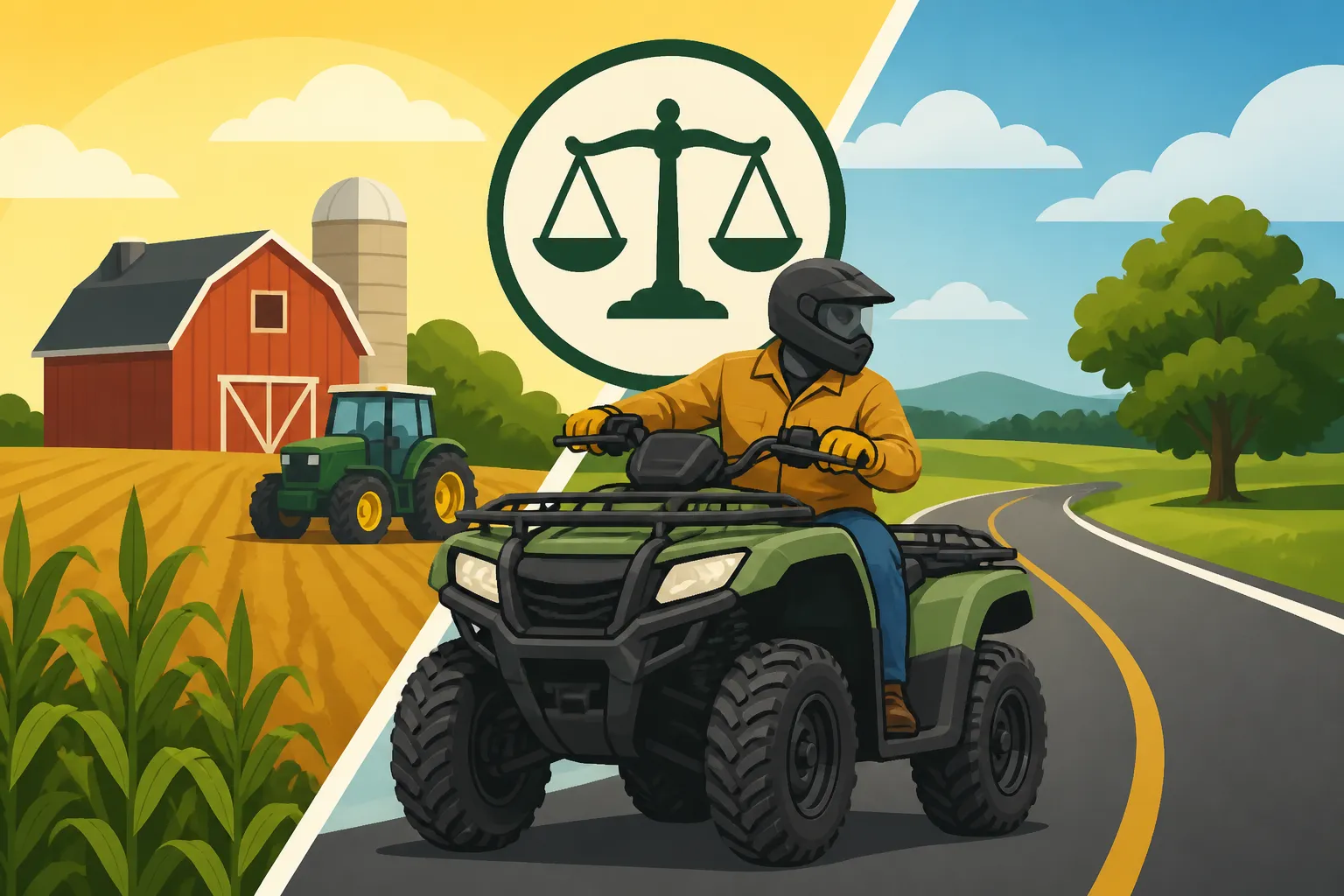
Why the ATV Road Law Was Written Around Farming
Navigating the rules for riding ATVs and UTVs on Nebraska roads can be incredibly confusing and frustrating for many riders. You might see machines out working fields or crossing gravel roads, yet hear that ATVs aren't "street legal." This guide is here to shed light on exactly why Nebraska's ATV road laws are primarily written with farming and agricultural use in mind, clearing up the common misconceptions and helping you understand the specific exceptions that allow these machines on public roadways.
The Agricultural Heart of Nebraska's ATV Road Law
It's no secret that agriculture is the backbone of Nebraska. From the sprawling cornfields to the vast Sandhills ranches, farming and ranching are integral to our state's identity and economy. When it came time to draft legislation regarding off-highway vehicles (OHVs) on public roads, lawmakers naturally looked at the practical needs of the agricultural community first. They weren't necessarily thinking about joyriding down Main Street or commuting to the grocery store on a quad. Instead, the focus was on enabling farmers and ranchers to efficiently perform their daily tasks without unnecessary legal hurdles. This foundational principle explains much of what we see in the law today.
Historically, many farm operations have relied on smaller, versatile vehicles to move between fields, check livestock, or transport tools across short distances. Before ATVs and UTVs became widespread, farmers might have used pickups or even tractors for these tasks. As ATVs and side-by-sides grew in popularity, they presented an ideal, more agile solution for many of these chores. Lawmakers recognized this evolving need and crafted regulations to accommodate these essential agricultural uses, understanding that banning them entirely from public roads would create significant operational challenges for a vital industry.
Why Farmers and Ranchers Needed Road Access
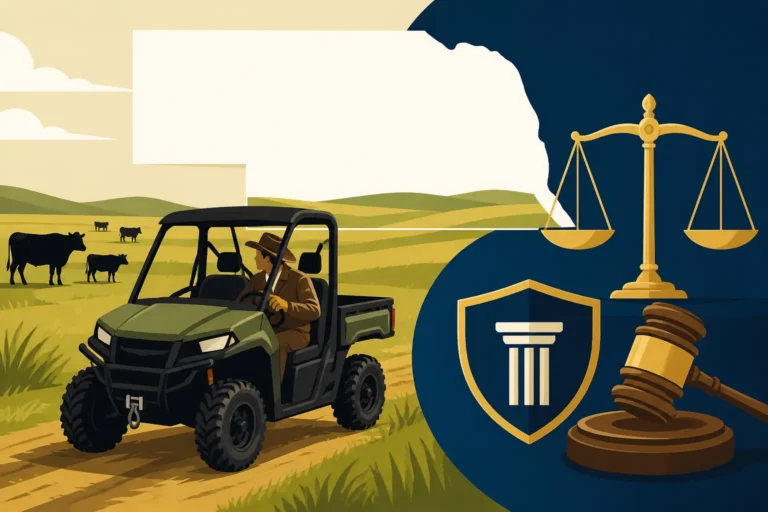
Imagine a farmer needing to move from one section of their field to another, just across a county road. Or a rancher who checks fences across several pastures, requiring them to briefly use a gravel road to get to the next gate. Without specific provisions, every one of these practical, necessary trips would be illegal. The law was designed to prevent this kind of impediment to agricultural productivity. It was about creating a functional framework that acknowledged the reality of modern farming operations.
For example, a farmer might use a utility side-by-side, perhaps outfitted with accessories from a company like SuperATV for heavy-duty hauling, to pull a small sprayer across a local road to reach a different part of their property. Or a ranch hand might ride a quad along a section line road to check on cattle, a much more efficient method than taking a truck when navigating rough terrain or muddy conditions. These aren't recreational uses; they are integral parts of the workday. The legislative intent was to legalize these specific, work-related movements, recognizing them as distinct from general recreational riding on public roads. This focus means that while some states have extensive street-legal kits and processes, Nebraska's approach is much narrower.
Understanding Nebraska's Agricultural Road Exception
The core of Nebraska's ATV road law, specifically as it applies to agricultural use, is found in the state statutes, notably sections that define permissible road operation. This "agricultural exception" is the key difference between what many other states allow and what is permitted here. It's not a blanket allowance for all ATVs on all roads, but a carefully defined exception for specific purposes. [Nebraska's Agricultural Road Exception] is critical for anyone who uses their machine for farm or ranch work.
What Qualifies as Agricultural Use?
Defining "agricultural purposes" is paramount. The law generally refers to using an ATV or UTV for activities directly related to farming, ranching, or other agricultural operations. This can include:
- Moving between fields: Transporting the machine or necessary tools from one part of a farm to another.
- Checking crops or livestock: Riding along a road to visually inspect fields, fences, or animals. [Is Checking Cattle an Agricultural Trip Under the Law?] often comes up as a specific example.
- Hauling materials: Transporting feed, supplies, or equipment related to farm work.
- Snow removal: Plowing snow on private agricultural property, which might involve crossing a road to access different parts of the property.
- Maintenance: Traveling to maintain farm equipment or structures.
It’s important to understand that "agricultural use" is generally interpreted quite strictly. Taking your ATV into town to pick up groceries, even if you are a farmer, typically would not fall under this exception. The trip's primary purpose must be directly agricultural. If you're using a utility UTV, perhaps with a rugged winch or cargo bed liner from SuperATV, for hauling feed for your cattle, that's clearly agricultural. If you're taking that same UTV to the lake for a weekend fishing trip, it's not.
Specific Legal Requirements for Agricultural Road Use
Even when an ATV or UTV is being used for agricultural purposes, there are still specific rules that must be followed. These aren't just suggestions; they are legal requirements designed to ensure safety and prevent accidents on public roads. Ignoring them can lead to citations, even if your machine is technically being used for farm work. [Nebraska ATV Road Rules Under 60-6,356] covers many of these specifics.
For instance, machines used on public roads for agricultural purposes often need to be equipped with certain safety features. This typically includes adequate lighting, especially if operating near dusk or dawn, and sometimes a safety flag. [Why Road-Legal ATVs Need a 5-Foot Safety Flag] is a common question, and it's all about visibility for other motorists. Additionally, operators must typically hold a valid driver's license or a farm permit. [Nebraska Requires a Class O License or Farm Permit] if you're going to be on the road. And yes, liability insurance is required when operating on a public road, even for agricultural use. [Nebraska Requires Liability Insurance on Roads] to protect against potential accidents.
These requirements highlight that the agricultural exception isn't a free pass. It's a conditional allowance that demands operators meet specific safety and legal benchmarks, acknowledging the inherent risks of mixing off-highway vehicles with standard road traffic.
How the Law Limits General Road Use and Recreational Riding
The emphasis on agricultural use in Nebraska's ATV laws means that general, recreational road riding is largely prohibited. This is often where riders, especially those new to the state or those coming from areas with more permissive laws, become confused. You might hear the phrase "Nebraska has no street legal ATVs," and while there are very specific exceptions for certain cities or villages, for the most part, this statement holds true for the state's public roads and highways. [Can You Drive an ATV on the Road in Nebraska?] provides more context on this overall restriction.
The Absence of a Statewide Registration for Road Use
One of the clearest indicators of Nebraska's stance on recreational road use is the absence of a statewide ATV registration system that would allow general road access. While ATVs are titled in Nebraska—a process handled by [Nebraska County Treasurers Handle ATV Titles]—this title specifically includes the notation "NOT TO BE REGISTERED." [Nebraska's Not To Be Registered Notation] is printed right there on your ownership document, making it clear that the state doesn't issue a license plate or sticker for street use. This is a fundamental difference from how cars, trucks, and even motorcycles are handled, which are registered and plated for road travel.
This lack of registration for road use means there's no official mechanism for a recreational rider to obtain a "street legal" status for their ATV or UTV on a statewide level. The title process is solely for proving ownership and collecting sales tax. [Why a Titled ATV Still Has No Plate] is a direct consequence of this legislative approach, prioritizing ownership tracking over road access.
Limited Exceptions: City Ordinances and Designated Areas
While the state law is restrictive, there are some very limited exceptions that can allow ATVs and UTVs on public roads in specific, localized areas. These exceptions are typically at the municipal level, where individual cities or county boards for unincorporated villages can pass ordinances to open certain streets or sections of roads. [Nebraska City Ordinances That Open Streets] are a prime example of this local control.
However, these city or village ordinances come with their own set of rules and limitations. They often require local registration, specific safety equipment (beyond what's needed for agricultural use), and may restrict speeds, hours of operation, or even the specific roads that can be used. It's never a case of "anything goes." For instance, a small town might allow UTVs on its residential streets during daylight hours, provided the vehicle has turn signals, a horn, and the operator purchases a special permit from city hall. These are hyper-local allowances, and they don't change the statewide rule that ATVs generally aren't street legal on Nebraska's state highways or county roads outside of the agricultural exception.
It’s crucial for any rider considering street use in such an area to thoroughly research the specific local ordinance. What's allowed in one village might be strictly prohibited in the next. Always check with the local city clerk or county office before planning to ride your ATV on any public road, even if you see others doing it.
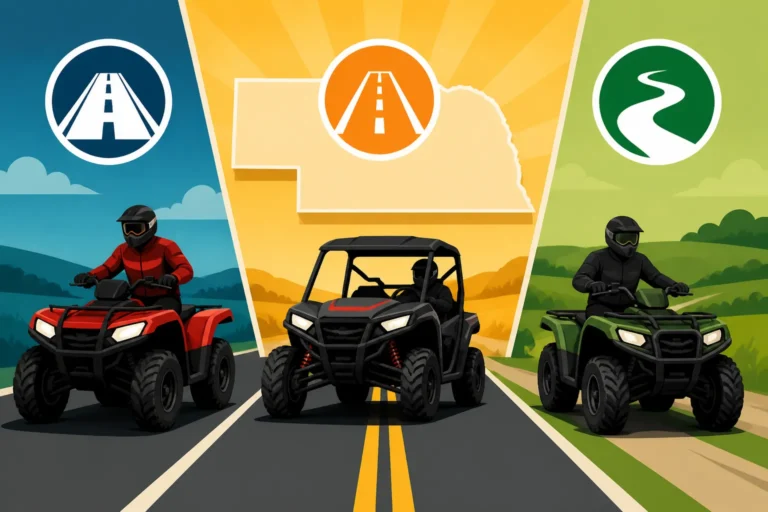
Here's a quick comparison to help visualize the general differences:
| Feature | Agricultural Road Use (State Law Exception) | General Recreational Road Use (Statewide) | City/Village Ordinance (Local Exception) |
|---|---|---|---|
| Primary Purpose | Farm/Ranch Work | Prohibited | Varies by ordinance, often recreational/local travel |
| Title Required? | Yes, but "Not To Be Registered" | Yes, but "Not To Be Registered" | Yes, but "Not To Be Registered" |
| State Registration/Plate? | No | No | No (state), but local permit/registration often required |
| Driver's License Needed? | Yes (or farm permit) | N/A (prohibited) | Yes (often Class O) |
| Liability Insurance? | Yes | N/A (prohibited) | Yes (often minimums apply) |
| Safety Flag Required? | Often for visibility | N/A (prohibited) | Varies by ordinance |
| Speed Restrictions | Reasonable for conditions | N/A (prohibited) | Yes (e.g., 30 mph) |
| Roads Permitted | County roads, some state roads (conditions apply) | Generally prohibited | Specific city streets/alleys defined by ordinance |
In essence, Nebraska's ATV road law isn't about promoting widespread recreational street riding. It's a pragmatic recognition of the agricultural industry's needs, carving out specific, conditional exceptions to facilitate essential farm and ranch operations. For everyone else, the general rule remains: keep your rides off the public roads unless you're in a specific locale with a valid and researched ordinance.
Navigating the Nuances: What This Means for You
For a typical ATV or UTV owner in Nebraska, understanding this agricultural focus is key to staying out of trouble. It shapes where and how you can ride legally. While the agricultural exception is vital for those working the land, it does leave recreational riders with limited options for road access. This means you need to be extra diligent about where you ride and ensure you're always on private property with permission, or in designated off-road riding areas.
Riding Beyond Agricultural Settings
If your primary use for an ATV or UTV isn't farm or ranch work, then your options for legally riding on public roads are extremely limited. You won't be able to simply add a turn signal kit from a company like SuperATV and expect your machine to become street legal statewide. The law just isn't written that way. Your best bet for recreational riding will be:
- Private Property: With express permission from the landowner. This is the most common and straightforward way to enjoy your machine legally.
- Designated OHV Parks and Trails: Places like the Bessey OHV Trails at Halsey or Cedar Run ATV Trail are specifically designed and managed for off-highway vehicle use. These areas provide legal, safe places to ride without needing to worry about road legality.
- Local Ordinances: As discussed, a few specific cities or villages have passed their own rules allowing UTVs (and sometimes ATVs) on certain streets. Always verify these rules directly with the local municipality.
Ignoring these distinctions can lead to significant fines, impoundment of your machine, and other legal consequences. Law enforcement agencies in Nebraska are generally well-versed in the specifics of the state's ATV laws, and they do enforce them.
Planning Ahead for Legal and Safe Riding
Before you ever load up your ATV or UTV for a ride, spend some time understanding where you plan to go and the rules that apply. If you're using your machine for legitimate agricultural work, make sure you meet all the equipment requirements like lights and a safety flag, and that you have the proper licensing and insurance. If you're headed for a recreational ride, confirm it's on private land with permission or at a dedicated OHV park. There’s no [Nebraska Has No State Decal] that allows general road use, and that distinction is paramount.
It's clear that Nebraska's ATV road law is a product of its deep agricultural roots. While it provides essential flexibility for farmers and ranchers, it simultaneously reinforces the idea that, for most recreational enthusiasts, ATVs and UTVs are meant for off-road adventures, not cruising down public streets. Understanding this fundamental premise is the first step to enjoying your machine responsibly and legally in the Cornhusker State.
Disclaimer
This article is for general informational purposes only and does not constitute professional advice. Laws, prices and regulations vary by location and change over time. Consult a qualified professional for guidance on your specific situation.