Nebraska Riding Compared to Kansas
Choosing between Nebraska and Kansas for an ATV or UTV trip can be trickier than it looks: a route that seems close on a map may lead to a closed area, a private riding park, or trails with different machine rules. This guide compares the riding experience, terrain, access, and trip planning in both states so you can choose a destination that fits your machine and your group.
Nebraska and Kansas riding at a glance
The biggest difference is not simply which state has “more trails.” It is what kind of ride you want and how you plan to access it. Nebraska’s options include forest trails, sand, and riding areas near water, while Kansas trips may involve a designated riding area or a private park with its own admission and operating rules.
| What matters to your trip | Nebraska | Kansas |
|---|---|---|
| Typical trip planning | Check a specific trail or riding area and its land-manager rules | Identify whether the destination is public or privately operated, then check its rules |
| Riding experience | Options include forest trails, sandy terrain, and lake-area riding | The experience depends heavily on the destination, from designated ORV areas to private parks |
| Access considerations | Do not assume state parks allow ATV use; check the area’s rules | Do not assume a public-land trail is open to every machine; check access and vehicle limits |
| Navigation | Confirm trail routes, closures, and staging arrangements before hauling | Confirm the destination entrance, operating status, and admission details before leaving |
| Best fit | Riders looking for a particular Nebraska setting, such as forest or sand | Riders whose preferred destination and park rules match their machine and group |
Nebraska is a destination-by-destination riding state
Nebraska offers several distinct riding settings, but that does not mean every public recreation area is open to ATVs. The Bessey OHV trails near Halsey, for example, give riders a forest setting, while Cedar Run offers a different experience near Harlan County Lake. Flat Rock Riders OHV Park is another option, with a smaller, managed riding area. Each destination has its own character, so it helps to choose the ride first and plan the drive around it.
For an overview of potential places to start researching, see [Nebraska ATV Trails: Where to Ride]. Then look closely at the specifics for the destination you have in mind. [Bessey OHV Trails at Halsey in Nebraska] and [Cedar Run ATV Trail in Nebraska] are useful starting points if you are comparing forest riding with a lake-area outing.
One detail that surprises visiting riders is that Nebraska state parks are not a general ATV trail network. Before treating a park or recreation area as a possible riding destination, check the actual rules. [Nebraska State Parks Ban ATVs] explains why a scenic state park stop should not be confused with an authorized ATV trail.
Kansas trips depend on the destination you choose
Kansas is not one uniform riding experience either. A visit to a designated ORV area can differ substantially from a visit to a privately operated park. Tuttle Creek ORV Area near Randolph is one destination riders may investigate, while Kansas Rocks Recreation Park near Mapleton is a private riding venue. Their access arrangements, operating conditions, machine limits, and visitor expectations may not be the same.
That distinction matters when you are comparing a Kansas trip with a Nebraska public riding area. A private park may have an entry process, waiver, hours, or rules that apply specifically to its property. A public area may instead have land-manager requirements, designated routes, or closures. Confirm which kind of destination you are planning to visit before setting off, rather than relying on a general statement that “Kansas has trails.”
The same practical rule applies in either state: choose a named area, identify who manages it, and check that manager’s latest visitor information. If your group wants to ride without a particular kind of restriction, confirm that directly. A trail being shown on a map does not by itself prove that it is open to your ATV or UTV.
Compare terrain and the kind of ride you want
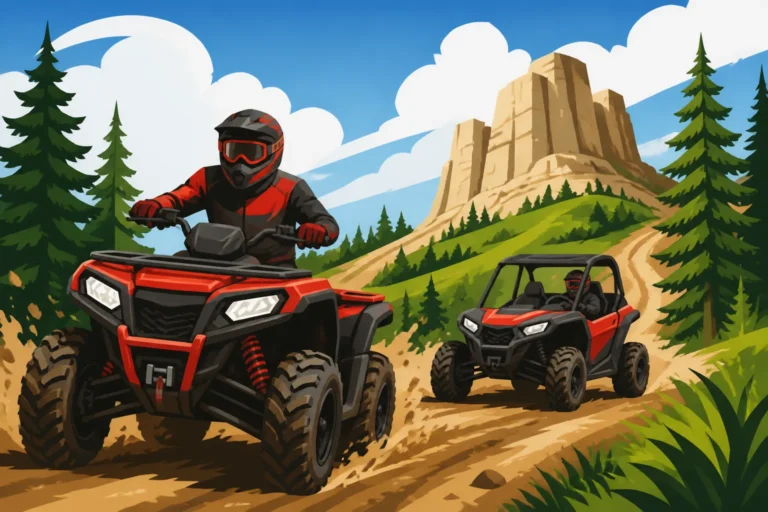
Terrain can make a bigger difference to your day than state lines do. Sand, forest trails, open prairie, hills, and rocky sections all affect speed, vehicle setup, comfort, and how much experience a rider needs. Think about what your group enjoys before choosing a destination based on distance alone.
Nebraska offers a mix of forest, sand, and water-area riding
Nebraska riders often compare destinations by their setting. Bessey’s forest trails can appeal to riders who want a wooded outing, while sand-focused riding calls for different preparation and a different approach to throttle control. Cedar Run’s lake-area location adds another kind of trip, where the riding area and staging arrangements are part of the experience.
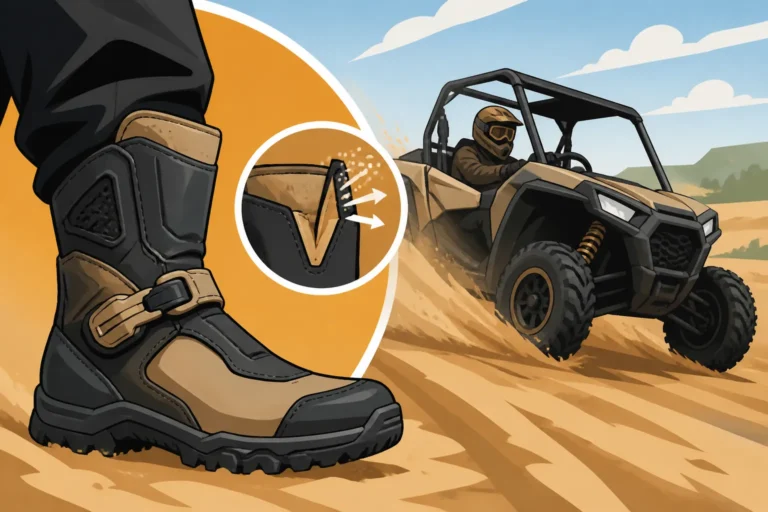
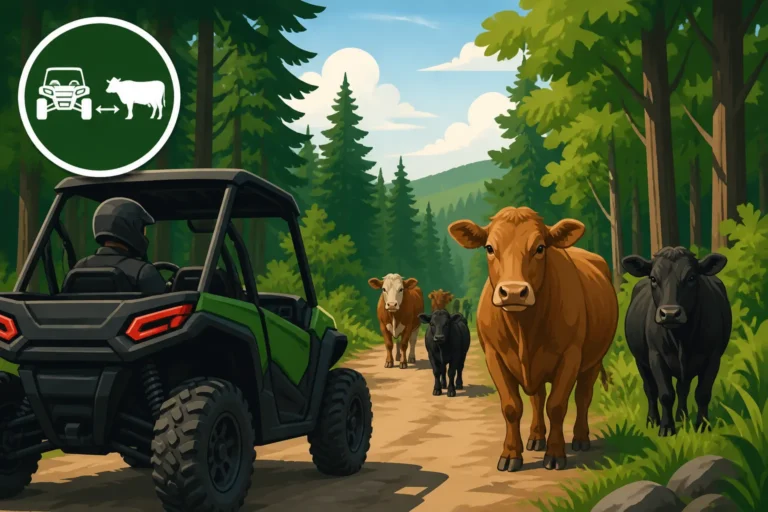
A forest ride and a sandy ride place different demands on machines and riders. Loose sand can make a machine work harder and may be tiring for someone who is new to it. Forest routes can bring narrower trails, changing surfaces, and the need to pay attention to other trail users. Neither setting is automatically easier; the right choice depends on your experience, machine, tires, and how long you plan to ride.
If sand is your priority, start with destination-specific information such as [Where You Can Legally Ride Nebraska Sand]. For a broader look at a forest destination, [Bessey's 36 Miles in Nebraska] can help you understand why riders may plan a longer outing around the Bessey area. Check current conditions before loading up, especially after weather that could affect trail surfaces.
Kansas may suit riders looking for a specific park or ORV area
Kansas can be a good fit when you have a particular destination in mind and its riding style matches your group. The important question is not just whether a place is in Kansas, but whether its terrain, route design, and machine rules suit the riders coming along. A private park may offer a more managed setting, while a designated ORV area may have a different layout and access process.
For newer riders, families, or groups bringing a mix of ATVs and side-by-sides, compare the actual permitted machines and trail difficulty before traveling. A route that is comfortable for an experienced rider on a compact quad may not work as well for a wider UTV or a young rider who is still learning. Ask about machine width, passenger rules, age requirements, and any required safety equipment when the area’s rules do not make those details clear.
Also be realistic about what you want from the day. If your group values a long ride through varied terrain, look for information about route length and trail connections. If the goal is a short outing with a defined riding area, a smaller or more managed destination could be a better match. Confirm those details with the operator or land manager rather than assuming that all riding areas offer the same kind of day.
Check access, vehicle rules, and conditions before you haul
A long drive with a trailer makes small oversights expensive in time and frustration. Before you leave, confirm that the destination is open, that your vehicle is allowed, and that you know where to unload. Rules and conditions can vary even between nearby riding areas, so a friend’s experience at one park may not apply to the place you are visiting.
Verify the rules for your specific ATV or UTV
Do not assume that rules for an ATV automatically apply to a side-by-side. Some destinations may distinguish between machine types, widths, passenger capacity, or approved routes. If you are bringing a UTV, check whether it is permitted on the routes you intend to ride. [Nebraska Trails That Allow Side-by-Sides] is a useful place to begin when researching Nebraska options, but confirm details with the specific trail manager before your trip.
In Nebraska, public-land rules and private-park rules are not interchangeable. The same distinction matters in Kansas. A private riding area can set operating requirements for its property, while a public destination may have rules tied to the land it occupies. [Nebraska Public Land Rules Compared to Private] can help clarify why the type of property matters when planning a ride.
Before the trip, make a short checklist:
- Confirm the area is open on your planned date.
- Check which ATV and UTV types are allowed and whether any routes have vehicle limits.
- Review age, passenger, helmet, waiver, and equipment rules.
- Find the correct entrance, staging area, and parking instructions.
- Check whether you need a permit, reservation, fee payment, or proof of insurance.
- Save the relevant rules and contact details where you can access them without cell service.
If a rule is unclear, ask the land manager or park operator before you arrive. It is far easier to resolve a question at home than at a gate after a trailer has been unloaded.
Check closures, weather, and navigation details
Trail conditions can change with rain, wind, seasonal work, or land-management decisions. A route that was open on a previous visit may not be open now, and a map can lag behind a closure. Check [Nebraska Trail Conditions Before You Tow] as part of your planning, then confirm the status of your chosen location through its official visitor information.
Digital trail tools can help you prepare, but they should support—not replace—checking the rules. Some riders use onX Offroad to review mapped routes and get a sense of the surrounding area before a trip. It can be especially useful when you are comparing trail locations or trying to understand the route between a staging area and a riding area. Still, verify access and closures with the land manager; a line on a digital map is not permission to ride.
Plan for weak or nonexistent cell service, particularly in more remote areas. Download or save useful information before leaving, and keep the destination address, entry instructions, and a backup route available offline. If your group splits up, agree on a meeting point and a time to check in. That simple preparation can prevent a minor navigation mix-up from becoming a stressful afternoon.
Choose the state that fits your group and trip
Once you know the terrain and access rules, the choice becomes more personal. A nearby destination is not always the best one if it does not fit your machine or the experience your group wants. Compare the full outing, including towing time, lodging, staging, and how much riding you expect to do.
Match the destination to riders, machines, and experience
For a group with different skill levels, look for clear information about trail difficulty and whether riders can choose routes that suit their comfort. A first-time rider may prefer a manageable route and a shorter day, while experienced riders may want varied terrain or longer loops. Do not plan the entire outing around the most confident person in the group; a ride that feels manageable to them may be exhausting or intimidating to someone newer.
Machine size deserves the same attention. A wide UTV may be welcome at one destination and restricted on some routes at another. A youth quad may also raise separate questions about age rules, supervision, and approved areas. Confirm those details for the exact place you plan to ride, not just for the state as a whole.
If a Nebraska destination is under consideration, [Flat Rock Riders OHV Park in Nebraska] offers another point of comparison with forest or lake-area trips. For route ideas closer to the state’s larger population centers, browse [Nebraska Trails Near Omaha] or [Nebraska Trails Near Lincoln], then check distance, access, and vehicle rules directly.
Compare the whole trip, not just the map distance
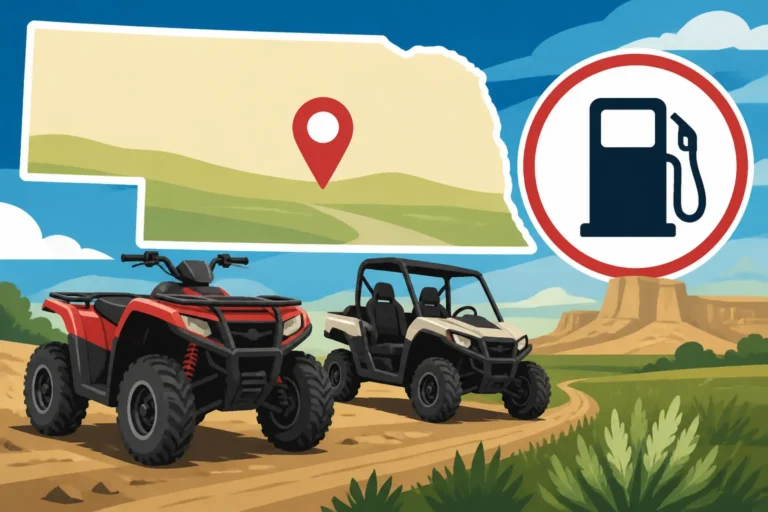
A useful comparison includes the ride, the drive, and the practical details around it. Estimate how long it will take to tow, whether your group needs a campsite or lodging, where you can refuel, and whether the destination has suitable parking or staging. A slightly longer drive may be worthwhile if the location offers the terrain and trail setup your group wants.
Think through a realistic day. If your group is leaving after work, arriving late, and setting up camp before riding, a destination with complicated check-in or uncertain access may not be ideal. If you are traveling with children or less experienced riders, a shorter first day gives everyone time to get comfortable with the area. For a larger group, agree in advance on who is bringing tools, water, first-aid supplies, and recovery equipment.
A navigation app such as onX Offroad can help you compare routes and get oriented, but build in time to verify trail access and current conditions. Do not rely on a route preview alone to determine whether a road, trail, or connecting segment is open to motorized use. Once you have confirmed the official information, save the route and key details so you are not trying to sort them out at the trailhead.
A simple decision process for your next ride
Use this process to narrow down Nebraska versus Kansas without getting stuck in endless map browsing:
- Choose the ride style. Decide whether your group wants forest, sand, water-area riding, a managed park, or another specific terrain type.
- Name a destination. Compare actual riding areas rather than comparing the states as a whole.
- Check machine fit. Confirm that your ATV or UTV is permitted and appropriate for the routes.
- Verify access. Check hours, closures, fees, permits, parking, and any private-property requirements.
- Plan for the group. Consider skill levels, passengers, youth riders, camping needs, and expected riding time.
- Prepare navigation and backup plans. Save information offline and know what you will do if weather or a closure changes the day.
If Nebraska’s forest, sand, or lake-area options fit what you want, start with a named Nebraska destination and verify its rules. If a Kansas area offers the terrain and access your group prefers, make the same checks there. In either state, a little confirmation before towing can prevent the most frustrating outcome: reaching the trailhead only to discover that your machine, route, or planned riding day does not fit the rules.
Disclaimer
This article is for general informational purposes only and does not constitute professional advice. Laws, prices and regulations vary by location and change over time. Consult a qualified professional for guidance on your specific situation.