Nebraska Machines Bought New After 2004
Buying a brand-new ATV or UTV in Nebraska can be an exciting prospect, full of visions of tearing up sand trails or tackling ranch chores. But before you hit the dirt, there's a crucial step that many new owners grapple with: titling your machine. This guide is specifically designed to walk you through the process of titling an ATV or UTV that was purchased new in Nebraska after 2004, a pivotal year that changed how these machines are legally recognized in our great state.
The Significance of the 2004 Titling Mandate for Newer Machines
If you've recently purchased a brand-new ATV or UTV, or are thinking about buying one that was originally sold new in Nebraska in 2005 or later, you're directly affected by a key piece of legislation that changed everything for off-road vehicle owners. Before 2004, many ATVs and UTVs operated in a legal gray area, often passed between owners with little formal paperwork. The state realized this created issues with tracking ownership, addressing theft, and ensuring consumer protection.
Why 2004 Became a Pivotal Year
Prior to July 1, 2004, the titling of ATVs and UTVs in Nebraska was largely optional or inconsistently applied, depending on how specific county offices interpreted rules. This led to a patchwork system where some owners had titles and others didn't, creating confusion and frustration for buyers and sellers alike. The lack of a clear statewide mandate meant that if you bought a machine new before that date, you might not have ever received an official title. This historical context is important because it means the process for older machines, or those purchased used that originated before 2004, can be quite different. Our state lawmakers recognized the need for a standardized system, similar to how cars and trucks are handled, to bring clarity and accountability to ATV and UTV ownership.
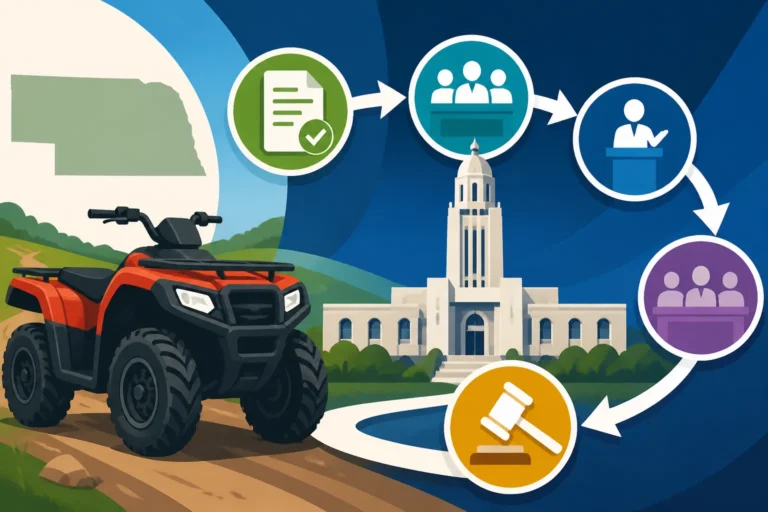
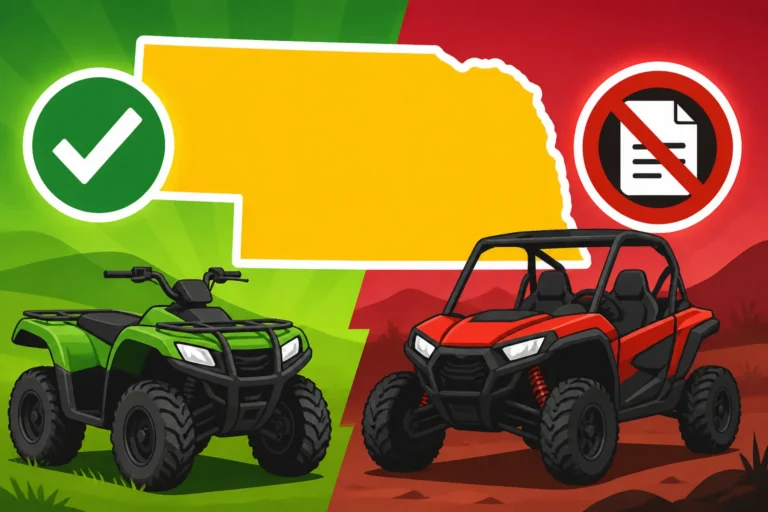
On July 1, 2004, a new law took effect, making it mandatory for all ATVs and UTVs sold new in Nebraska on or after that date to be titled. This wasn't just a suggestion; it became a hard and fast rule. The change meant that every new machine sold by a dealership from that point forward would be issued a Manufacturer's Statement of Origin (MSO), which is the first step towards getting an official title in your name. This mandate streamlined the ownership transfer process and provided a clear legal record for every qualifying machine. You can find more details on this historical shift in [Nebraska Titles Required Since 2004].
How the Law Impacts Your Newer Purchase
For you, the owner of a machine bought new after 2004, this law simplifies things significantly in one key way: your machine must have an official title. There's no question of whether it should or shouldn't; it's a legal requirement. When you buy a new ATV or UTV from a dealership today, the process of applying for your title will be initiated by the dealer, or you'll be given the necessary documents to complete it yourself at your local county treasurer's office. This ensures a clear chain of ownership from the manufacturer through the dealership to you.
The titling mandate means that your off-road machine is now a documented asset, much like your family car. This protects you as the owner by providing proof of ownership, which is invaluable in cases of theft, disputes, or when you decide to sell the machine down the road. It also provides a public record of any liens, which is important if you financed your purchase. This systematic approach eliminates much of the guesswork and anxiety that sometimes accompanied ATV purchases in the years prior to the mandate. Understanding this foundational rule is the first step toward a smooth titling experience.
Essential Documents for Titling Your Post-2004 Machine
Getting your ATV or UTV titled in Nebraska, especially one bought new after the 2004 mandate, is largely a paperwork exercise. The key is to arrive at your county treasurer's office with all your ducks in a row. Missing even one crucial document can lead to delays, forcing you to make multiple trips. We want to avoid that hassle for you, so let's break down exactly what you'll need.
The Manufacturer's Statement of Origin (MSO)
The absolute cornerstone of titling a newly purchased off-road machine is the Manufacturer's Statement of Origin, often abbreviated as MSO. Think of the MSO as your ATV's birth certificate. It's the original document issued by the manufacturer, confirming that the machine is brand new and has not been previously titled in any state. This document will list important details like the Vehicle Identification Number (VIN), make, model, year, and often the engine size. When you purchase a new ATV or UTV from a dealership, they are responsible for providing you with this MSO.
Without a proper MSO, your county treasurer's office cannot issue an initial title for a new machine. It's the starting point of the legal chain of ownership. Always double-check that the VIN on the MSO matches the VIN stamped on your machine perfectly. Any discrepancy, even a single digit, will halt the titling process. Keep this document safe; it's irreplaceable in its original form for the initial titling. If you are buying a machine from a private seller that was bought new after 2004, they should have a Nebraska title in their name, not the MSO, as the MSO is surrendered at the first titling.
Proof of Purchase: The Dealer's Sales Invoice
In addition to the MSO, you'll need clear proof of your purchase from the dealership. This typically comes in the form of a detailed sales invoice or bill of sale provided by the dealer. This document should clearly state the purchase price of the ATV or UTV, any trade-in allowances, and any applicable sales taxes collected by the dealer (though in Nebraska, the county treasurer typically collects sales tax at the time of titling for off-road vehicles). It also serves as evidence that you are the rightful owner who has just acquired the machine.
The sales invoice will also often list any additional items or services you purchased, such as extended warranties, accessories, or freight charges. While these might not all factor directly into the titling fee, they are part of the overall transaction record. Make sure the seller's information (the dealership) and your information (the buyer) are accurately listed on this document. This proof of purchase works hand-in-hand with the MSO to demonstrate a complete and legal transaction.
Your Nebraska Sales Tax Statement (Form 6ATV)
When you title your ATV or UTV in Nebraska, you'll also be dealing with sales tax. Unlike some other vehicles where the dealer collects the tax, for ATVs and UTVs in Nebraska, the sales tax is typically collected by your county treasurer at the time of titling. You'll need to complete a Nebraska Sales Tax and Application for Certificate of Title for All-Terrain Vehicle or Utility-Type Vehicle, commonly known as Form 6ATV. This form is absolutely essential for calculating and paying the sales tax due on your purchase.
Form 6ATV requires you to list the purchase price, any trade-in value (which can reduce your taxable amount), and other relevant financial details. It's where you formally declare the transaction for tax purposes. Both you and the seller (or a representative of the selling dealership for a new machine) will typically need to sign this form. The county treasurer will use the information on this form, along with your MSO and sales invoice, to process your title and collect the state and any applicable local sales taxes. Understanding [Nebraska Form 6ATV Explained] will definitely make this step smoother.
Navigating the Titling Process at Your County Treasurer's Office
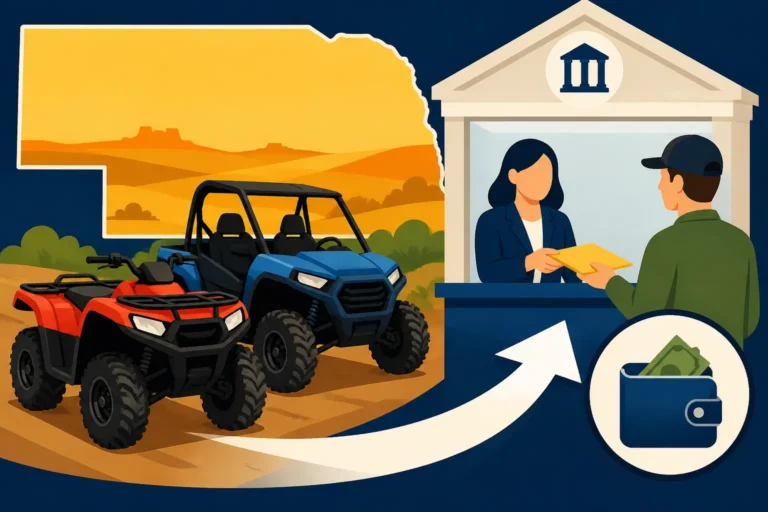
Once you have all your documents neatly organized, the next step is to head to your local county treasurer's office. This isn't the DMV, which handles motor vehicles; the county treasurer's office is specifically designated for titling ATVs and UTVs in Nebraska. Knowing what to expect can save you time and frustration, helping you get your new machine officially recognized without a hitch.
Making Your Trip to the Treasurer's Counter
Before you even step out the door, it's a good idea to check the operating hours of your specific county treasurer's office. Some smaller counties might have limited hours, or specific days dedicated to vehicle titling. A quick call or visit to their website can prevent a wasted trip. Remember to bring not only the original MSO, your dealer invoice, and your completed (or ready to be completed) Form 6ATV, but also a valid form of identification, such as your driver's license. If there are multiple owners, all owners may need to be present or provide notarized authorization, so be sure to check that detail as well.
It's also wise to bring your preferred method of payment for the title fees and sales tax. While cash is always accepted, many offices also accept checks or credit/debit cards, though card payments might incur a processing fee. Having everything ready means you can confidently approach the counter, hand over your organized packet of documents, and move through the process efficiently. Heading to the office prepared helps everyone involved, from you to the busy clerks, have a smoother experience. Check out [Nebraska County Treasurers Handle ATV Titles] for more context.
Completing the Paperwork with the Clerk
When you get to the counter, a clerk from the county treasurer's office will review all your submitted documents. They'll verify that the MSO is properly assigned to you, cross-reference the VINs, and ensure that your sales invoice is in order. They'll also assist you with or finalize your Nebraska Form 6ATV, calculating the precise amount of sales tax due based on your purchase price and your specific local tax rate. This is the moment where all those preparation steps pay off; if anything is missing or incorrect, this is where it will be flagged.
The clerk will then process your application for title. They will input your information and the machine's details into the state's system. You'll be asked to sign several forms, confirming the accuracy of the information provided and acknowledging your understanding of the titling process. It’s important to pay attention and ask any questions you might have at this stage. Once all documents are reviewed, signed, and approved, you'll pay the necessary title fees and the sales tax. This official interaction solidifies your claim of ownership and begins the formal titling process.
The Waiting Game: When Your Title Arrives
After you've completed all the paperwork and paid your fees, the clerk will often provide you with a temporary registration or a receipt that serves as proof you've applied for the title. This temporary document allows you to use your ATV or UTV in the interim, but it's not the official title itself. The actual Nebraska title certificate for your machine will then be mailed to you, typically within a few weeks. The exact turnaround time can vary depending on the volume of applications and the specific county office, so patience is key.
Once your official title arrives in the mail, store it in a safe and secure location. Do not keep it in your ATV or UTV! This document is your ultimate proof of ownership. While it doesn't serve as a registration plate or permit for road use – we'll get into that distinction later – it's crucial for future transactions like selling the machine or if you ever need to prove ownership for insurance purposes. You might want to make a photocopy or take a picture of the title and keep it on your phone for quick reference if ever needed, storing the original securely at home. For general guidance, see [How to Title an ATV in Nebraska].
Understanding the Financials: Taxes, Fees, and Credits
Beyond the paperwork, there's always the financial aspect to consider when titling a new ATV or UTV. Nobody enjoys unexpected costs, so it's best to understand upfront what you'll be paying. In Nebraska, these costs primarily revolve around sales tax and title fees, with some considerations for trade-ins and rebates that can impact your final bill.
The Sales Tax Calculation and Collection
One of the most significant financial aspects of titling your new ATV or UTV is the sales tax. In Nebraska, the statewide sales tax rate applies to the purchase price of your machine. On top of that, many cities and counties also have their own local sales tax rates, which are added to the state rate. The total combined sales tax percentage where you, the owner, reside is what will be applied to your purchase. This tax is typically collected by your county treasurer at the time you apply for your title, not by the dealer, a distinction that sometimes catches new buyers off guard.
The calculation is generally straightforward: the purchase price, less any eligible trade-in credit, is multiplied by the combined state and local sales tax rate applicable to your primary residence. It’s important to confirm your exact local rate before heading to the treasurer's office, as it can make a noticeable difference in your total payment. Make sure the purchase price on your dealer invoice accurately reflects the final agreed-upon price before taxes and fees, as this is what the tax will be based on. [Nebraska Sales Tax Collected at Titling] provides more information on this process.
Title Fees and Other Administrative Charges
In addition to the sales tax, you'll also pay a specific fee for the issuance of the title itself. This title fee is usually a set amount, which is relatively small compared to the sales tax. This fee covers the administrative costs associated with processing your title application and producing the official certificate. It's a standard charge for every new title issued in the state.
Beyond the title fee, you might encounter other minor administrative charges depending on your specific county office. These could include a nominal fee for temporary documentation, or perhaps a processing fee if you choose to pay with a credit or debit card. While these additional charges are typically small, it's always a good idea to factor them into your budget. The overall [Nebraska ATV Title Cost] will encompass these various charges, so it’s helpful to understand each component.
How Trade-Ins and Rebates Affect Your Taxable Amount
Here's some good news for those trading in an older machine or taking advantage of manufacturer rebates: these can actually reduce the amount of sales tax you owe. If you trade in a used ATV or UTV when purchasing your new one, the value of that trade-in is typically deducted from the purchase price before sales tax is calculated. This means you only pay sales tax on the net difference. For example, if you buy a new machine for a certain sum and trade in an older one for a credit, the sales tax is calculated on the lower amount, saving you money.
Similarly, if you receive a manufacturer's rebate on your new machine, that rebate amount is also usually deducted from the taxable value. It's crucial that any trade-in values or rebates are clearly itemized on your dealer's sales invoice and then correctly reflected on your Nebraska Form 6ATV. The county treasurer's office relies on these figures to accurately assess the sales tax. Always double-check these calculations before submitting your forms to ensure you're getting the full benefit of any credits or rebates.
Avoiding Common Pitfalls and Delays
Nobody wants to encounter snags when trying to title a new machine. The excitement of a new ATV or UTV can quickly fade if you're hit with unexpected delays or penalties. Being aware of the most common pitfalls can help you navigate the process smoothly and get to riding sooner.
The Importance of the 30-Day Titling Deadline
One of the most critical aspects of titling your new ATV or UTV in Nebraska is the strict 30-day deadline. You are legally required to apply for your title within 30 days of the purchase date. This isn't just a suggestion; it's a firm state law. If you miss this deadline, you will face a late titling penalty. This penalty accrues daily, so the longer you wait past the 30-day mark, the more expensive it becomes.
Life happens, we all know that, but it's really important to prioritize this trip to the county treasurer's office. Mark it on your calendar, set reminders, and make sure you gather all your documents well in advance. Planning one dedicated trip within that first month can save you a significant amount of money and stress. Don't let the excitement of riding distract you from this essential administrative task. Missing the deadline is a common mistake that can be easily avoided with a little planning. For more on this, see [Nebraska's 30-Day Titling Deadline].
Addressing Missing or Incorrect Paperwork
Another common source of delay comes from paperwork issues. Imagine getting to the county treasurer's office, waiting in line, and then being told your MSO is missing a signature, or the VIN on your sales invoice doesn't quite match the one on the MSO. These small errors, though sometimes unintentional, can bring the entire process to a grinding halt. You might have to go back to the dealership to get corrections or missing documents, which can be incredibly frustrating.
Before you leave home, take a moment to meticulously review every document:
- Does the VIN on the MSO exactly match the one on the sales invoice and your machine?
- Are all required signatures present on the MSO and sales invoice?
- Is your name and address correctly spelled and listed?
- Have all necessary fields on Form 6ATV been filled out accurately?
Taking five extra minutes for a thorough double-check can save you hours of backtracking and re-scheduling. It’s all about attention to detail.
Special Scenarios: Gifts, Inheritances, or Business Use
While this guide focuses on new purchases, it's worth briefly touching on other scenarios that can affect titling, even for machines initially bought after 2004. If you receive an ATV or UTV as a gift, you'll still need to title it, but the sales tax calculation will differ, often based on fair market value rather than a purchase price. Similarly, if you inherit a machine, the titling process will involve submitting probate documents or a will to transfer ownership.
For businesses that purchase ATVs or UTVs for commercial use (like on a ranch, construction site, or rental fleet), the titling process is largely the same, but the ownership will be listed under the business entity's name. In these cases, specific business documentation, like an Employer Identification Number (EIN) or corporate papers, might be required in addition to the standard titling forms. It's always best to consult with your county treasurer's office if your situation is anything other than a straightforward new purchase from a dealership. For business-related titling, you might look into [Nebraska Titles for a Business Machine].
What Your Nebraska Title Means for Riding and Ownership
So, you've successfully navigated the paperwork, paid your fees, and now you have that shiny new title in hand. Congratulations! But what exactly does this piece of paper signify for your Nebraska ATV or UTV? It's crucial to understand that an ATV title isn't the same as a car title, especially when it comes to road use and other legal distinctions.
The "Not To Be Registered" Notation Explained
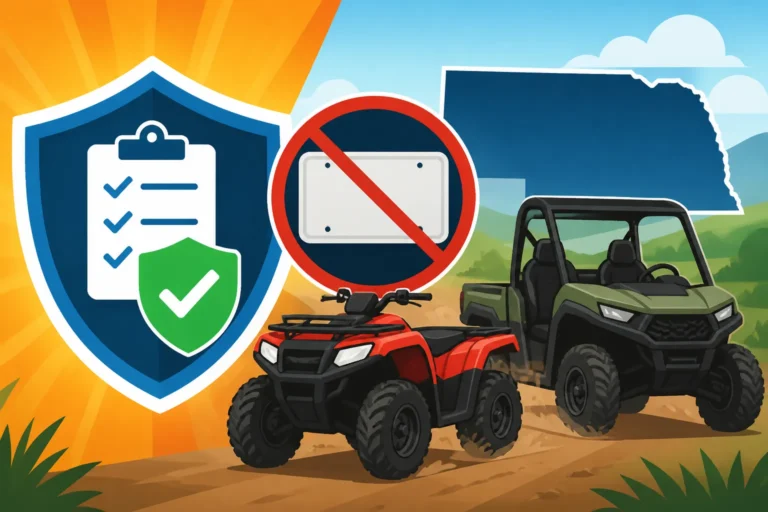
One of the most important things to understand about your Nebraska ATV or UTV title is a specific notation you'll see printed right on it: "NOT TO BE REGISTERED." This isn't a mistake; it's a deliberate and legally significant statement. What it means is that while your off-road machine is titled for ownership tracking purposes, it is generally not eligible for traditional motor vehicle registration with license plates for public road use, unlike cars, trucks, or motorcycles. [Why an ATV Title Says Not To Be Registered] goes into this in more detail.
This distinction is fundamental. Your title serves as proof of ownership and helps track the machine for sales tax purposes and lien recording. However, it does not grant you blanket permission to ride on public roads, highways, or even most city streets. Nebraska law specifically separates ATVs and UTVs from vehicles that are meant for general road use. While there are some very limited exceptions for agricultural use or certain local ordinances, the default rule is that a titled ATV is not a registered road vehicle.
Road Use Restrictions and Permitted Exceptions
Given the "NOT TO BE REGISTERED" notation, it's clear that unrestricted road use for ATVs and UTVs in Nebraska is generally prohibited. Most state highways and many county roads are off-limits. However, Nebraska law does carve out specific, narrow exceptions where ATVs and UTVs might legally operate on public roadways. The primary exception is for bona fide agricultural purposes. If you're using your ATV or UTV to directly assist with farming or ranching operations, such as checking cattle, hauling feed, or inspecting fences, you might be allowed to travel short distances on certain public roads.
Beyond agriculture, some cities and unincorporated villages have passed local ordinances that permit limited ATV and UTV use on their streets, usually with specific restrictions on speed, time of day, and required safety equipment like flags or lights. These are strictly local rules, so what's allowed in one town might be illegal in another. Always check local ordinances before riding on any public thoroughfare. Otherwise, the vast majority of your riding will be on private property with owner permission, or designated off-road trails. Understanding [Nebraska ATV Road Rules Under 60-6,356] is critical before you venture onto any public road.
Protecting Your Investment: Liens and Ownership Transfers
Your Nebraska ATV or UTV title also plays a crucial role in protecting your investment and facilitating future transactions. If you financed your purchase, the lending institution (bank, credit union, or dealership's finance arm) will typically have their lien recorded directly on your title. This lien signifies that the lender has a legal claim to the machine until your loan is fully paid off. Once the loan is satisfied, the lender will send you a lien release, which you'll need to submit to your county treasurer's office to have the lien removed from your title, giving you clear ownership.
When you decide to sell your titled ATV or UTV, the title is the key document for transferring ownership to the new buyer. You will sign over the title to the purchaser, and they will then take it to their county treasurer's office to apply for a new title in their name. This process ensures a clean chain of ownership and provides legal protection for both buyer and seller. For private sales, having a clear, accurate title makes the transaction much smoother and more secure. Even if you don't anticipate selling anytime soon, it's good to know your title is diligently tracking all these important ownership details.
Disclaimer
This article is for general informational purposes only and does not constitute professional advice. Laws, prices and regulations vary by location and change over time. Consult a qualified professional for guidance on your specific situation.