How an ATV Bill Moves Through the Legislature
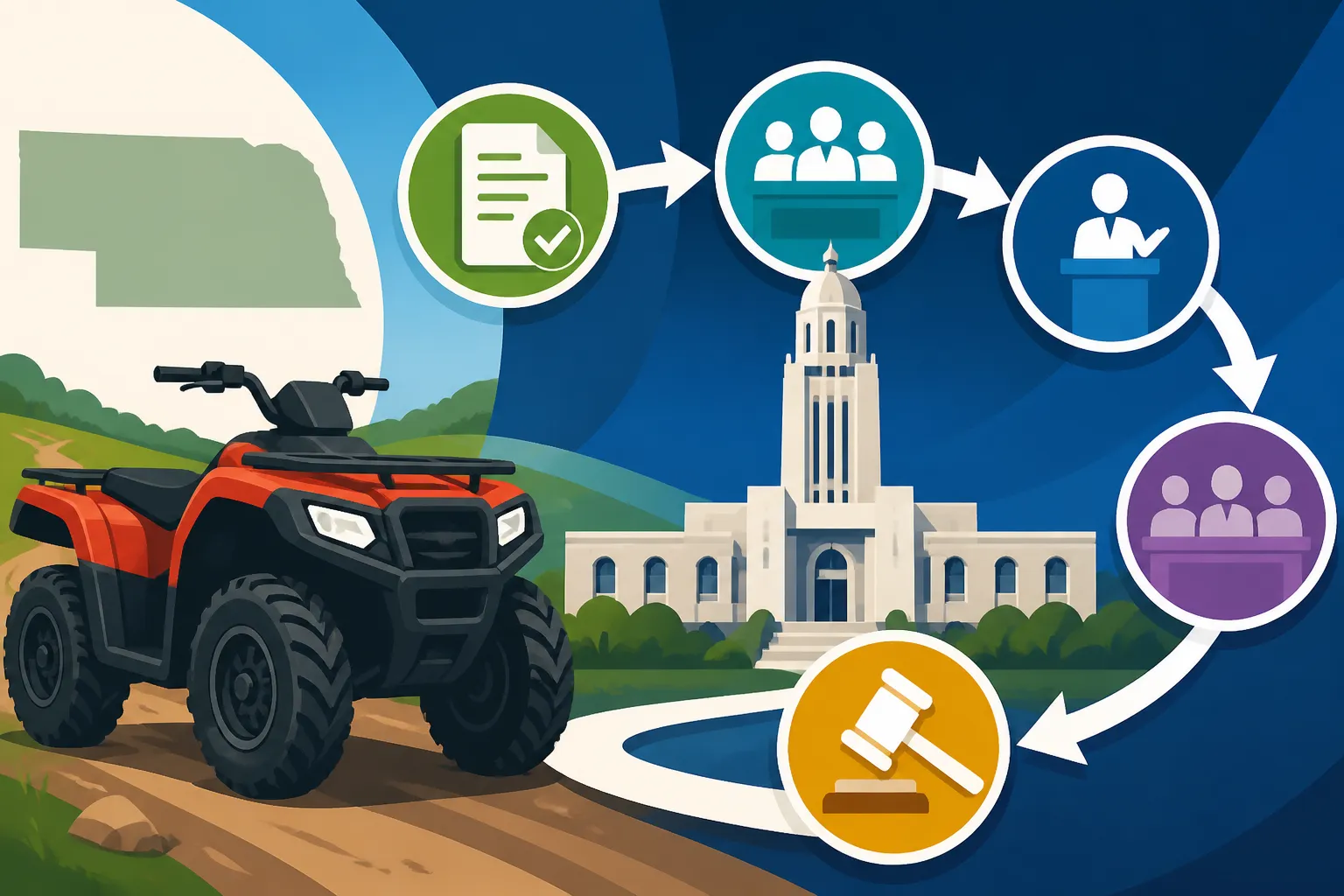
If you've ever found yourself scratching your head, wondering why some proposed laws for ATVs and UTVs seem to sail through the Nebraska Legislature while others vanish into thin air, you're definitely not alone. It's a common frustration for riders, landowners, and enthusiasts who just want to understand the rules of the road – or, more accurately, the rules of the trail. This guide is here to pull back the curtain on that often-mystifying process, explaining exactly how an ATV bill moves through the Nebraska Legislature, from a simple idea to a signed law, or perhaps, to an unceremonious end.
From Idea to Introduction: Crafting an ATV Bill in Nebraska
Every piece of legislation, including those that impact our beloved ATVs and UTVs, starts as a glimmer of an idea. Maybe a group of riders has been advocating for safer road crossings, or perhaps a county board sees a need for clearer rules regarding [Nebraska Rules for Riding a County Road]. These initial sparks of inspiration need to be formalized and championed before they can ever become a bill.
Finding a Legislative Champion and Drafting the Concept
Once an idea takes hold, the crucial next step is to find a state senator willing to take up the cause. Nebraska operates with a unicameral (one-house) legislature, meaning every bill goes through the same body, making a strong sponsor even more important. This senator becomes the bill's champion, introducing it and guiding it through the various stages. They'll listen to the concerns of constituents, sometimes meeting with groups like the Nebraska Off-Highway Vehicle Association or individual citizens who want to see changes made. This initial phase involves a lot of discussion and fact-finding to understand the scope and potential impact of the proposed changes.
For instance, if a group wants to propose a bill that would change the rules for [Nebraska Rules for Riding a Ditch], they might first approach a senator from a rural district, someone who understands the daily realities of farm life and ATV use. They'd explain the problem, perhaps citing examples of current ambiguities or frustrations. The senator's office might then begin to sketch out what a solution could look like, starting to think about the formal language that would be required.
Sometimes, citizens or advocacy groups might even try to draft some preliminary language themselves. While not legally binding, having a clear outline can help a senator understand the intent. Services like LawDepot can be helpful for individuals or smaller groups looking to formalize their ideas into clear, structured documents, even if it's just a starting point for discussions with legislative aides. This initial draft helps everyone involved visualize the eventual law and identify potential challenges or conflicts before the official legislative process even begins.
Officially Introducing the Bill and First Reading
Once a senator is on board and a general concept is in place, the official legislative drafting process begins. Legal staff within the Legislature's bill drafting office transform the idea into formal legislative language. This isn't just a simple write-up; it's a meticulous process to ensure the language is clear, legally sound, and doesn't conflict with existing statutes. They'll specify definitions, penalties, and implementation details. This stage is critical because poorly worded legislation can lead to confusion and unintended consequences down the line.
After the bill is drafted, the senator officially introduces it. This is typically done during the legislative session, which generally runs from January through May. When a bill is introduced, it is assigned a number (e.g., LB337, as we might remember from discussions about [Nebraska LB337 and Statewide Registration]) and given its "First Reading." This first reading is usually just a formality where the bill's number and title are announced on the floor of the Legislature. It marks the official entry of the proposed law into the system and signals to the public that a new piece of legislation is being considered.
This introductory phase often flies under the radar for most people, but it's where the foundation is laid. Without a senator to champion an idea and without the careful crafting of legislative language, even the most brilliant proposal for [Nebraska ATV Road Rules Under 60-6,356] would simply remain an idea, never seeing the light of day. It's the moment when an abstract concept takes its first tangible form as a bill.
Through the Committee Gauntlet: Public Hearings and Amendments
Once a bill is introduced, it doesn't immediately go up for a vote by the entire Legislature. Instead, it enters what can often feel like the most critical and challenging phase: the committee process. This is where the real vetting happens, where the public gets to speak, and where many bills ultimately live or die.
Committee Assignment and Public Hearings
Every bill introduced in Nebraska is assigned to one of the Legislature's standing committees. These committees specialize in certain areas, so a bill concerning ATVs and UTVs would likely go to the Transportation and Telecommunications Committee or perhaps the Judiciary Committee if it involves significant legal changes. The committee's job is to thoroughly examine the bill, hold hearings, and decide whether it should move forward. This specialization ensures that bills are reviewed by members who have some expertise or at least a focused interest in the subject matter.
The most visible part of the committee process is the public hearing. This is your opportunity, as a concerned citizen or an interested group, to voice your support or opposition to a bill. For an ATV-related bill, you might hear testimony from individual riders, farmers, law enforcement, representatives from ATV dealerships, or even environmental groups. Everyone gets a chance to present their views, often supported by personal anecdotes, data, or expert opinions. These hearings are invaluable for gathering diverse perspectives and understanding the full potential impact of the proposed legislation. You might hear people speak about the need for [Nebraska Safety Flag Rules] or why [Nebraska Has No Trail Sticker] is a good or bad thing.
Attending a public hearing, or submitting written testimony, is a powerful way for your voice to be heard. It's where the human element of legislation truly comes alive. Committee members listen intently, ask questions, and gauge public sentiment. This feedback is crucial; it can sway opinions, highlight unforeseen issues, or reinforce the need for a particular change. Many organizations, like those representing farmers or recreational riders, will prepare detailed statements, sometimes even using structured document creation tools like LawDepot to ensure their arguments are clear and professionally presented.
Work Sessions, Amendments, and Committee Vote
After the public hearing, the committee enters what's called an "executive session" or "work session." This is where the real nitty-gritty of bill refinement happens. The committee members discuss the testimony they heard, debate the merits of the bill, and consider potential amendments. An amendment can be a minor tweak to wording, or it can be a substantial change that alters the bill's intent or scope. This is where compromise often comes into play, as senators try to find common ground to move the bill forward.
For example, if a bill proposes a statewide ATV registration and fees, similar to past proposals for [Nebraska Registration Fee Proposals], committee members might propose amendments to lower the fee, exempt certain types of users (like farmers using machines exclusively on their own land, as in [Nebraska Farm Trips Outside City Limits]), or adjust how the collected funds would be used. They might also discuss the fiscal note—a projection of the bill's cost or revenue impact—and whether the state budget can support it. These discussions can be intense, as different senators advocate for different interests.
Eventually, the committee will vote on whether to advance the bill to the full Legislature. There are a few outcomes:
- Advance the bill: The bill moves to the "General File" for floor debate.
- Indefinitely postpone: The bill dies in committee. This is a common fate for many bills that lack sufficient support or have too many unresolved issues.
- Hold the bill: The committee decides to hold onto the bill for more consideration, often meaning it might be brought back later or simply allowed to die at the end of the session.
Here's a quick look at this stage:
| Stage of Bill | Description | Key Activities | Potential Outcomes |
|---|---|---|---|
| Committee Assignment | Bill sent to specialized legislative committee. | Review by topic-specific senators. | Bill assigned, preparations for hearing. |
| Public Hearing | Citizens and stakeholders present testimony. | Oral and written statements, Q&A with senators. | Committee gathers feedback, identifies issues. |
| Work Session | Committee discusses, debates, and refines bill. | Proposed amendments, fiscal note review, negotiations. | Bill advances, is postponed, or held. |
| Committee Vote | Formal decision to send bill to full Legislature. | Simple majority vote by committee members. | Bill moves to General File or dies. |
Floor Debate and Final Votes: Making it to the Governor's Desk
If an ATV bill successfully navigates the committee process, it then moves to the floor of the entire Legislature for debate and votes by all senators. This is where the bill truly takes center stage and is scrutinized by all 49 members.
General File and Select File Debates
Bills that are advanced out of committee are placed on the "General File." This is the first opportunity for all senators to debate the bill. During General File debate, senators can offer additional amendments, ask questions, and make impassioned speeches for or against the bill. It's a dynamic process, and often, bills undergo significant changes during this stage as compromises are struck and unexpected issues arise. We've seen this play out with discussions about [Lawmakers Proposed Registering Every ATV Statewide], where the fiscal and practical implications were heavily debated.
If a bill passes General File, it then moves to "Select File." This is another opportunity for debate and amendments, though typically less extensive than General File. Often, this stage is used to address any remaining technical issues or to solidify agreements made during General File. Senators might look at the specific wording to ensure clarity, especially regarding things like [Nebraska Insurance Minimums Today] or future changes like [Nebraska Insurance Minimums From 2027], making sure the language is precise.
It’s not uncommon for bills to be "bracketed" or held up during these debates, sometimes for strategic reasons. A bill can be a priority one day, and then suddenly shelved the next if another urgent matter arises or if a senator uses procedural tactics to delay it. It requires persistent advocacy and a clear understanding of the legislative rules to keep a bill on track. Sometimes, an amendment might even reference external documentation practices, where tools like LawDepot could have been used to create supplementary policy drafts for consideration.
Final Reading and the Governor's Action
After passing Select File, a bill moves to "Final Reading." This is the last vote on the bill as a whole, and no further amendments are allowed. During Final Reading, senators consider the bill in its final form. A simple majority vote (25 votes) is typically needed for a bill to pass the Legislature and be sent to the Governor. This is the moment when all the hard work, the debates, the compromises, and the public input culminate in a definitive decision by the elected representatives.
If the bill passes Final Reading, it is then engrossed (meaning it's prepared in its final, official text) and sent to the Governor of Nebraska. The Governor has a few options:
- Sign the bill into law: This is the most common outcome. Once signed, the bill becomes an official Nebraska statute and will go into effect on a specified date.
- Allow it to become law without a signature: If the Governor takes no action within five legislative days (excluding Sundays), the bill automatically becomes law. This often happens with bills the Governor doesn't strongly support or oppose.
- Veto the bill: The Governor can reject the bill. In this case, it goes back to the Legislature. The Legislature can then override the veto with a three-fifths majority vote (30 votes).
The journey for an ATV bill through the Legislature is a marathon, not a sprint. It's a testament to the democratic process, where ideas are debated, refined, and ultimately decided upon by elected officials, often with significant input from the public. Understanding this process demystifies why some efforts, like those to get [Nebraska Titles Required Since 2004], became law, while others, such as [Why the Statewide ATV Registration Bill Stalled in Committee], did not.
Why Some ATV Bills Succeed and Others Stall
Navigating the legislative labyrinth can be incredibly complex, and not every bill makes it through. There are numerous factors that contribute to whether an ATV bill ultimately becomes law or fades away in committee. Understanding these dynamics can help you be a more effective advocate for the changes you want to see.
Public Support and Grassroots Advocacy
One of the most powerful forces behind any successful bill is strong, organized public support. When a significant number of constituents contact their senators, attend hearings, or write letters, it sends a clear message that the issue matters. For ATV bills, this often means riders' groups, farm organizations, and local community members actively engaging in the process. A bill pushing for more accessible [Bessey OHV Trails at Halsey in Nebraska] might gather immense support from recreation enthusiasts, while a bill proposing new taxes could face widespread opposition.
Without this grassroots engagement, even a good idea can get lost in the shuffle. Senators are acutely aware of their constituents' feelings, and broad public support can provide the necessary momentum to push a bill past legislative hurdles. Conversely, strong public opposition can quickly sink a bill, regardless of its initial appeal to a few. This is where the power of collective action truly shines, ensuring that the voices of those directly affected by ATV and UTV laws are heard loud and clear.
Fiscal Impact and Political Will
Money talks, and in the Legislature, the fiscal impact of a bill is always a major consideration. Every bill that would cost the state money or generate revenue has a "fiscal note" attached to it, estimating its financial implications. A bill that requires significant new spending or creates new bureaucracy (such as creating a whole new statewide registration system with associated staff, like when [Lawmakers Estimated 30,000 ATVs Would Register in Year One] and proposed fees) will face much tougher scrutiny than one with minimal financial impact. Senators have to balance public good with responsible budgeting.
Beyond the money, political will is paramount. This refers to the collective desire among senators to pass a particular piece of legislation. It's influenced by factors like the urgency of the issue, the political climate, the senator's own priorities, and any behind-the-scenes negotiations. A bill might have merit, but if there's no strong political will to prioritize it over other pressing issues, it can simply run out of time or get sidelined. This often explains why some bills that seem like common sense solutions, such as clarifying rules for [Nebraska Title for a Ranch Machine], might move slowly while other, seemingly more complex, issues are fast-tracked.
Compromise and Consensus Building
Legislative success often hinges on the ability to compromise. Few bills pass in their original form without some modifications. Senators come from diverse districts with different needs and priorities, and to get enough votes, they often need to find common ground. This means being open to amendments, negotiating with opponents, and sometimes even scaling back ambitious proposals to achieve a more modest but attainable goal. A bill aiming to open all county roads to ATVs might be amended to only allow them in specific unincorporated villages through [How a County Board Opens a Village to ATVs], or for specific agricultural uses.
Building consensus requires effective communication and a willingness to work across different viewpoints. When all stakeholders, from recreational riders to law enforcement to agricultural producers, can come together and agree on a path forward, a bill has a much greater chance of success. This is often where legislative aides, and even groups like the Off-Highway Vehicle Association, play a vital role in bringing different parties to the table. When parties can't find that consensus, a bill is more likely to stall, remaining in committee or failing to garner enough votes on the floor. It's a continuous dance of negotiation and adjustment, a process where a well-crafted argument or a proposal that uses precise language (perhaps even initially drafted with tools like LawDepot) can make all the difference in achieving that crucial consensus.
Disclaimer
This article is for general informational purposes only and does not constitute professional advice. Laws, prices and regulations vary by location and change over time. Consult a qualified professional for guidance on your specific situation.