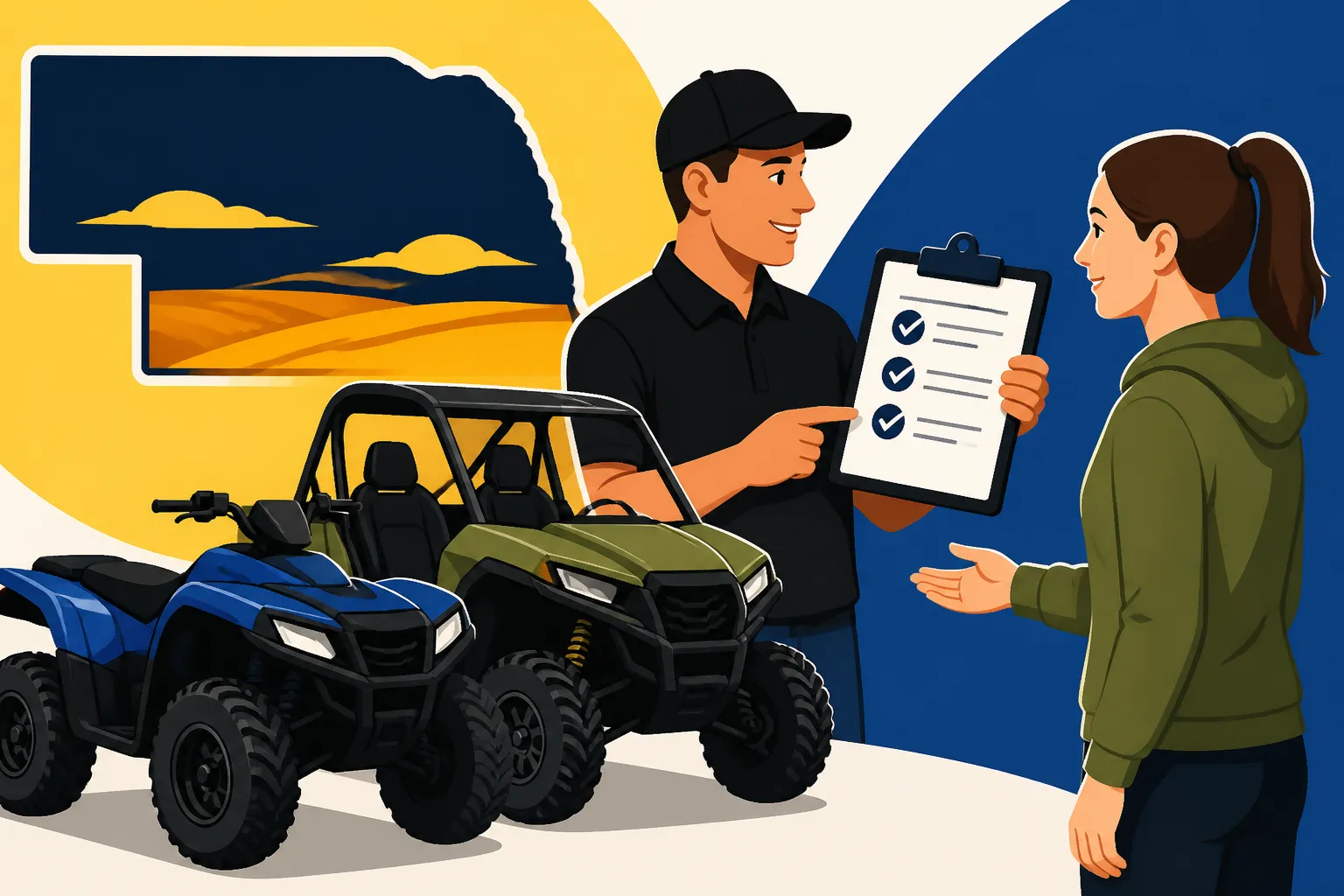
Nebraska Dealer Paperwork at Delivery
Bringing home a shiny new (or new-to-you) ATV or UTV from a Nebraska dealer is an exciting time, full of anticipation for hitting the trails or getting to work on the farm. But before you can truly enjoy your machine, you're often faced with a stack of paperwork at the dealership. This can feel overwhelming, especially with the unique rules and regulations that Nebraska has for titling and sales tax. This guide will walk you through the essential documents you'll receive from a Nebraska dealer, what each one means, and what you need to do with them to ensure a smooth transition from showroom floor to your first adventure.
Navigating the Initial Mountain of Paperwork
The moment you shake hands on the deal and head to the finance office, a cascade of papers begins. It's easy to get lost in the shuffle of signatures and explanations, but knowing what to look for can save you headaches down the road. This initial stack forms the foundation of your ownership and is critical for legal operation and future resale.
The Manufacturer's Statement of Origin (MSO)
Think of the Manufacturer's Statement of Origin, or MSO, as the "birth certificate" for your ATV or UTV. This document is issued by the manufacturer and certifies that the machine is new and has not been titled or registered in any state before. It's the absolute cornerstone of your ownership paperwork for a new machine.
The MSO contains vital information, including the Vehicle Identification Number (VIN), the make, model, year, and engine size of your machine. Crucially, it's the document you'll need to present to your county treasurer's office to apply for your Nebraska title. Without a properly endorsed MSO, you simply cannot title your new machine. When the dealer hands it over, double-check that your name (or the name of the primary owner) is correctly printed on it and that the VIN matches the one on your machine perfectly. Any discrepancies here could cause delays and frustration at the county office. Ensure the dealer has signed and dated it correctly, transferring ownership to you.
The Bill of Sale or Purchase Agreement
The bill of sale, or a more detailed purchase agreement, is your official receipt and contract for the transaction. This document legally proves that you bought the ATV or UTV from the dealership. It outlines the agreed-upon purchase price, any trade-in allowances, and itemizes all the additional charges, fees, and taxes associated with your purchase.
It's absolutely critical to review every line item on this document before you sign. Look for the purchase price, ensuring it matches what you negotiated. If you traded in an old machine, verify the trade-in credit is accurately reflected. Pay close attention to any "documentary fees," "freight charges," or "setup fees" — these are common dealer add-ons that should be transparently listed. While the bill of sale doesn't directly go to the county treasurer for titling the way the MSO does, it's essential for proving the purchase price, especially if there's ever a question about sales tax or ownership. Keep this document in a safe place, as it's your definitive record of the financial transaction. Nebraska Dealer Paperwork at Delivery is a crucial element to understand as you review this.
Understanding Your Core Documents: Title and Tax Forms
Unlike some states where the dealer handles everything from sales tax collection to title application, Nebraska has a different system. As a new owner, you'll have specific responsibilities for two of the most critical documents that go beyond the dealership's counter.
The Nebraska Sales Tax Statement (Form 6ATV)
Here's where Nebraska's system often surprises new buyers: in Nebraska, ATV and UTV dealers generally do not collect sales tax on the purchase. Instead, you, the buyer, are responsible for paying the state and any applicable local sales tax directly to your county treasurer's office when you apply for your title. The dealer will typically provide you with the necessary [Nebraska Form 6ATV Explained] (or a similar sales tax statement).
This form will detail the purchase price of your ATV or UTV. If you had a trade-in, it should also clearly show the trade-in value, which can reduce the amount of sales tax you owe. For example, if you bought a new machine for $10,000 and traded in an old one for $3,000, you'd only pay sales tax on the $7,000 difference. Make sure these figures are accurate on the form. It's your responsibility to take this completed form (and often, payment for the sales tax) to the county treasurer. This rule has been in place for a while, so expect to handle [Nebraska Sales Tax Collected at Titling] directly.
Preparing for Your Nebraska Title Application
Your Nebraska title is the legal document proving you are the owner of the ATV or UTV. While the dealer provides the MSO (for new machines) or the previous owner's title (for used machines), the actual process of getting the title in your name happens at your local county treasurer's office. This is a critical step, and Nebraska gives you a [Nebraska's 30-Day Titling Deadline] from the date of purchase to get it done.
When you head to the treasurer's office, you'll need your MSO (or previous title), the bill of sale, and the completed Form 6ATV. They will process your title application, collect the sales tax, and charge you a separate, relatively modest title fee. It's important to understand that [Why the County Treasurer, Not the DMV, Titles ATVs], so don't try to go to the Department of Motor Vehicles. Ensuring all your paperwork from the dealer is accurate and complete will make this process much smoother. If you bought an out-of-state machine, you'd follow a similar process to get [Nebraska Out-of-State Machines Need a Title].
Understanding Dealer Fees and Their Documentation
Beyond the agreed-upon price of the ATV or UTV itself, dealers often charge various fees that are detailed in your purchase agreement or bill of sale. It's important to differentiate these from government-mandated taxes or fees.
- Documentary Fees (Doc Fees): These are charges for the dealer's cost of preparing and processing all the paperwork associated with your sale. While they vary, they are typically a flat fee. Nebraska doesn't cap these fees, so they can sometimes be a point of negotiation. The dealer needs to clearly itemize this on your purchase agreement.
- Freight Charges: If your machine was shipped to the dealership from the manufacturer, you might see a freight or shipping charge. This covers the cost of transporting the vehicle to the dealer.
- Setup or Assembly Fees: Many ATVs and UTVs arrive at the dealership partially crated and require assembly and pre-delivery inspection (PDI) by the dealer's service department. A setup fee covers this labor.
These fees are legitimate costs for the dealer, but they should always be transparently disclosed and itemized on your purchase agreement. Don't be shy about asking the dealer to explain any fee you don't understand before you sign on the dotted line. Being aware of [Nebraska Dealer Documentary Fees] and [Nebraska Dealer Freight Charges] before you walk in can help you budget and negotiate.
Beyond the Basics: Other Important Dealer Documents
While the MSO, bill of sale, and tax forms are essential for titling and ownership, other documents you receive from the dealer are crucial for the long-term enjoyment, maintenance, and potential resale of your ATV or UTV.
Warranty Information and Service Agreements
A new ATV or UTV almost always comes with a manufacturer's warranty. This documentation, often a separate booklet or a section within your owner's manual, details what components are covered, for how long, and under what conditions. It's vital to read and understand these terms. Does it cover parts and labor? Are there specific maintenance requirements you must meet to keep the warranty valid? Knowing these details can save you significant repair costs down the line.
The dealer might also offer extended service agreements or warranties. These are optional, third-party contracts that typically extend coverage beyond the factory warranty. Carefully weigh the pros and cons of these. Consider the cost, what's covered (and what isn't), and the reputation of the service agreement provider. Sometimes, a dealer may also offer pre-paid service plans for routine maintenance, which can be convenient but should also be evaluated for cost-effectiveness compared to paying for service as needed.
Financing Agreements and Loan Paperwork
If you're financing your ATV or UTV purchase through the dealership (or they've connected you with a lender), you'll receive a separate stack of documents related to your loan. This paperwork is extremely important as it outlines your financial obligations.
Key documents will include the loan agreement or promissory note, which specifies the principal amount, interest rate, repayment schedule, and total interest paid over the life of the loan. You'll also likely receive a security agreement, which grants the lender a lien on your ATV or UTV until the loan is paid off. This lien will be noted on your Nebraska title. Understanding [How a Lien Is Recorded on an ATV Title] is crucial for future sales or if you plan to move. Carefully review all terms, including any late fees, prepayment penalties, or other clauses. Keep these documents in a secure place, as they're your record of the financing arrangement and will be needed when you eventually pay off the loan and get a clear title. Don't hesitate to ask your dealer's finance manager to explain anything unclear. Getting [Financing an Off-Road Machine in Nebraska] requires careful review of these papers.
Owner's Manuals and Safety Information
Every new ATV or UTV comes with an owner's manual. While it might seem like just another booklet to stash away, it's an invaluable resource. The owner's manual contains critical information about operating your machine safely, recommended maintenance schedules, troubleshooting tips, fluid capacities, and specific safety warnings unique to your model.
Dealers also typically provide additional safety information, which might include pamphlets on proper riding gear, passenger limits, and age recommendations. Take the time to review this material. It's designed to help you understand your machine's capabilities and limitations, promoting safer riding habits. Knowing what your machine can and cannot do, and how to properly maintain it, is essential for both your safety and the longevity of your investment.
Your Post-Delivery To-Do List: What Comes Next
Congratulations! You've successfully navigated the dealer paperwork, signed on the dotted lines, and now your new ATV or UTV is either loaded on your trailer or being delivered. But your responsibilities aren't quite finished yet. There are a few crucial steps to take after leaving the dealership to ensure everything is legally squared away and you're ready for your first adventure.
The Trip to the County Treasurer's Office
This is the most immediate and critical step you need to take. As we've discussed, you're responsible for paying sales tax and titling your machine in Nebraska. You need to visit your local county treasurer's office within 30 days of purchase. Make sure you have all the necessary documents with you:
- The Manufacturer's Statement of Origin (MSO) or the previous owner's signed-over title.
- The bill of sale or purchase agreement from the dealer.
- The Nebraska Sales Tax Statement (Form 6ATV), accurately filled out.
- A valid driver's license or state ID.
- Proof of your Nebraska address.
- Payment for the sales tax and the title fee. Be prepared to pay with cash, check, or possibly a debit/credit card (check with your specific county for accepted payment methods).
Neglecting this step within the 30-day window can result in late fees. To avoid multiple trips, it's always a good idea to call your county treasurer's office ahead of time to confirm their hours and exactly [What to Bring to the County Treasurer's Window]. You'll find that [Planning One Trip to the Treasurer's Counter] will save you time and hassle.
Securing Insurance and Planning Your First Ride
While Nebraska doesn't mandate insurance for off-road use on private land, if you plan to operate your ATV or UTV on public roads where it's legally permitted (such as for agricultural purposes or in cities/villages with specific ordinances), you must carry liability insurance. It's generally a good idea to consider comprehensive or collision coverage as well, regardless of where you ride, to protect your investment from theft, damage, or other unforeseen events.
Contact your insurance agent soon after purchasing your machine to discuss your options. They can help you understand [Nebraska Insurance Required Only on Roads] and advise on the best coverage for your needs. Once insurance is sorted, you can begin planning your first safe and legal ride. Familiarize yourself with [Nebraska ATV Road Rules Under 60-6,356] if you intend to use public roads, and always choose appropriate riding areas, whether it's private land (with permission) or a designated OHV park.
Organizing Your Documents and Future Records
Once all the paperwork is complete and your title is in hand (or on its way), create a dedicated system for organizing all your ATV or UTV documents. This should include your title, bill of sale, sales tax form, loan documents (if applicable), warranty information, and owner's manual. A physical folder in a safe place is a great start, and consider making digital copies of everything for backup.
Maintaining organized records is incredibly important. You'll need them for future maintenance, warranty claims, insurance purposes, and especially when it comes time to sell your machine. A complete and organized record of ownership and maintenance can significantly increase its resale value and make the selling process much smoother. If you decide to sell your machine privately down the road, tools like LawDepot can help you create a professional bill of sale or other necessary legal documents to ensure a clear and legally sound transaction. Having these records easily accessible will save you a lot of searching and stress later on.
Document Checklist for Nebraska ATV/UTV Buyers
To help keep track, here's a quick checklist of the key documents you'll encounter and what they're for:
| Document Type | Provided By | Purpose | Action Required By You |
|---|---|---|---|
| Manufacturer's Statement of Origin (MSO) | Dealer | Proof of new machine's origin; required for first title. | Take to County Treasurer for titling. |
| Bill of Sale / Purchase Agreement | Dealer | Official proof of purchase, details transaction terms and fees. | Keep for records; required at Treasurer for sales tax verification. |
| Nebraska Sales Tax Statement (Form 6ATV) | Dealer | Document to declare purchase price for sales tax collection. | Take to County Treasurer; pay state and local sales tax. |
| Financing Agreement / Loan Papers | Dealer/Lender | Details loan terms, payment schedule, and lien. | Keep for records; understand your financial obligations. |
| Warranty Information | Dealer | Explains manufacturer's coverage, terms, and exclusions. | Read thoroughly; keep for potential future repairs. |
| Owner's Manual & Safety Guides | Dealer | Instructions for safe operation, maintenance, and safety warnings. | Read before riding; keep with machine or in records. |
Disclaimer
This article is for general informational purposes only and does not constitute professional advice. Laws, prices and regulations vary by location and change over time. Consult a qualified professional for guidance on your specific situation.