When a Dealer Files Your Title Paperwork for You
Buying an ATV or UTV in Nebraska can be an exciting prospect, whether it’s for work on the farm, hitting the trails, or just enjoying the outdoors. However, the enthusiasm can quickly turn to confusion when it comes to the nitty-gritty of title paperwork. Many new owners wonder, "When does the dealer handle all this, and what exactly does that mean for me?" This guide will clear up the process, explaining when you can expect a dealer to file your title paperwork, what their role entails, and what responsibilities still fall on your shoulders.
The Convenience of Dealer-Handled Title Paperwork in Nebraska
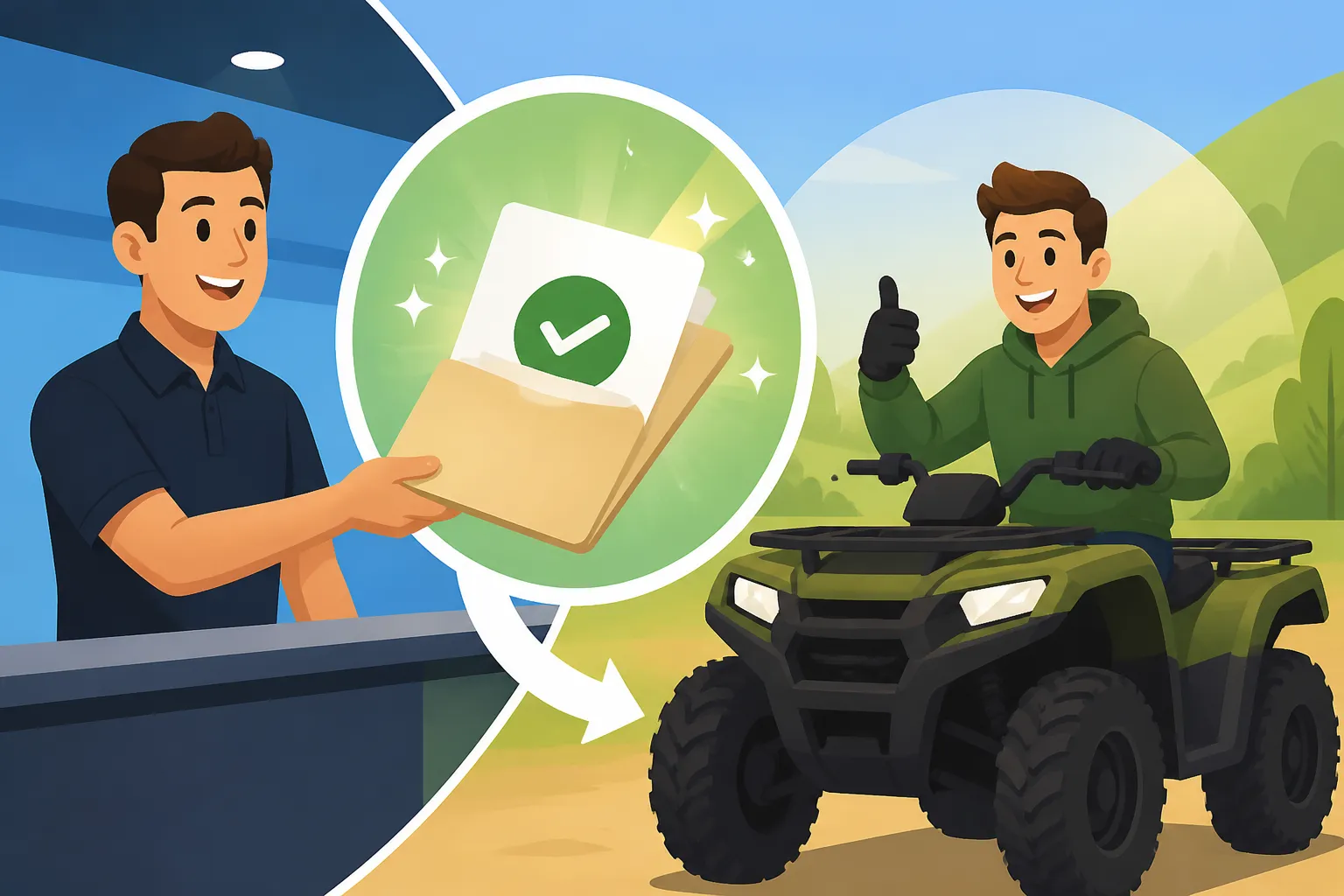
When you walk into a dealership to purchase a new or used ATV or UTV, one of the benefits they often highlight is how they simplify the paperwork process. They aim to make the entire transaction as smooth as possible, from selecting your machine to driving it away (or, more accurately, trailering it home).
Why Dealers Offer This Service
Dealers are in the business of selling machines, and they understand that complex administrative tasks can be a deterrent for buyers. Offering to handle the title paperwork is a significant value-add for their customers. Think about it: you’ve just made a big purchase, and you’re eager to get out and ride or put your new utility vehicle to work. The last thing most people want to do is navigate government forms, figure out which office to visit, and worry about deadlines.
Dealers know the ropes. They deal with these forms and the county treasurer's offices constantly, meaning they're familiar with the specific requirements for titling off-road vehicles in Nebraska. They can ensure that the Manufacturer's Statement of Origin (MSO) for a new machine, or the previous owner's title for a used one, is properly transferred. This expertise saves you time and reduces the likelihood of common errors that could delay your title. It's all part of their effort to offer a comprehensive sales experience, making your purchase as hassle-free as possible.
What to Expect at the Dealership
When you sit down to finalize the purchase, the dealer's finance or sales team will gather all the necessary information. This typically includes your full legal name, current address, and details about the machine you're buying, such as its Vehicle Identification Number (VIN), make, model, and year. They will also document the purchase price and any trade-in value if you're trading in another machine.
As part of this service, you'll likely see a "documentary fee" or "doc fee" added to your purchase agreement. This fee covers the administrative costs associated with preparing and submitting the title application and other required paperwork. While these fees can vary, they compensate the dealer for their time and effort in ensuring your machine is properly titled. The sales associate will guide you through signing several forms. This will almost certainly include the bill of sale and the [Nebraska Form 6ATV Explained], which is crucial for documenting the sale and calculating sales tax. They’ll also collect any upfront fees they handle, like the basic title application fee, though it's important to remember that sales tax is typically handled differently in Nebraska, which we'll get into shortly.
Breaking Down the Dealer's Role in Nebraska Titling
It's easy to assume that when a dealer says they'll "handle the paperwork," they take care of absolutely everything. While they do a lot, it’s important to understand the specific tasks they undertake and where your responsibilities begin and end.
The Forms a Dealer Prepares
The primary responsibility of the dealer, when they file your title paperwork, is to accurately prepare and present the foundational documents needed for titling. For a new ATV or UTV, this means providing you with the Manufacturer's Statement of Origin (MSO). This document is essentially the "birth certificate" for your machine, proving it’s never been titled before. For a used machine, they will ensure the existing title is properly assigned to you by the previous owner (if the dealer acquired it from an individual) or directly from their inventory.
Beyond the MSO or previous title, the dealer will prepare a comprehensive bill of sale. This document formalizes the transaction, detailing the buyer, seller, machine information (including VIN), purchase price, and date of sale. While dealers typically use their own forms, understanding what a complete bill of sale should include is helpful. Resources like LawDepot offer templates that can show you what essential information—such as the buyer's and seller's full contact information, a clear description of the ATV or UTV, the agreed-upon price, and any warranties or as-is clauses—should be present. They will ensure all sections are accurately filled out and that you, the buyer, sign where required. This meticulous preparation is key to a smooth titling process at the county level. They may also pre-fill sections of the sales tax statement, noting the sale price and any trade-in credit you received.
Collecting Taxes and Fees (Mostly)
Here's where things can differ significantly from buying a car, and it's a common point of confusion for new ATV and UTV owners in Nebraska. Unlike many vehicle purchases where the dealer collects all sales tax at the time of sale, in Nebraska, dealers generally do not collect the state and local sales tax for ATVs and UTVs. This tax is instead collected by your county treasurer when you officially apply for the title.
What the dealer will collect are their own documentary fees, freight charges, and any setup fees. They might also collect the basic title application fee, which they then forward to the county treasurer on your behalf as part of their service. If you live in a Nebraska city that has its own ATV registration ordinance, the dealer might also facilitate the collection of those city-specific fees. It's crucial to get a clear itemized breakdown from the dealer so you understand exactly what you've paid them and what you still owe directly to the county. This way, you won't be caught off guard when you visit the treasurer's office. You can learn more about this specific process in [Nebraska Sales Tax at the Treasurer's Counter].
Submitting Paperwork to the County Treasurer
The core convenience of having a dealer file your title paperwork is that they often handle the actual submission to the county treasurer's office. Instead of you having to take time off work, drive to your county seat, and potentially wait in line, the dealer's staff will compile all the necessary documents—the MSO or previous title, the bill of sale, the completed title application (sometimes Form 6ATV), and any other supporting paperwork—and send it to the appropriate county office.
This service is particularly valuable if you've purchased your machine from a dealership located far from your home county. They manage the logistics of getting the paperwork to your specific county treasurer, aiming to ensure it's submitted within the critical [Nebraska's 30-Day Titling Deadline] from the date of purchase. This proactive approach helps prevent late fees and ensures your title is processed as efficiently as possible, allowing you to focus on enjoying your new machine.
Your Crucial Responsibilities Even With Dealer Assistance
While a dealer provides immense help with the titling process, handing over the paperwork doesn't mean you can completely forget about it. There are still several crucial responsibilities that remain with you, the buyer, to ensure everything goes smoothly.
Verifying All Information Before Signing
This is perhaps your most important responsibility. Before you sign any document at the dealership, take the time to carefully review every detail. Double-check your full name, current address, and any contact information. Crucially, verify that the Vehicle Identification Number (VIN) on the paperwork precisely matches the VIN stamped on your ATV or UTV. A single digit or letter error on the VIN can cause significant delays or even invalidate your title application, leading to a frustrating experience trying to [Correcting a Misspelled Name on an ATV Title] or VIN.
Beyond personal details and the VIN, confirm the purchase price, any trade-in allowances, and the listed sales date. Ensure that all terms, especially those related to financing or warranties, are as you understood them. While the dealer prepares the forms, you are ultimately attesting to the accuracy of the information with your signature. Having a general understanding of what a complete bill of sale should look like, perhaps by reviewing a template from LawDepot, can empower you to spot potential omissions or errors before they become problems.
Understanding What Fees You Still Owe
As we discussed, Nebraska dealers typically do not collect sales tax on ATVs and UTVs. This means that even after you've paid the dealer, you will still owe the state sales tax (currently 5.5%) plus any applicable local sales tax directly to your county treasurer when you go to finalize the titling process. This can sometimes be a surprise for buyers who assume everything is paid for at the dealership.
It's vital to ask the dealer for a clear, itemized breakdown of all costs. Understand what you are paying them versus what you will need to pay at the county treasurer's office. This includes the actual title fee (which might be separate from the dealer's doc fee), and potentially any city registration fees if your municipality requires them. Being prepared for these additional costs ensures you have the full [Nebraska ATV Title Cost] budgeted and avoid any unpleasant surprises when you try to get your title. Don't be shy about asking for clarification – a good dealer will be transparent about all fees.
Following Up on Your Title Status
Even though the dealer submits the paperwork, it’s a good practice to keep an eye on the process. Titles for ATVs and UTVs in Nebraska are handled by individual county treasurers, and processing times can sometimes vary depending on the workload of the specific office. While many titles arrive within a few weeks, delays can occur.
If you haven't received your title in the mail within a reasonable timeframe (typically 2-4 weeks after the dealer submitted it), don't hesitate to follow up. Your first point of contact could be the dealership to confirm they've sent everything. If they confirm submission, then a call to your county treasurer's office, or a quick check on their website (if they offer online tracking), can give you an update. Sometimes, a minor error discovered by the county clerk, like a missing signature that wasn't caught at the dealership, could put a hold on your title. Staying on top of it ensures that any issues are caught and resolved promptly, helping you meet [Nebraska's 30-Day Titling Deadline] without accumulating late fees.
Common Questions and Potential Issues with Dealer Filing
While dealer assistance streamlines the titling process, it’s not always entirely without hitches. Knowing what could go wrong and how to address it can save you a lot of headache.
What If the Dealer Makes a Mistake?
Even with the best intentions and procedures, mistakes can happen. A dealer might accidentally transpose a digit in the VIN, misspell your name, or overlook a required signature. If you discover an error on your title or any of the paperwork you receive, your immediate next step should be to contact the dealership. They are usually best equipped to help rectify the situation.
The dealer will typically have a process in place to correct such errors. This might involve preparing an affidavit of correction, issuing a corrected bill of sale, or directly communicating with the county treasurer's office on your behalf. Since the error originated with their paperwork, they have a responsibility to assist you in getting it fixed. This is also where your thorough review before signing becomes invaluable; catching an error early saves everyone time and frustration. If you had used a reliable template from a service like LawDepot to understand the structure of correct documents, you might be more confident in pinpointing the specific error.
When to Handle It Yourself
While the convenience of dealer-filed paperwork is appealing, you always have the option to handle the titling process yourself. There are several reasons why a buyer might choose this route. Perhaps you want to save the dealer's documentary fee, or you live very close to your county treasurer's office and find it simple enough to make the trip yourself. Some individuals also prefer to have complete control over their paperwork, ensuring every detail is exactly as they want it.
If you choose to title your ATV or UTV yourself, you'll need to gather all the necessary documents directly. This includes the Manufacturer's Statement of Origin (MSO) or the properly signed-over previous title, a completed bill of sale (which you can draft using a reliable template, for example, from LawDepot), and proof of insurance (if required for your intended use). You'll then take these documents, along with payment for the title fee and sales tax, to your local county treasurer's office. While it requires a bit more effort on your part, it ensures you’re fully aware of every step of the process and saves you any dealer-specific handling fees. You can find more details on how to prepare a bill of sale in [Writing a Bill of Sale for a Neighbor's Quad], even if it's from a dealer.
Here’s a quick comparison of the two approaches:
| Aspect | Dealer-Filed Titling | Self-Filed Titling |
|---|---|---|
| Convenience | High (dealer handles most steps) | Moderate (requires buyer's direct involvement) |
| Documentary Fees | Yes (added cost, typically $100-$300+) | No (you save this cost) |
| Sales Tax Collection | No (paid by buyer at county treasurer) | No (paid by buyer at county treasurer) |
| Title Fee Collection | Sometimes (often included in doc fee, or forwarded) | Yes (paid by buyer at county treasurer) |
| Required Documents | Dealer provides/prepares MSO/title and bill of sale | Buyer must gather MSO/title and prepare bill of sale |
| Submission to County | Dealer typically submits on your behalf | Buyer must personally submit to county treasurer |
| Timeline | Dealer's processing speed + county processing time | Buyer's speed in gathering/submitting + county processing time |
| Error Correction | Dealer assists with corrections | Buyer handles corrections directly with county |
| Required County Visit | Usually not required, but sometimes for payment | Required for submission and payment |
Disclaimer
This article is for general informational purposes only and does not constitute professional advice. Laws, prices and regulations vary by location and change over time. Consult a qualified professional for guidance on your specific situation.