Nebraska Helmet Rules Riders Ask About
Many riders in Nebraska hit the trails, fields, and country roads on their ATVs and UTVs, and one of the most common questions that comes up, often leading to a lot of head-scratching, is about helmets. It's easy to assume that if you're riding any motorized open-air vehicle, a helmet is a no-brainer legal requirement. However, the laws aren't always as straightforward as we might think, creating confusion and sometimes even leading to misunderstandings with law enforcement. This guide will cut through the fog, clarifying Nebraska's specific rules regarding helmets for ATVs and UTVs, exploring why these rules are often misunderstood, and outlining best practices for keeping yourself safe, regardless of what the law mandates.
Nebraska's General Approach to ATV/UTV Helmet Laws
It might surprise many riders, especially those moving to Nebraska from other states or who are used to motorcycle laws, but the state of Nebraska does not have a comprehensive, statewide law requiring helmets for all ATV and UTV riders in all situations. This can feel counterintuitive, given the obvious safety benefits of wearing a helmet when operating these powerful machines. The absence of such a broad mandate often leads to a false sense of security or, conversely, a lot of unnecessary worry for riders trying to stay on the right side of the law.
The state legislature, through its various statutes, has defined different types of motorized vehicles, and these definitions are key to understanding where helmets are legally required. For example, motorcycles fall under specific statutes that do mandate helmet use, but ATVs and UTVs are typically classified differently for the purposes of these particular safety equipment laws. This distinction is crucial, and it’s where a lot of the common misconceptions begin. Just because a machine has an engine and handlebars, or a steering wheel and open-air seating, doesn't mean it's automatically lumped into the same legal category as a street motorcycle.
The Motorcycle vs. ATV Distinction
When you dig into Nebraska Revised Statute 60-6,279, which deals with helmets, you'll find that it primarily addresses operators and passengers of "motorcycles." The critical piece of the puzzle here is how Nebraska defines a "motorcycle." Generally, a motorcycle is a vehicle that has a seat or saddle for the operator and is designed to travel on not more than three wheels in contact with the ground. While some ATVs have three wheels, the broader definition and common usage separate them from what the legislature typically considers a "motorcycle" for on-road helmet requirements. Side-by-sides, with their steering wheels and bucket seats, are even further removed from this definition. This legal distinction means that the mandatory helmet rule for motorcycles simply doesn't apply by default to the vast majority of ATVs and UTVs under state statute, particularly when they are used off-road.
This doesn't mean that ATVs and UTVs are inherently safer or that helmets are unnecessary. Far from it. It simply means that the specific wording of the law about mandatory helmet use targets a different class of vehicle. Riders often mistakenly apply the motorcycle helmet law to their quad or side-by-side, thinking they're breaking state law by not wearing one off-road. While wearing a helmet is always a good idea, as we'll discuss, it's important to understand that the state's main helmet statute just doesn't encompass most off-road machines.
The Absence of a Statewide ATV Helmet Law
So, to be absolutely clear: as a general statewide rule, Nebraska does not have a statute requiring every ATV or UTV rider to wear a helmet every time they ride, especially on private land or designated trails. This is a common point of confusion, and many riders spend a lot of time searching for a law that simply doesn't exist at the state level. It's not uncommon to hear riders discussing "the helmet law" as if it applies universally to all powersports, but for ATVs and UTVs, this is a generalization that doesn't hold true in Nebraska.
This absence of a blanket statewide helmet law for ATVs and UTVs reflects a legislative choice, whether intentional or by omission, to leave this aspect of safety largely to individual rider discretion or to local jurisdictions and private entities. While there have been discussions and proposals over the years regarding ATV safety, none have resulted in a statewide mandatory helmet law for all ATV/UTV operation. This means that if you're riding your quad on your own farm property, or tearing up a designated trail within state regulations, you're generally not violating a state helmet mandate by choosing not to wear one, though good judgment might suggest otherwise.
Why the Confusion Around Helmet Laws Exists
It's completely understandable why so many Nebraska ATV and UTV riders are confused about helmet laws. The landscape of off-road vehicle regulations can be complex, with different rules applying to various types of machines, riding locations, and even rider ages. This patchwork of regulations, combined with common assumptions and influences from neighboring states, often creates a muddled picture for even the most diligent rider trying to stay informed. It’s not just a matter of misunderstanding; it’s a genuine struggle to navigate disparate information sources.
Think about it: you see motorcyclists always wearing helmets, and ATVs and UTVs are also motorized vehicles with open cockpits. It's a natural leap to assume similar safety requirements. Then you add in the fact that many local governments or private riding parks do have their own rules, and the picture becomes even foggier. Riders often just want a simple yes or no answer, but the reality is more nuanced, requiring a bit of digging into the specifics of where and how you're riding. This complexity is exactly why a clear, detailed explanation is so necessary.
Misinterpreting Motorcycle Statutes
As we touched on earlier, a major source of confusion stems from applying Nebraska's helmet law for motorcycles to ATVs and UTVs. The state statute (60-6,279) clearly states that "No person shall operate or be a passenger on a motorcycle unless he or she is wearing a protective helmet of a type approved by the Department of Motor Vehicles." This is a definitive, no-exceptions rule for motorcycles. However, the legal definitions distinguish motorcycles from ATVs and UTVs. A typical ATV or UTV, regardless of how fast it goes or how open it feels, does not fit the legal definition of a "motorcycle" for this specific statute.
This misinterpretation often comes from a good place – people wanting to be safe and lawful. They know a "helmet law" exists in Nebraska, and they logically extend it to other similar-looking or similar-feeling vehicles. For example, if someone previously rode dirt bikes that were street legal, they might be conditioned to always wear a helmet due to those regulations. When they transition to a four-wheeled ATV or a side-by-side, they carry over that assumption. It’s crucial to remember that legal definitions matter, and in Nebraska, ATVs and UTVs generally don’t fall under the "motorcycle" umbrella for the state's mandatory helmet requirement.
Local Ordinances and Private Park Rules
While there isn't a statewide helmet mandate for ATVs/UTVs, local jurisdictions and private riding parks often fill that void with their own rules. Many cities and counties that have passed ordinances allowing limited ATV/UTV road use, for example, might include a helmet requirement as part of their specific conditions. [Nebraska City Age Requirements] or [Nebraska City Registration Fees for a UTV] might come with stipulations about safety gear, including helmets, especially for younger riders or when operating on paved surfaces. This means that a helmet might be optional on your farm, but absolutely required if you're riding your machine down Main Street in a town that has embraced ATV-friendly ordinances.
Similarly, private riding parks, like the [Bessey OHV Trails at Halsey in Nebraska], [Cedar Run ATV Trail in Nebraska], or [Flat Rock Riders OHV Park in Nebraska], almost universally mandate helmets for all riders. These parks operate on private or leased land and can set their own stringent safety rules as a condition of entry. They might require specific types of helmets, like DOT-approved models, or even full-face helmets for certain activities. So, while the state might not require it, the place you want to ride very well might. This patchwork creates a situation where you need to check the rules not just for the state, but for the specific city, county, or private venue where you plan to operate your machine.
The Impact of Adjacent State Laws
Another significant source of confusion can be the helmet laws in neighboring states. Riders often travel across state lines, or they might have friends or family who ride in places like Iowa, Kansas, or South Dakota. These states can have entirely different approaches to ATV and UTV helmet requirements. For instance, some states might have age-based helmet mandates (e.g., all riders under 18 must wear a helmet), or even universal helmet laws for all off-road vehicles. When riders encounter these varying rules, they can easily assume that Nebraska's laws are similar, leading to incorrect conclusions.
If you're a Nebraska resident who frequently rides in, say, South Dakota, where the rules might be more stringent, you might instinctively wear your helmet every time you ride, even when back home, simply out of habit or a general understanding of safety. This is a good habit, but it can blur the lines of what is legally required versus what is simply good practice. [Nebraska Rules for a Visiting Iowa Rider] or [Nebraska Rules for a Visiting Kansas Rider] would highlight these differences. It's always best to be aware of the laws in the specific state you're riding in, rather than assuming reciprocity or similarity.
Situations Where Helmets Are Mandated or Highly Recommended in Nebraska
While a statewide, blanket helmet law for ATVs and UTVs might not exist in Nebraska, that doesn't mean helmets are never required or aren't incredibly important. There are indeed specific circumstances and locations where wearing a helmet becomes a legal mandate, and countless more where it's just plain common sense for your safety and the safety of your passengers. Ignoring these specific rules can lead to citations, denial of entry to riding areas, or, more critically, serious injury. It's about being informed and making smart decisions, not just following the bare minimum.
Remember, the goal of any safety equipment is to protect you, not just to satisfy a legal requirement. Even if the law doesn't explicitly force you, consider the consequences. A simple rollover or a low-speed impact with a tree could have devastating effects on an unprotected head. Many riders, myself included, wouldn't dream of riding without one, regardless of what a piece of paper says. It's about mitigating risk in an activity that inherently carries some danger.
Road Use Under City or County Ordinances
This is perhaps the most prominent area where helmet requirements for ATVs and UTVs might come into play legally in Nebraska. While state law generally restricts ATVs and UTVs from public roads, certain cities and counties have taken advantage of provisions allowing them to create their own ordinances to open up local streets and alleys for limited use. When these local ordinances are passed, they often come with specific safety requirements, and a helmet mandate is a very common one, especially for younger riders or on higher-speed roads. [Nebraska City ATV Registration Fees] might be tied to compliance with these local safety requirements.
For example, a city ordinance might state that any ATV or UTV operating on designated city streets must have an operator and passengers wearing DOT-approved helmets. This ensures that while the community gains the convenience of ATV access, it also maintains a level of public safety. If you plan to ride your UTV, perhaps a heavily accessorized one from a company like SuperATV, on city streets, it's absolutely critical to check the specific ordinances of that particular municipality. What's legal in one town might not be in the next. Ignoring these local rules could result in a fine or having your riding privileges revoked within that jurisdiction.
Private Riding Parks and Organized Events
As mentioned previously, private riding parks and many organized riding events across Nebraska almost universally require helmets. This is for liability reasons as much as for safety. Park owners and event organizers want to minimize the risk of serious injury on their property, and a mandatory helmet policy is a fundamental component of that. Whether you're hitting the dunes at Bessey or navigating the trails at Cedar Run, you can expect to be turned away if you don't have an appropriate helmet for yourself and any passengers. These rules are usually clearly posted at entry points and on their websites.
For instance, a park might specify that only DOT-approved helmets are permitted, or they might even recommend Snell-certified helmets for higher-speed or more extreme riding. They often have rules about youth riders, sometimes requiring full-face helmets for minors. Participating in a poker run or a charity ride? Odds are, a helmet will be a non-negotiable part of the entry requirements. Always check the specific rules of the park or event before you load up your machine. It saves a lot of disappointment and ensures you can enjoy your ride without any issues.
Youth Rider Training and Best Practices
While Nebraska doesn't have a statewide mandatory safety course for ATVs like some other states, many organizations offer voluntary youth rider training programs. These programs are invaluable for teaching safe riding techniques, and they invariably include a mandatory helmet requirement for all participants. Even if the state doesn't require a helmet for a 10-year-old riding a youth quad on private land, any reputable safety course will insist on it, and for good reason. [Nebraska Safety Course Options] would likely cover these programs.
Beyond any legal mandate, wearing a helmet is simply a best practice for all riders, regardless of age or experience, whenever operating an ATV or UTV. These machines can be unpredictable, and accidents can happen quickly, even at low speeds or in seemingly safe environments. The protection a helmet offers against head injury is immeasurable. Think of it as cheap insurance for your brain. Whether you're an experienced rancher using a utility UTV or a weekend warrior exploring trails, a helmet should be a non-negotiable part of your riding gear. It's the single most effective piece of equipment to prevent serious injury or fatality in an accident.
Choosing the Right Helmet and Ensuring Proper Fit
Since we've established that while not always legally mandated by the state, wearing a helmet for ATV and UTV riding is a critically important safety measure, the next logical step is understanding which helmet to choose and how to ensure it fits correctly. A helmet is only as effective as its design and how well it's worn. Just grabbing any old helmet won't do; you need one that's designed for the type of riding you do and fits snugly to provide maximum protection. This isn't an area where you want to cut corners or make assumptions.
Investing in a good helmet is an investment in your own well-being. It's not just a fashion statement or a bulky inconvenience; it's a piece of life-saving equipment. There's a vast array of helmets on the market, from full-face street helmets to open-face dirt helmets, and knowing the differences can help you make an informed decision for your specific riding style and environment.
Understanding Helmet Certifications and Types
When shopping for an ATV or UTV helmet, you'll encounter various certifications. The most common and important ones are DOT, Snell, and ECE.
- DOT (Department of Transportation): This certification means the helmet meets the minimum safety standards set by the U.S. federal government. Any helmet sold in the U.S. for on-road motor vehicle use must be DOT certified. It's a good baseline for protection.
- Snell: The Snell Memorial Foundation is a private, non-profit organization that develops even more stringent helmet safety standards and tests helmets independently. A Snell certification indicates a higher level of impact protection than DOT alone. Many serious off-road riders and racers prefer Snell-certified helmets for their added peace of mind.
- ECE (Economic Commission for Europe): This certification is prevalent in Europe and is also a highly respected international standard, often considered comparable to Snell in its rigor.
For ATV/UTV riding, you'll typically look at a few helmet types:
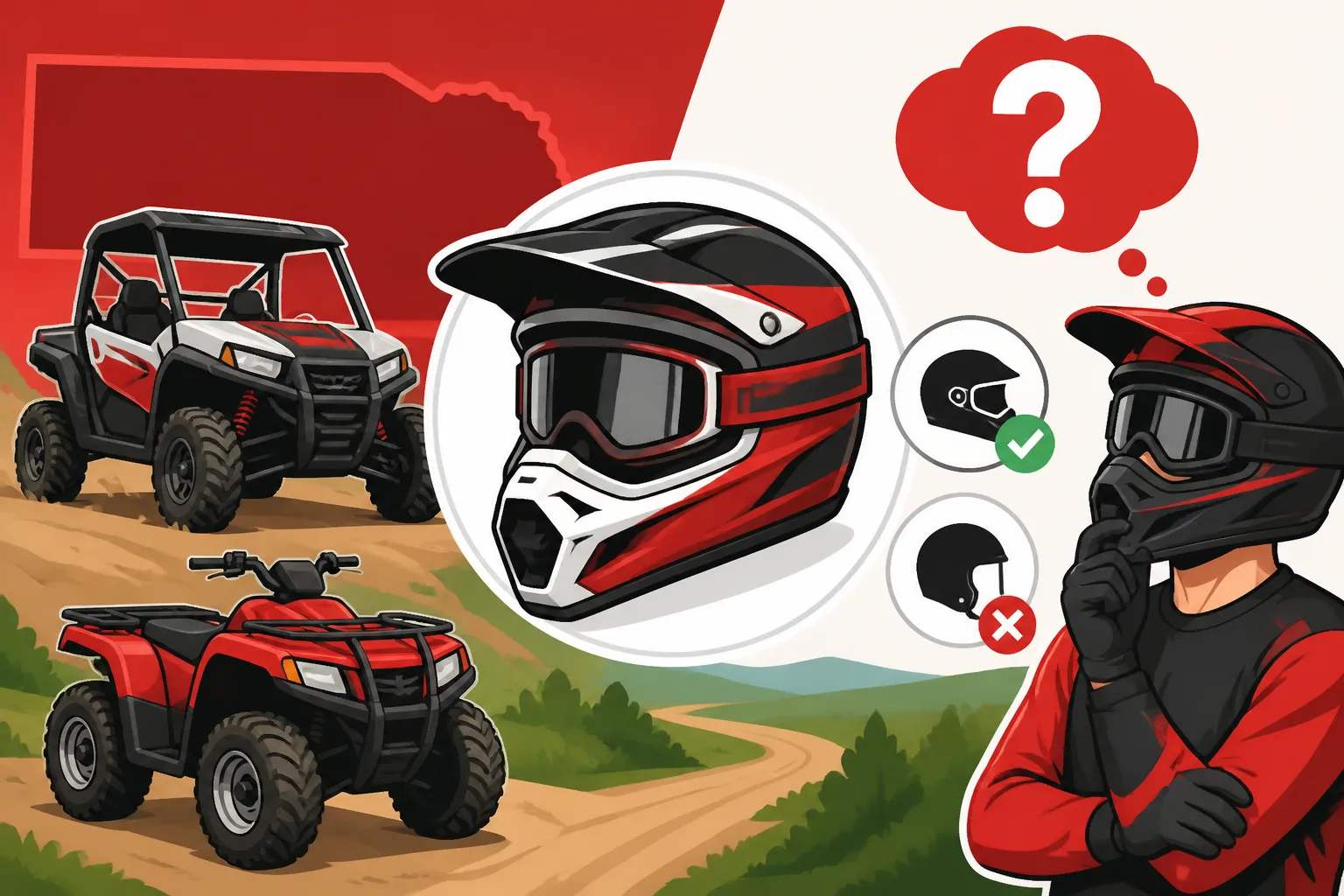
- Motocross/Off-Road Helmets: These are very popular for ATVs and UTVs. They are characterized by an elongated chin bar for face protection and a sun visor. They are designed for maximum airflow (which is great for strenuous riding) and are usually worn with separate goggles. Brands like SuperATV might offer accessories for these helmets or complement them with other gear.
- Full-Face Street Helmets: While designed for motorcycles, some UTV riders prefer these for their integrated face shield and excellent all-around protection, especially for faster trail riding or when road use is permitted. They offer less airflow than off-road helmets, which can be a consideration in hot weather.
- Modular/Flip-Up Helmets: These combine features of full-face and open-face helmets. The chin bar can flip up, offering convenience for conversation or quick breaks. Again, primarily a street design but sometimes adopted by UTV riders.
- Open-Face/¾ Helmets: These cover the top, back, and sides of the head but leave the face exposed. While offering some protection, they are generally not recommended for ATV/UTV riding due to the lack of chin and face protection, which are common impact points in off-road accidents.
Ensuring a Proper Helmet Fit and Care
Once you choose a type and certification, getting the right fit is paramount. A helmet that's too loose can shift during an impact, failing to protect you, and one that's too tight can be uncomfortably painful.
- Size Measurement: Use a cloth tape measure to find the circumference of your head, just above your eyebrows and ears. Compare this measurement to the manufacturer's sizing chart.
- Snug Fit: When you put the helmet on, it should feel snug all around your head, with no pressure points. It should not be able to rotate or slide when you try to move it up, down, or side to side.
- Chin Strap: Always fasten the chin strap securely. It should be tight enough that you can't easily slip a finger between the strap and your chin. The strap keeps the helmet on your head during an impact.
- Field of Vision: Ensure the helmet doesn't obstruct your peripheral vision.
- Comfort Test: Wear the helmet for a few minutes in the store (if possible) to check for any discomfort or hot spots.
Caring for your helmet is also crucial for its longevity and effectiveness.
- Cleaning: Use mild soap and water for the shell and interior padding. Avoid harsh chemicals that can damage materials.
- Storage: Store your helmet in a cool, dry place, away from direct sunlight or extreme temperatures. Avoid hanging it by the chin strap.
- Replacement: Helmets are designed for a single impact. If your helmet takes a significant hit, even if there's no visible damage, replace it immediately. Helmet materials can degrade over time, so most manufacturers recommend replacing a helmet every five to seven years, regardless of impacts.
The Role of Private Parks and Ordinances in Helmet Enforcement
It’s easy to focus solely on state laws when thinking about rules, but for ATV and UTV riders in Nebraska, private parks and local ordinances play an equally, if not more, significant role in regulating helmet use. These specific jurisdictions or entities have the power to create and enforce their own safety guidelines, which can often be more stringent than state law, particularly when it comes to personal protective equipment. Understanding this layered approach to regulation is key to avoiding issues and ensuring a safe, enjoyable ride.
Imagine planning a big weekend trip to a new riding area only to be turned away at the gate because you didn't know their specific helmet rule. It's a frustrating scenario that's entirely avoidable with a little homework. The rules aren't always about state mandates; sometimes, they're about the specific conditions of the land you're on or the community you're passing through.
Private Park and Event-Specific Helmet Rules
Almost without exception, private ATV/UTV parks and organized events in Nebraska will have their own mandatory helmet rules. This isn't just about safety; it's also a significant liability consideration for the operators. If a rider is seriously injured without a helmet, it could open the park to legal challenges. Therefore, you will nearly always find clear stipulations about helmet use as a condition of entry. For places like [Bessey OHV Trails at Halsey in Nebraska] or [Cedar Run ATV Trail in Nebraska], expect to wear a helmet, and often a DOT-approved one at minimum.
These rules often extend beyond just "wear a helmet." They might specify:
- Type of Helmet: For instance, requiring full-face helmets for youth riders or for certain high-speed tracks.
- Certification: Only allowing DOT, Snell, or ECE certified helmets.
- Condition: Helmets must be in good condition, not visibly damaged.
- Passengers: All passengers, regardless of age, must also wear helmets.
Before heading to any private park or organized ride, always check their website or call ahead to confirm their specific helmet requirements. This small step can save you a lot of hassle and potential disappointment. It also ensures you're prepared with the correct gear, which might include specific accessories like a shatter-resistant windshield from SuperATV that pairs well with helmets, preventing debris from hitting your face shield.
City and County Ordinances Regarding Helmets
As more cities and counties in Nebraska consider opening their streets to ATVs and UTVs, they often do so with a host of accompanying safety regulations. A helmet requirement is a frequent addition to these local ordinances, particularly when a machine is operating on public paved roads. These local laws are designed to balance rider access with public safety concerns, especially given the increased risk of collision with other vehicles on public streets. [Nebraska City Ordinances That Open Streets] is a prime example of where such rules might be found.
For example, a town might pass an ordinance that allows UTVs on certain streets but explicitly states that "all operators and passengers of Utility Terrain Vehicles (UTVs) operating on city streets must wear a Department of Transportation (DOT) approved helmet." This rule would apply regardless of whether the state has a general helmet law for ATVs. It's a local condition for local access. If you live in or plan to visit a town that has embraced street-legal ATVs, it's vital to research their specific ordinance regarding helmets, speed limits, flag requirements, and other safety equipment. Penalties for violating these local rules can include fines, and repeated violations could lead to the revocation of your ability to ride on those streets.
Essential Safety Gear Beyond the Helmet
While our focus has been heavily on helmets, it's crucial to remember that head protection is just one component of a comprehensive safety strategy for ATV and UTV riding. These machines are powerful and expose riders to various elements and potential hazards. To truly minimize risks and enhance your riding experience, you need to consider a broader range of protective gear. Just like a full ensemble of parts from SuperATV can optimize your machine's performance and durability, a full set of safety gear optimizes your safety and comfort.
Think of it this way: you wouldn't send a soldier into battle with just a helmet, right? The same logic applies to off-road riding. Your body is exposed to impacts, abrasions, flying debris, and the elements. A helmet protects your most vital organ, but the rest of you also needs safeguarding. Investing in quality gear is not just about protection; it's about comfort, fatigue reduction, and ultimately, extending your riding career by preventing injuries that could sideline you.
Eye Protection and Goggles
Right after a helmet, reliable eye protection is arguably the most critical piece of safety gear. Whether you're wearing an open-face helmet or a motocross helmet, your eyes are vulnerable to dust, dirt, mud, branches, insects, and even small rocks kicked up by other riders. A simple splash of mud can temporarily blind you, leading to an accident.
- Goggles: These are the preferred choice for off-road riding, especially when paired with a motocross helmet. Look for goggles with good ventilation to prevent fogging, a wide field of vision, and impact-resistant lenses. Different lens tints can also improve visibility in varying light conditions. Make sure they fit snugly with your helmet and seal well around your eyes.
- Integrated Face Shields: If you opt for a full-face or modular street helmet, the integrated face shield provides excellent eye protection. Ensure it's scratch-resistant and kept clean for optimal visibility.
Never ride with just sunglasses, as they offer minimal impact protection and can easily fly off. Even short, slow rides can kick up unexpected debris. Good eye protection ensures you can see where you're going and react quickly to changing trail conditions.
Gloves, Boots, and Body Armor
Your hands, feet, and torso also need significant protection when riding.
- Gloves: ATV/UTV specific gloves are designed to provide grip, protect against blisters, cuts, and abrasions, and offer some impact protection. They usually have reinforced palms and knuckles. Choosing a pair with good ventilation for warmer weather and some insulation for colder rides can significantly enhance comfort and control.
- Over-the-Ankle Boots: Proper riding boots are crucial. They protect your feet and ankles from impacts, crushing injuries, and hyperextension. Regular sneakers or work boots simply don't offer the same level of protection. Look for boots that provide good ankle support, have sturdy soles for grip on footpegs, and are made from durable, abrasion-resistant materials. Many off-road boots extend up the shin for added protection.
- Body Armor/Chest Protector: For aggressive riding, racing, or navigating particularly rocky or challenging terrain, a chest protector or full body armor is a wise investment. These protect your torso, shoulders, and back from impacts with handlebars, trees, or the ground during a fall. While not always legally required, this gear can be a lifesaver, especially for riders pushing their limits or navigating dense wooded areas.
- Long Pants and Long-Sleeved Shirt: Even on hot days, wearing long pants (preferably riding pants with padded sections) and a long-sleeved shirt (jersey) made of durable, breathable material can prevent scrapes, cuts, and sunburn. Denim jeans are better than shorts, but dedicated riding pants offer superior protection.
Remember, a mishap can happen to anyone, regardless of experience. Preparing your body with the right gear, from head to toe, is just as important as maintaining your machine and understanding the rules of the trail.
Here's a quick comparison of helmet types:
| Helmet Type | Primary Use Case | Key Features | Typical Certifications | Pros | Cons |
|---|---|---|---|---|---|
| Motocross/Off-Road | Aggressive Off-Road, Racing | Extended chin bar, visor, worn with goggles | DOT, Snell, ECE | Excellent airflow, face/chin protection | Requires separate goggles |
| Full-Face Street | On-Road, Faster UTV Riding | Integrated face shield, aerodynamic | DOT, Snell, ECE | Full face protection, quieter | Less airflow, heavier, can fog |
| Modular/Flip-Up | Versatile UTV Riding | Chin bar lifts up, integrated face shield | DOT, ECE | Convenience, good protection | Heavier, more complex, less airflow |
| Open-Face/¾ | Casual, Low-Speed, Cruising | Covers top/sides, face exposed, worn with glasses | DOT | More open feel, lighter | Minimal face/chin protection |
Navigating Age-Specific Rules and Recommendations
When it comes to ATV and UTV riding, age is often a significant factor in safety regulations and recommendations, particularly regarding helmets. While Nebraska doesn't have a universal helmet law for adults, the rules and safety guidelines often tighten up considerably for younger riders. This focus on youth safety is rooted in the understanding that children and teenagers may lack the judgment, physical strength, or experience to safely operate these machines, and their developing bodies are more vulnerable to severe injuries.
It's a common scenario: a family wants to enjoy the outdoors together, and the kids are eager to ride their own youth quads. As a parent, you want to encourage outdoor activity, but you also need to ensure their safety and comply with any rules. This section aims to clarify the specific considerations for younger riders in Nebraska, offering guidance on legal requirements and best practices.
Nebraska ATV Age Requirements and Helmet Implications
Nebraska does have specific age restrictions for operating ATVs, particularly on public lands or when crossing roads. While these statutes don't explicitly mandate helmets, they create a framework where safety gear, including helmets, becomes implicitly or explicitly required through other means, such as private park rules or responsible parenting. For instance, [Nebraska ATV Age Requirements] outlines who can ride what and where. Generally, children under specific ages are often prohibited from operating certain engine sizes or from riding on public access areas without adult supervision.
The lack of a state helmet law for youth on private land can sometimes create a false sense of security for parents. However, virtually every ATV manufacturer, safety organization, and private riding park strongly recommends or requires helmets for all youth riders. Even if the state itself doesn't issue a ticket for an unhelmeted minor on private property, allowing a child to ride without this crucial protection is an unnecessary and significant risk. The stakes are simply too high when it comes to head injuries, especially for children whose brains are still developing.
Private Park Minimum Ages and Helmet Enforcement
Private riding parks and organized events, which are often the primary places many families ride, will almost certainly enforce strict age and helmet rules for minors. These parks often have minimum age requirements for operating certain machines, and they nearly always require DOT-approved helmets for all riders under 18. Some may even have stricter rules, such as requiring full-face helmets for younger participants or those on faster machines. [Nebraska Private Park Helmet Rules] delves into these specifics.
It's not uncommon for a park to have a "no helmet, no ride" policy that is particularly stringently applied to children. Before planning a family trip to a riding park, parents should thoroughly review the park's specific safety rules for youth riders. This might include:
- Minimum riding age for specific machines.
- Requirement for a parent or guardian to ride alongside or supervise.
- Mandatory helmets, often with specific certification (e.g., DOT).
- Restrictions on passengers for youth riders.
These rules are in place for a reason: to protect young riders. As a parent, embracing these guidelines and going above and beyond the minimum legal requirements is paramount. Your child's safety should always be the top priority, and a quality, properly fitted helmet is non-negotiable for any young rider. You can find robust helmets and related youth gear from reputable suppliers, which can offer peace of mind when your kids hit the trails.
Disclaimer
This article is for general informational purposes only and does not constitute professional advice. Laws, prices and regulations vary by location and change over time. Consult a qualified professional for guidance on your specific situation.