Nebraska’s 30 mph Road Limit
One of the biggest headaches for ATV and UTV owners in Nebraska is figuring out where you can actually ride your machine legally, especially when it comes to public roads. It's frustrating to invest in a fantastic off-road vehicle only to feel constantly unsure about the rules that govern its use beyond your private land. This comprehensive guide is here to untangle the complexities of Nebraska's ATV and UTV road laws, with a particular focus on the crucial 30 mph speed limit and other vital requirements for keeping your rides safe and legal.
Understanding Nebraska's ATV Road Use Laws
Nebraska's approach to ATV and UTV road use can feel a bit like a patchwork quilt, with different rules applying based on the type of road and even local government decisions. It's not like simply throwing a license plate on your truck and driving anywhere. For off-road machines, the rules are much more restrictive, and understanding the foundational principles is key to avoiding an unwelcome conversation with a deputy. The main takeaway is that general road use is prohibited unless a specific exception allows it, and those exceptions often come with caveats.
The Agricultural Exemption: A Foundation
For many folks in rural Nebraska, the idea of using an ATV or UTV on a county road for farm-related tasks seems like common sense. Thankfully, the law largely agrees with this, providing a significant agricultural exemption. This allows ATVs and UTVs to be operated on public roads for agricultural purposes, provided they meet certain criteria. Think of it: you're moving from one field to another, checking fences, or hauling tools to a distant pasture. These are the kinds of activities this exemption aims to cover. It's not a free pass to drive to town for groceries, but it acknowledges the practical realities of farming and ranching in the state.
However, "agricultural purposes" isn't a blanket term that covers every single trip. The law is fairly specific about what constitutes an agricultural use. Typically, this means directly related to farming, ranching, or livestock operations. It's about moving machines or equipment between parcels of land, checking crops, or tending to animals. Using your ATV for an agricultural purpose means you're acting as a necessary part of your farming operation, not just taking a scenic drive because your farm is nearby. You'll still need to follow speed limits and have the proper equipment, which we'll delve into shortly. [Nebraska's Agricultural Road Exception] is a vital piece of legislation for many landowners.
Local Ordinances: Opening City Streets
While state law generally restricts ATV and UTV use on public roads, it does grant power to local municipalities – specifically cities and villages – to create their own ordinances to permit such use on certain streets. This is where the "patchwork quilt" analogy really comes into play. What's legal in one town might be strictly prohibited in the next town over, even just a few miles down the road. It means you absolutely cannot assume that because you saw an ATV cruising down Main Street in one village, you can do the same in another.
These local ordinances typically lay out very specific conditions. They might designate certain streets or alleys, define operating hours, impose helmet requirements (even if state law doesn't for ATVs), or even require a special local registration sticker or permit. If you live in or plan to ride through a city or village, your first step should always be to contact city hall or check their official website for any existing ATV/UTV ordinances. Simply looking for signs on the street isn't enough; you need to understand the full scope of their rules, as well as the fees that might be involved. [Nebraska Cities That Adopt ATV Ordinances] often have unique rules.
County Board Resolutions: Unincorporated Villages
Similar to how cities can adopt ordinances, Nebraska law also provides a mechanism for county boards to allow ATV and UTV use within the unincorporated villages located in their county. These are those smaller communities that aren't officially incorporated as a city or town and therefore fall under county jurisdiction. Just like city ordinances, county board resolutions are specific to the area they cover and come with their own set of rules and limitations. This provision recognizes that many unincorporated villages might benefit from allowing residents to use ATVs for local travel, especially where paved roads are few or where a quick trip to a neighbor is more convenient on a utility vehicle.
The process for a county board to enact such a resolution often involves public hearings and a vote, reflecting the community's needs and concerns. If you reside in or frequently visit an unincorporated village, it's crucial to understand if your county board has passed such a resolution and what its terms are. This isn't about opening all county roads, but specifically the public ways within the boundaries of that particular village. Again, checking with the county clerk's office or the county's official website is the best way to get accurate, up-to-date information. Don't rely on hearsay from a friend; the exact wording of the resolution matters immensely.
The Critical 30 MPH Speed Limit
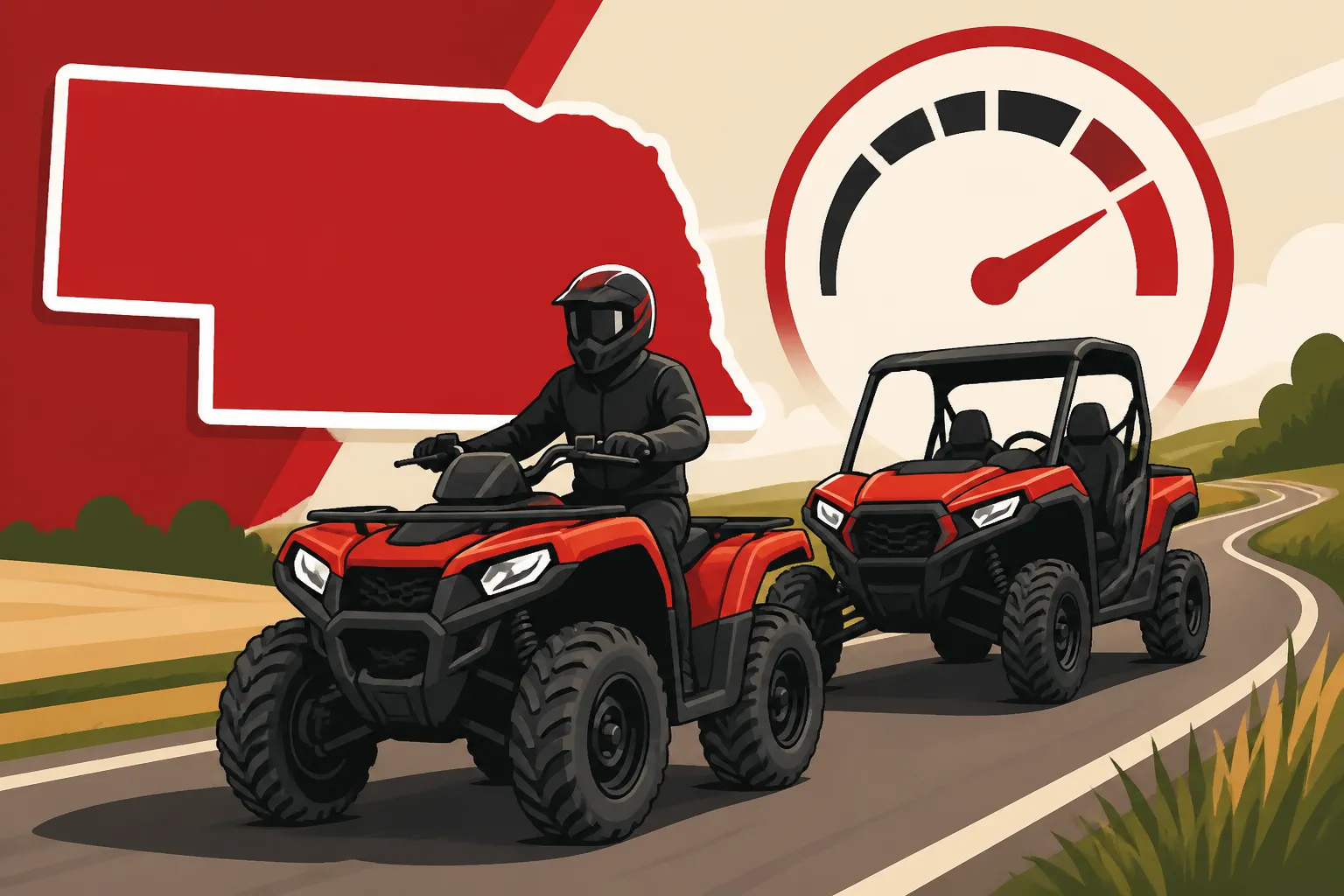
When Nebraska law allows an ATV or UTV to be operated on a public road, whether it's for agricultural purposes or under a local ordinance, one of the most consistently enforced rules is the speed limit: a strict 30 miles per hour. This isn't a suggestion; it's a hard limit designed to enhance safety for ATV riders and other motorists alike. Ignoring this limit can quickly turn a legal trip into an illegal and potentially dangerous one, leading to fines and even more serious consequences.
Why 30 MPH is the Absolute Maximum
The 30 mph limit is not arbitrary; it's rooted in safety considerations for off-road vehicles that simply aren't designed for highway speeds or sustained road use. ATVs and UTVs have a higher center of gravity, narrower wheelbases compared to cars, and often knobby tires optimized for traction in dirt, mud, or sand, not smooth asphalt. These design characteristics make them less stable and more prone to rollovers or loss of control at higher speeds on paved surfaces. A sudden swerve to avoid a pothole at 40 mph on an ATV can have drastically different, and far more dangerous, results than doing so in a passenger car.
Furthermore, visibility is a major factor. While equipped with lights, ATVs and UTVs are smaller than cars and can be harder for other drivers to spot, especially in low light or on winding roads. The lower speed limit gives both the ATV rider and other motorists more time to react, reducing the risk of collisions. This limit is one of the most fundamental aspects of [Nebraska ATV Road Rules Under 60-6,356], and it is applied uniformly across all permissible road use scenarios.
Practical Implications of the Speed Limit
Understanding the 30 mph limit means adjusting your mindset and your ride plans. If you're used to hitting higher speeds on trails or private land, you'll need to consciously slow down for any stretch of public road. This might mean longer travel times for agricultural trips between fields or for navigating through an authorized village. It's about patience and adherence to the law. Trying to rush will not only put you at risk but also invite law enforcement attention.
For many modern UTVs, especially utility models, 30 mph might feel quite natural. However, for some sportier ATVs, maintaining such a low speed can feel restrictive. It's important to remember that the law prioritizes safety over exhilaration when it comes to shared public roadways. If your machine's speedometer isn't entirely accurate, or if you're not used to judging speed precisely, consider using a GPS app on your phone or a dedicated GPS unit to monitor your actual speed and ensure you stay well within the legal limit.
Safety Considerations at Low Speeds
Even at 30 mph, safety remains paramount. While the risk profile changes, it doesn't disappear. You're still sharing the road with vehicles that can travel much faster and are significantly heavier. Maintaining a vigilant awareness of your surroundings is crucial. Look twice for approaching vehicles, especially at intersections or when making turns. Be predictable in your movements and use turn signals if your machine is equipped with them (or hand signals if not).
Road conditions can also pose challenges. Loose gravel on county roads, potholes, or unexpected debris can still cause issues even at lower speeds. Always maintain a safe following distance from any vehicles ahead of you. And remember, the 30 mph limit isn't permission to drive up to 30 mph in all conditions; if visibility is poor due to fog or heavy dust, or if the road surface is slick, you should reduce your speed even further to ensure your safety and the safety of others.
Essential Equipment for Road-Legal ATVs
Operating an ATV or UTV on Nebraska's public roads isn't just about speed; it's also about equipping your machine properly to ensure visibility and safe operation. Just as a car needs working lights, brakes, and safety features, so too does an off-road vehicle when it enters the public sphere. These equipment requirements are designed to make your machine visible to other motorists and to indicate your intentions clearly.
Lights, Brakes, and Reflectors
When operating on public roads, your ATV or UTV must have functional head and tail lights, particularly during specific hours or conditions. [Nebraska Lighting Statute 60-6,357] outlines these requirements. This means headlights that illuminate the road ahead and taillights that are clearly visible from the rear. You'll also need brake lights that activate when you apply the brakes, signaling to following vehicles that you're slowing down or stopping. Many modern ATVs and UTVs come standard with these, but it's crucial to check that they are all in good working order before you head out. Burnt-out bulbs are not just an inconvenience; they're a safety hazard and a legal violation.
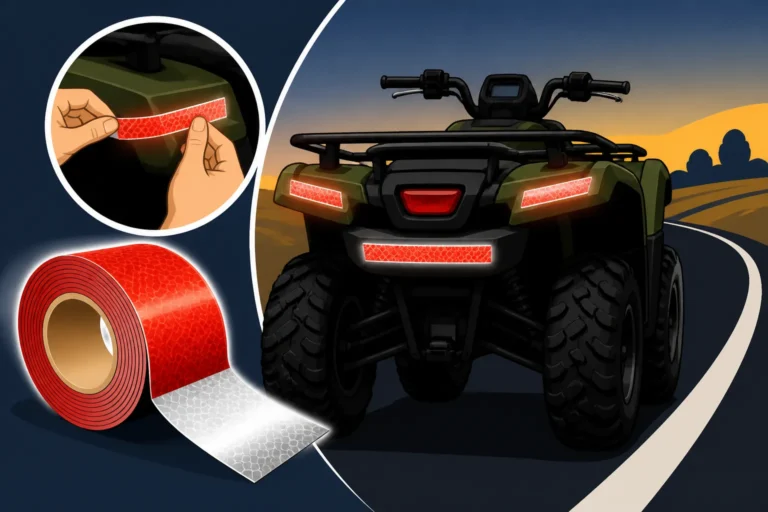
Beyond active lighting, reflectors are also key. These passive safety features help make your machine more visible even when its lights might not be directly shining or in situations where ambient light is low. Check for factory-installed reflectors on the sides and rear of your ATV. If your machine is older or has had aftermarket modifications, you might consider adding additional reflective tape, especially to the sides, to enhance your profile for other drivers. This is especially true for farm equipment or utility models that might blend into their surroundings.
The Mandatory 5-Foot Safety Flag
Perhaps one of the most distinctive and often overlooked requirements for road-legal ATVs and UTVs in Nebraska is the mandatory safety flag. This isn't just a suggestion; it's a legal necessity. The law states that when operating on a public road, your machine must display a fluorescent orange or red flag, measuring at least 30 square inches, mounted at least five feet above the ground on the machine. This flag acts as an additional visual marker, significantly increasing your visibility, especially on rolling terrain or over rises in the road where your smaller machine might otherwise be obscured by the landscape or other vehicles.
Many manufacturers like SuperATV offer flagpole mounts and flags specifically designed for ATVs and UTVs, making it easy to comply with this regulation. It’s important to make sure the flag is securely mounted and truly extends five feet high, not just four and a half. This height ensures it's visible above cars and pickups, giving other drivers an earlier warning of your presence. Don't skimp on this piece of equipment; it's a low-cost item that provides significant safety benefits. [Why Road-Legal ATVs Need a 5-Foot Safety Flag] is something every rider should understand.
Other Recommended Gear for Visibility
While not always legally mandated for ATVs in Nebraska (unlike helmets for motorcycles, for example), wearing appropriate gear can dramatically improve your safety and visibility on public roads. Brightly colored riding gear, especially in fluorescent or high-visibility colors, can make you stand out. A bright orange or lime green vest worn over your jacket can be easily seen by other drivers, particularly during the day. This is an extra layer of protection that goes beyond the legal minimum.
Furthermore, maintaining a clean and clear windshield (for UTVs) or goggles/face shield (for ATVs) is vital for your own visibility. Dirty or scratched eyewear can impair your ability to spot hazards or other vehicles. Consider adding auxiliary lighting, such as LED light bars, to your machine if you frequently ride in agricultural settings or at dusk/dawn, even if not explicitly required by law for road use. The more visible you are, the safer your ride will be.
Navigating Different Road Types: City, County, and Highways
The rules for operating your ATV or UTV on public roads in Nebraska are highly dependent on the type of road you're on. There isn't a one-size-fits-all permission slip. Understanding the nuances between county roads, city streets, and highways is paramount to staying legal and safe. Ignoring these distinctions can lead to citations and even serious accidents.
Rules for County Roads and Section Lines
County roads and section lines form the backbone of rural Nebraska's transportation network, and this is where agricultural use of ATVs and UTVs is most common. As mentioned earlier, machines can be operated on these roads for agricultural purposes, provided they adhere to the 30 mph speed limit, display the 5-foot safety flag, and have proper lighting. This applies to activities like moving between fields, checking livestock, or transporting small equipment essential for farm work. [Nebraska Rules for Riding a County Road] are crucial for rural residents.
It's important to differentiate agricultural use from recreational riding. Taking your quad out for a joyride down a county road simply because it's convenient or scenic is generally not permitted under the agricultural exemption. You must have a bona fide agricultural purpose for being on the road. Always be prepared to explain your purpose if questioned by law enforcement. Additionally, be mindful of sharing these roads with other vehicles, especially during planting and harvest seasons when large farm equipment is frequently on the move. Dust can also be a significant issue on gravel roads, reducing visibility for everyone.
Specifics for City Streets and Alleys
As discussed, operation on city streets and alleys is only allowed if a specific municipal ordinance permits it. If such an ordinance exists, it will outline the precise conditions for use. This could include which streets are open, the hours of operation, whether you need a local permit or registration, and any additional equipment requirements beyond state law (like turn signals or mirrors). Some cities might restrict ATV use to residential streets and ban them from arterial roads or business districts.
For example, a city might allow residents to use their UTVs on side streets to access a local park or retrieve mail from a community mailbox, but prohibit them on the main highway frontage road that runs through town. It's not enough to know an ordinance exists; you must know the details of that ordinance. Always check with the specific city or village office before operating your ATV or UTV on their streets. Ignorance of a local ordinance is not a valid defense if you're cited. [Nebraska City Ordinances That Open Streets] are varied and specific.
Highway Crossings: Strict Limits and Procedures
This is perhaps the area with the most stringent rules: crossing a state highway or controlled-access highway. Nebraska law generally prohibits ATVs and UTVs from traveling on state highways. However, it does allow for perpendicular crossings under very specific conditions. You can cross a highway if it is done at a 90-degree angle, at an intersection, and after coming to a complete stop and yielding to all other traffic. This is not a casual maneuver; it requires extreme caution and adherence to all traffic laws.
You cannot drive down a state highway, even for a short distance, to reach a crossing point. The intention is to allow you to get from one side of a road to another when agricultural land or permitted areas are on both sides. Controlled-access highways (like interstates) are typically off-limits for ATVs and UTVs, even for crossing, due to the high speeds and limited access points. Always choose the safest possible crossing point, making sure you have clear sight lines in both directions, and be prepared to wait until traffic is completely clear. [Crossing a Highway at a Ninety-Degree Angle] demands your full attention.
Insurance, Licensing, and Age Requirements
Beyond the physical limitations of your machine and the roads it can travel, Nebraska also has requirements concerning who can operate an ATV or UTV on public roads, and what kind of financial responsibility they must carry. These rules are in place to ensure that operators are competent and that there's a safety net in case of an accident.
Liability Insurance: What You Need
If you plan to operate your ATV or UTV on any public road in Nebraska, including for agricultural purposes or in areas opened by local ordinances, you are generally required to carry liability insurance. This isn't optional; it's a legal mandate similar to what's required for cars and trucks. The insurance provides financial protection in case you cause an accident that results in injury to another person or damage to their property. Without it, you could be personally responsible for thousands, or even hundreds of thousands, of dollars in medical bills or repair costs.
The minimum liability coverage amounts required in Nebraska are set by state law, and these amounts can change over time. It's always best to check with a reputable insurance provider or the Nebraska Department of Insurance for the most current figures. Make sure your policy specifically covers road use for your ATV or UTV. Some off-road policies might only cover private property riding, so verify that your coverage extends to public roads as allowed by law. [Nebraska Requires Liability Insurance on Roads] is a serious requirement.
Driver's License or Farm Permit
To legally operate an ATV or UTV on a public road in Nebraska, the operator generally needs a valid Class O (operator's) driver's license. This is the standard driver's license that most people hold for operating cars and light trucks. The rationale is that if you're on a public road, you need to possess the same basic driving knowledge and skills as anyone else operating a vehicle there.
However, there is an important exception for minors engaged in agricultural operations. A youth who is at least 13 years old but under 16 can operate an ATV or UTV on a public road for agricultural purposes if they hold a valid farm permit. This permit allows them to assist with farm work without needing a full driver's license. It's a specific permit for a specific type of work, not a general license to drive a quad to school. Ensure the permit is valid and that the youth is indeed engaged in a legitimate agricultural activity. [Can a Farm Permit Replace a Driver's License?] only under specific circumstances.
Age Restrictions for Riders and Passengers
Beyond the licensing requirements, Nebraska also has age restrictions concerning who can ride an ATV or UTV, both as an operator and as a passenger, especially when it comes to youth. While state law doesn't explicitly mandate a specific minimum age for ATV operators on private land, when operating on public roads, the driver's license or farm permit requirements effectively set a minimum age. Generally, this means 16 for a full driver's license or 13 for a farm permit for agricultural use.
For passengers, the rules can vary. Many ATVs are designed for a single rider and carrying a passenger can dangerously affect the machine's balance and handling, particularly on uneven terrain or at speed. Most ATV manufacturers strongly advise against carrying passengers on single-rider machines. UTVs, designed with multiple seats and roll cages, are generally built to carry passengers safely. However, specific age requirements for passengers on either type of machine might be outlined in local ordinances, so always check local rules in addition to manufacturer guidelines.
Common Mistakes and Misconceptions
Despite the relatively clear legal framework, many ATV and UTV riders in Nebraska still fall prey to common misunderstandings or simply make mistakes that can lead to fines, accidents, or both. It's easy to assume things or rely on outdated information, but when it comes to public safety and legal compliance, assumptions can be costly.
Believing All Roads Are Open
Perhaps the most prevalent misconception is the belief that if you live in a rural area, all county roads are automatically open for ATV or UTV use. This is simply not true. As highlighted earlier, general road use is prohibited unless it falls under a specific exception, primarily agricultural use, or is explicitly allowed by a city ordinance or county resolution for an unincorporated village. Just because a road is gravel or lightly traveled does not mean it's an open invitation for your off-road machine.
Many riders also mistakenly think that if a neighbor uses their ATV on a certain road, it must be legal for everyone. This is a dangerous assumption. Your neighbor might have a legitimate agricultural purpose, or they might be operating illegally. Always verify the legality of your own intended use for your specific situation. [Nebraska Rules Riders Get Wrong] often center around this misunderstanding.
Ignoring the Flag and Lighting Rules
Another frequent oversight is neglecting the required safety equipment, particularly the 5-foot safety flag and proper lighting. Riders might think these are minor details, or that "no one will notice." However, these requirements are in place for a very good reason: visibility. An ATV is a small machine, and anything that makes it more noticeable to other drivers is a critical safety feature. Law enforcement officers are well aware of these requirements and will often enforce them, not just for the sake of a ticket, but for public safety.
Forgetting to turn on your headlights during the day (when required by local ordinance or low-visibility conditions) or having a burnt-out taillight can lead to dangerous situations and citations. A quick pre-ride check of all lights and ensuring your flag is correctly mounted and visible should become a routine part of preparing for any road trip, no matter how short.
Misunderstanding Insurance Requirements
Some ATV and UTV owners might carry a basic off-road insurance policy, assuming it covers them for any use, including on public roads. However, many standard off-road policies are tailored for private property use and may not include the necessary liability coverage for public road operation. This misunderstanding can leave riders dangerously exposed financially in the event of an accident on a public thoroughfare.
It's crucial to explicitly discuss your planned road use with your insurance agent and confirm that your policy provides the required liability coverage for operating on Nebraska's public roads where legally permitted. Don't assume your existing policy is sufficient. A quick phone call could save you a significant amount of stress and money down the line.
Enforcement and Penalties for Non-Compliance
Operating an ATV or UTV on Nebraska's public roads without adhering to the state's laws and any applicable local ordinances carries real consequences. Law enforcement officers take these rules seriously because they are directly tied to public safety. Understanding what can happen if you're found in violation can serve as a strong motivator to ensure you're always riding legally.
What a Deputy Can Ask to See
If you are stopped by a law enforcement officer while operating your ATV or UTV on a public road, they will likely ask to see several things. First and foremost, they will want to verify your identity and your eligibility to drive, so a valid driver's license (or farm permit) is essential. They will also inquire about your insurance, so be prepared to show proof of liability coverage that extends to public road use. This could be an insurance card or a digital copy on your phone.
Beyond personal documents, the deputy will inspect your machine itself. They will check for the mandatory 5-foot safety flag, ensuring it's properly mounted and visible. They'll also verify that your headlights, taillights, and brake lights are all in working order. If you're claiming agricultural use, they might ask about the nature of your trip and your destination to confirm it aligns with the [Nebraska Farm Trips Outside City Limits] exception. Cooperation and a clear understanding of the rules are your best assets in such a situation.
Ticket Costs and Court Consequences
The most immediate consequence of non-compliance is often a traffic citation. The cost of these tickets can vary depending on the specific violation, but they are generally not cheap. Furthermore, a traffic ticket can carry points against your driving record, potentially leading to increased insurance premiums or even the suspension of your driver's license if you accumulate too many points. Operating an uninsured vehicle is a particularly serious offense, often carrying higher fines and potentially more severe penalties.
In addition to the financial cost of the ticket, you may also incur court costs if you choose to contest the citation or if a mandatory court appearance is required. This means taking time off work, travel to the courthouse, and the stress of navigating the legal system. It's far easier and less expensive in the long run to simply adhere to the rules from the outset.
Machine Impoundment and Other Ramifications
In more serious cases, particularly for repeated offenses or for dangerous operation, law enforcement has the authority to impound your ATV or UTV. Having your machine impounded means you'll face not only the citation but also towing fees and daily storage fees, which can quickly add up. Retrieving an impounded machine can be a bureaucratic and costly process, delaying your ability to use it further.
Beyond tickets and impoundment, severe violations could lead to criminal charges, especially if reckless operation results in injury or significant property damage. It’s also important to remember that riding where prohibited or unsafely can erode public trust and lead to stricter laws or the revocation of existing ordinances that allow limited road use. Your responsible riding helps keep these privileges available for everyone.
Preparing Your ATV for Nebraska Roads
Getting your ATV or UTV ready for legal operation on Nebraska's public roads isn't just about understanding the rules; it's about physically preparing your machine. This involves routine maintenance, potentially adding aftermarket accessories, and thoughtfully planning your route to ensure compliance and safety.
Pre-Ride Checks and Maintenance
Before every trip that involves public roads, a thorough pre-ride inspection of your ATV or UTV is critical. Start with your tires: check the pressure and inspect for any damage or excessive wear. Ensure all your lights are working – headlights, taillights, and brake lights. Verify that your brakes are responsive and effective. Check your fluid levels (oil, coolant, brake fluid) and ensure there are no leaks.
Your machine's steering should feel tight and responsive, without excessive play. The throttle should operate smoothly, returning to idle immediately when released. Lastly, ensure your 5-foot safety flag is securely mounted and clearly visible. Regular maintenance, such as oil changes, filter cleaning, and checking belts, will not only keep your machine running smoothly but also ensure it's reliable when you need it most on a public road. A breakdown on a county road can be inconvenient and potentially hazardous.
Adding Aftermarket Road-Legal Components
Depending on your ATV or UTV's factory setup, you might need to add certain aftermarket components to meet Nebraska's road-legal requirements. For instance, if your machine doesn't have a robust, easily mountable location for a 5-foot safety flag, you might need a flag mount kit. Many companies, including SuperATV, offer a variety of universal and machine-specific mounts that can be easily installed, providing a sturdy base for your safety flag.
Consider enhancing your lighting if your stock lights feel inadequate for road use, especially during dusk or dawn. Aftermarket LED light bars or auxiliary lights can significantly increase your visibility to other drivers. If your machine lacks turn signals or a horn, adding these can greatly improve your ability to communicate your intentions to other road users, even if not explicitly required by state law for ATVs, they often are for UTVs and certainly improve safety. These additions are about proactive safety, making your machine as visible and communicative as possible.
Planning Your Route to Stay Legal
Careful route planning is perhaps one of the most overlooked aspects of preparing for legal ATV or UTV road use. Don't just hop on and go; map out your journey beforehand. Identify the specific roads that are part of your agricultural operations or the particular city streets designated by a local ordinance. Avoid state highways entirely, or pinpoint the safest 90-degree crossing points if absolutely necessary.
Use online maps or even physical maps to trace your route, noting any areas where you might need to slow down, be extra cautious, or potentially avoid altogether. Consider the time of day you'll be riding. Will visibility be an issue? Will there be heavy traffic from school buses or rush hour commuters? Planning ahead minimizes surprises and ensures that every mile you travel on a public road is done legally and safely, giving you peace of mind during your ride.
| Requirement/Rule | Applicability (Public Roads) | Key Details |
|---|---|---|
| Speed Limit | All permitted road use | Strict 30 mph maximum. Not suggested, but mandated. |
| Purpose of Use | County Roads, Section Lines | Must be for agricultural purposes (e.g., farm work, checking livestock). Recreational use generally prohibited. |
| Local Permission | City Streets, Unincorporated Villages | Only permitted if specific city ordinance or county board resolution allows. Check local government for details. |
| Safety Flag | All permitted road use | Fluorescent orange/red, min 30 sq. inches, mounted 5 feet above ground. Increases visibility. |
| Lighting | All permitted road use | Functional headlights, taillights, brake lights required. Check operation before each ride. Reflectors recommended. |
| Driver's License | All permitted road use | Valid Class O driver's license. Exception: Farm Permit for 13-15 year olds for agricultural purposes only. |
| Liability Insurance | All permitted road use | Mandatory liability insurance with minimum state coverage. Must cover public road use. |
| Highway Crossings | State Highways | Only at 90-degree angles, at intersections, after complete stop, yielding to all traffic. Driving on highways is prohibited. |
| Helmets | Not mandated by state law for ATVs | May be required by local ordinances or private parks. Always recommended for safety. |
| Passengers | Varies by machine/ordinance | ATVs typically single-rider. UTVs designed for passengers. Check local ordinances for age/occupancy limits. |
Disclaimer
This article is for general informational purposes only and does not constitute professional advice. Laws, prices and regulations vary by location and change over time. Consult a qualified professional for guidance on your specific situation.