Nebraska Rules for Riding Farm Ground
Riding your ATV or UTV across the vast fields and pastures of Nebraska for farm work might seem straightforward, but it comes with its own unique set of rules and considerations, especially when that farm work involves even a momentary trip onto a public road. Many folks assume that if a machine is being used for agriculture, it's automatically exempt from all the normal road-riding laws, and while there are indeed some crucial exemptions, it's not a free pass. This guide will walk you through the nuances of legally and safely operating your machine on farm ground and when transitioning to roads for legitimate agricultural purposes in Nebraska, helping you avoid common pitfalls and frustrating encounters with law enforcement.
Understanding What "Farm Ground" Means for Your ATV
Before you even think about hitting the throttle, it's really important to get clear on what "farm ground" actually means in the context of ATV and UTV use in Nebraska. It's not just any open field; it comes with specific legal implications and responsibilities.
Private Property vs. Public Access
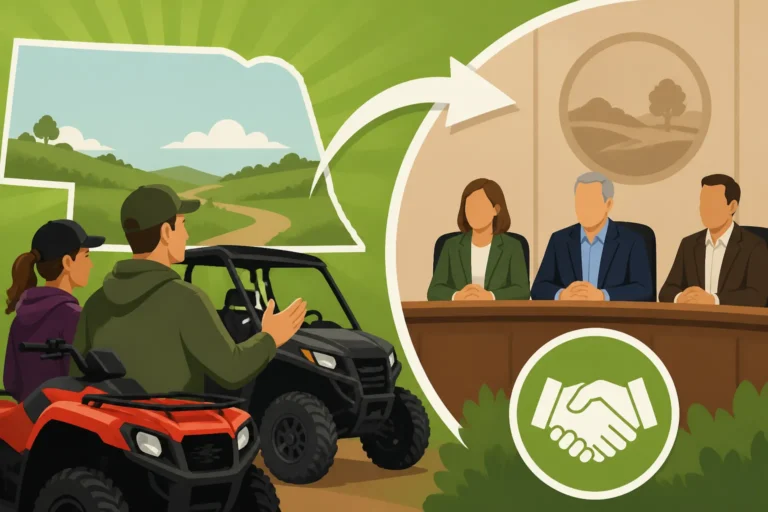
First and foremost, "farm ground" is almost always private property. This seems obvious, but it has huge implications for where and how you can ride. If it's your land, great, you have the owner's permission (because you're the owner!). If it's leased land, you should have express permission from the landowner as part of your lease agreement. But if it's your neighbor's field, or a ranch you've just been driving past, you absolutely, unequivocally need permission. Just because a gate is open, or a field looks empty, does not mean it's open season for riding. Trespassing, even for what seems like an innocent quick spin, can lead to fines, legal troubles, and certainly a very strained relationship with your neighbors. Always, always verify who owns the land and secure proper authorization. [Getting Written Permission From a Ranch Landowner] is more than just a polite gesture; it's a legal safeguard for both you and the landowner.
Agricultural Use Defined by Nebraska Law
The term "agricultural use" isn't just a casual description; it's a legal designation that unlocks certain exceptions, especially when you need to move your ATV or UTV onto public roads. Nebraska Revised Statute 60-6,356 specifically outlines conditions under which an ATV or UTV can be operated on public roads and highways, with agricultural purposes being a primary exception. This means your riding isn't just for fun; it's genuinely part of farming, ranching, or other agricultural operations. Think about activities like checking cattle, inspecting crops, moving equipment from one field to another, spraying weeds, or mending fences. These are all legitimate agricultural uses. If you're just joyriding on a Saturday afternoon, even on land zoned as agricultural, and you happen to briefly pop onto a road, that typically won't qualify for the agricultural exemption for road use. The intent and primary purpose of your trip really do matter.
Navigating Farm Ground: Rules for Private Property Riding
Even on your own land or land where you have permission, there are some best practices and common-sense rules to follow. These aren't necessarily legal statutes for private property, but they're crucial for safety, landowner relations, and general respect for the agricultural environment.
The Importance of Landowner Permission
We touched on this, but it bears repeating: permission is paramount. Whether it's verbal or, ideally, written, knowing you have the landowner's explicit okay prevents misunderstandings. A written agreement, or even a text message exchange confirming permission, can save a lot of headaches later on. Imagine rolling a fence line or checking irrigation pivots on a neighbor's pasture, only to have someone new to the area call the sheriff because they don't recognize you. That written permission in your pocket can quickly clear things up. Also, when you're done, remember to [Leaving Pasture Gates the Way You Found Them] – if it was closed, close it; if it was open for livestock access, leave it open. Small courtesies like these go a long way in maintaining trust and future access.
Basic Safety and Courtesy on Farm Land
Farm ground often has unique hazards that differ from a recreational trail. You might encounter hidden stumps, deep ruts, irrigation ditches, or livestock. Always be mindful of your surroundings. Slow down in unfamiliar areas. Avoid tearing up fields, especially if crops are planted or recently harvested, unless your task specifically requires it. Respect wetlands, drainage areas, and sensitive ecosystems often found on farm properties. Loud exhausts or aggressive riding can also disturb livestock and neighbors, so consider the impact of your actions. Even if you're alone, riding responsibly is always the best policy.
Equipping Your Machine for Farm Tasks
The right setup can make all the difference for farm work. Many ATVs and UTVs are designed for utility, and there are countless aftermarket accessories to enhance their capabilities. For instance, a reliable winch can be a lifesaver when you're pulling a fence post or getting unstuck in a muddy pasture. SuperATV offers a wide range of durable accessories, from heavy-duty bumpers to cargo beds and plows, perfect for handling the rigors of farm tasks. Think about what you're hauling: a sturdy cargo box or a small trailer can make transporting tools, feed, or harvested items much easier. Proper tires are also key – aggressive treads for mud and soft ground, or more general-purpose tires for mixed terrain. Consider a good skid plate if you're navigating rocky or uneven ground to protect the undercarriage of your machine.
When Farm Use Meets Nebraska Roads: Agricultural Exemptions
This is where things can get a little tricky, and where a lot of confusion lies. Nebraska law does provide specific allowances for ATVs and UTVs used for agricultural purposes on public roads, but these aren't without their own stringent requirements. You can't just slap a "farm use" sticker on your quad and hit the highway for a quick errand.
Specific Road Use Cases for Farm ATVs/UTVs
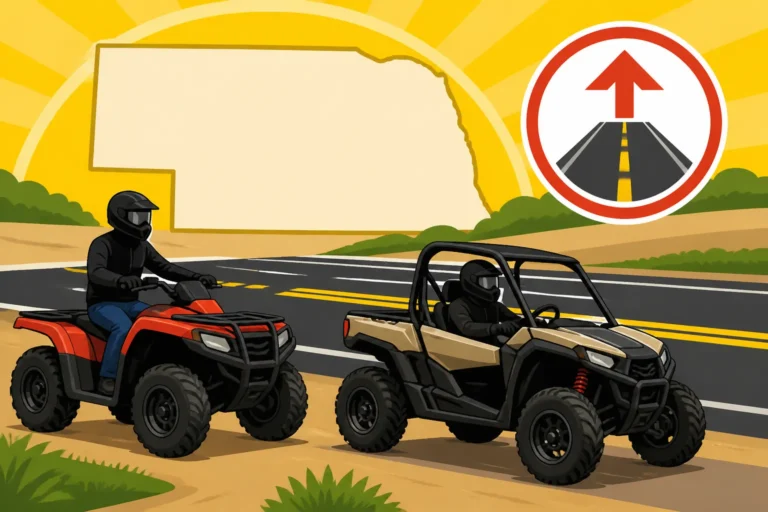
Nebraska's primary statute, 60-6,356, allows ATVs and UTVs to be operated on public roads and highways if they are being used for agricultural purposes, such as moving between fields or parts of your farm property that are separated by a road. This means your trip on the road must be directly incidental to your farming or ranching operation. It's not about recreational riding, even if that recreational riding is on a farm. The law is quite clear: [Nebraska ATV Road Rules Under 60-6,356] exist to facilitate agricultural work, not general transportation or leisure. It's important to differentiate between using your machine on farm ground and using it on a public road for farm-related travel.
Essential Equipment for Road Travel Under Exemption
When you do take your farm machine onto a public road, even for a short agricultural trip, it needs to be equipped for visibility and safety.
Here's what you absolutely need:
- Speed Limit: You are restricted to a maximum speed of [Nebraska's 30 mph Road Limit]. No matter how fast your machine can go, you must adhere to this.
- Lights: Your ATV or UTV must have a headlight and at least one taillight that is illuminated. [Nebraska Requires Head and Tail Lights] are not just for nighttime; they must be on during the day as well for increased visibility. If you're finding your factory lights are a bit dim, aftermarket options from companies like SuperATV can provide brighter, more robust lighting solutions.
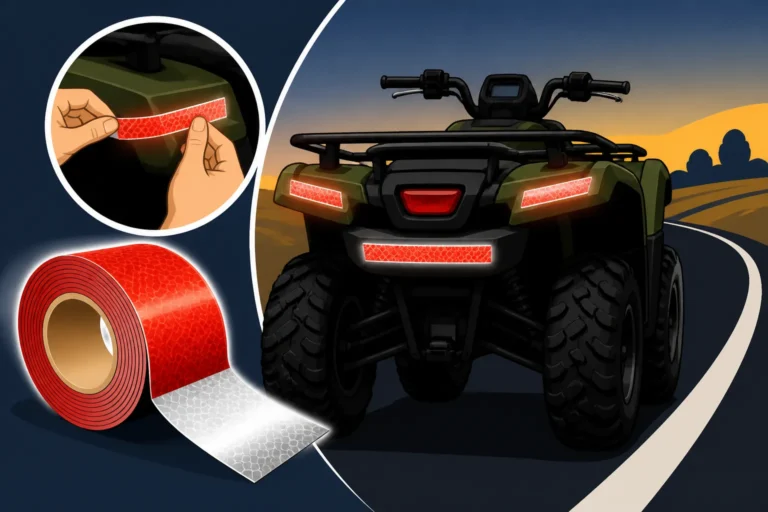
- Safety Flag: This is critical. You need a safety flag that is at least five feet above the ground when mounted on your machine, with a flag that is at least 30 square inches of day-glow orange or red-orange color. This flag makes you much more visible to other traffic. [Nebraska's 5-Foot Safety Flag Rule] is there to ensure drivers in larger vehicles can see your smaller machine.
- Insurance: If you're on a public road, even for farm use, you need liability insurance. [Nebraska Requires Liability Insurance on Roads] to protect yourself and others in case of an accident.
- License/Permit: The operator must hold a Class O operator's license (standard driver's license) or a valid farm permit. [Nebraska Requires a Class O License or Farm Permit] to legally operate the machine on public roads.
Crossing Highways and Public Roads
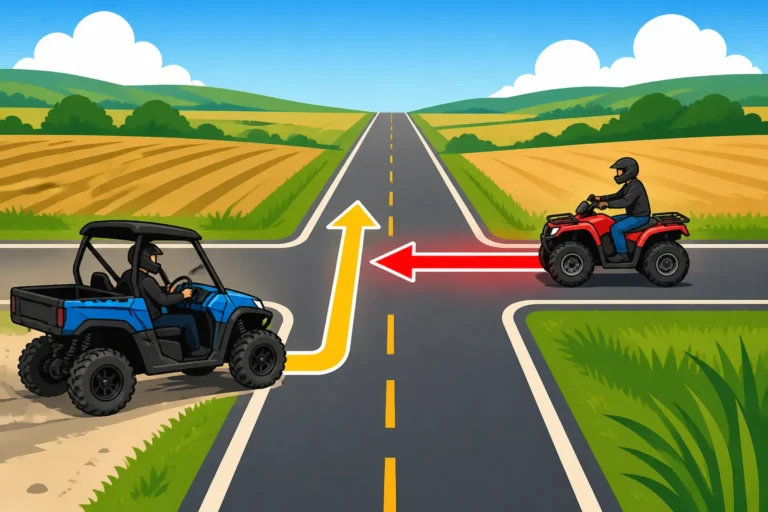
Agricultural exemptions allow you to cross a controlled-access highway or drive on a public road, but there are strict rules for how you do it. You can't just dart across without looking.
- Ninety-Degree Crossings: When crossing a highway, you must do so at approximately a [Nebraska Crossing Rules at Ninety Degrees] angle. This minimizes the time you are in traffic lanes and gives other drivers a clearer view of your path.
- Complete Stops and Yielding: You must come to a [Nebraska Complete Stops Before Crossing] any public road and yield to all other traffic. This is non-negotiable. Other vehicles always have the right-of-way.
- Divided Highways: If you need to cross a divided highway, you can only do so at an intersection. You cannot cross the median at any other point.
Common Misconceptions and Legal Pitfalls
It's easy to make assumptions, especially when dealing with agricultural exemptions, but these often lead to trouble. Knowing what isn't allowed is just as important as knowing what is.
"Farm Use" Is Not a Blanket Pass
The biggest misconception is that "farm use" means you can do anything with your ATV or UTV, anywhere, as long as it's somehow related to a farm. This is absolutely not true. The agricultural exemption for road use is very specific and narrow. It's designed for genuine tasks like checking fences, moving machinery, or inspecting fields. It is not for recreational riding on farm land that simply happens to be adjacent to a road. If your primary purpose is leisure, you don't qualify for these road exemptions. A deputy will look at the totality of the circumstances – are you carrying tools, feed, or equipment? Is it a direct route between two points of your agricultural operation? Or are you just out for a ride? The distinction is critical and can be the difference between a wave and a ticket.
Penalties for Misusing Agricultural Exemptions
Ignoring the rules, whether intentionally or out of ignorance, can lead to real consequences. Operating your ATV or UTV on a public road without meeting the agricultural exemption criteria or the required equipment can result in citations, fines, and even the impoundment of your machine. [Nebraska Penalties for Illegal Road Riding] can range from hundreds of dollars for a single infraction to much more for repeat offenses or in cases of reckless behavior. Furthermore, if you get into an accident while illegally riding on a road, your insurance company might deny coverage, leaving you personally responsible for damages and injuries. A deputy might ask to see your license, proof of insurance, and may question you about your route and purpose. Being prepared with your paperwork, including the title (even though ATVs aren't registered for roads, they are titled), can help you explain your situation. [What Paperwork a Deputy Can Ask to See] is a common part of enforcement, so be ready.
Summary of Road Use Requirements for Agricultural ATVs/UTVs
Here's a quick reference for agricultural machine road use in Nebraska:
| Requirement | Detail | Notes |
|---|---|---|
| Purpose | Strictly agricultural work (e.g., field-to-field transport, livestock check) | Recreational riding, even on farm land, does not qualify for road use. |
| Speed Limit | Max 30 mph | Even if your machine can go faster, you must adhere to this. |
| Lights | Headlight and at least one taillight (on at all times) | Crucial for visibility, day or night. SuperATV offers upgraded lighting options. |
| Safety Flag | 5 ft high, 30 sq. inches, day-glow orange/red-orange | Mounted on the machine for visibility to other traffic. |
| Insurance | Required liability insurance | Standard minimums apply. |
| Operator's License | Class O (driver's license) or Farm Permit | Necessary for legal operation on public roads. |
| Road Crossings | At 90-degree angle, complete stop, yield to all traffic | At intersections for divided highways. Safety is paramount. |
| Prohibited Areas | Controlled-access highways (except for crossing at intersections), state highways (generally) | Know your local roads and avoid prohibited routes. |
Navigating the rules for riding your ATV or UTV on farm ground and public roads in Nebraska for agricultural purposes can feel like a lot to take in, but with the right knowledge and attention to detail, you can use your machine efficiently and legally. Always prioritize safety, understand the specific exemptions, and remember that even for farm work, respecting the rules of the road is paramount.
Disclaimer
This article is for general informational purposes only and does not constitute professional advice. Laws, prices and regulations vary by location and change over time. Consult a qualified professional for guidance on your specific situation.