Nebraska Rules for Crossing a Highway
Navigating the road rules for ATVs and UTVs in Nebraska can feel like trying to solve a puzzle with half the pieces missing, especially when you're wondering about crossing busier thoroughfares. It's a common source of confusion and frustration for riders, as the lines between what's permitted and what's strictly off-limits often seem blurry. This guide aims to bring clarity to those vexing questions, specifically breaking down Nebraska's regulations when it comes to crossing highways, so you can ride confidently and legally.
The Strict Reality of Highway Crossings in Nebraska
Let's be blunt: when it comes to ATVs and UTVs, Nebraska law is generally very restrictive regarding their use on paved roads, particularly state highways. Many riders understandably assume that if they can ride on a county road, they might have some leniency on adjacent highways, but that's a dangerous assumption to make. The state has specific rules in place designed for the safety of everyone on the road, and these machines generally don't fit into the high-speed, high-traffic environment of a highway.
Why Highways Are Different from County Roads
Highways, whether they're multi-lane interstates or two-lane state routes, are designed for high-speed vehicular traffic. The engineering, the speed limits, and the sheer volume of vehicles mean that ATVs and UTVs, which are typically slower and offer less protection, are at a significant disadvantage. County roads, on the other hand, often have lower speed limits, less traffic, and are more frequently used for agricultural or local access purposes where ATVs might have specific exemptions. This fundamental difference in design and intended use is why the rules for each type of road vary so dramatically. Your machine, even if equipped with robust accessories from a brand like SuperATV, is still no match for a semi-truck at 60 mph.
The Absolute Ban on State Highways
It's crucial to understand that Nebraska generally prohibits ATVs and UTVs from operating on state highways. This isn't just a suggestion; it's law. In fact, a specific statute, Nebraska Statute 60-6,356, explicitly states that ATVs and UTVs are "not to be operated on any controlled-access highway." What constitutes a "state highway"? Think U.S. routes (like Highway 2, 30, 81), state-numbered routes (like N-92, N-14), and certainly the Interstate system. These roads are typically identified by specific route markers and are maintained by the Nebraska Department of Transportation. [Nebraska Bans ATVs on State Highways] and [Nebraska Bans Crossing a Controlled-Access Highway] clearly outline these prohibitions. The intent here is purely safety. The speed differential between an ATV/UTV and other vehicles on these highways creates an incredibly high risk of severe accidents. It's simply not worth the danger to attempt travel or even routine crossings on these types of roads.
Exceptions and Misconceptions
There's a persistent misconception that if your local county board has opened its county roads to ATVs, then it automatically creates an exception for crossing state highways that intersect them. This is, unfortunately, incorrect. The state law regarding controlled-access highways and other state-maintained routes remains paramount. While county roads might have exceptions for agricultural use or local ordinances that allow limited ATV travel, these allowances generally do not extend to state highways. You cannot use a state highway, even for a short distance, to connect two otherwise legal riding areas. The only way you might encounter a "highway" that could be crossed (and even then, with extreme caution and only if intersecting roads are open to ATVs) would be a very specific, undivided state-maintained route that is not designated as controlled-access, and only at a designated intersection, and if the local jurisdiction of the intersecting roads explicitly permits ATV operation. This is a rare and highly conditional scenario, and the safest approach is to assume state highways are completely off-limits.
Understanding the "Ninety-Degree Rule" for Crossings
While the blanket ban on state highways is clear, Nebraska law does address how ATVs and UTVs should operate when crossing other types of roadways where their use is otherwise permitted. This is where the "ninety-degree rule" comes into play, a critical component of safe and legal ATV/UTV operation in specific, limited situations. It's a precise maneuver designed to minimize risk, not to open up every paved road for casual crossing.
What a Ninety-Degree Crossing Truly Means
The ninety-degree crossing rule is exactly what it sounds like: when you cross a public road that you are legally permitted to cross, you must do so as close to a right angle as possible. This means driving directly across the road, perpendicular to the flow of traffic, rather than turning onto the road and driving along it, even for a very short distance, before turning off. Imagine drawing a straight line from one side of the road to the other; that's your path. [Nebraska Crossing Rules at Ninety Degrees] outlines this specific requirement.
The safety rationale behind this rule is multifold. Firstly, it minimizes the amount of time your machine is exposed to traffic on the paved surface. The quicker you are across, the less chance there is for a conflict with faster-moving vehicles. Secondly, it makes your intentions clear to other drivers. When you approach a road at a ninety-degree angle and proceed straight across, it's easier for oncoming traffic to predict your movement compared to if you were to merge, travel a short distance, and then exit. This direct, unambiguous action significantly reduces confusion and potential for accidents. For example, if you're on a gravel county road that continues on the other side of a two-lane paved road where ATV use is permitted, you'd approach the paved road, stop, check for traffic, and then drive straight across to continue on the gravel road. You wouldn't turn left onto the paved road for 50 feet and then turn right off of it.
Where This Rule Applies (and Doesn't)
It's vital to stress that the ninety-degree rule is not a loophole for riding on or casually crossing any "highway." As previously discussed, [Nebraska Bans Crossing a Controlled-Access Highway] means this rule absolutely does not apply to interstates, divided highways, or other controlled-access roads. The ninety-degree rule primarily applies to situations where you are legally operating on a county road or an approved city street, and you need to cross another public road—often a two-lane, undivided paved road that isn't a controlled-access highway—to continue your journey on an equally permissible route.
For instance, if a county board has passed a resolution opening its rural roads, and you're traveling on one such road that intersects a lesser-trafficked state-maintained route (that is not controlled access), then if local ordinances permit, you could potentially utilize the ninety-degree crossing. However, this is a very narrow allowance and depends entirely on the specific classification of the intersecting road and the local ordinances in place for the connecting roads. Always verify the rules with the local county sheriff's office or city hall for the precise area you plan to ride. Never assume.
Safety First: Preparing for Any Permitted Crossing
Even in the rare, highly specific instances where an ATV or UTV crossing of a public road might be permissible, safety must be your absolute top priority. These machines are not cars, and they require a different level of vigilance and preparation, especially when interacting with faster-moving vehicle traffic. Thinking "safety first" is not just a cliché; it's a necessity for avoiding serious incidents.
Essential Gear and Practices
Before you even consider crossing any road, ensure your machine and your riding gear are up to snuff. Visibility is key. Nebraska law requires that ATVs operating on public roads utilize specific safety equipment. This includes a [Nebraska's 5-Foot Safety Flag Rule], which mandates a flag measuring at least 30 square inches of day-glow orange, mounted at least five feet above the ground. This flag makes your machine much more visible to other drivers, especially over hills or around curves.
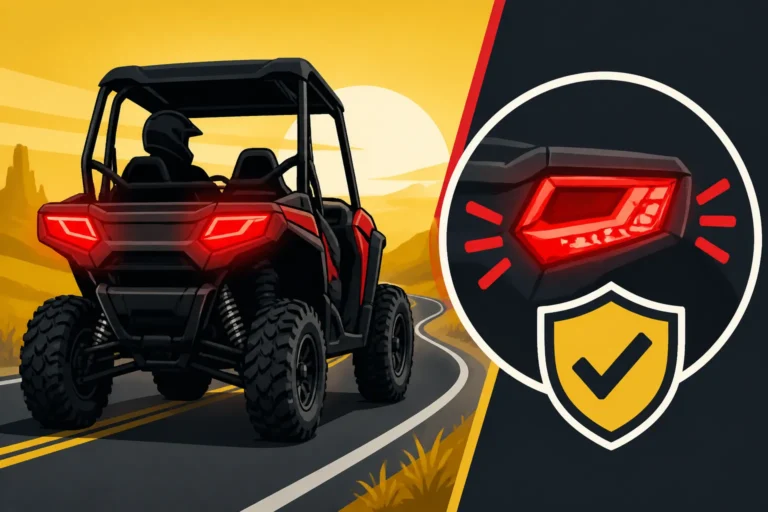
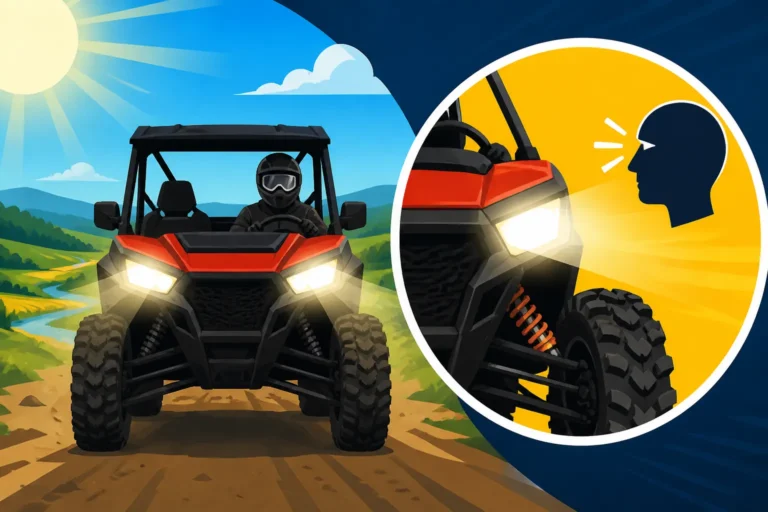
Furthermore, [Nebraska Requires Head and Tail Lights] for any road operation. This isn't just for night riding; [Nebraska Daylight Riding Rule] also applies, meaning your headlights and taillights must be on even during the day when crossing or operating on a road. This significantly enhances your visibility to other motorists. Consider upgrading to brighter LED lights or adding auxiliary lighting from a company like SuperATV for maximum impact. While helmets aren't universally mandated for ATVs by Nebraska state law, they are always a smart choice for head protection. Brightly colored clothing, reflective tape on your machine, and clear eyewear are also highly recommended to make sure you're seen. Always check the weather; a sudden downpour can drastically reduce visibility and make road surfaces slippery, adding another layer of risk to an already challenging maneuver.
Understanding Traffic Laws at Intersections
When approaching any road you intend to cross, treat it as you would any vehicle intersection. This means coming to a [Nebraska Complete Stops Before Crossing] and scanning thoroughly for traffic in all directions. You must [Nebraska Yielding at Every Crossing] to any oncoming traffic. This is not a suggestion; it is a legal requirement. Look left, then right, then left again, ensuring the path is clear before proceeding. Remember, ATVs and UTVs are subject to a maximum speed limit of 30 mph when legally operating on public roads, and this limit certainly applies during a crossing. You should not be attempting a high-speed dash across a road.
Also, be mindful of passengers. Most ATVs are designed for a single rider. Carrying a passenger on a single-rider ATV, especially during a road crossing, can impair your control and is often illegal, even if the road is otherwise open to ATVs. If your UTV is designed for multiple passengers, ensure everyone is seated properly and wearing seatbelts.
The Importance of Local Ordinances
Even with all state-level requirements met, the critical factor for whether you can legally cross any non-controlled-access paved road often boils down to local jurisdiction. Nebraska law allows cities and counties to pass their own ordinances regarding ATV/UTV use on their respective roadways. A county might open its gravel roads, but a city within that county might completely prohibit ATVs on its streets, even for crossing.
This means before you ride, and especially before you plan any crossing, you must do your homework. Check [How to Find Your Town's ATV Ordinance Online] by visiting the city clerk's office, the county treasurer's office, or the county sheriff's department. Many municipalities post their ordinances online, but sometimes a phone call or an in-person visit is the only way to get definitive answers. Never assume a road is open or that a crossing is allowed without concrete proof. An ounce of prevention (and a few phone calls) can save you a world of trouble. Remember, [Three Ways ATVs Can Legally Use Nebraska Roads] are all very specific, and none of them involve casual highway travel or crossing.
Penalties and Risks of Non-Compliance
Ignoring Nebraska's rules for ATVs and UTVs on public roads, particularly concerning highways, can lead to serious consequences that extend far beyond a simple slap on the wrist. The state has these laws for very real reasons, and violating them not only puts your wallet at risk but, more importantly, endangers your life and the lives of others.
What Happens If You Break the Rules
The immediate consequence of illegally operating your ATV or UTV on a highway or in a prohibited manner can be a citation. [Nebraska Ticket Costs for Road Riding] can be substantial, often running into hundreds of dollars, and that's just the fine. You'll also likely face [Nebraska Court Costs for a Citation], which can add a significant amount to your total bill, even if you just pay the fine without appearing in court. These financial penalties can quickly escalate, turning a short, illicit joyride into a very expensive lesson.
Beyond the fines, law enforcement has the authority to impound your machine if it's being operated illegally. Imagine your UTV, perhaps fitted with an impressive SuperATV winch and lift kit, being towed away because you decided to take a shortcut across a state highway. The costs associated with towing and storage can add up rapidly, not to mention the hassle of retrieving your machine. Furthermore, if you're involved in an accident while illegally operating your ATV or UTV, your insurance company may deny coverage, leaving you personally liable for damages, injuries, and legal fees, which could easily amount to tens of thousands of dollars or more. Operating outside the law often voids the very protection you thought you had.
Beyond the Ticket: The Real-World Dangers
While the legal and financial repercussions are significant, the most critical risk of non-compliance is the physical danger. ATVs and UTVs are inherently different from cars and trucks. They lack the enclosed safety cage, airbags, and crumple zones found in passenger vehicles. In a collision with a car, and especially with a heavy-duty truck or semi on a highway, the ATV/UTV rider is incredibly vulnerable. The speed differentials on highways are extreme; a machine traveling at 30 mph is a sitting duck to a car moving at 65 or 75 mph.
A serious accident can result in severe injuries, permanent disability, or even death. This isn't just a hypothetical; it's a tragic reality for many who misjudge the risks. Beyond your own safety, illegally operating your machine on a highway puts other motorists at risk. A sudden, unexpected ATV on a high-speed road can cause other drivers to swerve, brake violently, or even lose control, potentially leading to multi-vehicle pile-ups. The long-term consequences of such an event—guilt, legal battles, medical expenses—can haunt you for years, even if you survive. Always prioritize safety over convenience or the temptation to break the rules.
| Aspect | Controlled-Access Highways (e.g., Interstates, some US/State Routes) | Other Paved Roads (e.g., some County Roads, City Streets opened by Ordinance) | Unpaved Roads (e.g., Gravel County Roads) |
|---|---|---|---|
| Direct Travel (riding along) | Strictly Prohibited | Generally Prohibited, unless specifically opened by local ordinance. | Often Permitted, unless specifically prohibited. |
| Crossing | Strictly Prohibited | Potentially Permitted at 90 degrees only if intersecting roads are open to ATVs and it's not a controlled-access highway. | Generally Permitted at 90 degrees (if crossing another road). |
| Safety Flag (5ft, day-glow) | Not Applicable (due to prohibition) | Required if riding/crossing legally. | Recommended, especially if riding on/crossing roads. |
| Head/Tail Lights (daytime) | Not Applicable (due to prohibition) | Required if riding/crossing legally. | Recommended, especially near roads or other traffic. |
| Yielding & Stopping | Not Applicable (due to prohibition) | Required at all crossings and intersections. | Required at road crossings. |
| Penalties for Violation | High fines, impoundment, severe safety risk. | Fines, impoundment, safety risk if operating illegally. | Fines, safety risk if operating illegally (e.g., trespassing). |
Disclaimer
This article is for general informational purposes only and does not constitute professional advice. Laws, prices and regulations vary by location and change over time. Consult a qualified professional for guidance on your specific situation.