Nebraska Court Costs for a Citation
Getting a citation while out riding your ATV or UTV in Nebraska can really throw a wrench in your weekend plans, or even your daily farm tasks. It's not just the immediate sting of the ticket itself; many folks get really frustrated and confused by the additional costs that pop up if they decide to fight it, or even just delay paying it. This guide is here to help you understand exactly what those court costs for a citation can entail in Nebraska, how they add up, and what you can do to navigate the system without any more unwelcome surprises.
Understanding the Initial Citation and Fine Structure
When a deputy or a state patrol officer pulls you over for an ATV or UTV infraction in Nebraska, the first thing you'll receive is a citation, often called a ticket. This piece of paper outlines the alleged violation and typically states a presumptive fine amount. It can feel like a punch to the gut, especially if you thought you were doing everything right or just made an honest mistake. Many riders are familiar with these basic fines, but what often catches people off guard are the additional fees that pile on if the situation moves beyond simply paying that initial fine.
Common ATV/UTV Violations in Nebraska
Let's face it, there are a lot of rules about where and how you can ride ATVs and UTVs in Nebraska, and some of them can feel pretty nuanced. It's easy to accidentally stumble into a situation where you're handed a citation. A very common one, and a source of much frustration, is illegal road use. While [Can You Drive an ATV on the Road in Nebraska?] offers some exceptions, particularly for agricultural purposes, many folks don't realize how limited those exceptions truly are. You might get cited for riding on a state highway, failing to yield, or exceeding [Nebraska's 30 mph Road Limit] on an approved road.
Other common violations include not having the proper safety equipment. For instance, if you're on a road where it's permitted, you're required to have a 5-foot safety flag, and believe me, law enforcement checks for it. [Why Road-Legal ATVs Need a 5-Foot Safety Flag] explains this in detail. Then there are licensing issues; while ATVs aren't registered like cars, if you're operating one on a public road, you generally need [Nebraska Requires a Class O License or Farm Permit]. Passenger rules, especially for youth riders, can also lead to citations. Even if you're just cutting across a gravel road to get to a field, if you don't have the necessary equipment or aren't covered by one of the narrow exceptions, you could be looking at a ticket.
The Difference Between a Fine and Court Costs
It's absolutely crucial to understand that the "fine" listed on your citation is often just one piece of the financial puzzle. Think of the fine as the penalty for the specific offense itself – it's the amount the state has decided should be paid for, say, riding without a helmet if that were a rule (which, thankfully, it generally isn't for ATVs in Nebraska, unlike motorcycles). This fine is meant to deter future violations and punish past ones.
However, if you choose not to pay that fine immediately, or if the court becomes involved for any reason (like you decide to contest the ticket, or you simply miss a payment deadline), a whole new category of expenses comes into play: court costs. These aren't about the offense itself, but rather about the administrative burden of processing your case through the judicial system. These are fees for the court's time, its staff, its paperwork, and its facilities. They can include things like filing fees, administrative fees, judicial services fees, and often contributions to state funds for specific purposes. Unlike the fine, which might be reduced or dismissed if you successfully contest it, court costs are often non-negotiable once they've been incurred, regardless of the outcome of your case.
Navigating the Nebraska Judicial System for ATV/UTV Infractions
So, you've received a citation. Now what? You generally have a couple of choices: either pay the fine and accept the consequences, or appear in court to contest the charge. Each path has its own set of considerations, and understanding them is key to making the best decision for your situation and your wallet. Most ATV/UTV citations in Nebraska fall under the jurisdiction of the county court where the alleged offense occurred.
Deciding to Pay the Fine or Appear in Court
The immediate urge after getting a ticket might be to just pay it and make it go away. For many minor infractions, this is indeed the simplest and often the most cost-effective route, especially if you know you were in the wrong. Paying the fine usually means you're admitting guilt to the violation as charged and waiving your right to a hearing. The initial fine amount is usually clearly stated on the citation, along with instructions on how to pay. If you choose this route, it's generally best to pay promptly to avoid any late fees or further court involvement that could trigger additional costs.
However, there are times when going to court might be worth the effort and potential added expense. If you truly believe you weren't in violation, if there were mitigating circumstances, or if you think the officer made an error, contesting the ticket gives you a chance to present your side. This can sometimes lead to a dismissal, a reduction of the charge to a less serious offense, or a lower fine. But remember, going to court almost invariably means you'll be on the hook for those separate court costs, even if the fine itself is reduced or waived. It's a gamble, and you have to weigh the potential benefits against the guaranteed administrative fees. For instance, if you're facing a citation related to [Nebraska Requires Liability Insurance on Roads], proving you did have coverage might be worth a court appearance to avoid a more serious penalty.
The Role of the County Court and Its Fees
In Nebraska, most traffic-related infractions involving ATVs and UTVs are handled by the county court. These courts are the backbone of the local judicial system, dealing with everything from minor speeding tickets to small claims. When your ATV citation goes through the county court, you're not just paying for the ticket; you're contributing to the operational costs of that court. These fees are set by state statute and can vary slightly, but they generally cover the administrative functions of the court.
These can include a court administration fee, a judicial branch education fund fee, a victim's compensation fund fee, and potentially a criminalistics laboratory fee, among others. While the specific amounts can fluctuate and are subject to legislative changes, they are usually added on top of the base fine if you appear in court or if the fine goes unpaid and a judgment is entered against you. It's not uncommon for these court costs to easily double, or even triple, the initial fine amount. This is why paying a small fine upfront can sometimes save you a significant amount in the long run. To give you a clearer picture, here’s a hypothetical breakdown:
| Violation Type (Hypothetical) | Initial Fine | Estimated Court Costs (Added) | Total Cost if Court Involved |
|---|---|---|---|
| No Safety Flag | $75 | $50 – $100 | $125 – $175 |
| Illegal Road Use | $150 | $75 – $150 | $225 – $300 |
| No Liability Insurance | $200 | $100 – $200 | $300 – $400 |
| Operating Under Age/Unlicensed | $125 | $60 – $120 | $185 – $245 |
Note: These figures are illustrative and do not reflect actual current or future fees, which vary by jurisdiction and legislative action. Always check with the specific county court for accurate, up-to-date information.
Factors Influencing Total Court Costs and Penalties
Beyond the immediate fine and the basic court processing fees, a citation can lead to a cascade of other financial and practical consequences. It's not just about what you pay on paper; it's about the potential ripple effect on your driving record, insurance rates, and even the value of your machine. Understanding these broader implications can help you make informed decisions when you're dealing with an ATV or UTV citation.
Beyond the Basic Fees: Additional Penalties and Surcharges
The base fine and standard court costs are just the beginning for some folks. If you miss your payment deadline or fail to appear in court as instructed, the county court can impose additional late fees. These aren't usually small slaps on the wrist; they can be substantial and further inflate the total amount you owe. In some cases, failure to appear can even lead to a warrant for your arrest, which, while rare for minor ATV infractions, is a serious matter.
Depending on the nature of the violation, particularly if it involves operating an ATV on a public road, there could be points assessed against your Nebraska driver's license. Accumulating too many points can lead to increased insurance premiums, or even suspension of your driving privileges, which can have a huge impact on your daily life, not just your riding hobby. If the citation was for a serious offense, like operating under the influence, the penalties escalate dramatically, including hefty fines, mandatory drug/alcohol education, and significant court costs, not to mention a potentially lengthy license suspension.
Then there's the possibility of impoundment. If your ATV or UTV was involved in a serious infraction, or if you were operating it illegally, law enforcement might impound the machine. Getting it back means paying impound fees, daily storage fees, and possibly towing costs. These charges can add up incredibly fast, sometimes far exceeding the original fine. To help avoid some of these headaches in the first place, ensuring your machine is properly equipped for any legal road use is key. For example, a quality SuperATV lighting kit can prevent a "no lights" citation, and their durable safety flags ensure you meet the [Nebraska Safety Flag Dimensions] requirement.
How a Lawyer Can Impact Your Case and Costs
For many, the idea of hiring a lawyer for an ATV citation might seem excessive. After all, isn't it just a small ticket? However, in certain situations, legal representation can be a wise investment. If the charge is serious, could result in a license suspension, or has significant potential for high fines and court costs, a lawyer might be able to negotiate with the prosecutor for a reduced charge, a lower fine, or even a dismissal. They understand the intricacies of the local court system and can navigate the legal jargon far better than most of us.
Of course, hiring a lawyer comes with its own costs, typically in the form of hourly rates or a flat fee for specific services. You'll need to weigh these legal fees against the potential savings in fines, court costs, and the long-term impact on your driving record and insurance rates. For example, if you're contesting a citation where proving ownership is an issue, such as a dispute over a [Nebraska Titles After a Private Sale], a lawyer can be invaluable in presenting your documentation. Sometimes, a lawyer's expertise can prevent a situation from escalating into even more costly problems down the road.
The Long-Term Financial Impact of a Citation
A citation isn't just a one-time financial hit; it can have lingering financial consequences. As mentioned, increased insurance premiums are a very real possibility, especially if the violation is tied to your driving record. Insurance companies typically check your record when it's time to renew your policy, and a new citation can make you seem like a higher risk, leading to higher rates for several years.
Beyond insurance, consider the resale value of your machine. While not common for minor infractions, a history of reckless operation or multiple serious citations could potentially affect how a future buyer perceives your ATV or UTV, especially if there's any public record of incidents. While less direct, every dollar you spend on fines, court costs, lawyer fees, or impoundment is a dollar that can't go towards maintenance, upgrades (like that SuperATV winch you've been eyeing), or even just saving up for your next machine. It’s a good reminder that prevention is always the best strategy.
Preventing Citations and Understanding Your Rights
Dealing with court costs and fines after an ATV or UTV citation is a headache nobody wants. The best defense, as they say, is a good offense—meaning, being proactive about understanding and following the rules can save you a lot of grief and money down the line. Knowing your rights and the proper steps to take if you do receive a citation are also crucial for minimizing negative outcomes.
Key Nebraska ATV/UTV Road Rules to Avoid Trouble
Nebraska has specific statutes governing the use of ATVs and UTVs, particularly on public roads. Many riders get into trouble because they simply aren't aware of these rules. For instance, while some agricultural uses permit road travel, it’s not a free pass. [Nebraska ATV Road Rules Under 60-6,356] clearly outlines these narrow exceptions. You must generally have a valid driver's license (or a farm permit if applicable), liability insurance, and the vehicle itself needs specific safety equipment.
Remember that 5-foot safety flag we talked about? It’s not optional for road use. Headlights and taillights are also usually required, even during daylight hours in some instances, for visibility. [Nebraska Requires Head and Tail Lights] is a critical rule often overlooked. Speed limits apply, typically no more than 30 mph on authorized roads. Also, be mindful of local ordinances; [Nebraska Cities That Adopt ATV Ordinances] and [Nebraska County Board Resolutions for Villages] can open up specific streets to ATV traffic, but these are often highly localized and come with their own set of rules and sometimes even registration fees. Before you even think about riding on a public road, make sure your machine is equipped with appropriate safety gear, like a strong SuperATV horn and rearview mirrors to comply with local requirements. Always check the specific county and city rules where you plan to ride.
What to Do if You Receive a Citation
Even with the best intentions, sometimes a citation happens. If an officer pulls you over, the most important thing to do is remain calm and be polite. Arguing or becoming belligerent will not help your case and can potentially lead to additional charges. Cooperate, provide the requested identification and documentation, and listen carefully to what the officer says. Make sure you get all the documentation they issue to you, including the citation itself. If you have questions about the citation, you can ask the officer for clarification, but save any disputes for court.
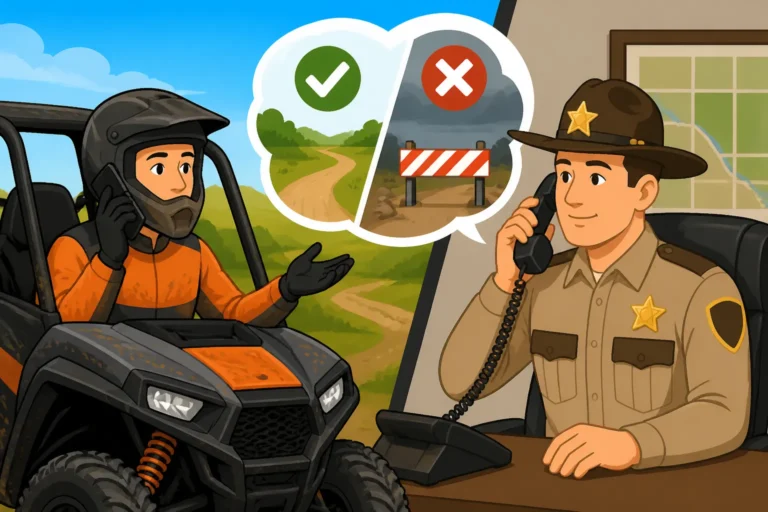
Once you have the citation in hand, take the time to read it thoroughly. Understand the charges against you, the due date for payment or court appearance, and any instructions provided. You'll need to decide whether to pay the fine or contest it. If you choose to pay, do so promptly as outlined on the citation to avoid those aggravating late fees. If you plan to contest, contact the relevant county court clerk's office as soon as possible to understand the process, deadlines, and what court costs you might incur. Don't wait until the last minute! For specific questions about your ATV's title, you might call the [Nebraska County Treasurers Handle ATV Titles] office, but for the citation itself, the county court is your primary contact. Having a clear understanding of [What Happens If You Miss the 30-Day Title Deadline] or similar administrative processes can help you avoid additional issues related to your machine's legality.
Remember, this article is here to help you understand the landscape, but laws change and specific situations require specific advice.
Disclaimer
This article is for general informational purposes only and does not constitute professional advice. Laws, prices and regulations vary by location and change over time. Consult a qualified professional for guidance on your specific situation.