Leaving Pasture Gates the Way You Found Them
Riding ATVs and UTVs across Nebraska's vast and beautiful landscapes offers incredible freedom and access, especially on private lands that generously allow passage. However, this privilege comes with a profound responsibility, and one of the most fundamental rules, often unwritten but universally expected, is to always leave pasture gates exactly as you found them. This guide will dive deep into why this seemingly simple act is crucial for maintaining access, respecting landowners, and ensuring safety for everyone involved, including livestock and the riders themselves.
Why "Leaving Gates As You Found Them" Matters So Much
It might seem like a minor detail, but the practice of closing a gate if it was closed, or leaving it open if it was open, carries immense weight in the world of rural Nebraska. This isn't just about courtesy; it's about the very fabric of trust between landowners and those who traverse their property, and it directly impacts the safety and livelihoods tied to that land. When you're out enjoying a ride, remember that you're often in someone's workplace, their home, or their investment.
Preserving Landowner Trust and Future Access
Landowners who grant permission for ATV or UTV use on their property are extending a significant gesture of goodwill. They are trusting you, often a stranger, to respect their land, their animals, and their property. Failing to close a gate, or closing one that was deliberately left open, immediately erodes that trust. Imagine you've been granted access to a beautiful stretch of sandhills or river bottom for a ride. If a gate is left open and cattle wander onto a highway, or into a neighbor's crop field, the landowner bears the liability and the headache.
This isn't just a hypothetical scenario; it happens, and when it does, it often leads to landowners revoking permission for everyone. Your actions, or inactions, reflect not just on you, but on the entire ATV/UTV riding community. Responsible behavior, like diligently managing gates, is the key to preserving these riding opportunities for yourself and for generations of riders to come. It’s about being a good neighbor, even if you’re just passing through. Landowners talk, and a reputation for carelessness can spread quickly, shutting down access points across wide areas. [Getting Written Permission From a Ranch Landowner] is a critical first step, and honoring that permission by respecting their rules is the second.
Ensuring Safety for Livestock and Wildlife
The primary reason most pasture gates exist is to contain livestock. Cattle, horses, sheep, and even domestic fowl depend on these barriers to stay within their designated areas. A gate left ajar, even slightly, can lead to animals escaping, which creates numerous hazards. Escaped livestock can wander onto public roads, causing dangerous traffic accidents that put both animals and motorists at severe risk. They can also stray into irrigated fields, neighboring properties, or even become lost, leading to significant financial loss and stress for the rancher.
Beyond domestic animals, gates can also be crucial for managing wildlife. While not their primary purpose, an open gate can provide unwanted access for vehicles into sensitive wildlife habitats or allow wildlife to access areas where they might not be safe, such as busy roads or areas with potential hazards. Respecting the gate structure is a direct contribution to animal welfare and safety in rural Nebraska. Remember to also be mindful of your speed and surroundings, as shared spaces mean exercising caution.
Different Types of Pasture Gates and How to Handle Them
Not all gates are created equal. Nebraska's diverse agricultural landscape features a variety of gate styles, each with its own quirks and proper operating procedures. Taking a moment to observe the gate before you open it is time well spent, ensuring you can replicate its original state.
Traditional Wood and Metal Gates
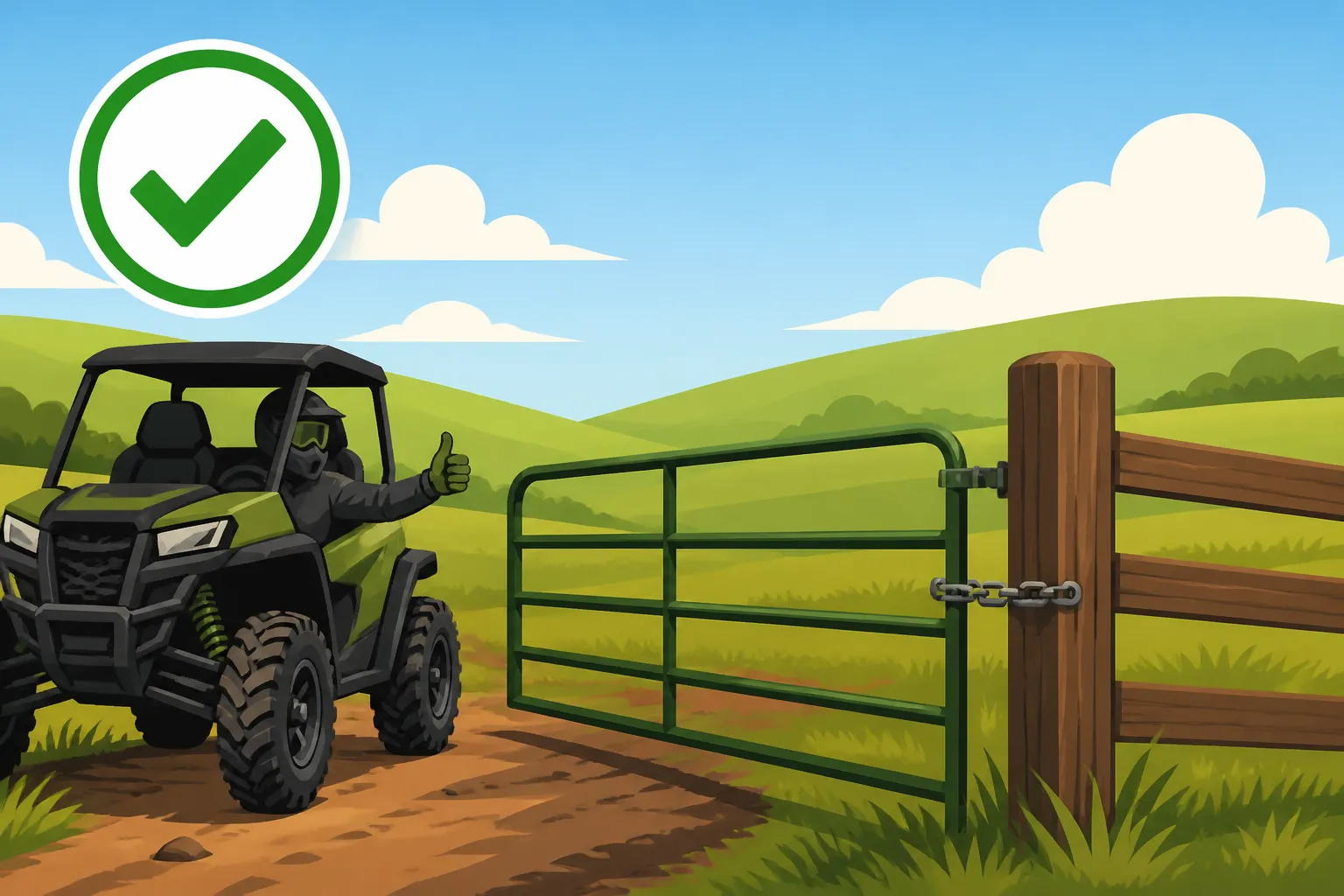
These are perhaps the most common gates you'll encounter on private land. They typically consist of sturdy wooden posts and rails, or heavy-gauge metal tubing, often with wire or chain latches. The key here is observation. Was the chain wrapped around a post multiple times, or just hooked? Was there a specific loop it fit into?
- Closed Gate Procedure:
- Unlatch Carefully: Note how the gate is secured. If it's a chain, observe the exact loop, or if it's wrapped, how many times. If it's a slide latch, notice if it has a specific "resting" position.
- Open Slowly: Gates can be heavy or have unseen obstacles. Open it just wide enough for your ATV or UTV to pass through.
- Drive Through Swiftly: Once clear, stop, and immediately return to the gate.
- Re-secure Exactly: Replicate the original latching mechanism. If it was wrapped, wrap it. If it was a specific hook, use that hook. Don't invent your own way; the landowner put it that way for a reason, perhaps to keep it secure against wind or animals.
- Open Gate Procedure:
- Observe and Confirm: Is the gate clearly propped open, tied back, or secured in an open position? Are there signs indicating it should stay open, perhaps due to ongoing work in the field?
- Pass Through: Simply drive through, but be extra vigilant for any unexpected livestock movement or equipment.
- Do Not Close: Resist the urge to "help" by closing an open gate. It was left open for a reason, possibly for livestock movement, equipment access, or irrigation. Closing it could disrupt ranch operations, cause more problems than it solves, and again, break the landowner's trust.
Here's a quick reference for common gate types:
| Gate Type | Common Latching Mechanism | "Leave As Found" Principle | Safety Considerations |
|---|---|---|---|
| Traditional (Wood/Metal) | Chain, Slide Latch, Pin | Re-latch precisely as it was found (wrapped, hooked, slid) | Heavy, can swing, check for stability, watch for rust |
| Wire Gate (Barbed/Smooth) | Loop & Post, Handle & Cinch | Re-stretch tightly to original tension; never leave slack | Barbed wire can snag clothes/skin, electric shock risk |
| Cattle Guard | N/A (Ground Level Grid) | Drive carefully over; ensures livestock stay put | Uneven surface, can be slippery, avoid high speeds |
| Electric Fence | Insulated Handle, Gate Clips | Open by handle, never touch wire; re-clip firmly | Always test with a grass blade first, avoid direct contact |
| Hinge/Pivot Gate | Gravity Latch, Simple Pin | Ensure it settles back into its natural closed position | Can swing wide, watch for obstacles, ensure full closure |
Wire Gates and Electric Fences
Wire gates are common in more remote pastures or temporary setups. They often involve a stretched wire, sometimes barbed, that hooks onto a post with a handle or a loop. Electric fences, while not always a "gate" in the traditional sense, often have designated crossing points or gate-like sections that need careful handling.
- Wire Gate Handling:
- Look for the Loop: There's usually a specific way the wire is looped around a post or a handle that hooks onto a fastener. Note this.
- Maintain Tension: When you re-secure a wire gate, it's critical to ensure it's pulled taut, just as you found it. A sagging wire gate is an ineffective gate for containing livestock. Be careful with barbed wire, it can snag clothes or even damage tires if you're not paying attention.
- Never Cut or Modify: This should go without saying, but never attempt to cut, bend, or alter a wire gate or fence in any way.
- Electric Fence Handling:
- Identify the Insulated Handle: Always look for the insulated handle that breaks the circuit, if one exists. This is your safe zone.
- Do Not Touch Wires: Never touch the bare wires of an electric fence. It might not always be on, but assume it is.
- Specialized Crossing: Some electric fences have designated "gate" sections that are meant to be opened with an insulated handle and re-hooked. Others might simply be a line you have to step over if you're on foot, but this isn't for ATVs. Stick to recognized entry points.
Riding your machine across varied terrain, especially near fences and gates, demands attention to detail. Having robust protection for your ATV or UTV can give you peace of mind. Accessories like heavy-duty skid plates or A-arm guards from a company like SuperATV can protect vital components from snagging on low wires, branches, or rocks, especially when you're maneuvering in tight spaces around gate posts.
Beyond the Gate: Broader Etiquette for Riding on Private Land
Responsible gate management is just one piece of the puzzle when riding on private property. The overall impression you leave, and the respect you show for the land and its owner, determines whether these precious riding opportunities will continue. Remember that [Reading Posted Signs on Ranch Land Before You Ride] is non-negotiable, as they convey critical information.
Stay on Designated Paths and Trails
Unless explicitly told otherwise by the landowner, always stick to established paths, trails, or ranch roads. Don't create new tracks, cut across fields, or drive through standing crops or pastures unless it's a specific instruction for your purpose (e.g., checking cattle, if you have explicit permission). Driving off-path can damage crops, compact soil, erode land, or disturb wildlife and livestock. These are not minor issues to a landowner; they can represent significant financial losses or environmental concerns.
If you're unsure about where you can and cannot ride, always ask the landowner for clarification before you start your engine. Carrying a map, or even just a quick sketch provided by the landowner, can prevent accidental trespass into unauthorized areas.
Respect Livestock and Wildlife
When you encounter livestock, slow down, give them a wide berth, and avoid sudden noises or movements that could spook them. Never chase or harass animals. If you're riding through a pasture with cattle, understand that they are often wary of machines. Sometimes, slowing to a crawl or even stopping to let them move away on their own is the best approach. If you're on a ranch and someone is working cattle, yield to them and their animals, offering assistance if appropriate and requested. The same goes for wildlife; observe from a distance and avoid disturbing them. [Nebraska Rules for Riding a Pasture] emphasize these points strongly.
Noise is another factor. While ATVs and UTVs are inherently noisy, try to keep revving and sudden acceleration to a minimum when near homes, barns, or areas where livestock are present. Consider adding quieter aftermarket exhaust systems if you frequently ride near sensitive areas. Keeping your machine in good working order, perhaps using quality replacement parts from SuperATV, can also help ensure your machine runs smoothly and doesn't create unexpected, jarring noises.
Leave No Trace
This is a golden rule for any outdoor activity, and it applies doubly to riding on private land. "Leave no trace" means exactly that: take out everything you bring in. This includes trash, empty fuel cans, broken parts, and even organic waste like fruit peels (which can take a long time to decompose and look unsightly). If you stop for a snack or a drink, pack out all your wrappers.
Beyond visible trash, also consider your impact on the land itself. Avoid excessive mud bogging or rutting in sensitive areas, especially after heavy rains, unless it's a designated activity or part of a work task. The goal is for the landowner to barely know you were there, aside from the positive memory of a respectful rider.
The Consequences of Disregarding Landowner Trust
The act of leaving a gate open, or otherwise disrespecting private property, can have far-reaching consequences that extend beyond a simple scolding. It can impact not only you but also the entire riding community in Nebraska. Understanding these potential repercussions reinforces the importance of responsible behavior.
Loss of Riding Privileges and Legal Ramifications
The most immediate consequence of violating a landowner's trust or failing to manage gates properly is the loss of your riding privileges. Once that trust is broken, it's incredibly difficult to earn back. A landowner who has had a bad experience with one rider is unlikely to grant permission to others, leading to a shrinking pool of available riding land for everyone.
Beyond losing access, there can be legal ramifications. Leaving a gate open that leads to livestock escaping onto a road could result in the landowner seeking damages from you for negligence. If animals are injured or cause a traffic accident, the liability could extend to you. Furthermore, deliberate disregard for property rules or riding in areas where permission was not granted can quickly escalate to trespassing charges, which come with fines and potential legal fees. [Nebraska Trespass Law for Riders] is very clear on the boundaries of private property access.
Damaged Reputation for the Riding Community
Every rider who accesses private land acts as an ambassador for the entire ATV and UTV community. A single act of irresponsibility, like leaving a gate open, can unfairly tarnish the reputation of all riders. Landowners might generalize, assuming that if one rider is careless, all riders will be. This makes it harder for responsible clubs and individuals to secure access for charity rides, organized events, or simply personal recreation.
It's a collective responsibility to uphold a positive image. By consistently demonstrating respect for property, gates, and the environment, riders help build a foundation of trust that benefits everyone who loves to explore Nebraska's back roads and pastures on an off-road machine. Showing up prepared, with your machine well-maintained and equipped, sends a strong message of professionalism and respect, whether you're using performance tires from SuperATV or just ensuring your lights work. This kind of preparation means you can focus on the task at hand, like ensuring that gate is properly secured.
Practical Advice for Every Rider
Before you even head out, have a plan. Know whose land you'll be on and confirm your permission. If you're unsure about a gate, get off your machine, walk to it, and take a moment to understand its mechanism. This small investment of time can prevent huge headaches. Communicate with the landowner beforehand to understand their expectations regarding gates and access. Are there areas they prefer you avoid? Are there specific times when gates need to be open or closed? Asking these questions shows proactive respect and responsibility. Always err on the side of caution. If you're in doubt about a gate, close it unless there's obvious evidence it should remain open. [Planning One Trip to the Treasurer's Counter] for your title and registration is a task that requires careful preparation; treating gate management with the same diligence is equally important.
The bottom line is simple: treat private land with the same care and respect you would your own property, or even more. The privilege of riding on Nebraska's beautiful private lands is a gift, and leaving pasture gates the way you found them is a fundamental way to ensure that gift keeps on giving.
Disclaimer
This article is for general informational purposes only and does not constitute professional advice. Laws, prices and regulations vary by location and change over time. Consult a qualified professional for guidance on your specific situation.