Turning 18 Before a Town Registers Your ATV
It's incredibly frustrating when you're ready to take your ATV or UTV beyond the pasture or the trail and onto town streets, only to find a maze of local rules that seem to change block by block. Many riders, especially those on the cusp of adulthood, wonder how turning a certain age affects their ability to legally navigate their machine within city limits. This guide will walk you through the specifics of how becoming 18 years old impacts your ability to register and operate an ATV on city streets in Nebraska, cutting through the confusion of state laws versus local ordinances.
Understanding Nebraska's General Stance on ATVs and Roads
First, let's get one thing clear: Nebraska's state law generally views ATVs as off-road machines. This means, by default, you can't just hop on your quad and cruise down a state highway or a county road outside of specific agricultural exceptions. This blanket prohibition can be incredibly disheartening for riders who want to use their machines for practical purposes, like commuting short distances, running errands, or simply enjoying a ride through town. It often leaves folks feeling like their machine is unfairly categorized.
The state statute, 60-6,356, is quite explicit. It says these machines are designed for off-road use and generally bans them from public streets and highways. This is why you won't see a standard license plate on an ATV in Nebraska, even if it has a title. [Why a Titled ATV Still Has No Plate] This fundamental state-level restriction is the backdrop against which all local rules are set. It's not like getting a driver's license for a car, where the state broadly allows road use. For ATVs, the state says "no," and then local jurisdictions have the option to say "yes," but only under very specific conditions they set themselves.
Why Town Ordinances Are Your Only Path to Street Legality
Given the state's restrictive view, the only way an ATV or UTV can legally touch pavement in Nebraska (beyond farm-specific uses) is if a city or an unincorporated village's county board passes its own local ordinance. These are not state laws; they are hyper-local rules that give towns the authority to open certain streets to ATVs, usually within their own municipal boundaries. [How a Town Ordinance Opens Its Streets to ATVs] This patchwork of rules means what's perfectly legal in one town might be strictly prohibited in the next town over, just a few miles down the road. It's enough to make your head spin trying to keep track!
These local ordinances are created by city councils or county boards, responding to the specific needs and desires of their communities. Some towns embrace ATVs as a way to allow residents easier access to businesses or recreational areas, especially in smaller communities where traffic is lighter. Others may see them as a nuisance or a safety hazard and keep their streets closed. The key takeaway here is that you absolutely must check the specific ordinance for the town you plan to ride in, because state law won't help you here. [What to Ask City Hall Before Riding Streets]
The State's Non-Registration Stance on ATVs
Adding another layer of complexity, Nebraska titles ATVs but does not register them for road use in the traditional sense, unlike cars or motorcycles. [Nebraska Titles ATVs but Does Not Register Them] When you get a title for your ATV from your county treasurer, it even carries a notation that says "NOT TO BE REGISTERED." [Nebraska's Not To Be Registered Notation] This means there's no statewide registration system or state-issued plate that signifies your ATV is street-legal.
Instead, if a town allows ATVs on its streets, it typically implements its own local registration system. This often involves a town-specific sticker or decal, an annual fee, and a set of local rules you must follow. This local registration is what validates your ability to ride on those specific town streets, not any state document. It’s crucial to understand this distinction because many riders assume a state title means they're halfway to road legality, when in fact, for road use, it's the town's permission that really matters.
How Turning 18 Unlocks Opportunities for Town Registration
For many young riders, the dream of taking their quad to the local store or a friend's house hits a wall because of age restrictions. This often stems from the requirement to hold a valid driver's license, which is a common prerequisite in town ordinances for street-legal ATV operation. Turning 18 years old is a significant milestone that can remove a major hurdle.
Before you turn 18, your options for legally operating an ATV on a public street, even in a town with an ordinance, are severely limited. While some states have specific youth permits for on-road ATV use (and Nebraska has specific rules for minors on farm permits), these typically don't apply to general recreational street use within municipal limits. Most town ordinances that allow ATVs on streets mirror state laws for motor vehicles by requiring the operator to be a licensed adult.
Meeting the Driver's License Requirement
The most common and impactful change when you turn 18 is your eligibility to hold a Class O (operator's) driver's license. Many Nebraska towns, in their ordinances allowing ATVs on streets, explicitly state that the operator must possess a valid driver's license. Without one, you're usually out of luck, regardless of how experienced a rider you are off-road.
This requirement isn't just about showing you can drive; it's about demonstrating you've passed the state's knowledge and driving tests, which are designed to ensure you understand traffic laws and can safely operate a motor vehicle. For a town, it's a way to ensure that ATV operators on their streets have a baseline level of road safety knowledge. So, if you're approaching 18 and eyeing that town ordinance, getting your Class O license should be a top priority. [Do You Need a License for an ATV in Nebraska?]
Impact on Town-Specific Age Requirements
While Nebraska's general ATV safety laws include age restrictions for operation on public or private land, these are separate from the specific age requirements found in town ordinances for street use. When a town crafts its ordinance, it often sets its own age minimums for ATV operators on its streets. Many of these ordinances directly tie into the state's driver's license age, effectively setting the minimum age for street-legal ATV operation at 18.
So, for example, a town might state that an ATV operator must be "at least 18 years of age and hold a valid Nebraska Class O driver's license." If you're 17, even if you're the most responsible rider in the county, that ordinance will likely prohibit you from registering your ATV for street use in that particular town. Turning 18 effectively unlocks the door to meeting this common age requirement, giving you legal standing that you didn't have before. [Nebraska City Age Requirements]
The Age of Majority and Legal Responsibility
Beyond the practical requirement of a driver's license, turning 18 also signifies reaching the age of majority. This means you are legally considered an adult, capable of entering into contracts, being fully responsible for your actions, and generally having all the rights and responsibilities of an adult citizen. For a municipality, this simplifies things considerably. Dealing with an adult who is legally accountable for their actions on public streets is preferable from a liability and enforcement standpoint.
When you're under 18, even with a farm permit, there's often a layer of parental responsibility and supervision involved, especially concerning off-road operations. On public streets, towns want to ensure operators are fully capable of understanding and adhering to traffic laws, insurance requirements, and potential penalties. Becoming 18 aligns you with this expectation, making the process of local registration smoother, as you're no longer navigating the additional complexities associated with minor operators.
Practical Steps to Register Your ATV After You Turn 18
Alright, you've hit the big 1-8, and you've got your driver's license in hand. Now what? The process of registering your ATV for street use in a Nebraska town isn't complicated, but it does require careful attention to local rules. Don't assume anything; verify everything with the specific town you intend to ride in. This involves a bit of legwork, but it's worth it for the peace of mind and legal access to local streets.
Your first and most crucial step is to connect directly with the city clerk's office or the appropriate municipal department in the town where you want to ride. This isn't something the state handles. Ask them for a copy of their specific ATV/UTV ordinance, or ask them to direct you to where you can find it online. Reading the actual ordinance is essential because it will lay out every single requirement, from age and licensing to equipment and fees.
Getting a Copy of the Local Ordinance
Think of the local ordinance as your blueprint. It's not enough to hear a friend say, "Oh yeah, you can ride ATVs in Smithville." You need to know the exact rules. Some towns make their ordinances readily available on their municipal website; others might require a call or a visit to city hall. Don't be shy about asking questions. Clerks are usually happy to help you understand the nuances.
Look for details about:
- Eligible streets: Does the ordinance open all streets, or only specific ones?
- Operating hours: Can you ride day or night?
- Required equipment: What lights, mirrors, turn signals, or flags are necessary?
- Insurance minimums: What liability coverage is required?
- Fees: What is the annual registration cost? [Nebraska City Registration Fees]
- Application process: What forms do you need to fill out, and what documents do you need to bring?
For instance, you might find that your town requires specific mirrors or a certain type of safety flag for visibility, much like the visibility accessories you might find from a company like SuperATV. These details will be in the ordinance, and it's your responsibility to know and follow them.
Submitting Your Application and Fees
Once you understand the ordinance, the next step is typically to gather the required documents and submit your application to the city office. This usually involves:
- Proof of ownership: Your Nebraska ATV title will be essential here.
- Proof of insurance: The town will likely require proof of liability insurance that meets their minimums. [Nebraska City Insurance Requirements]
- Valid driver's license: Your new Class O license will be key to proving your eligibility.
- Completed application form: The town will have its own form to fill out.
- Payment for registration fees: Be prepared to pay the annual fee, which can vary from town to town. [Yutan Charges $150 to Register an ATV]
It's a good idea to bring originals of your documents and perhaps copies, just in case. The city clerk will process your application, verify your eligibility, and issue you whatever is required to show your ATV is locally registered, such as a special sticker or permit to display on your machine. Keep this document or sticker visible as required, as it's your proof of compliance for local law enforcement.
| Requirement Category | Before Turning 18 (General) | After Turning 18 (General) |
|---|---|---|
| Driver's License | Generally not eligible for Class O; may have farm permit | Eligible for Class O driver's license |
| Town Age Minimum | Likely restricted; most ordinances require 18+ | Meets typical 18+ age minimums |
| Legal Responsibility | Often requires parental/guardian involvement | Legally an adult, fully accountable |
| Insurance | May be difficult to obtain full coverage independently | Easier to obtain and manage own policy |
| Registration Process | Often prohibited from town registration | Eligible for town-specific registration |
| Required Equipment | Still needs to meet ordinance equipment (lights, etc.) | Still needs to meet ordinance equipment (lights, etc.) |
Beyond Age: Other Requirements for Street-Legal ATVs in Nebraska Towns
While turning 18 and getting your driver's license are critical steps, they are by no means the only requirements for legally riding your ATV on town streets. Every town ordinance will have a list of equipment, operational, and insurance requirements that you must meet. Ignoring these can lead to citations, fines, or even having your machine impounded. It’s not just about being old enough; it’s about being equipped and prepared enough.
These requirements are put in place for safety, both for you and for other drivers and pedestrians sharing the road. They reflect an understanding that ATVs, while fun and useful, operate differently than cars and need specific features to be safely integrated into traffic flows. Don't cut corners here; safety should always be your top priority.
Essential Equipment Upgrades
Your off-road ATV, straight from the dealership, likely isn't equipped for street legality. Most town ordinances will mandate specific equipment that you'll need to install or ensure is functional. This often includes:
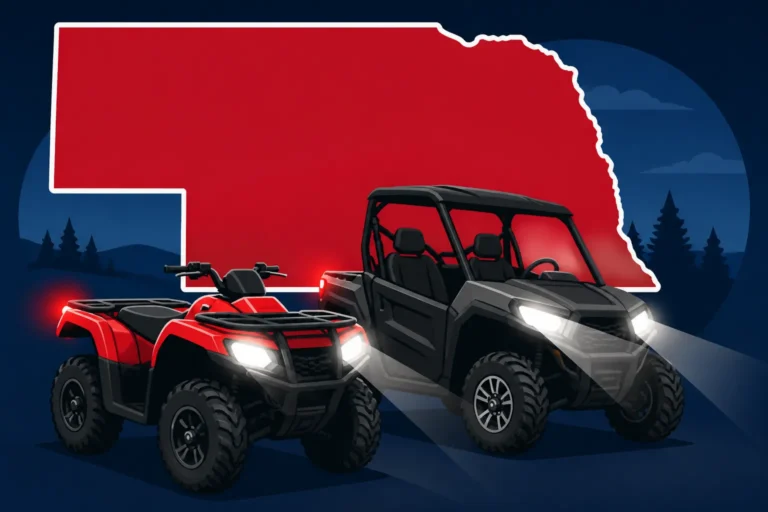
- Headlights and Taillights: These must be functional and often meet specific brightness and visibility standards, especially for any permitted night operation (though many towns restrict ATVs to daylight hours). [Nebraska Requires Head and Tail Lights]
- Brake Lights: Essential for signaling your deceleration to vehicles behind you.
- Turn Signals: Required to indicate your intentions when turning or changing lanes.
- Rearview Mirrors: Typically at least one, if not two, to ensure you have adequate visibility of traffic behind you.
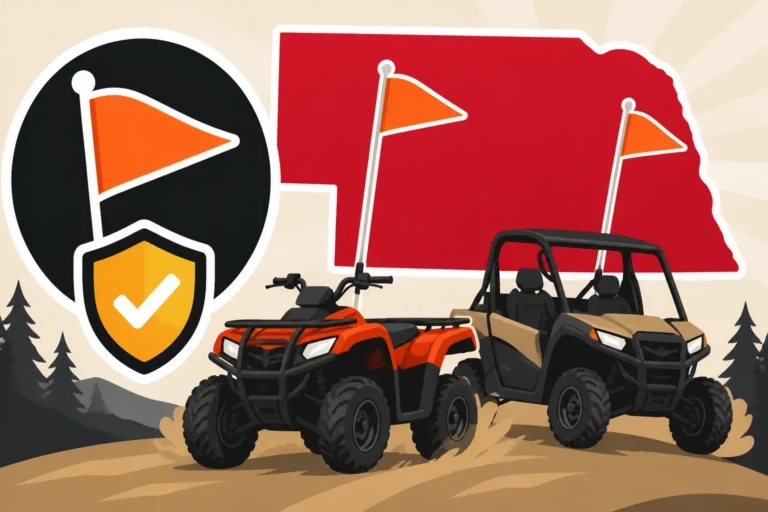
- Safety Flag: Many ordinances, echoing state recommendations for certain off-road areas, require a brightly colored, triangular safety flag mounted at a certain height (e.g., 5 feet above the ground) to increase your visibility to other drivers, especially over hills or around corners. [Why Road-Legal ATVs Need a 5-Foot Safety Flag] You can find excellent, durable flags and mounting solutions from companies like SuperATV, ensuring you meet these specific requirements.
- Horn: A working horn is crucial for alerting others to your presence.
- Muffler/Exhaust System: Many towns have noise ordinances, so your ATV's exhaust system must be in good working order and not excessively loud.
Before you even think about submitting your application, go through your ATV and make sure it has all these components. Investing in quality aftermarket parts, perhaps from a reputable brand like SuperATV, is often necessary to get your machine up to snuff.
Mandatory Insurance Coverage
Just like with any other motor vehicle on public roads, towns will almost certainly require you to carry minimum liability insurance coverage on your ATV. This isn't just a suggestion; it's usually a non-negotiable part of the registration process. This insurance protects you financially if you're involved in an accident and are deemed at fault, covering damages or injuries to other people or their property.
The specific minimums will be detailed in the local ordinance, and they often align with Nebraska's state minimums for motor vehicles. [Nebraska Insurance Minimums Today] Be prepared to show proof of this insurance when you apply for your town registration. If you're caught riding on town streets without the required insurance, you could face hefty fines, legal penalties, and even impoundment of your ATV. It’s a vital piece of the puzzle for responsible road use.
Operational Restrictions and Rules of the Road
Even with all the right equipment and insurance, there will be operational rules you must follow within the town limits. These are designed to ensure ATVs operate safely alongside other traffic and don't become a nuisance. Common restrictions include:
- Speed Limits: Most ordinances set a maximum speed limit for ATVs, often lower than the posted speed limit for cars, such as 30 mph or less. [Nebraska's 30 mph Road Limit]
- Designated Streets: Some towns will only allow ATVs on certain streets, often prohibiting them on main thoroughfares or state highways that pass through town.
- Daylight Hours Only: Many ordinances restrict ATV operation to "sunrise to sunset." [Nebraska Daylight Riding Rule] While some might make an exception for snow removal at night, generally, nighttime riding is off-limits.
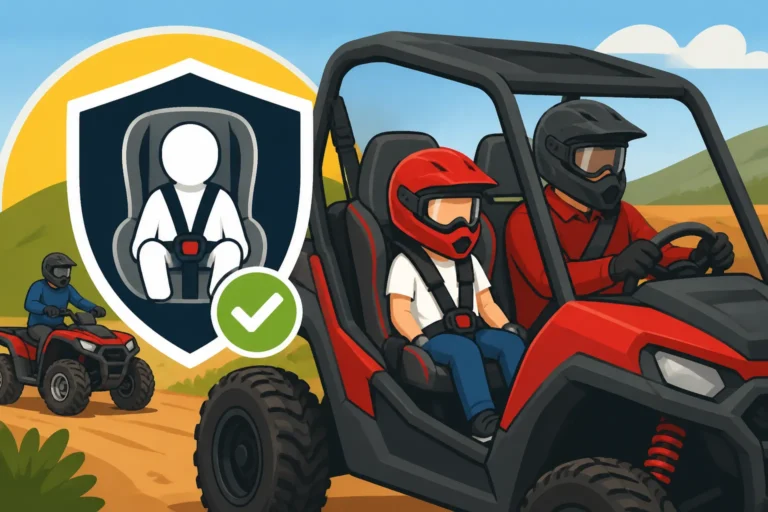
- Passenger Restrictions: Some ordinances may prohibit passengers, or limit them based on the ATV's design and seating. [Nebraska Rules for Passengers on a Quad]
- Helmet Use: While Nebraska state law doesn't mandate helmets for ATVs on private land, a local ordinance might. [Nebraska Helmet Rules Riders Ask About] Always check this specific detail.
Always remember that these rules are in place for a reason. Adhering to them not only keeps you safe but also helps maintain the privilege of ATV use on town streets. Breaking these rules could jeopardize your ability to ride in that town in the future and reflect poorly on the entire ATV community.
Disclaimer
This article is for general informational purposes only and does not constitute professional advice. Laws, prices and regulations vary by location and change over time. Consult a qualified professional for guidance on your specific situation.