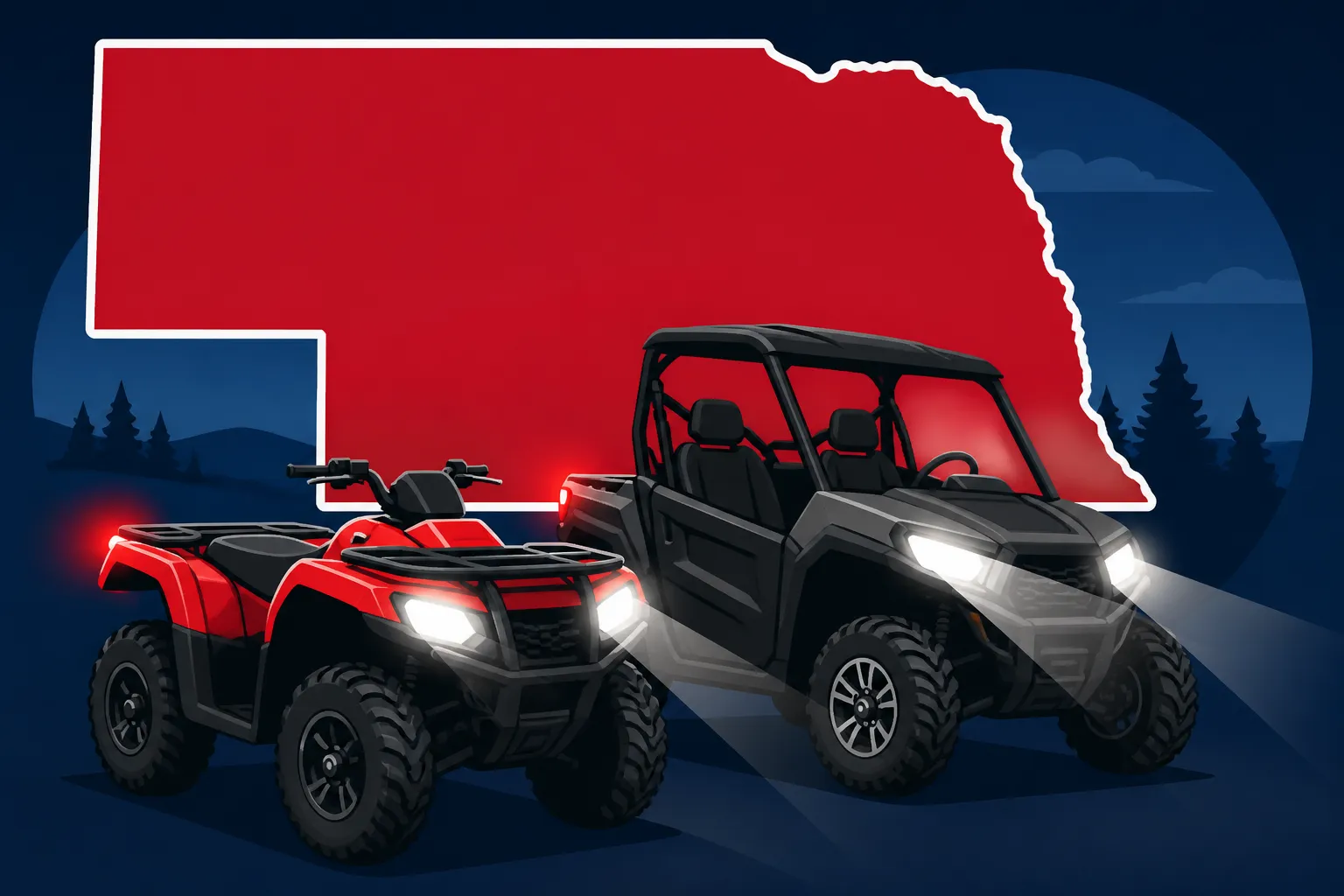
Nebraska Requires Head and Tail Lights
Riding an ATV or UTV in Nebraska can be an absolute blast, whether you're working on the ranch, hitting the trails, or just cruising around the farm. But the moment you think about taking your machine onto a public road, a whole new layer of rules and requirements kicks in, often leaving riders scratching their heads. One of the biggest points of confusion, and frankly, frustration, revolves around what kind of lighting your machine needs to be considered "street legal" in the eyes of Nebraska law. This guide is here to untangle those specific lighting requirements, as well as the other essential gear you'll need to stay safe and compliant when you venture onto the asphalt or gravel.
Understanding Nebraska's General Road Rules for ATVs/UTVs
Before we even dive into the nitty-gritty of headlights and taillights, it's crucial to understand the foundational rules that govern ATV and UTV use on Nebraska's public roads. This isn't like titling a car, where road use is assumed. For off-road machines, road use is generally restricted, with specific exceptions. Many riders get caught off guard, thinking that if they have a title, they can just hit the road. That's a common misconception, often leading to tickets and a lot of headaches.
The Farm-Use Exception Explained
For many Nebraskans, especially those living in rural areas, their ATV or UTV is less of a toy and more of an indispensable tool. The good news is that Nebraska law recognizes this. The state allows ATVs and UTVs to be operated on public roads for agricultural purposes. This isn't a blanket pass, though; it's quite specific. Imagine you're checking fences, moving equipment between fields, or heading to the grain bin. These are the kinds of activities that fall under the agricultural exception. It means you can use your machine to get work done, even if that work takes you briefly onto a county road.
However, "agricultural purpose" doesn't mean you can run to town for groceries or drive across the county just for fun, even if you live on a farm. The law is quite clear that the machine must be used in conjunction with farming, ranching, or other agricultural operations. It's a pragmatic exception for those who truly rely on these machines for their livelihood, not a loophole for recreational road trips. Understanding [Nebraska's Agricultural Road Exception] is key to staying out of trouble.
City and Village Ordinances: A Local Lifeline
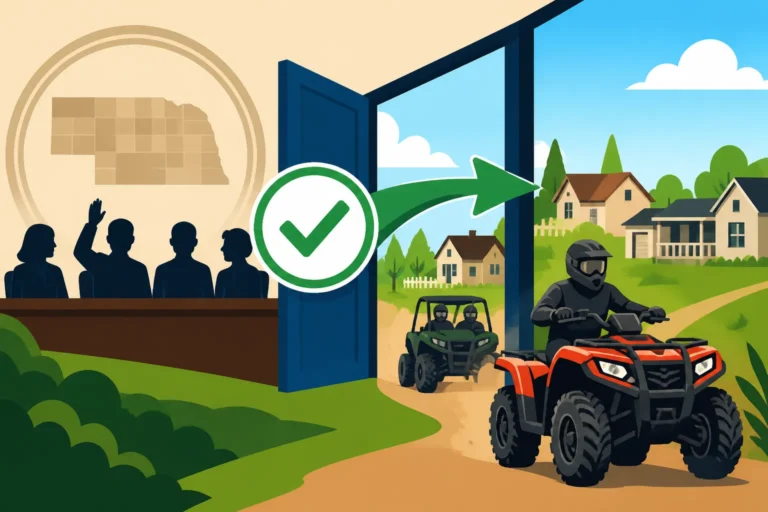
While state law is quite restrictive regarding ATVs on public roads, it does provide a pathway for cities and unincorporated villages to create their own rules. This is where things can get really localized and, honestly, a bit confusing if you don't do your homework. Many communities, especially smaller towns, have recognized the utility of ATVs and UTVs for their residents and have passed local ordinances to allow them on certain streets.
These ordinances often come with their own set of stipulations: specific hours of operation, designated streets, speed limits, and, of course, equipment requirements that might go beyond state minimums. For instance, one town might allow UTVs on all city streets except state highways running through town, while another might only permit them on residential streets. This patchwork of local rules means that what's legal in one town might get you a ticket just down the road. It's vital to research [Nebraska City Ordinances That Open Streets] and [Nebraska County Board Resolutions for Villages] before you ride in any particular community.
Why State Highways Are Mostly Off-Limits
Even with the agricultural exception and local ordinances, there's one consistent rule: most state highways in Nebraska are off-limits to ATVs and UTVs. These are typically the numbered routes (like Highway 2, Highway 30, etc.) that are maintained by the state Department of Transportation. The reasoning is clear: higher speeds, heavier traffic, and different engineering standards make these roads inherently more dangerous for slower-moving, less protected off-road vehicles.
There are very narrow exceptions, such as crossing a state highway at a ninety-degree angle at an intersection, or in specific cases where a local ordinance might explicitly allow for a very short segment of state highway to be part of an approved route within city limits – but even then, these are rare and usually highly regulated. Generally, you should assume that state highways are a no-go zone. This restriction is crucial for safety and preventing serious accidents. Always err on the side of caution when considering these major thoroughfares. [Nebraska Bans ATVs on State Highways] for a good reason – the risks are simply too high.
Specific Lighting Requirements for Road-Legal ATVs/UTVs
Now, let's shine a light on the specific equipment that Nebraska law mandates for ATVs and UTVs that are allowed on public roads, focusing particularly on lighting. This isn't just about seeing where you're going; it's just as much about being seen by others, which is paramount for safety.
Headlights: Illuminating Your Path Forward
If your ATV or UTV is legally permitted on a public road in Nebraska, even under the agricultural exception or a local ordinance, it must be equipped with at least one headlight. This isn't just a suggestion; it's a non-negotiable requirement. The headlight needs to be functioning, visible from a specific distance, and, crucially, must be turned on even during daylight hours when operating on a public road. Yes, you read that right – even if the sun is blazing, your headlight needs to be on. This dramatically increases your visibility to other drivers, especially on dusty gravel roads or in areas with visual obstructions.
Think about it: an ATV or UTV is a much smaller profile than a car or truck, and in conditions like bright sun or dust, they can blend in very easily. A lit headlight acts as an early warning system for oncoming traffic. If your machine's stock headlight isn't quite cutting it or you're looking for an upgrade, companies like SuperATV offer a range of aftermarket LED light bars and headlights that can significantly enhance your forward illumination and overall visibility. Ensuring your [Nebraska Requires Head and Tail Lights] is one of the most basic, yet critical, steps to legal road operation.
Taillights: Ensuring You're Seen from Behind
Just as important as seeing where you're going is ensuring that other drivers can see you, especially from the rear. Nebraska law dictates that any ATV or UTV on a public road must have at least one functioning taillight that emits a red light visible from a specified distance. This taillight is your primary defense against rear-end collisions, particularly on roads where traffic might be moving much faster than you.
Like headlights, your taillight must be on whenever you are operating on a public road, regardless of the time of day. This is particularly vital on those country roads where dust can hang heavy in the air, or if you're pulling a small trailer for farm work. A bright, clear taillight ensures that drivers approaching from behind know you're there and can react accordingly. Many stock taillights are perfectly adequate, but if yours is dim or damaged, replacing it or adding additional auxiliary taillights is a smart safety investment. [Nebraska Lighting Statute 60-6,357] outlines these specifics for road usage.
Reflectors and Other Visibility Enhancements
While not always explicitly called out as lighting in the same way headlights and taillights are, reflectors play a crucial role in overall visibility, especially in low-light conditions or if your primary lights fail. Nebraska law typically requires specific reflective devices on the rear and sides of vehicles to enhance their visibility. For ATVs and UTVs, this usually means red reflectors on the rear and amber reflectors on the sides.
These passive safety devices catch the light from other vehicles' headlights, making your machine stand out even when your own lights might be less effective or if you're parked on the shoulder. Beyond the legal minimums, many riders wisely choose to add additional reflective tape or strips to their machines, particularly if they frequently operate near dawn or dusk, or on roads where visibility is often compromised by terrain or weather. Every little bit of extra visibility helps when sharing the road with larger, faster-moving vehicles.
Beyond Lights: Other Essential Gear for Road Use
While proper lighting is non-negotiable for road-legal ATVs and UTVs in Nebraska, it's just one piece of the puzzle. There are several other crucial pieces of equipment and requirements you'll need to meet to ensure your machine is truly road-ready and compliant with state and local laws. Overlooking these can be just as problematic as not having working lights.
The All-Important Safety Flag
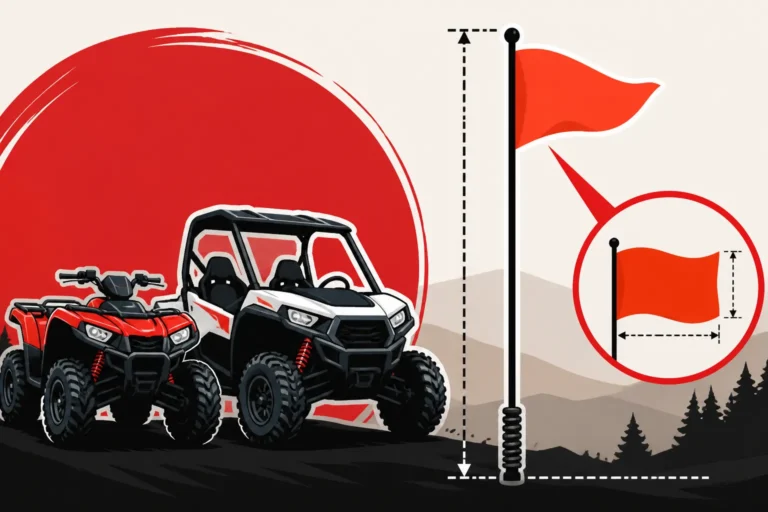
Perhaps one of the most distinctive and often overlooked requirements for ATVs and UTVs operating on Nebraska roads is the safety flag. If you're riding on a public road, Nebraska law mandates that your machine must be equipped with a safety flag. This isn't just any flag; it has specific requirements. It needs to be at least five feet above the ground, and typically a bright, day-glow orange or red triangular flag, often with a minimum surface area.
The purpose of this flag is to increase your vertical visibility. On rolling terrain, over hills, or around blind corners, a small ATV or UTV can be completely hidden from view. The flag, however, often remains visible, signaling your presence to other drivers long before they can see the machine itself. This is an absolutely critical safety device, particularly on dusty county roads where a driver might not see your headlights until they are too close. Many riders opt for a whip antenna with a flag, easily available through accessory providers like SuperATV, to meet this important requirement. Understanding [Why Road-Legal ATVs Need a 5-Foot Safety Flag] is key.
Mirrors, Horns, and Other Road-Safety Add-ons
Beyond lights and flags, there are other accessories that are either legally required or highly recommended for road use. Most vehicles on public roads are expected to have a working horn, and ATVs and UTVs are no exception. A horn is a vital communication tool, allowing you to alert other drivers or pedestrians to your presence. Many ATVs come with rudimentary horns, but if yours is missing or non-functional, it's an easy and inexpensive fix.
Rearview mirrors are another crucial safety item. While not always explicitly listed in every state's ATV road-use statutes, they are generally implied or required by local ordinances that allow ATVs on streets. Being able to see traffic approaching from behind without constantly turning your head is essential for safe road operation. Many aftermarket mirror kits are available for ATVs and UTVs that attach easily to handlebars or roll cages. Other important considerations include turn signals, which, while not always state-mandated for ATVs, are a common requirement in local ordinances and significantly enhance your ability to signal intentions to other drivers.
Required Insurance Coverage
Here's another big one that often catches riders by surprise: if you're operating an ATV or UTV on a public road in Nebraska, you are required to carry liability insurance. This isn't optional; it's the law, just like with cars and trucks. The state sets minimum coverage amounts for bodily injury and property damage, and these are often referred to in shorthand like "25/50/25" (meaning $25,000 for bodily injury per person, $50,000 for bodily injury per accident, and $25,000 for property damage).
Carrying this insurance protects you financially in case you're involved in an accident that causes damage or injury to another party. Without it, you could be personally liable for significant costs, not to mention facing fines and penalties for operating uninsured. Your standard off-road policy might not automatically include road coverage, so it's critical to speak with your insurance agent to ensure your policy specifically covers road use in Nebraska. Don't assume your farm insurance or existing auto policy covers your ATV on the road – verify it. For more details, check [Nebraska Requires Liability Insurance on Roads] and [Nebraska Insurance Minimums Today].
Local Ordinances and Their Impact on Lighting Rules
As we've touched on, local control plays a huge role in determining where and how you can ride your ATV or UTV on public roads in Nebraska. This local authority extends directly to equipment requirements, including lighting. It's a key reason why simply knowing state law isn't enough – you have to know your local rules, too.
How City Councils Open Streets
Many Nebraska cities and towns have enacted ordinances that permit ATVs and UTVs on certain streets within their corporate limits. These ordinances are often a response to local demand, recognizing that these machines are part of the community's fabric, whether for transport, work, or local recreation. When a city council crafts such an ordinance, they often include specific equipment requirements that go beyond the state's minimums.
For instance, while state law might require a headlight and taillight for agricultural use on a county road, a city ordinance might additionally require turn signals, brake lights, a license plate (even if the state doesn't issue one for ATVs), or even specific reflective markings. They might also set stricter standards for headlight brightness or taillight visibility. The city has the authority to do this as a condition of allowing road use. This means a machine that's perfectly legal for farm use on a county road might not meet the standards for city streets just a few miles away. [Nebraska Cities That Adopt ATV Ordinances] often detail these specific requirements.
County Boards and Unincorporated Villages
It's not just incorporated cities that have this power. County boards in Nebraska can also pass resolutions to open streets in unincorporated villages within their jurisdiction to ATV and UTV traffic. This provides a similar flexibility for smaller, non-incorporated communities that want to allow their residents to use these machines for local travel. The process is very similar to how a city council operates: the county board will establish the conditions, including any specific lighting or safety equipment requirements.
Again, these county-level resolutions can add layers of complexity. An unincorporated village might require features like a horn or rearview mirrors that aren't strictly mandated by state agricultural road-use laws but are deemed necessary for safety within the village's denser residential areas. This decentralization of rules means that what constitutes a "road-legal" ATV can vary significantly from one corner of the state to another, underscoring the need for local research. Check [Nebraska County Board Resolutions for Villages] to understand how this works.
Checking Local Rules Before You Ride
Given this patchwork of regulations, the single most important piece of advice is this: always check the specific ordinance or resolution for the city or village where you intend to ride. Do not assume. Your county treasurer's office, the city clerk's office, or even the local sheriff's department can often provide copies or direct you to where you can find this information online. Many cities post their municipal codes on their websites.
It can feel like a chore, but taking the time to understand the local nuances will save you a lot of grief. A quick call or visit can clarify everything from operating hours and speed limits to specific equipment mandates like whether you need turn signals or a specific type of flag. Ignoring these local rules is a common mistake that leads to citations and impounded machines. Never rely on hearsay; get the official information. It's truly the only way to be sure you're compliant. For more information, consider reading [What to Ask City Hall Before Riding Streets].
Practical Tips for Ensuring Your Machine is Road-Ready
Getting your ATV or UTV ready for occasional road use in Nebraska isn't just about meeting the minimum legal requirements; it's also about practical safety and maintenance. A little proactive effort can go a long way in preventing breakdowns, ensuring visibility, and keeping you safe when you're sharing the road with other vehicles.
Pre-Ride Checks and Maintenance
Before you ever pull onto a public road, even for a short agricultural trip, it's crucial to perform a quick but thorough pre-ride check. This is not just good practice; it's essential for road safety. Start with your lights: are both your headlight and taillight working? Are they clean and free of mud or dust that could obscure their light output? Check your turn signals and brake lights if your local ordinance requires them.
Next, inspect your tires. Are they properly inflated for road use? Off-road tires can wear quickly on pavement, so regular checks are vital. Ensure your brakes are functioning correctly and that your mirrors (if equipped) are clean and properly adjusted. Check your horn. Make sure your safety flag is securely mounted and at the correct height. These routine checks only take a few minutes but can make a huge difference in preventing an incident. Plus, a well-maintained machine is generally a safer machine.
Accessory Upgrades for Enhanced Safety
While meeting the minimum legal requirements is your first priority, many riders choose to go above and beyond for enhanced safety, especially if they plan on frequent road use. As mentioned, companies like SuperATV offer excellent aftermarket lighting solutions, from brighter LED headlights and taillights to additional light bars that provide superior visibility. Upgrading to LED lights, for example, often means brighter illumination, lower power draw, and longer lifespan compared to traditional halogen bulbs.
Beyond lighting, consider investing in a robust set of rearview mirrors that provide a wide field of view. Some riders even add a small, audible turn signal kit that beeps when activated, providing an extra reminder to turn off the signal after a lane change or turn. Reflective tape on the sides and rear of your machine can significantly boost passive visibility, particularly at dawn, dusk, or in inclement weather. These aren't necessarily about legal compliance but about maximizing your safety margin when sharing the road.
Documenting Your Compliance
Finally, a smart move for any rider operating an ATV or UTV on Nebraska roads is to keep all your relevant documentation handy. This includes proof of insurance, a copy of your ATV title (even if it says [Nebraska's Not To Be Registered Notation]), and if you're riding under a local ordinance, a printed copy or digital version of that specific ordinance. While an officer can typically look up this information, having it readily available can expedite a traffic stop and prevent misunderstandings.
It's also a good idea to know the specific statute numbers related to ATV road use in Nebraska. For example, knowing [Nebraska ATV Road Rules Under 60-6,356] can help you confidently explain your compliance if questioned. Keep these documents in a waterproof bag or container on your machine. Being able to quickly and clearly demonstrate that you've done your homework and equipped your machine properly shows good faith and can often make for a much smoother interaction with law enforcement.
Here's a quick summary of essential road-use equipment in Nebraska:
| Requirement | State Law (General) | Common Local Ordinance Additions | SuperATV Solution Examples |
|---|---|---|---|
| Headlights | At least one, on even during day | Brighter LEDs, specific lumens | LED Headlight Kits, Light Bars |
| Taillights | At least one red, on even during day | Brighter LEDs | LED Taillight Kits |
| Safety Flag | 5 feet above ground, day-glow color | Specific flag dimensions/colors | ATV Whip Lights, Safety Flags |
| Horn | Required | Louder, specific dB | Universal Horn Kits |
| Rearview Mirrors | Often implied/locally required | Required for street use | Side Mirrors, Rearview Mirrors |
| Turn Signals | Not always state-mandated | Commonly required | Universal Turn Signal Kits |
| Brake Lights | Not always state-mandated | Commonly required | Integrated Taillights |
| Liability Insurance | Required for road use | Specific minimums | Check your insurer |
| Reflectors | Red (rear), Amber (side) | Additional reflective tape | Reflective Decals |
Disclaimer
This article is for general informational purposes only and does not constitute professional advice. Laws, prices and regulations vary by location and change over time. Consult a qualified professional for guidance on your specific situation.