Nebraska Rules for a Teen Rider
It's no secret that a lot of parents and teenagers in Nebraska look at an ATV or UTV and see endless possibilities for fun, work, and adventure. But here’s the thing that often causes a huge headache: trying to figure out exactly what the rules are for a teen rider. The laws around age, licensing, and where exactly a young person can legally operate these machines can feel like a tangled mess. This guide aims to untangle that for you, providing clear, actionable information so you can empower your teen to ride safely and legally, avoiding any unexpected fines or trouble with the law.
The Core Question: Age, License, and Supervision for Nebraska Teen Riders
Navigating the rules for young riders can feel a bit like reading a map with missing pieces. You want to make sure your teen is safe and compliant, but the information isn't always straightforward. Let's break down the fundamental requirements for age, licensing, and whether an adult needs to be hovering nearby.
General Age Rules for Off-Road Riding
When it comes to riding off-road on private land, Nebraska doesn't have a single statewide minimum age requirement for operating an ATV or UTV. This can be a relief for parents with enthusiastic younger teens, but it also places a significant responsibility on the adult in charge. While the state doesn't mandate an age, manufacturers themselves often recommend age guidelines for specific machine sizes and types. For instance, a small 90cc youth ATV is designed for a much younger rider than a powerful 450cc sport quad. Ignoring these recommendations isn't just risky from a safety standpoint; it can also lead to issues with insurance or liability if an incident occurs.
Many private riding parks and recreational areas do implement their own age restrictions, often requiring riders to be at least 12 or 16 years old, sometimes with an accompanying adult or proof of a safety course. It's always a good idea to check with any facility you plan to visit before loading up the machines. Even if your teen is riding on your own property, encouraging them to take a safety course can teach them invaluable skills and judgment, regardless of their age.
The Driver's License Requirement for Road Use
Here's where things get really specific and often catch people off guard. If your teen is planning to operate an ATV or UTV on any public road in Nebraska, even briefly for agricultural purposes or in a town with a specific ordinance, they absolutely must possess a valid driver's license. This isn't a suggestion; it's a legal requirement that mirrors the rules for adult operators.
Specifically, they would need a Class O operator's license, which is Nebraska's standard driver's license. For teens who are already working on the family farm, a valid farm permit can also fulfill this requirement. This means if your 15-year-old has their learner's permit but not a full Class O license, they generally cannot legally operate an ATV or UTV on a public road, even for a quick hop between fields. The state makes no exceptions for minors when it comes to the licensing requirement for public road operation. This particular rule is often a point of confusion for families, but it’s crucial to understand to avoid serious legal trouble. You can learn more about what this means for your teen by checking out [What a Class O License Means for Nebraska Riders] or [Can a Farm Permit Replace a Driver's License?].
The Role of Adult Supervision
For off-road riding on private property, while there isn't a universal state law mandating adult supervision for teen riders, it's undeniably a best practice, especially for younger or less experienced teens. An adult's presence can provide immediate assistance in case of an accident, offer guidance on riding techniques, and ensure the teen is adhering to safety protocols. Many ATV safety courses emphasize the importance of a graduated learning approach, where new riders, especially young ones, are supervised until they demonstrate consistent proficiency and good judgment.
When it comes to riding on public roads where legally permitted, if your teen meets the licensing requirements, direct adult supervision isn't always a separate legal mandate beyond the licensing itself. However, the spirit of the law, and certainly the intent of safe riding practices, suggests that parents or guardians should always ensure their teen is competent and responsible enough to handle the machine and the specific riding environment. A newly licensed 16-year-old might technically be allowed to ride solo on a county road for farm work, but good judgment calls for ensuring they are truly ready for that responsibility.
Where Nebraska Teen Riders Can Legally Operate ATVs and UTVs
One of the biggest questions for any ATV or UTV owner, regardless of age, is "Where can I actually ride this thing?" For teen riders, this question is even more critical, as their permissible riding areas are often more restricted due to licensing and safety considerations. Understanding the nuances of private land versus public road access in Nebraska is key to staying out of trouble.
Private Land: The Primary Riding Zone
Without a doubt, the safest and most legally unrestricted place for a teen to ride an ATV or UTV in Nebraska is on private property with the explicit permission of the landowner. This could be your own acreage, a friend's farm, or a designated private riding park. On private land, the state's stringent rules regarding licensing, speed limits, and safety flags for public roads generally don't apply, though common sense and landowner rules certainly do.
This freedom on private land makes it an ideal place for teens to learn how to operate their machines, practice their skills, and truly enjoy the off-road experience. It's also where safety courses are most beneficial, providing a controlled environment to learn proper techniques before venturing into more complex situations. Always remember that even on private land, basic safety gear like helmets and eye protection should be non-negotiable.
Limited Road Access for Agricultural Purposes
Nebraska law does provide a very specific exception that allows ATVs and UTVs to be operated on public roads, primarily for agricultural purposes. This is outlined in Neb. Rev. Stat. § 60-6,356. For a teen rider, this means that if they meet the aforementioned licensing requirements (a Class O driver's license or a farm permit), they can legally use a public road outside city limits to conduct farm or ranch business. This could include checking cattle, moving between fields, or transporting tools.
However, this isn't a free pass to joyride on county roads. There are strict conditions:
- The machine must be operated for an agricultural purpose.
- The rider must possess a valid driver's license or farm permit.
- The machine cannot exceed 30 mph.
- It must display a highly visible fluorescent orange or red triangular safety flag at least 5 feet above the ground.
- It must have working headlights and taillights, even if riding during daylight hours.
- The machine can only cross state and federal highways at a 90-degree angle after coming to a complete stop and yielding to all traffic.
These rules are designed to balance the needs of agricultural operations with public safety. For a teen, understanding and adhering to these requirements is paramount. Violating them can lead to tickets and fines, even if they're "just going a short distance." For more detailed information, look into [Nebraska's Agricultural Road Exception] and [When Farm Use Makes an ATV Road Trip Legal].
City and Village Ordinances
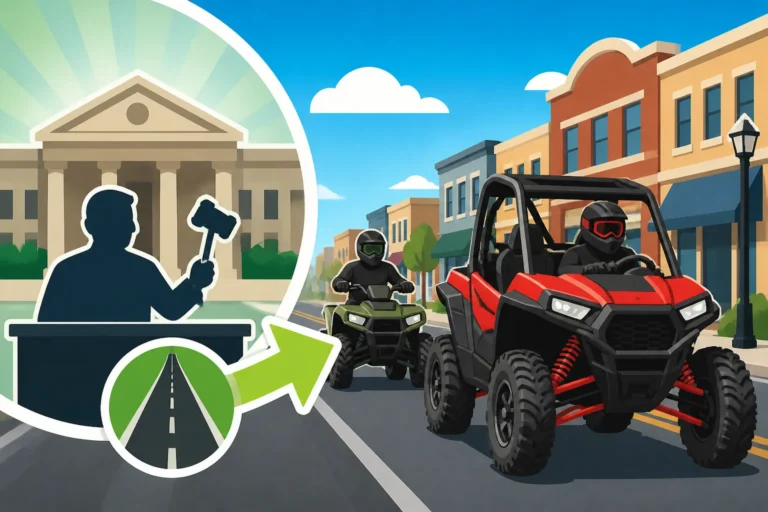
Beyond the statewide agricultural exemption, some individual cities and unincorporated villages in Nebraska have passed local ordinances that permit the operation of ATVs and UTVs on their streets. These are typically smaller communities that see value in allowing residents to use these machines for local transportation or specific tasks.
If your teen plans to ride in such a community, it's absolutely critical to research that specific city or village's ordinance. These local rules can vary wildly and often include:
- Specific hours of operation (e.g., sunrise to sunset).
- Mandatory registration or permits with the city hall.
- Additional age or licensing requirements beyond the state minimum (though the state's Class O license rule for public roads still applies).
- Designated streets where riding is allowed or prohibited.
- Insurance requirements.
A teen rider would still need a valid Class O driver's license to operate on these public streets. Relying on hearsay or assuming "everyone else does it" is a recipe for trouble. Always check with the local city clerk's office or village board. Resources like [How a Town Ordinance Opens Its Streets to ATVs] and [How a County Board Opens a Village to ATVs] can shed more light on this.
Essential Safety Gear and Equipment for Young Riders
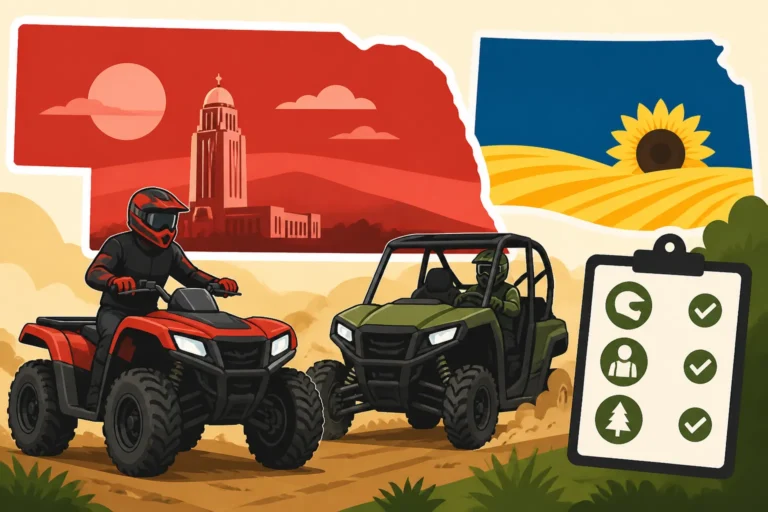
Safety should always be the top priority when anyone, especially a teen, is riding an ATV or UTV. While some safety gear is legally mandated for certain situations, much of it is simply smart practice to minimize risks. Equipping your teen and their machine properly can make a huge difference in preventing injuries.
Helmets, Eye Protection, and Protective Clothing
Let's talk about helmets first. While Nebraska's helmet statute specifically covers motorcycles and not ATVs in all situations (you can read more about this in [Nebraska's Helmet Statute Covers Motorcycles, Not ATVs]), the overwhelming consensus from safety experts, manufacturers, and private riding parks is that a properly fitted helmet is non-negotiable for ATV and UTV riders of all ages. A DOT-compliant helmet can prevent serious head injuries in a crash or rollover. For teens, whose judgment might still be developing, a helmet is even more critical.
Eye protection, such as goggles or a face shield, is also essential. Dust, flying debris, branches, and insects can impair vision and cause painful injuries, leading to a loss of control. Long-sleeved shirts, long pants, gloves, and sturdy over-the-ankle boots provide crucial protection against scrapes, cuts, burns, and impacts. Think of it as a second skin that can absorb some of the punishment that might otherwise go to your teen's body. Even on a hot summer day, this protective clothing is a small price to pay for safety.
Machine-Specific Safety Requirements for Road Use
If your teen is operating an ATV or UTV on public roads under the agricultural exemption or a local ordinance, the machine itself needs to meet certain safety equipment standards. These are not optional; they are required by law to enhance visibility and operational safety for both the rider and other road users.
- Safety Flag: A fluorescent orange or red triangular safety flag, mounted at least five feet above the ground, is mandatory. This flag significantly increases the machine's visibility to other drivers, especially on dusty roads or over hills.
- Headlights and Taillights: Even during daylight hours, your ATV or UTV must have working headlights and taillights if it's on a public road. This ensures it's seen by oncoming traffic and vehicles approaching from behind. Checking these before every road trip is a simple but vital habit.
- Mirrors and Turn Signals: While not universally mandated by Nebraska state law for agricultural road use, some local ordinances may require mirrors or even turn signals, particularly for UTVs that are more like traditional vehicles. Always verify the specific requirements for the area your teen will be riding in.
Many riders, including teens, often look to aftermarket parts from companies like SuperATV for durable safety flags, upgraded lighting systems, or secure storage solutions that don't interfere with visibility. Ensuring your machine is equipped correctly is not just about compliance; it's about giving your teen the best chance to be seen and avoid accidents when sharing public roads.
Avoiding Common Pitfalls and Staying Safe
For parents and teen riders alike, understanding the rules is just the first step. True safety comes from consistent adherence to those rules, good judgment, and continuous learning. There are several common mistakes that can easily lead to dangerous situations or legal consequences, and knowing how to avoid them is paramount.
Understanding Passenger Rules
One of the most frequently misunderstood rules, especially for ATVs, concerns passengers. Most ATVs are designed and intended for a single operator only. They are not built to safely carry a passenger, and doing so can drastically alter the machine's balance and handling characteristics, making it much more prone to rollovers. For a teen rider, whose experience and strength might not be fully developed, adding a passenger exponentially increases the risk of an accident. In many areas, carrying a passenger on a single-rider ATV is illegal, even on private land.
UTVs, or side-by-sides, are different. They are designed with multiple seats and seatbelts, making them suitable for passengers as long as the manufacturer's capacity limits are observed. If your teen is operating a UTV, ensure all passengers are properly seated and belted, and that the total weight does not exceed the machine's limits. Always double-check the owner's manual for specific passenger guidelines for any machine your teen is riding. For more on this, you might review [Nebraska Rules for a Child Passenger].
Consequences of Illegal Riding
The consequences of a teen riding illegally on public roads in Nebraska can range from inconvenient to severe. Deputies and local law enforcement are authorized to issue citations for violations such as:
- Operating without a valid driver's license or farm permit.
- Exceeding the 30 mph speed limit on agricultural roads.
- Failing to display a required safety flag or proper lighting.
- Riding in prohibited areas, such as state highways or city streets without an ordinance.
- Carrying an illegal passenger on a single-rider ATV.
These citations can result in fines, court costs, and potentially points on a driver's license, which can impact future insurance rates or even lead to license suspension for a teen. In some cases, particularly for repeated offenses or dangerous behavior, the machine itself could be impounded. Imagine the frustration and expense of retrieving an impounded ATV because a simple rule was overlooked. Understanding [Nebraska Penalties for Illegal Road Riding] is a good way to reinforce the seriousness of these rules.
The Value of Rider Education
Beyond the legal requirements, ongoing rider education is arguably the best investment you can make in a teen rider's safety. While Nebraska does not mandate a safety course for all ATV/UTV operators, there are excellent voluntary courses available that teach crucial skills like proper turning, braking, hill climbing, obstacle avoidance, and emergency maneuvers. These courses also emphasize risk assessment and responsible riding practices.
Many organizations offer hands-on training tailored for different age groups and machine types. An educated rider is a safer rider, regardless of their age or the terrain. Consider enrolling your teen in a certified ATV safety course to give them the confidence and skills needed to handle various riding conditions safely. This also helps instill a sense of responsibility and respect for the machine and the environment. Take a look at [Nebraska Safety Course Options] and [Nebraska Voluntary Online Rider Courses] for places to start. Even experienced riders can benefit from a refresher course, and for teens, it provides a structured learning environment that classroom experience just can't match. Equipping them with a good helmet, sturdy boots, and maybe even some SuperATV handguards is important, but equipping them with knowledge and good judgment is priceless.
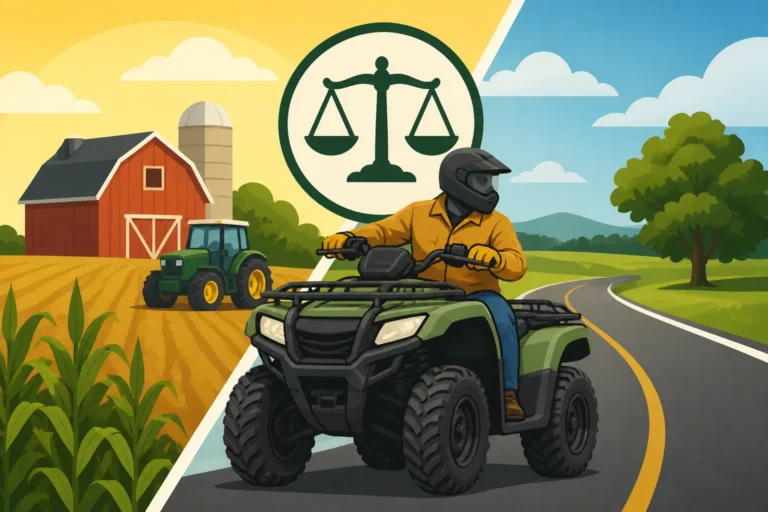
Teen Rider Requirements: Off-Road vs. Road Use in Nebraska
To help clarify the distinctions, here's a table summarizing the key requirements for teen riders in Nebraska, depending on where they are operating their ATV or UTV.
| Requirement | Private Land (Off-Road) | Public Road (Agricultural Use/Ordinance) |
|---|---|---|
| Minimum Age | No statewide minimum (manufacturer recommendations apply; private parks may have rules) | No separate minimum age for road use, but must meet licensing age criteria |
| Driver's License | Not required | Required: Valid Class O operator's license or farm permit |
| Adult Supervision | Highly recommended, especially for younger/new riders | Not a separate legal mandate if licensed, but always recommended |
| Safety Flag | Not required | Mandatory: Fluorescent orange/red, 5 ft high |
| Headlights/Taillights | Recommended for visibility | Mandatory (even in daylight) |
| Speed Limit | No statewide limit (ride within limits of safety/skill) | 30 mph maximum |
| Agricultural Use | Not applicable | Mandatory for most road access outside cities |
| Local Ordinance | Not applicable | Check specific city/village rules for permits/routes |
| Helmet | Highly recommended (often required by private parks) | Highly recommended (not mandated by state law for ATVs, but smart) |
| Passengers (ATV) | Generally not allowed on single-rider ATVs (unsafe) | Generally not allowed on single-rider ATVs (illegal and unsafe) |
This article is for general informational purposes only and does not constitute professional advice. Laws, prices and regulations vary by location and change over time. Consult a qualified professional for guidance on your specific situation.