Nebraska Ticket Costs for Road Riding
It's incredibly frustrating, isn't it? You just want to enjoy your ATV or UTV, maybe get some work done, or simply traverse a short distance, and suddenly you're facing a law enforcement officer with a ticket book in hand. The rules for riding off-highway vehicles on Nebraska roads can feel like a minefield, leaving many riders confused and, unfortunately, financially impacted. This guide will meticulously break down the various types of tickets you might encounter, delve into the real costs involved—which often extend far beyond the initial fine—and offer practical, actionable advice to help you avoid those costly citations and ride with peace of mind.
Understanding Why Tickets Happen on Nebraska Roads
The landscape of ATV and UTV use in Nebraska, particularly concerning public roads, is complex and often misunderstood. Many riders assume a certain level of leniency, especially in rural areas, but the reality is that specific state statutes and local ordinances dictate exactly where and how these machines can operate on or near public roadways. Ignoring or misinterpreting these rules is the primary reason riders find themselves staring at a ticket.
The Core Rules Many Riders Overlook
It’s easy to feel like you know the rules, especially if you've been riding for years. However, the specific statutes governing ATVs and UTVs on Nebraska roads are quite strict and often counter-intuitive to what some riders might expect. The biggest misconception is that if a road is gravel or in a rural area, it's automatically fair game. That's simply not the case. The state's primary law, Nebraska statute 60-6,356, lays out very specific conditions for road use. For instance, a common violation occurs when riders exceed [Nebraska's 30 mph Road Limit] on authorized roadways. This speed restriction is absolute, not a suggestion, and exceeding it can quickly lead to a stop and a ticket.
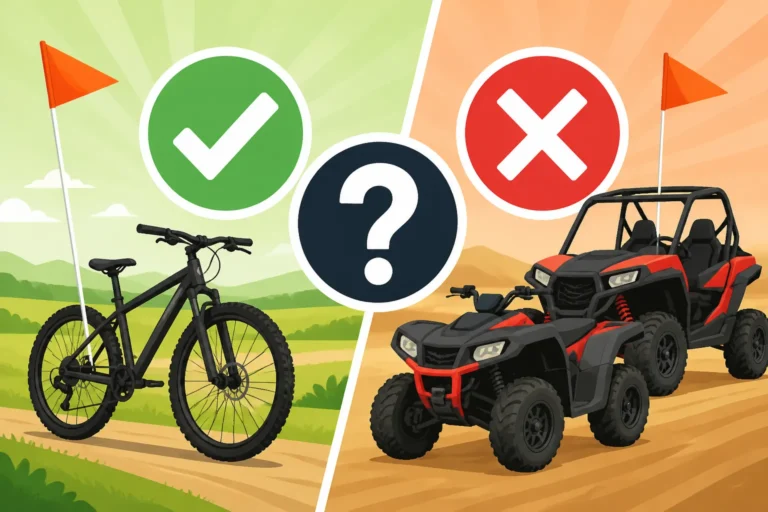
Beyond speed, equipment requirements are frequently overlooked. Many riders don't realize that even if they are legally allowed on a stretch of road, their machine must be properly outfitted. This includes essential items like a [Nebraska's 5-Foot Safety Flag Rule], which must be prominently displayed and of specific dimensions to ensure visibility. Similarly, proper lighting is not just for night riding; [Nebraska Requires Head and Tail Lights] to be on even during daylight hours when operating on a public road. Then there’s the human element: the rider needs a valid Class O operator's license or a farm permit, as detailed in [Nebraska Requires a Class O License or Farm Permit]. And, critically, if you're on a public road, you must carry liability insurance. [Nebraska Requires Liability Insurance on Roads] is not a suggestion; it's a hard requirement.
Common Violations That Lead to a Stop
Picture this scenario: you're just trying to get your feedlot machine from one pasture to another, a quick hop across a county road. Or maybe you’re taking your UTV down a city street in a small town that you think has an ordinance allowing it, but you haven't actually confirmed. These seemingly innocent actions are often where violations occur. One of the most common reasons for a ticket is simply riding in a prohibited area. For example, [Nebraska Bans ATVs on State Highways] entirely, and attempting to cross a controlled-access highway is also strictly forbidden, as outlined in [Nebraska Bans Crossing a Controlled-Access Highway]. There are very limited exceptions, such as specific agricultural uses, but these are often misinterpreted.
Another frequent cause for a stop is a missing or improperly displayed safety flag. It might seem like a small detail, but deputies are trained to look for these compliance items. If your flag isn't five feet above the ground or isn't the correct day-glow color, you're inviting a closer look. Likewise, operating without the required headlights and taillights, even in broad daylight, is an easy catch for law enforcement. Many people also make the mistake of riding their ATV or UTV with a passenger when the machine is only designed for one rider, or letting an underage, unlicensed driver operate the machine on a public thoroughfare. Even a short trip down the street to a neighbor's house can turn into a costly interaction if you're not fully compliant with every rule.
Deconstructing the Financial Hit: What an ATV Road Ticket Can Cost
When you get pulled over for an ATV or UTV road violation, the immediate concern is often the fine amount printed on the ticket. However, it's critical to understand that the initial fine is often just the tip of the iceberg. The total financial burden can quickly escalate when you factor in court costs, surcharges, potential legal fees, and even long-term impacts like increased insurance premiums.
The Base Fine: More Than Just a Slap on the Wrist
The dollar amount written on your citation for a road riding violation in Nebraska isn't a fixed, statewide figure that applies to every offense. Instead, the specific fine can vary significantly based on the nature of the violation, whether it's a first offense, and even which county or city jurisdiction issued the ticket. For example, a minor equipment violation, such as a missing safety flag or an unlit headlight during daylight hours, might carry a base fine in the low to mid-hundreds of dollars. It sounds manageable, right? But compare that to a more serious infraction, like operating under the influence—[Nebraska DUI Law and Off-Road Machines] applies to these vehicles too—which can lead to fines well into the thousands, along with other severe penalties.
Even for what might seem like a simple violation, like riding on a prohibited roadway or exceeding the 30 mph limit, the base fine is designed to be a deterrent. It's often structured to make you think twice about cutting corners or taking risks in the future. These [Nebraska Penalties for Illegal Road Riding] aren't just about collecting revenue; they're about enforcing safety and order on public thoroughfares. What might feel like a minor convenience for you could be seen as a significant safety hazard by others sharing the road, and the fines reflect that public safety concern.
Beyond the Fine: Court Costs, Surcharges, and Hidden Expenses
Unfortunately, the line item for the "fine" on your ticket is rarely the final amount you’ll pay. There’s a whole host of additional fees that pile on, inflating the true cost of a citation. The most immediate additional expense you'll face is [Nebraska Court Costs for a Citation]. These are administrative fees charged by the court system for processing your case, regardless of whether you contest the ticket or simply pay it. These costs can easily add another significant chunk, often a hundred dollars or more, on top of your base fine.
Beyond court costs, you might encounter various state-mandated surcharges and administrative fees. These are often applied universally to traffic citations to fund specific state programs or services, and they can vary. While individual amounts may seem small, they quickly add up. And let's not forget the "hidden" costs: if you decide to contest your ticket, you'll likely miss a day of work to attend court, and if you hire an attorney, their fees will far eclipse the original fine. Perhaps one of the most impactful long-term costs could be on your insurance premiums. A moving violation could classify you as a higher risk, potentially leading to increased rates when it's time to renew your policy, especially if you have [Nebraska Insurance After a Claim] or a prior incident on your record.
Preventing a Ticket: Staying Legal and Riding Smart
The best way to deal with a ticket is to avoid getting one in the first place. This requires a proactive approach, combining thorough knowledge of the law with proper machine preparation and responsible riding habits. It's about empowering yourself with information so you can enjoy your machine without the stress of potential fines.
Know Your Local Ordinances and State Laws
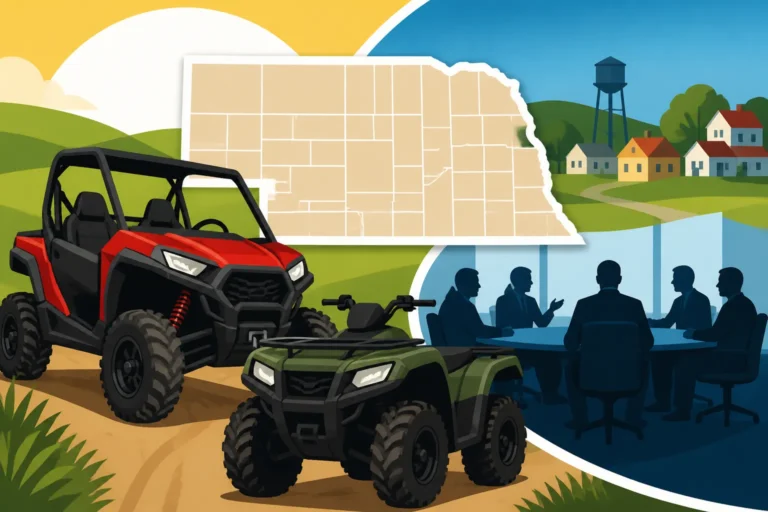
One of the most crucial steps you can take is to become intimately familiar with the specific laws governing ATVs and UTVs in Nebraska, as well as any local rules that might apply to your area. It's not enough to assume; you need to verify. The state law provides a framework, but cities and counties have the authority to create their own ordinances that can open or close local roads to off-highway vehicles under certain conditions. For instance, [Nebraska Cities That Adopt ATV Ordinances] might allow street use within city limits with specific permits, fees, and equipment requirements. Similarly, [Nebraska County Board Resolutions for Villages] can grant permission for ATVs and UTVs to operate on certain village streets.
Before you ever take your machine onto a public road, make it a point to contact your local city clerk's office, county sheriff's department, or even the county treasurer's office to clarify any specific rules in your area. Ask targeted questions, such as [What to Ask City Hall Before Riding Streets] or [Asking the Sheriff Whether a County Road Is Open]. Remember, ignorance of the law is not a valid defense. While most ATVs are generally [Can You Drive an ATV on the Road in Nebraska?] under very strict conditions, understanding these nuances—like the fact that [Three Ways ATVs Can Legally Use Nebraska Roads] exist, primarily for agricultural purposes or in specific municipal/village zones—is your best defense against a costly citation.
Equipping Your Machine for Compliance
Beyond knowing the rules, your machine itself must be properly equipped to meet Nebraska's requirements for road use. This isn't just about having a safe ride; it's about being legally compliant. The safety flag is a prime example: it needs to be at least five feet above the ground, and the flag itself must be day-glow orange and at least 30 square inches in size. These specifications are not arbitrary; they are detailed in [Nebraska Safety Flag Dimensions] and [Nebraska Day-Glow Flag Colors]. Investing in a high-quality, durable flag and a secure mounting system, perhaps from a reputable brand like SuperATV, is a smart move. They offer robust flags and mounts that can withstand Nebraska's conditions, ensuring you meet the visual requirements.
Lighting is another critical component. Even if you're only riding during daylight hours, your ATV or UTV must have functioning headlights and taillights that are activated. [Nebraska Requires Head and Tail Lights] for any road operation. This means checking your bulbs regularly and ensuring your wiring is in good order. Beyond these mandated items, consider reflective tape on your machine to enhance visibility, especially if you ever find yourself on a road near dusk or dawn. While not explicitly required for all road use, it adds a layer of safety that can't hurt. Finally, always carry proof of your liability insurance and your operator's license, as these are the first things a deputy will ask to see if you're stopped. [What Paperwork a Deputy Can Ask to See] includes these vital documents.
What to Do If You Receive a Ticket
Despite your best efforts to understand and follow the rules, sometimes things happen. You might misinterpret a local ordinance, or perhaps an officer might perceive a violation differently. Receiving a ticket for an ATV or UTV road riding infraction can be stressful, but knowing how to handle the situation can make a significant difference in the outcome.
Handling the Stop and the Citation
If a law enforcement officer pulls you over while you're operating your ATV or UTV on a public road, the most important thing to do is remain calm and be polite. Arguing with the officer on the roadside rarely, if ever, leads to a favorable outcome and can sometimes escalate the situation or even result in additional charges. Pull over safely and follow all instructions given by the officer. Have your operator's license, proof of insurance, and any other relevant documentation (like a bill of sale or title) readily available.
Listen carefully to what the officer says about the alleged violation. Ask clarifying questions if you don't understand, but avoid making excuses or admitting guilt. Simply gather the information. Once the officer issues the citation, take a moment to review it. Make sure the information on the ticket, such as your name, date, time, and the specific statute you're cited under, is accurate. If you notice any immediate factual errors, you can politely point them out, but again, avoid confrontational language. Your primary goal at this stage is to secure the citation, understand the charges, and determine the next steps. It's often helpful to immediately note down your recollection of the event, including time, location, road conditions, and what was said, as this can be invaluable if you decide to contest the ticket later.
Deciding Whether to Pay or Contest
Once you have a ticket in hand, you're faced with a choice: pay the fine or contest it in court. Both options have their pros and cons, and the best decision depends entirely on the specifics of your situation. If you believe the ticket was issued unfairly, or if there were factual inaccuracies in the officer's assessment, contesting it might be the right path. However, be prepared for the commitment involved. Contesting a ticket means you'll need to appear in court, possibly multiple times, which can mean taking time off work and dealing with the formalities of the legal system. You'll need to present your case, potentially with evidence or witnesses, to a judge. This process is detailed in [How to Contest an ATV Ticket in County Court].
On the other hand, paying the ticket means you're admitting guilt to the violation. This can be the simpler option if you acknowledge the infraction and want to avoid the hassle of court. However, remember that paying the fine also means accepting the court costs, surcharges, and the potential impact on your insurance rates. Before making your decision, carefully weigh the total financial cost of the ticket (fine + court costs + surcharges) against the time, effort, and potential legal fees if you were to contest it. In some cases, especially for minor infractions, it might be possible to contact the prosecutor's office to discuss the possibility of a reduced charge or a deferral program, which could save you some money or keep the violation off your record. It's always worth exploring your options.
Comparison of Common ATV Road Violations and Potential Impact
Here's a look at some common violations related to ATV road use in Nebraska and the potential consequences. Please remember that specific fine amounts vary by jurisdiction and the specifics of the case, so these are illustrative of the types of costs you might encounter.
| Violation Type | Example Scenario | Immediate Financial Impact (Illustrative) | Additional Costs/Consequences | How to Avoid |
|---|---|---|---|---|
| No Safety Flag | Riding on an authorized county road without a 5-foot flag | Low-to-Mid Hundred Dollars | Court costs, administrative fees | Ensure your flag is at least 5 feet tall, day-glow orange, 30 sq. inches. SuperATV has compliant options. |
| Exceeding 30 MPH Limit | Going 45 mph on a legally opened gravel road | Mid-to-High Hundred Dollars | Court costs, potential insurance premium increase | Always adhere strictly to the 30 mph speed limit on all public roads. |
| Riding on Prohibited Road | Taking a shortcut on a state highway (I-80, US-30) | High Hundred to Low Thousand Dollars | Court costs, impoundment fees, potential attorney fees | Know which roads are strictly off-limits, like state highways. Check [Nebraska Bans ATVs on State Highways]. |
| No Headlights/Taillights | Driving at noon on a legal road with lights off | Low-to-Mid Hundred Dollars | Court costs, safety hazard | Always operate with headlights and taillights on when on a public road, even in daylight. |
| No Valid Operator's License | Teenager with only a learner's permit driving on road | High Hundred to Low Thousand Dollars | Court costs, potential impoundment, possible driver's license suspension | Ensure all riders on public roads possess a Class O license or valid farm permit. Check [Nebraska Requires a Class O License or Farm Permit]. |
| No Liability Insurance | Operating on a city street without required coverage | High Hundred to Mid Thousand Dollars | Court costs, potential impoundment, financial liability in accident | Purchase and carry proof of minimum liability insurance. [Nebraska Requires Liability Insurance on Roads]. |
| Operating While Intoxicated (OWI) | Riding ATV on a county road after consuming alcohol | Thousands of Dollars | Court costs, license suspension, mandatory classes, impoundment, legal fees, criminal record | Never operate an ATV or UTV on public roads under the influence of alcohol or drugs. [Nebraska DUI Law and Off-Road Machines]. |
Navigating the rules for ATVs and UTVs on Nebraska roads can definitely feel like a challenge, but with a bit of proactive research and diligent preparation, you can avoid the headache and financial strain of a ticket. Knowing the laws, properly equipping your machine, and riding responsibly are your best defenses. Stay safe out there, and enjoy the ride!
Disclaimer
This article is for general informational purposes only and does not constitute professional advice. Laws, prices and regulations vary by location and change over time. Consult a qualified professional for guidance on your specific situation.