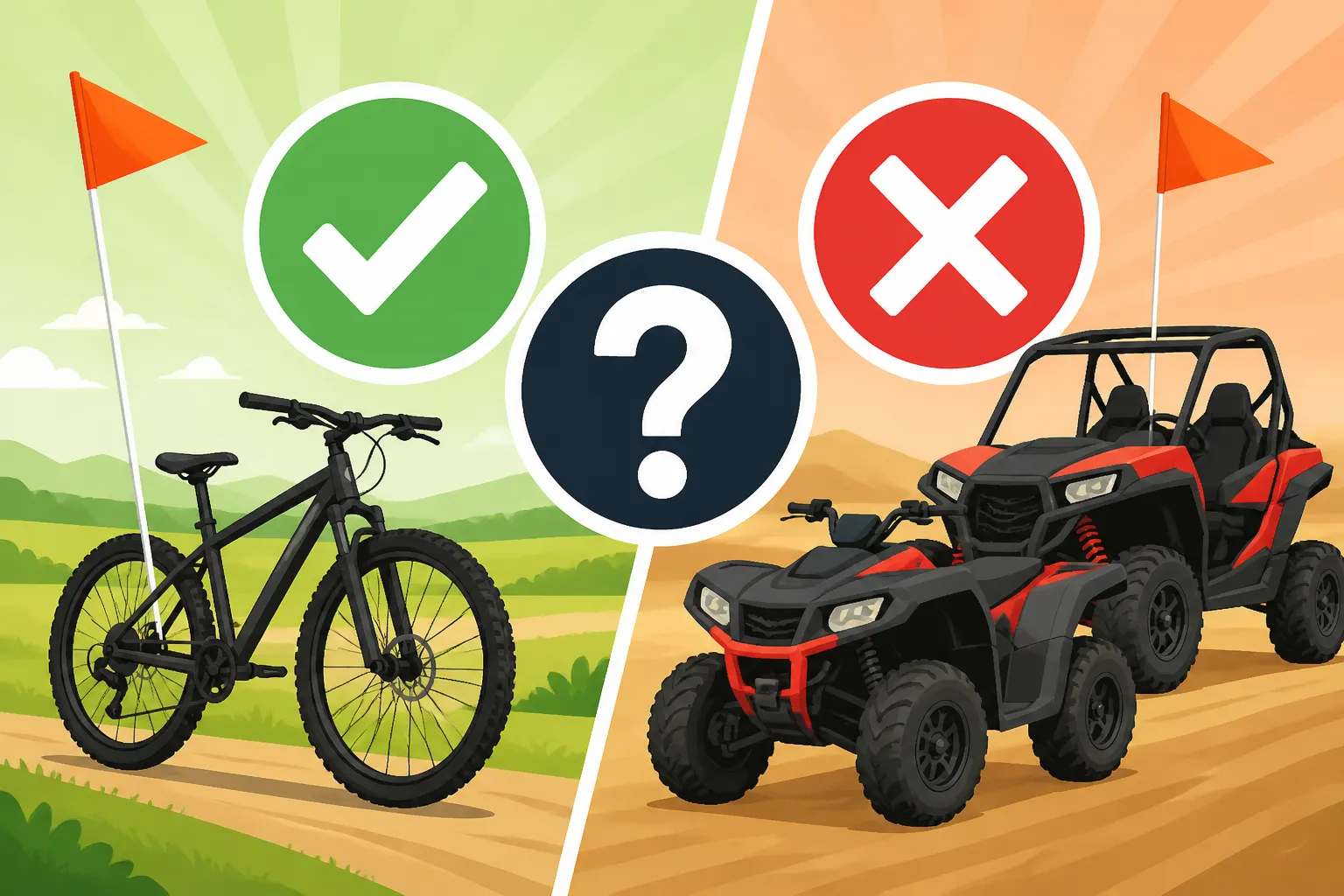
Does a Bicycle Safety Flag Meet the Rule?
It's easy to assume that any bright flag stuck on the back of your ATV or UTV will do the trick when you're making a quick run down a county road or crossing a highway. Many riders, in an honest effort to be safe and visible, wonder if that bright orange triangle they use on their bicycle could also fulfill the requirement for their off-road machine. Unfortunately, Nebraska's regulations are quite specific about what constitutes a legal safety flag for road use, and a standard bicycle flag often falls short, leaving riders vulnerable to tickets and, more importantly, safety hazards. This guide will walk you through the precise requirements for ATV and UTV safety flags in Nebraska, ensuring you understand exactly what you need to stay compliant and safe on public roadways.
Understanding Nebraska's ATV Road Rules and Safety Gear
Navigating the nuances of ATV and UTV road laws in Nebraska can feel like trying to hit a moving target. There are state statutes, county resolutions, and even city ordinances that all play a role in defining where and how you can operate your machine on public thoroughfares. One of the most frequently misunderstood pieces of required equipment, and a critical one for safety, is the humble safety flag. It’s not just a suggestion; it’s a legal necessity in specific circumstances.
Why Safety Flags Matter on Nebraska Roads
Imagine yourself cresting a hill on a gravel county road, or preparing to cross a busy two-lane highway. From the perspective of an oncoming car, especially a larger vehicle like a pickup or a semi, an ATV or UTV can be surprisingly difficult to spot. They sit lower than most traffic, and their profile can blend in with the background. This is where a safety flag becomes absolutely vital. Its primary purpose is to extend a highly visible marker well above your machine, increasing your presence on the road and giving other drivers crucial extra seconds to see you, react, and adjust their speed or position.
This isn't just about avoiding a ticket; it's about avoiding a serious accident. On dusty gravel roads, a flag can often be seen poking above the cloud of dirt long before the machine itself. When crossing a highway, a flag might be the first indication to a motorist traveling at 60 mph that something smaller and slower is about to enter their path. Riders often express frustration at the perceived nit-pickiness of such rules, especially when they feel they are being cautious, but the flag rule is born from a clear safety imperative. It’s a passive safety device that works 24/7, providing an early warning system for your presence, particularly in situations where your machine's actual size might deceive other drivers.
The Specifics of Nebraska's Safety Flag Requirement
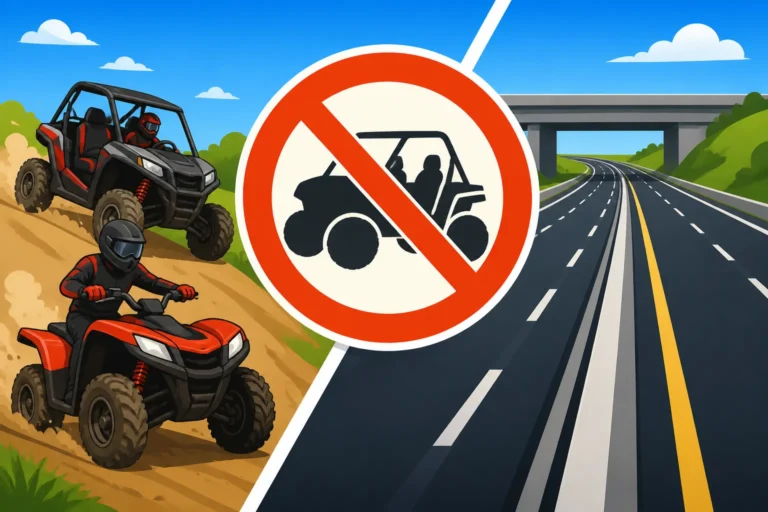
Now, let's get down to brass tacks: what exactly does Nebraska law demand of your safety flag? The relevant statute is pretty clear, and it leaves little room for interpretation. When an ATV or UTV is operated on a public road where allowed (remember, state highways and controlled-access highways are generally off-limits, with specific crossing exceptions), it must display a safety flag. This isn't just "any" flag; it has very specific characteristics.
First and foremost, the flag needs to be mounted in such a way that the highest point of the flag itself is at least [5 Feet Above the Ground]. This is a critical measurement that often trips up riders. If you simply mount a flag directly to the back rack, it might not achieve this required height, especially on smaller quads. The purpose of this height requirement is to ensure the flag is visible over crops, fences, or the hoods of other vehicles, giving it the best chance of being seen by drivers approaching from a distance.
Beyond height, the flag itself has explicit material and size requirements. The law mandates a triangular flag, and it must be made of "day-glow orange" material. This isn't just "bright orange"; it's a specific type of fluorescent orange designed for maximum daytime visibility. The minimum size for this triangular flag is [30 Square Inches] when measured across its surface. This means a flag that's, for example, 6 inches wide at the base and 10 inches tall would meet this minimum area requirement. These specifications are designed to maximize the flag's visual impact, making it stand out even in challenging lighting conditions or busy backgrounds. You can find more details on these specifications in topics like [How Big the Triangular Safety Flag Has to Be] and [Day-Glow Orange and the 30-Square-Inch Flag Rule]. It’s not enough to have a flag; you need the right flag, meeting these exact dimensions and color.
Comparing Bicycle Flags to Legal Requirements
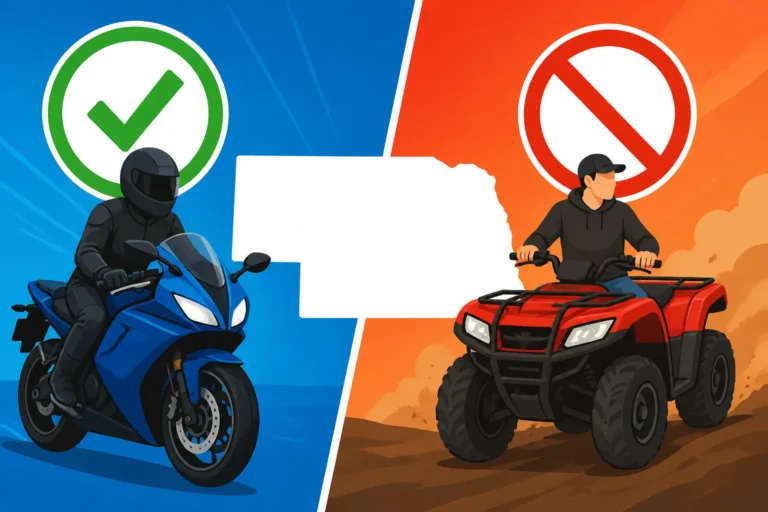
It's completely understandable why someone might look at a bicycle safety flag and think it could do double duty for their ATV. They're bright, they're designed for visibility, and they're readily available. However, a quick comparison to Nebraska's specific requirements reveals why this common assumption can be a problem.
Where Bicycle Flags Fall Short
The primary issue with most bicycle flags is their size and mounting height. Bicycle flags are typically designed to be mounted on a bicycle, which means they often come with poles that are just 3 to 4 feet tall. While this height is usually sufficient to extend above a cyclist's head, it falls considerably short of the [Nebraska's 5-Foot Safety Flag Rule] when mounted on an ATV or UTV. Remember, the law specifies the highest point of the flag must be 5 feet above the ground. Even on a smaller ATV, a 4-foot pole often won't achieve this. For UTVs, which have a higher roofline, the disparity is even greater.
Furthermore, while bicycle flags are bright, they might not always be the specific "day-glow orange" material mandated by Nebraska law. Many bicycle flags come in various neon colors or patterns, which, while eye-catching, don't necessarily meet the strict color definition. Their material might also be less robust than what's needed for the higher speeds and vibration of an ATV, leading to fraying or tearing more quickly. Finally, the size of the triangular flag on a bicycle kit is frequently smaller than the [30-Square-Inch Flag Rule] that applies to ATVs. These flags are simply designed for a different application, with different considerations for speed, vehicle size, and the environments in which they are used.
What to Look for in a Compliant ATV Safety Flag
So, if your trusty bicycle flag isn't going to cut it, what should you be looking for? The good news is that there are plenty of aftermarket options specifically designed to meet or exceed Nebraska's requirements. When you're shopping for a safety flag, keep these key characteristics in mind:
- Height: Look for flags advertised as "ATV/UTV safety flags" or "whips." These often come with poles that are 6 feet or even longer, ensuring that once mounted, the tip of the flag will easily clear the 5-foot mark. Some even have telescoping poles for adjustable height.
- Color: Insist on "day-glow orange." This specific shade provides the best contrast against natural backgrounds and ensures compliance with the spirit and letter of the law.
- Size: Make sure the triangular flag itself is at least 30 square inches. Many manufacturers will list the flag dimensions, or you can quickly calculate the area (base x height / 2 for a triangle).
- Durability: ATV flags are often built with stronger poles (fiberglass or composite) and more robust flag material to withstand wind, brush, and the rigors of off-road and road use. Look for flags with reinforced stitching and sturdy mounting bases.
Brands like SuperATV offer a range of whips and flags designed for off-road vehicles that often meet these criteria. When purchasing, always double-check the product specifications against Nebraska's law to confirm it's truly compliant. A little research upfront can save you a lot of hassle and potential fines later on. Investing in a proper, compliant flag is not just about avoiding a ticket; it’s a direct investment in your safety and visibility on shared roadways.
Here's a quick comparison to highlight the differences:
| Feature | Typical Bicycle Safety Flag | Nebraska ATV Road-Legal Flag Requirement |
|---|---|---|
| Minimum Height | Often 3-4 feet | 5 feet above the ground when mounted |
| Color | Various, often bright | Day-glow orange (specifically) |
| Minimum Size | Often smaller | At least 30 square inches |
| Material Durability | Lightweight, sometimes flimsy | Designed for off-road/road use, more robust |
| Mounting | Simple, often flexible pole | Secure, rigid mounting for stability at speed |
| Visibility | Good for bicycles | Optimized for larger, faster vehicles |
Beyond the Flag: Other Essential Road Equipment
While a compliant safety flag is non-negotiable for road use, it's just one piece of the puzzle for legal and safe operation of your ATV or UTV on Nebraska's public roads. There are several other critical equipment requirements and operational rules you absolutely must adhere to. Ignoring these could lead to more than just a warning; it could result in serious fines or even impoundment of your machine.
Lighting Up Your Ride for Nebraska Roads
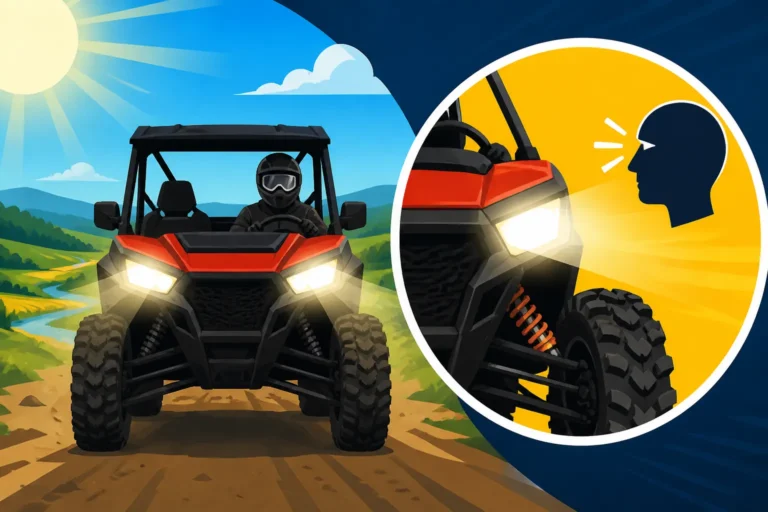
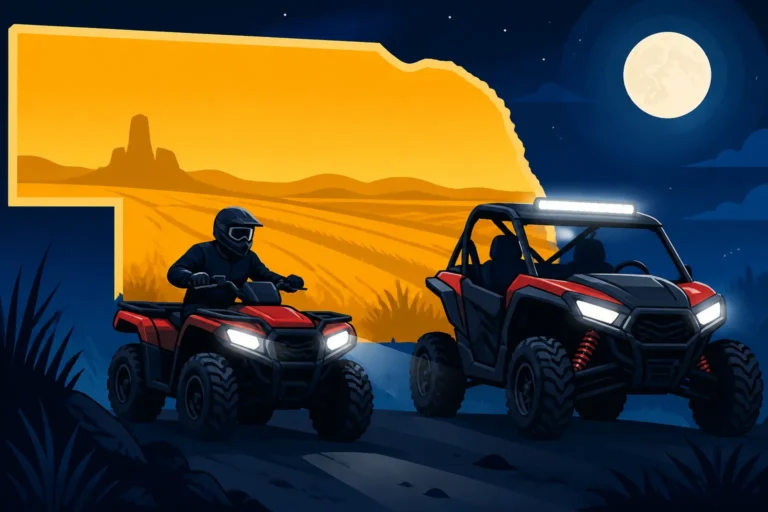
Visibility isn't just about a flag; it's also about your lights. If you're going to be on a public road, even during daylight hours, your machine needs to be properly lit. Nebraska law explicitly states that ATVs and UTVs operated on public roads must have working [Nebraska Requires Head and Tail Lights]. This means a functional headlight that illuminates the road ahead and a taillight that makes you visible from the rear. While you might assume this is only for night riding, many states, including Nebraska in certain contexts, require your headlight to be on even during the day for maximum visibility. For example, laws often specify "sunrise to sunset" rules for when headlights are not strictly required, but it's generally a good practice to have them on. During periods of reduced visibility, like fog, heavy rain, or even just kicking up a lot of dust on a gravel road, those lights become even more critical. Properly maintained and functional lights are not just about legality; they are fundamental to your ability to see and be seen.
Reflective Tape and Visibility Enhancements
Beyond the mandated lights and flag, smart riders take additional steps to enhance their visibility, especially if they anticipate riding during dawn, dusk, or in potentially dusty conditions. Adding [Adding Reflective Tape to an ATV for Road Use] to strategic points on your machine can dramatically increase its visibility to other drivers, particularly at night or in low light. Think about the front, rear, and sides of your ATV or UTV. High-contrast reflective tape can catch the headlights of an approaching vehicle from a considerable distance, providing an extra layer of safety that goes above and beyond the minimum requirements.
This is particularly important for utility machines that might spend a lot of time on farm roads or near rural intersections. While not explicitly required by law, these kinds of enhancements demonstrate a commitment to safety and can significantly reduce your risk. Aftermarket accessory providers like SuperATV often carry kits for lights and reflective applications, which can be a convenient way to get everything you need in one place. Remember, the more visible you are, the safer everyone on the road will be.
The Importance of Proper Licensing and Insurance
Having the correct physical equipment on your ATV is paramount, but it's equally important to ensure you, the operator, are legally allowed to be on the road. This involves two critical elements: licensing and insurance. In Nebraska, operating an ATV or UTV on a public road requires that the driver hold either a valid Class O operator's license (a standard driver's license) or a valid farm permit. This is not a "sometimes" rule; it's a "every time" rule. [Nebraska Requires a Class O License or Farm Permit] for anyone behind the handlebars or wheel when on a public thoroughfare.
Furthermore, just like with a car, liability insurance is a non-negotiable requirement when your ATV or UTV is on a public road. [Nebraska Requires Liability Insurance on Roads] to protect you and others in the event of an accident. This coverage typically needs to meet state minimums for bodily injury and property damage. While you might not need insurance if you only ride on private property, the moment your wheels touch a public road, those insurance requirements kick in. Failing to have proper licensing and insurance can lead to severe penalties, including hefty fines, vehicle impoundment, and even legal action in the event of a collision. Before you even think about putting a tire on a county road, ensure your paperwork is as compliant as your equipment.
Consequences of Non-Compliance and Best Practices
Riding an ATV or UTV on Nebraska's public roads comes with privileges, but also significant responsibilities. Failing to meet the state's requirements, including those for safety flags, can lead to unpleasant and potentially costly consequences. Understanding these repercussions and adopting best practices will help ensure your rides are safe and legal.
What Happens If Your Flag Doesn't Meet the Rule?
The immediate and most common consequence of not having a compliant safety flag (or any required equipment) is a citation from law enforcement. A sheriff's deputy or state patrol officer can pull you over and issue a ticket if your flag doesn't meet the height, color, or size specifications. These penalties can range from a warning to a significant fine, and the cost can add up quickly, especially once court costs are factored in. [Nebraska Penalties for Illegal Road Riding] can be substantial, and these are often assessed per violation. So, if you're missing a flag, don't have proper lighting, and lack insurance, you could be looking at multiple citations.
Beyond the financial hit, there's the critical issue of safety. If your flag isn't high enough or bright enough, it's not fulfilling its purpose of making you visible. This dramatically increases your risk of being involved in an accident, particularly on roads shared with faster-moving vehicles or large farm equipment. An accident, even a minor one, can lead to injuries, property damage, and skyrocketing insurance rates – far more costly than simply buying a proper flag in the first place. Law enforcement isn't enforcing these rules to be difficult; they're doing it to save lives and prevent injuries.
Sourcing Compliant Flags and Accessories
Finding the right safety flag doesn't have to be a scavenger hunt. Most reputable powersports dealerships in Nebraska will carry compliant ATV and UTV safety flags, often referred to as "whips." You can also find a wide selection from online retailers specializing in off-road accessories. When shopping, always double-check the product description against Nebraska's specific requirements: 5 feet total height when mounted, day-glow orange, and at least 30 square inches for the triangular flag portion.
Don't be afraid to ask questions at the dealership or contact customer service for online stores. Inquire about the flag's pole material, the durability of the flag fabric, and the ease of mounting. Many flags come with quick-release bases, which are incredibly convenient if you frequently transport your machine or ride in areas where the flag isn't required. For those who want to take their visibility a step further, look for LED-lit whips. While not required, they can provide exceptional visibility, especially during dawn, dusk, or night riding, transforming your machine into a beacon on the road. Brands like SuperATV are well-known for offering robust and high-quality accessories, including whips and flags, so they are a good place to start your search for compliant gear.
Always Double-Check Local Ordinances
Finally, remember that Nebraska's statewide rules for ATVs on roads are not the only rules that apply. While the state statutes set the baseline, individual cities and counties have the authority to create their own ordinances regarding ATV and UTV use on their local streets and county roads. This means that a city like Yutan, for instance, might have an ordinance allowing ATV street use within its limits, but with additional rules or even a separate city registration fee. [How a Town Ordinance Opens Its Streets to ATVs] can vary widely.
Before you take your machine onto any public road, whether it's a city street or a county gravel road, take a few minutes to check with the local city hall or county clerk's office. A quick phone call or a visit to their website can clarify any local rules that might supersede or add to the state's requirements. This due diligence ensures you're fully compliant, avoiding unexpected tickets and contributing to safer, more respectful riding in every community you visit.
Disclaimer
This article is for general informational purposes only and does not constitute professional advice. Laws, prices and regulations vary by location and change over time. Consult a qualified professional for guidance on your specific situation.