Nebraska Rules for Riding After Dark
Riding an ATV or UTV after dark in Nebraska can feel like navigating a maze blindfolded. You've heard whispers of "daylight only" rules, but then you see someone plowing snow at night with their side-by-side, leaving you scratching your head about what's actually allowed and what's a definite no-go. This guide is here to untangle the complexities of Nebraska's laws and common-sense safety practices when the sun dips below the horizon, helping you understand when and how you can legally and safely operate your machine after dark.
The General Rule: Why Night Riding on Public Roads is Restricted
Let's face it, the vast majority of ATV and UTV riding in Nebraska happens during the day. It's when the trails are visible, the ranch work is in full swing, and the recreational opportunities are at their peak. However, there are times when daylight simply isn't enough, or when circumstances push you into the twilight hours. Nebraska law, in its wisdom, has some very specific ideas about when your machine should be out and about on public thoroughfares, and generally, that doesn't include the dead of night.
The "Sunrise to Sunset" Mandate
For the average recreational rider, the biggest hurdle to night riding on Nebraska's public roads and highways is the explicit "sunrise to sunset" rule. This isn't just a suggestion; it's a legal boundary. The law states that ATVs and UTVs are primarily intended for off-road use, and when they do venture onto approved public roads—which, let's be clear, is a very limited scenario in Nebraska—it must be during daylight hours. This means if you're out on a county road that happens to be designated for ATV use, you need to be off it before the last rays of sun vanish and not back on until the first light appears. This restriction is primarily for safety, as these machines often aren't as visible as full-sized vehicles, and their speed and handling characteristics on pavement can be different, especially in low light. It's a fundamental rule that shapes how and when most riders use their machines on public access points. You'll find this enshrined in [Sunrise to Sunset Only] stipulations that govern such use.
The Snow Removal Exception
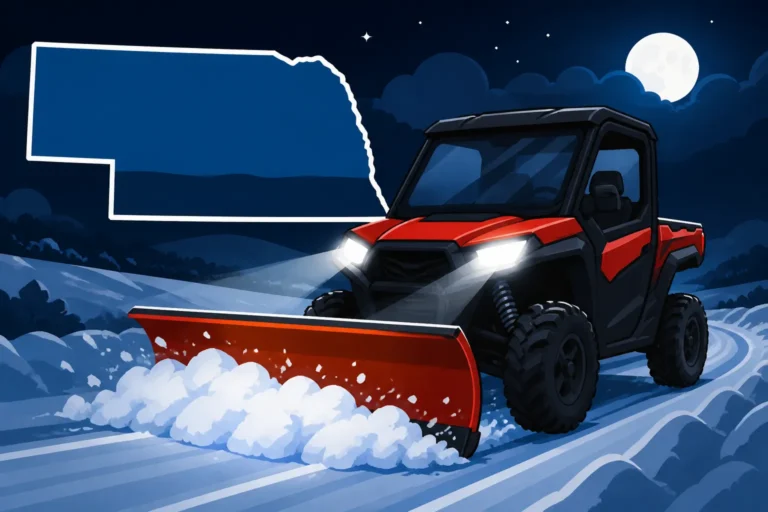
Now, for that glimmer of hope we mentioned earlier: the snow removal exception. This is one of the very few, very specific instances where Nebraska law makes an allowance for an ATV or UTV to be operated on a public road after dark. If you're using your machine to plow snow, whether it's your driveway, a neighbor's property, or even a public thoroughfare if you're authorized to do so, the "sunrise to sunset" rule can be temporarily set aside. This exception acknowledges the practical necessity of snow removal, which often needs to happen whenever the snow falls, day or night. However, this isn't a blanket pass to go joyriding at 2 AM. You must genuinely be engaged in snow removal activities. And even then, your machine must be equipped with proper lighting and other safety features to ensure maximum visibility for yourself and any other motorists or pedestrians. It's a privilege, not a right, and it comes with stringent safety expectations. For more details on this, look up [Clearing Snow After Dark].
What "Public Roads" Actually Means for ATVs
Understanding what constitutes a "public road" for ATV and UTV use in Nebraska is crucial, especially when discussing night riding rules. In most parts of Nebraska, ATVs and UTVs are generally prohibited from state highways and federal interstates. Their use on county roads and city streets is highly restricted and depends almost entirely on specific local ordinances or agricultural exceptions. Some cities and counties might have specific [Nebraska City Ordinances That Open Streets] or [County Boards Can Open Unincorporated Villages to ATVs] that allow limited road use within their jurisdictions, but these are the exceptions, not the rule.
Even in areas where limited road use is permitted, the "sunrise to sunset" rule generally applies, with the snow removal exception being a notable carve-out. For agricultural purposes, a farmer might be able to take their ATV on certain roads for a short distance between fields, even after dark, but this is typically under a specific "agricultural road exception" rather than a general allowance for night riding. It's vital to remember that just because a road is gravel doesn't automatically mean ATVs are welcome, especially after dark. Always verify local regulations before you venture onto any public roadway.
Essential Lighting Requirements for Legal Night Use
Even when conditions permit you to ride your ATV or UTV after dark—whether it's for legal snow removal, authorized agricultural crossings, or simply on your own private land—having the right lighting isn't just a good idea; it's absolutely essential for safety and, in many cases, legally mandated. You can't just hope for the best; you need to see and be seen.
Headlights and Taillights: The Basics
If you're operating an ATV or UTV on any public road, even under the specific exceptions for snow removal or agricultural crossings, your machine must be equipped with functioning headlights and taillights. This isn't optional. Nebraska law, specifically [Nebraska Lighting Statute 60-6,357], dictates that these machines need proper illumination. Your headlight needs to project a beam that can illuminate the road ahead for a sufficient distance, allowing you to react safely to any obstacles or hazards. Similarly, a red taillight must be visible from a specified distance to the rear, alerting other drivers to your presence. These are the absolute minimum requirements. Many machines come standard with adequate lighting, but wear and tear, or even just factory-standard dimness, might not be enough for true night safety, especially if you're dealing with rural roads where ambient light is nonexistent. If your stock lights feel like glorified flashlights, it might be time to consider upgrades.
Why Reflective Tape and Other Visibility Enhancements Matter
Beyond the basic headlights and taillights, maximizing your visibility after dark is paramount. Imagine a dark, dusty gravel road. Even with your lights on, you can be surprisingly hard to spot for an approaching vehicle, especially if they're not expecting an ATV. This is where additional visibility enhancements become critical. Applying high-quality reflective tape to various points on your machine—the front, sides, and rear—can make a huge difference. These simple strips can catch the beam of an approaching vehicle's headlights, making you much more noticeable long before they see your own lights.
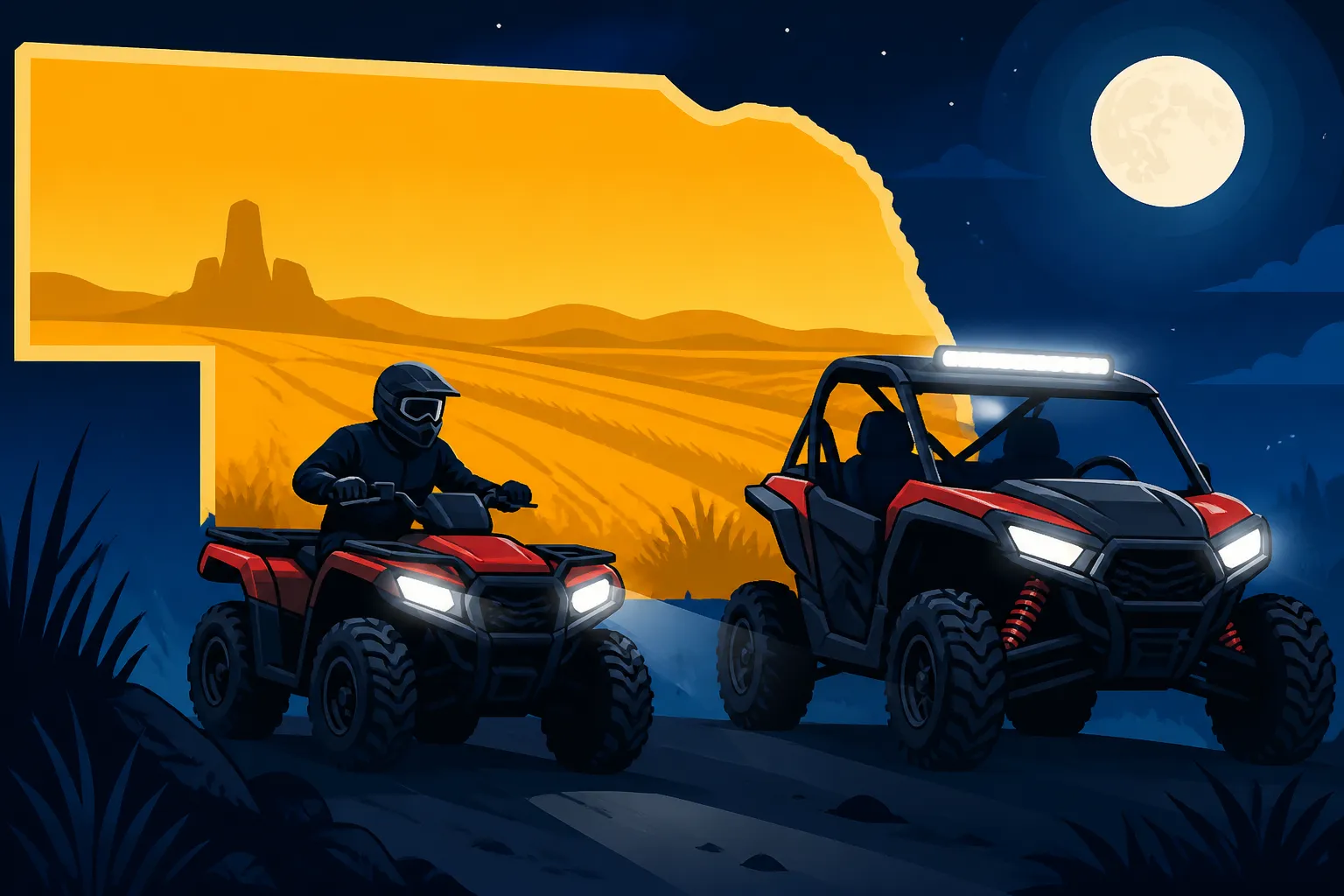
Think about other riders too: if you're out with a group on private land, reflective decals on helmets or jackets can help keep everyone accounted for. Furthermore, a [Nebraska Safety Flag Dimensions] rule for road use specifies a five-foot safety flag, which often comes in day-glow colors. While the flag itself is primarily for daytime visibility, some flags incorporate reflective elements, which can be an added bonus if you're forced to be on a road at dusk or dawn. For private land, auxiliary lighting like an LED light bar can turn night into day, illuminating not just the path directly in front of you, but also the wider terrain, helping you spot wildlife, fences, or ditches you might otherwise miss. Many riders turn to aftermarket specialists like SuperATV for powerful, durable light bars designed specifically for off-road conditions, which can significantly boost confidence and safety when riding in the dark.
Checking Your Equipment Before Dark
Before you even think about starting your engine for a night ride, a thorough equipment check is non-negotiable. This isn't just about lights; it's about the entire machine.
- Lights: Are your headlights bright and properly aimed? Is your taillight working? What about any brake lights? If you have aftermarket accessories, are they securely mounted and wired correctly? Many riders find that adding a bright LED light bar from a reputable brand like SuperATV provides vastly superior illumination compared to stock headlights, making night riding much safer.
- Battery: Night riding puts a greater drain on your battery, especially with auxiliary lights. Ensure your battery is fully charged and in good health.
- Tires: Check tire pressure and condition. Low pressure or worn tires can affect handling, which is even more critical in low visibility.
- Fluids: Engine oil, coolant, and brake fluid should all be at proper levels.
- Safety Gear: Always wear appropriate riding gear, including a helmet, eye protection, long sleeves, and pants. For night riding, consider reflective elements on your clothing or helmet.
- Fuel: Don't run out of gas in the dark. Always start with a full tank.
- Communication: If riding with others, ensure you have a way to communicate, especially if you get separated. Cell service might be spotty in rural areas.
Taking a few minutes for this pre-ride inspection can prevent a minor inconvenience from turning into a major safety issue when you're miles from anywhere in the dark.
Navigating Private Land After Dark: Different Rules, Same Safety
While public road use after dark is heavily restricted in Nebraska, the rules change significantly once you're on private property. This is where most night riding genuinely happens, whether it's for farm work, hunting, or simply enjoying your machine away from traffic. On your own land or land where you have explicit permission, the state's "sunrise to sunset" rule for public roads doesn't apply. However, this freedom comes with its own set of responsibilities and safety considerations that are just as, if not more, important.
Landowner Permission: The Golden Rule
Before you ever set a tire on someone else's property, especially after dark, getting explicit [Getting Written Permission From a Ranch Landowner] is absolutely crucial. This isn't just good manners; it's a legal safeguard. Riding on private land without permission, regardless of the time of day, is trespassing. After dark, it can lead to even more serious misunderstandings or legal issues. Always get permission in writing if possible, detailing what you're allowed to do and when. This protects you, and it protects the landowner. For example, if you're using your UTV to check cattle late at night for a rancher, you need to ensure they've given you the clear go-ahead. If you're out hunting after legal shooting hours, you need permission to be on the land and understand any specific rules the landowner has for night access and vehicle use. Never assume; always ask and clarify.
Visibility Challenges and Safety Gear on Private Property
Even on private land, the laws of physics don't change: it's harder to see and be seen in the dark. While you might not be encountering other vehicles, you're still facing potential hazards like fences, ditches, rocks, trees, and wildlife that can appear out of nowhere. This is why investing in superior lighting for your ATV or UTV is so important for night riding on private property. Factory headlights are often sufficient for daylight but can be quite dim for truly dark conditions. Adding a powerful LED light bar, perhaps from a brand known for durability and brightness like SuperATV, can dramatically improve your field of vision. These light bars can illuminate a much wider and longer path, helping you spot hazards far in advance.
Beyond machine lighting, your personal safety gear needs to be up to snuff. A good helmet is non-negotiable, and consider one with reflective decals or even an integrated light for added visibility if you're riding with a group. Eye protection is critical; clear goggles or a clear visor are a must for preventing dust, bugs, or low-hanging branches from impairing your vision. Proper footwear and gloves can also prevent injuries in the event of an unexpected encounter with terrain. While not legally mandated on private land, these proactive measures can save you a lot of grief. Some private riding parks even enforce their own [Nebraska Private Park Helmet Rules] for nighttime events, emphasizing that safety shouldn't be taken lightly, regardless of the legal setting.
Specific Scenarios: Farm Use, Hunting, and Recreation After Dark
Different reasons for night riding on private land bring different considerations:
-
Farm Use: For many Nebraska farmers and ranchers, an ATV or UTV is an indispensable tool, and work doesn't always stop when the sun goes down. Checking irrigation, herding cattle, responding to emergencies, or moving equipment can all necessitate night operation. While the state road laws don't apply, you still need to be extra cautious. Rough terrain, unexpected obstacles, and drowsy driving are all risks. Ensure your lights are powerful and well-aimed. Carrying a good flashlight or headlamp is also smart for tasks that require you to dismount. [Nebraska Farm Trips Outside City Limits] often involve crossing fields and pastures in low light, making good visibility critical.
-
Hunting: If you're using your ATV or UTV to access hunting blinds, retrieve game, or scout after legal shooting hours, safety is paramount. Make sure your vehicle is legally permitted on the hunting land you're using. Be aware of other hunters who might be in the area on foot or in vehicles. Keep your speed down, especially when driving through tall grass or uneven terrain. Retrieving game after dark can be particularly challenging, so a powerful light source is crucial for safely navigating back to your truck. Remember that [Nebraska Game Retrieval by Machine] usually has its own set of specific regulations, beyond just land access.
-
Recreation: For some, night riding is simply an exhilarating way to experience the outdoors differently. Whether it's a group ride on a friend's property or a quiet solo excursion, the thrill of navigating under the stars is undeniable. However, it's also the easiest way to get disoriented or encounter unexpected obstacles. Stick to familiar trails, ride at a reduced speed, and always inform someone of your planned route and estimated return time. Consider carrying a GPS device or a fully charged phone with a mapping app, as well as a basic repair kit and first-aid supplies. This is where those bright, aftermarket lights from brands like SuperATV really shine, giving you the confidence to enjoy your ride safely.
Consequences of Violating Night Riding Rules
Ignoring Nebraska's rules for riding ATVs and UTVs after dark, especially on public roads, isn't just a minor oversight; it can lead to serious legal and financial consequences. The authorities take these regulations seriously for public safety, and ignorance of the law is rarely an excuse.
Penalties for Illegal Road Riding After Dark
If you're caught riding an ATV or UTV on a public road in Nebraska outside of legal daylight hours (and not performing snow removal or an approved agricultural crossing), you could face a citation for illegal operation. The specifics can vary by county or municipality, but generally, you're looking at fines. These fines might not break the bank on their own, but they can quickly add up, especially once court costs are factored in. Beyond the financial hit, multiple offenses could lead to more severe penalties, including potential impoundment of your machine. A law enforcement officer has the discretion to determine if your operation poses an immediate danger, which could prompt them to remove the vehicle from the road. This isn't just a theoretical threat; officers regularly enforce these rules to protect both ATV riders and the general motoring public. Information on [Nebraska Penalties for Illegal Road Riding] is worth reviewing to understand the full scope of potential repercussions.
Avoiding Risky Situations and Impoundment
The easiest way to avoid penalties and the headache of impoundment is to simply know and obey the rules. If you're unsure whether a particular road or situation allows night riding, err on the side of caution and stay off it. When in doubt, call the local county sheriff's office or city police department for clarification. They are the ones who enforce these rules and can give you definitive answers. If you must operate after dark, ensure you are strictly adhering to the snow removal exception or any other specific agricultural allowances, and that your machine is fully equipped with proper lighting and visibility aids.
Getting your ATV or UTV impounded is a costly and inconvenient ordeal. Not only will you face fines for the violation itself, but you'll also be responsible for towing fees, storage fees, and potentially other administrative charges to get your machine back. This can quickly turn a simple joyride or a short trip into a very expensive lesson. Remember, the goal of these laws isn't to prevent fun, but to ensure everyone's safety on shared public spaces.
Insurance Implications and Accident Reporting
Beyond legal penalties, riding illegally after dark can have significant insurance implications. Most standard ATV/UTV insurance policies are written with the expectation that you are operating your machine legally. If you're involved in an accident while riding on a public road outside of the permitted hours or conditions, your insurance company might deny your claim. This means you could be personally responsible for all damages, injuries, and legal fees, which could be financially devastating. Always review your policy and understand its exclusions. [Nebraska Insurance Required Only on Roads] means if you're using it on a road, even legally, you need coverage.
Furthermore, any accident involving an ATV or UTV on a public road, regardless of the time of day, must be reported to law enforcement, especially if there are injuries or significant property damage. Even on private land, if serious injury occurs, reporting it is crucial for medical aid and potential insurance claims. However, if you're involved in an accident after dark on a public road while violating the "sunrise to sunset" rule, you could face additional charges on top of the accident itself. This also feeds into [Nebraska Accident Reporting for an ATV Crash] guidelines, where illegal operation could complicate matters significantly. Always prioritize safety and legal compliance to protect yourself, your machine, and your financial well-being.
| Scenario | Legal on Public Roads After Dark? | Key Requirements | Safety Considerations |
|---|---|---|---|
| Recreational Riding | No (Generally) | "Sunrise to sunset" rule applies; local ordinances vary. | High risk of citations, impoundment, accidents with other vehicles. Reduced visibility for driver and others. |
| Snow Removal | Yes (Exception) | Must be actively plowing snow. Equipped with proper headlights & taillights. | Still need to be highly visible. Consider additional reflective tape and auxiliary lights. Other drivers may not expect ATVs/UTVs. |
| Agricultural Use | Yes (Limited Exception) | Specific statute for farm work, often crossing roads. Proper lighting required. | Must be directly related to agricultural operation. Slow speeds, watch for farm equipment and livestock, be aware of other vehicles. |
| Private Land with Permission | Yes (No State Road Restrictions) | Landowner permission is critical. | Main focus shifts to personal safety, machine lighting (e.g., SuperATV LED bars), terrain awareness, and potential hazards like fences, ditches, and wildlife. Carrying communication and first aid is wise. |
Disclaimer
This article is for general informational purposes only and does not constitute professional advice. Laws, prices and regulations vary by location and change over time. Consult a qualified professional for guidance on your specific situation.