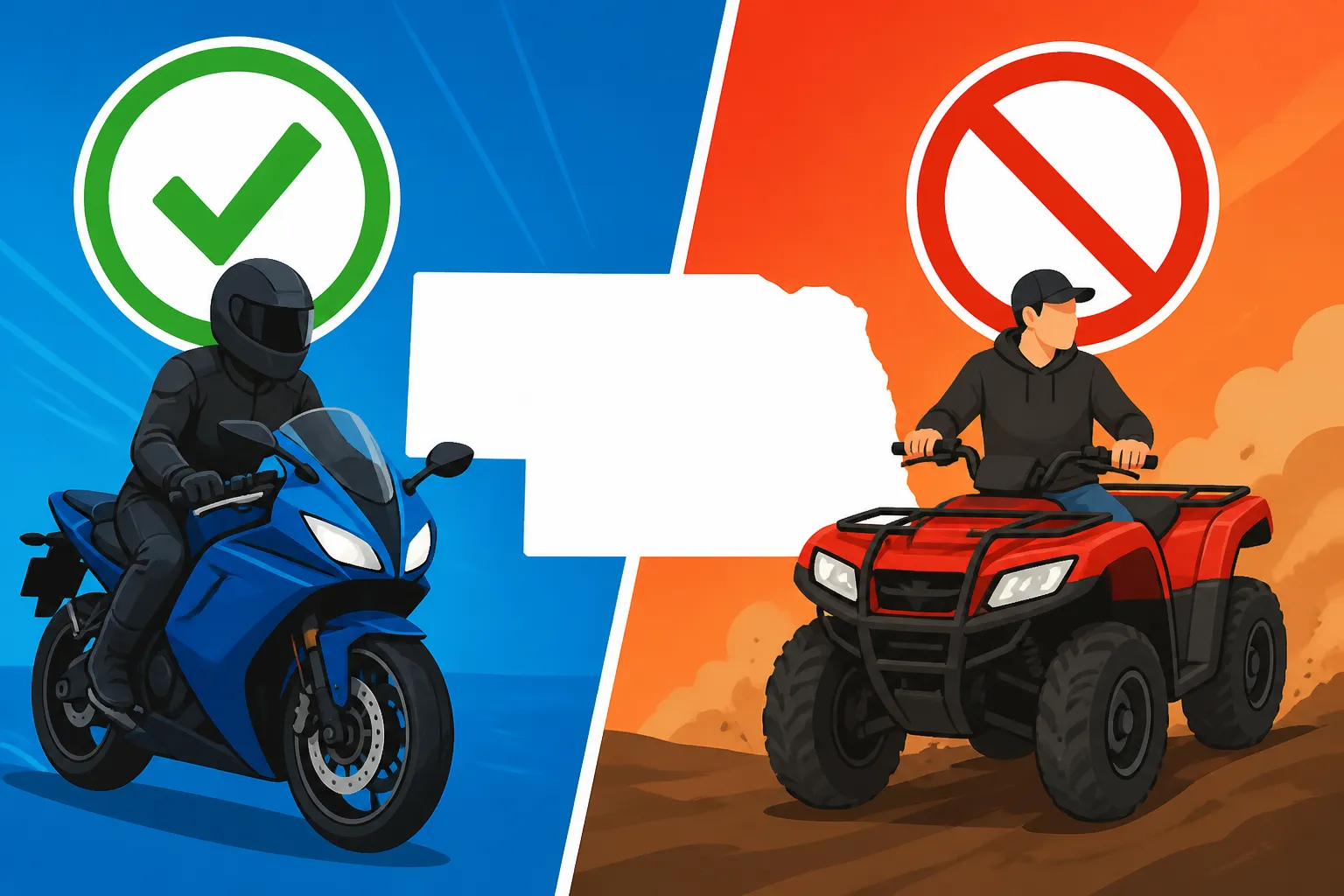
Nebraska’s Helmet Statute Covers Motorcycles, Not ATVs
It's a common question that pops up in conversations around campfires and at the trailheads across Nebraska: "Do I have to wear a helmet on my ATV or UTV?" Many riders understandably confuse the rules, often believing the same helmet requirements for motorcycles apply universally to all motorized recreational vehicles. This misconception can lead to unnecessary worry or, more dangerously, a false sense of security regarding legal requirements. This comprehensive guide will clear up Nebraska's specific helmet laws, explain why ATVs and motorcycles are treated differently, and help you understand your responsibilities and best practices for safe off-road adventures.
Understanding Nebraska's Helmet Statute
Let's cut right to the chase: Nebraska's state statute concerning helmets, specifically Nebraska Revised Statute 60-6,279, explicitly applies to operators and passengers of motorcycles. It states that anyone operating or riding on a motorcycle on public roads must wear protective headgear. This is a very clear and specific designation.
The Motorcycle-Specific Language of the Law
The key here is the precise wording of the statute. It doesn't use broad terms like "motorized recreational vehicle" or "off-road vehicle." It directly names "motorcycles." This legal specificity means that unless another distinct statute explicitly states a helmet requirement for ATVs or UTVs, the motorcycle helmet law simply does not apply to them. Riders often assume that because both are two-wheeled vehicles (in the case of dirt bikes, which are technically motorcycles) or capable of similar speeds, the safety regulations would be identical. However, the law makes a very clear distinction.
What the Law Does Not Say About ATVs and UTVs
For ATVs and UTVs, Nebraska state law does not have a blanket mandate requiring helmets for all riders, regardless of age or riding location. This can be surprising to many, especially those who prioritize safety and are used to stricter regulations in other states or for other types of vehicles. While there might be recommendations or specific rules in certain situations (which we'll delve into), a statewide, across-the-board requirement for helmets on ATVs and UTVs simply isn't enshrined in the primary state statutes. This can feel like a legal gray area for some, but it’s important to understand what the law does and does not cover.
Why the Distinction Matters for ATV Riders
The legal distinction between motorcycles and ATVs/UTVs regarding helmet laws has significant implications for riders in Nebraska. It shapes what you are legally required to do and, perhaps more importantly, what you should consider for your own safety, even when not mandated by law.
Common Misconceptions and Legal Realities
One of the biggest frustrations for riders is navigating these often-confusing legal waters. Many people mistakenly believe that because an ATV is a "motorized vehicle," it automatically falls under the same safety umbrella as a motorcycle. This leads to concerns about tickets or non-compliance when, in reality, the state law doesn't impose such a requirement. This is especially true when discussing Nebraska's Helmet Statute Covers Motorcycles, Not ATVs. It's crucial for every rider to understand that while personal safety is paramount, the legal obligation to wear a helmet is distinctly separate for these two vehicle types under state law.
The Absence of a Statewide ATV Helmet Mandate
Unlike some other states that have enacted comprehensive helmet laws for all off-road vehicles, Nebraska has not gone down that path for ATVs and UTVs. This means that if you're riding on private land, where the vast majority of ATV and UTV use occurs, there is no state law dictating that you must wear a helmet. This lack of a statewide mandate is often a point of discussion among riders, with some advocating for greater freedom and others pushing for enhanced safety regulations, especially for younger riders. Understanding [Nebraska ATV Age Requirements] is also crucial, as while it doesn't dictate helmets, it does regulate who can operate certain machines.
Specific Instances Where Helmets Might Be Required
While the state doesn't have a universal helmet law for ATVs, there are specific scenarios where you might still need to wear one:
- Private Riding Parks: Many private ATV parks or recreational areas in Nebraska have their own rules and regulations, which frequently include mandatory helmet use for all riders, regardless of age. These parks are often designed with varying terrain and challenges, making helmet use a non-negotiable safety measure to protect their patrons and limit liability. Always check the specific rules of any private park, like [Flat Rock Riders OHV Park in Nebraska], before you unload your machine.
- City or County Ordinances for Road Use: While Nebraska state law generally restricts ATV and UTV use on public roads, some cities and counties have enacted ordinances that permit limited street legal riding under specific conditions. If your city or county allows you to operate your ATV or UTV on public streets or roads, they might also impose specific safety requirements, including helmet use. For example, [Nebraska UTV Street Legal Rules by City] will vary, and some ordinances might include helmet provisions. Always verify the local ordinances if you plan to ride on public roadways.
- Youth Rider Programs/Safety Courses: If you or a family member participates in an organized ATV safety course or youth riding program, it is almost a certainty that helmets will be mandatory, along with other protective gear. These programs focus on instilling good safety habits from the start. Taking a [Nebraska Voluntary Safety Courses] is always a good idea, and helmets are typically part of the curriculum.
When Wearing a Helmet is Still a Smart Idea (Even If Not Required)
Just because a helmet isn't legally mandated by state law for most ATV and UTV riding in Nebraska doesn't mean you should skip it. Common sense and a commitment to personal safety strongly suggest that a helmet is one of the most vital pieces of gear you can wear. After all, the unexpected can happen in an instant, and protecting your head is simply smart.
The Unpredictable Nature of Off-Road Riding
Off-road riding, whether on a quad or a side-by-side, inherently carries risks. You're dealing with unpredictable terrain—mud, rocks, loose sand, sudden dips, and hidden obstacles. A moment's lapse in judgment, an unexpected rut, or a mechanical issue can lead to a rollover or an ejection. In such situations, even at low speeds, a head injury can be severe or even fatal. Think about those sudden stops or the times you've hit an unexpected bump; the forces involved can be substantial. Protecting your most vital asset—your brain—with a quality helmet is a non-negotiable for many experienced riders.
Protecting Yourself and Your Loved Ones
Ultimately, the decision to wear a helmet is a personal one for many Nebraskans, but it's one that impacts not just you, but also your family and friends. A serious head injury can have lifelong consequences, affecting your ability to work, enjoy hobbies, or even perform basic daily tasks. For parents, ensuring children wear helmets is particularly important. While the state doesn't mandate it for a [Nebraska Rules for a Child Passenger] on an ATV, most responsible adults would agree it's essential. Leading by example and always donning a helmet shows a commitment to safety that can positively influence others in your riding group.
Different Types of Helmets for Different Riding
The world of helmets is vast, and there are specific designs best suited for ATV and UTV riding. While a standard motorcycle helmet offers good protection, many off-road specific helmets are designed with features like larger eyeports for goggles, improved ventilation for strenuous activity, and visors to protect against roost and sun.
| Feature | Street Motorcycle Helmet | Off-Road ATV/UTV Helmet |
|---|---|---|
| Primary Use | Paved roads, touring, commuting | Trails, dunes, mud, racing |
| Visor | Integrated, often clear/tinted | Prominent peak visor for roost/sun |
| Ventilation | Good, but often more enclosed | Excellent, designed for strenuous activity |
| Eye Protection | Integrated face shield | Requires separate goggles |
| Chin Bar | Integrated, often more streamlined | More pronounced and open for airflow |
| Weight | Varies, can be heavier for comfort | Often lighter for agility |
| Noise Reduction | Prioritized | Less focus on noise reduction |
Choosing a helmet that is DOT-approved (Department of Transportation) ensures it meets minimum safety standards. Look for a comfortable fit that isn't too tight but also doesn't shift on your head.
Additional Safety Considerations Beyond Helmets
While helmets are a critical piece of safety gear, they're just one component of a comprehensive approach to safe ATV and UTV riding. A truly safe rider looks at the entire picture, from the machine itself to their riding habits and the gear they choose. Thinking about all aspects of safety will significantly reduce risks on the trail.
Proper Protective Gear
Beyond a helmet, wearing appropriate protective gear is essential. This includes:
- Eye Protection: Goggles are non-negotiable for ATV riding, even if your helmet has a visor. They keep dust, dirt, branches, and insects out of your eyes, ensuring clear vision.
- Over-the-Ankle Boots: Sturdy boots protect your feet and ankles from impacts, scrapes, and provide crucial grip on footpegs.
- Long Pants and Long-Sleeved Shirt: Denim or durable riding pants and a long-sleeved shirt (or jersey) protect your skin from abrasions, scrapes, and sun exposure.
- Gloves: Riding gloves improve grip, reduce blisters, and protect your hands from branches and debris.
- Body Armor/Chest Protectors: Especially for aggressive riding or youth riders, a chest protector or body armor can offer significant protection for your torso.
Thinking about upgrades that enhance occupant protection in UTVs, brands like SuperATV offer a range of products. From heavy-duty roofs and windshields to full doors and upgraded harnesses, these accessories can provide an extra layer of safety and security, especially when navigating challenging terrain.
Machine Maintenance and Inspections
A safe ride starts before you even turn the key. Regularly inspecting and maintaining your ATV or UTV is paramount. This means checking your tires for proper inflation and wear, ensuring brakes are functioning correctly, checking fluid levels, and making sure all lights are operational. Loose bolts, worn suspension components, or faulty brakes can all contribute to dangerous situations. A pre-ride inspection should become a routine, especially if you're hitting the trails at [Bessey OHV Trails at Halsey in Nebraska].
Responsible Riding Habits
No amount of gear can replace responsible riding. This includes:
- Never Ride Impaired: Alcohol and drugs severely impair judgment and reaction time, making riding extremely dangerous.
- Ride Within Your Skill Level: Don't attempt trails or maneuvers that are beyond your experience. Gradually build your skills.
- Maintain Safe Speeds: Always ride at a speed appropriate for the terrain, visibility, and your skill level. Slow down around blind corners or cresting hills.
- Respect the Environment and Others: Stay on marked trails, avoid disturbing wildlife, and yield to other riders or hikers.
- Don't Overload Your Machine: Adhere to the manufacturer's recommendations for passenger and cargo weight limits.
- Tell Someone Your Plans: Inform a trusted person about your riding route and estimated return time, especially if riding alone. Even on a [Nebraska National Forest Riding] trip, where cell service might be spotty, this simple step can be a lifesaver.
By combining the use of appropriate helmets and protective gear with diligent machine maintenance and responsible riding habits, you create the safest possible environment for enjoying the fantastic off-road opportunities Nebraska has to offer. Don't forget to also consider [Nebraska Rules for Riding a County Road] if you plan to access trails that way, as specific road-use requirements may apply.
Disclaimer
This article is for general informational purposes only and does not constitute professional advice. Laws, prices and regulations vary by location and change over time. Consult a qualified professional for guidance on your specific situation.