Nebraska Ordinance Lookups Before You Ride
It's incredibly frustrating when you want to take your ATV or UTV out for a spin, but you're constantly worried about whether you're even allowed on that particular road. Nebraska's rules for riding these machines on public streets can feel like a confusing maze, with state laws setting a baseline and local jurisdictions adding their own unique twists. This guide will walk you through exactly how to navigate those local ordinances and resolutions, so you can ride with confidence and avoid unnecessary headaches.
The Complex Reality of Nebraska ATV Road Rules
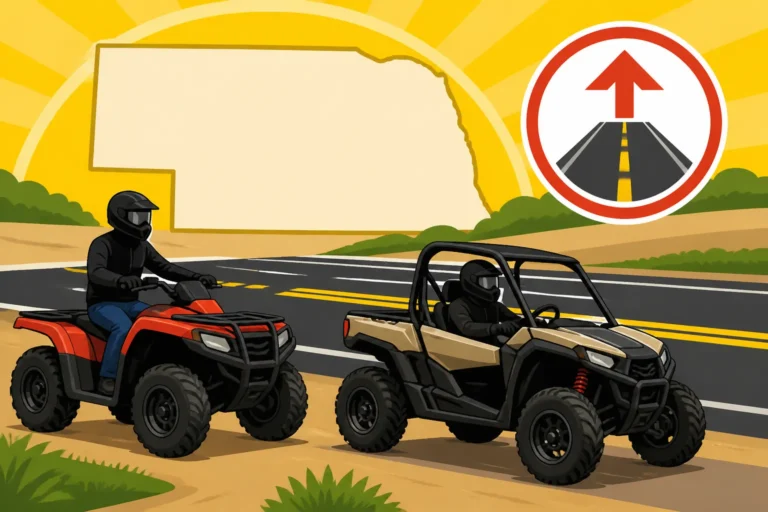
You'd think there would be one clear set of rules for riding ATVs and UTVs on public roads across Nebraska, wouldn't you? It feels like it should be straightforward, but the reality is far more intricate, leaving many riders scratching their heads. The state provides a framework, but it's the local communities that often have the final say on where and how you can ride your machine on their specific roads. This patchwork approach can be a real pain, especially if you travel across county lines or visit different towns.
Why State Law Isn't Always the Whole Story
While Nebraska state law, specifically Statute 60-6,356, lays out general guidelines for ATV and UTV use on public roads—primarily allowing agricultural purposes, emergency services, or sanctioned events—it doesn't completely close the door on other uses. Here's where it gets tricky: the state law also gives cities and county boards the power to pass their own ordinances or resolutions to permit ATV and UTV operation on public roads within their boundaries. This means that a road that's off-limits in one county might be perfectly legal to traverse in the next, all depending on what the local officials have decided. It's a key reason why you absolutely cannot rely on general state rules alone.
This creates a scenario where a rider might adhere strictly to state law, only to find themselves in violation of a local rule they didn't even know existed. Imagine you're riding in a rural area, cross into a small town, and suddenly you're facing a fine because that particular village has a specific ordinance you weren't aware of. It's not fair to expect riders to intuitively know every local rule, which is why actively looking up these ordinances is so crucial. Without knowing these nuances, you're essentially riding blind when it comes to local roads.
The Role of Local Ordinances and Resolutions
This is where the rubber meets the road, quite literally. Cities pass what are called ordinances, and county boards pass resolutions. These are the legal documents that either open up specific streets or entire classes of roads (like all gravel county roads within an unincorporated village) to ATV and UTV traffic. These local laws aren't just a free-for-all, though. They typically come with their own set of requirements, restrictions, and often, local registration fees. For example, some cities might require an annual permit, while others might simply list the types of roads that are allowed.
Understanding that these local provisions exist is the first step. The second, and arguably most important, is knowing how to find them. These ordinances often dictate specific hours of operation, designate which roads are permissible, and detail the equipment requirements for your machine. They can be incredibly specific, so a general understanding of state law simply won't cut it. You might find that [Nebraska City Ordinances That Open Streets] allow you to cruise through Main Street, but only if you've paid a local fee and have a bright safety flag attached. Similarly, [Nebraska County Board Resolutions for Villages] can greenlight riding in unincorporated areas, but perhaps only during daylight hours.
How to Find Your Local ATV Ordinances
So, you're ready to hit the pavement (or gravel, as it often is in Nebraska) in your ATV or UTV, but you know you need to check the local rules first. Don't worry, it's not as daunting as it sounds, but it does require a bit of proactive detective work. Simply assuming is the quickest way to end up with a ticket, and nobody wants that. Taking the time to do your homework now will save you a lot of grief and potential fines down the road.
Starting with Your City Hall or County Clerk
The absolute best place to start your search is by reaching out directly to the source. If you're planning to ride within the limits of an incorporated city or village, your first call or visit should be to their City Hall. Ask to speak with the City Clerk's office. They are the keepers of all city ordinances and should be able to tell you if there's an active ATV/UTV ordinance, what it entails, and how you can get a copy. Don't be shy about asking specific questions, such as "Can you drive an ATV on the road in Nebraska?" within their city limits, or what the specific [Nebraska City ATV Registration Fees] might be.
For riding on county roads outside of incorporated areas, you'll want to contact the County Clerk or County Administrator's office. They handle the county board resolutions. Be sure to specify that you're looking for resolutions regarding ATV/UTV use on county roads, especially concerning any unincorporated villages or specific areas the county board may have opened. It's a good idea to have the exact address or general area you plan to ride in mind when you call, as this can help them narrow down their search for you. Sometimes, a quick phone call can clear up confusion that hours of online searching might not.
Online Searches and Official Websites
In this day and age, a lot of information is available online, but you have to be careful about your sources. Many cities and counties maintain official websites where they post their codes, ordinances, and resolutions. A good strategy is to use search terms like "ATV ordinance [City Name] Nebraska" or "UTV resolution [County Name] Nebraska" in your preferred search engine. Look for links to official government sites (usually ending in .gov or .org, though smaller municipalities might have .com sites if they host with a third party).
Once you're on an official site, look for sections like "City Code," "Ordinances," "Resolutions," or "Public Works/Transportation." These sections are typically where you'll find the text of the laws. Be cautious of forums or unofficial blogs, as the information there can be outdated or simply incorrect. While such sites might offer personal experiences or tips, they are not a substitute for the actual legal text. Always cross-reference with an official source or a direct conversation with a city or county official.
What Specific Information to Look For
When you get your hands on a local ordinance or resolution, whether in print or online, don't just skim it. You're looking for very specific details that will dictate how, when, and where you can ride. Every word matters here. Pay close attention to these key elements:
- Permitted Streets/Areas: Does it open all streets in the city, or just certain ones (e.g., only gravel roads, or roads with speed limits under [Nebraska's 30 mph Road Limit])? For counties, does it apply to all county roads or just specific unincorporated villages?
- Hours of Operation: Are you allowed to ride 24/7, or only during specific hours (e.g., sunrise to sunset)? Are there exceptions for snow removal?
- Equipment Requirements: Beyond basic state rules, does the local ordinance require specific lights (like [Nebraska Lighting Requirements on a Machine]), mirrors, turn signals, or a [Nebraska's 5-Foot Safety Flag Rule]? You might even consider aftermarket options from brands like SuperATV to ensure your machine meets all local specifications.
- Age and Licensing: Are there specific age minimums for riders? Do you need a regular driver's license, or is a farm permit sufficient?
- Insurance: Is liability insurance explicitly required for road use within that jurisdiction? The state requires it for road use, but local ordinances might reiterate or even expand on this, so check [Nebraska Insurance Minimums Today].
- Registration/Permit Fees: Will you need to pay an annual fee or obtain a specific local permit? This is often separate from state titling.
- Penalties: What are the fines or consequences for violating the ordinance? Knowing this can certainly motivate you to comply.
What to Expect in Local ATV Ordinances
Once you've located the relevant ordinances or resolutions, you'll quickly realize that while they grant permission, they also come with a fair share of responsibilities and rules. Local jurisdictions aren't just throwing open their streets without safeguards; they're trying to balance recreation and utility with public safety. Understanding these common requirements will help you prepare yourself and your machine for legal road use.
Common Restrictions and Requirements
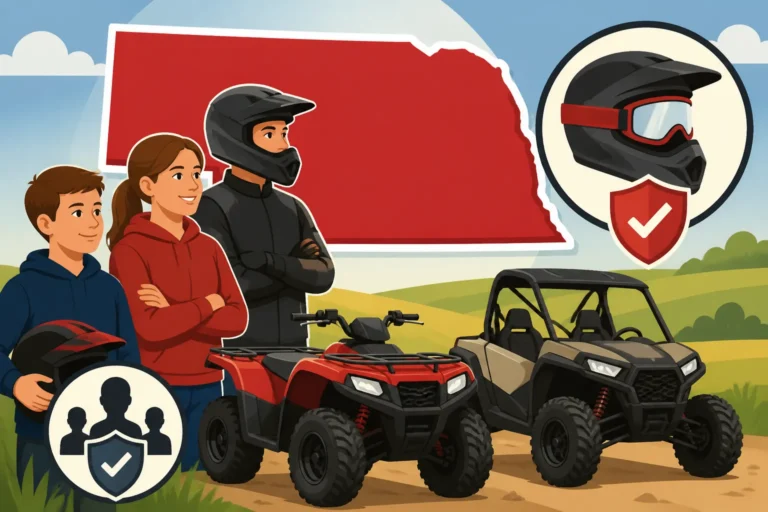
Local ordinances often mirror or expand upon the state's cautious approach to ATVs and UTVs on public roads. You can generally expect to find stipulations regarding safety gear and machine capabilities. For example, many ordinances will reinforce the need for proper lighting, like headlights and taillights, and some might even specify reflective tape or additional visibility measures, especially if you plan to operate near dusk or dawn. You might need to ensure your machine has working turn signals and brake lights. [Nebraska Safety Flag Requirements] are often reiterated, meaning that distinctive orange or day-glow triangular flag mounted at least five feet above the ground might be a non-negotiable requirement. Riders often turn to reputable accessory providers like SuperATV for these types of upgrades, making sure their machine is visible and compliant.
Another frequent requirement is related to speed. While Nebraska has a general 30 mph limit for ATVs on roads, local ordinances will almost certainly re-emphasize this, or even lower it in certain congested areas. Insurance is another big one; while state law requires liability insurance for any road use, local rules often explicitly state it as a condition for their road access. This means carrying proof of your coverage is paramount. Finally, many cities and villages require their own local registration or permit, often with an associated fee. This is separate from your state title, and it's how the local jurisdiction keeps track of who's operating on their roads and helps fund enforcement. Be prepared for [Nebraska City Registration Fees for a UTV] as a common part of the process.
Differences Between City Streets and County Roads
It's vital to recognize that the rules can vary significantly depending on whether you're riding within city limits or on a rural county road. City ordinances, such as those that allow ATVs and UTVs on streets in towns like Yutan or Papillion, typically apply to all, or most, public streets within their corporate boundaries. These are often designed to give residents more flexibility for short trips within town, like to the grocery store or a friend's house. However, these urban ordinances often come with more stringent requirements regarding speed, equipment, and sometimes even a higher local registration fee due to the increased traffic density. You'll need to know [Nebraska Rules for Riding a City Street] inside and out.
County resolutions, on the other hand, usually focus on rural county roads, and sometimes specifically open up the roads within unincorporated villages or hamlets. They might be more geared towards allowing farmers and ranchers to use their machines for agricultural purposes, or simply to provide residents in very small communities with easier access around their homes. The rules for [Nebraska Rules for Riding a County Road] might be slightly more relaxed in terms of traffic, but they will still have core safety requirements. It's less common for a county to open all county roads across its entire jurisdiction for general recreational ATV use, so it's critical to know which specific roads or areas are covered by a county board's resolution.
Here's a quick checklist of what you might find when reviewing local ordinances:
| Ordinance Element | City Streets (Example) | County Roads (Example) |
|---|---|---|
| Applicability | Most streets within city limits | Unincorporated villages, specific rural routes |
| Speed Limit | Often 30 mph, potentially lower in residential zones | Often 30 mph, sometimes lower near residences |
| Required Equipment | Head/tail lights, mirrors, turn signals, safety flag | Head/tail lights, safety flag (less common for mirrors) |
| Insurance | Mandatory liability proof | Mandatory liability proof |
| Local Permit/Fee | Very common, annual fee | Less common, but possible for designated areas |
| Operating Hours | Sunrise to sunset common, some exceptions for snow | Sunrise to sunset common, farm use exceptions |
| Age/License | Driver's license often required | Driver's license or farm permit, age minimums apply |
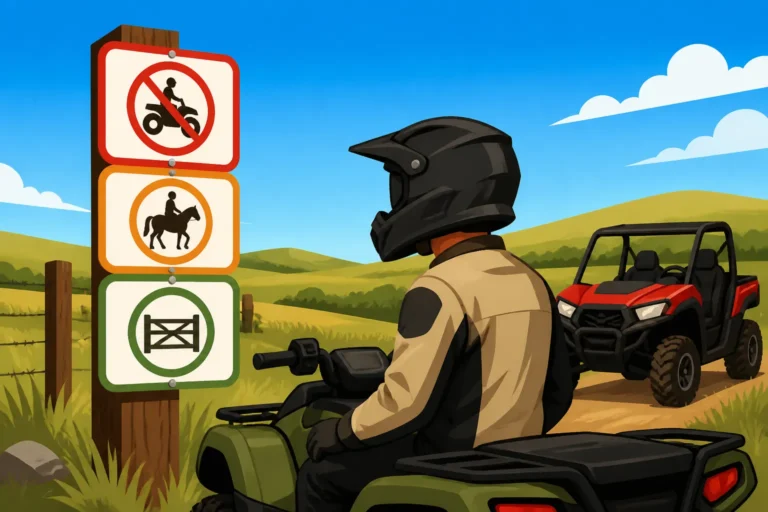
| Specific Prohibitions | Riding on state highways/divided roads, parks, sidewalks | Riding on state highways/divided roads, private land without permission |
Practical Steps Before You Ride on Public Roads
You've done your research, found the local ordinances, and now you're ready to hit the road. But wait! There are a few crucial practical steps you need to take before you ever turn the key. These steps are all about ensuring you're fully compliant, safe, and prepared for any encounter you might have with law enforcement or other road users. Don't cut corners here; your peace of mind and your wallet will thank you.
Verifying Your Machine Meets Local Standards
Before you even think about rolling onto a public street, give your ATV or UTV a thorough inspection to ensure it meets every single requirement laid out in both state law and the specific local ordinance. This means checking your lights – are your headlights and taillights fully functional? Many local rules demand that they be on at all times while riding on public roads. Do you have working turn signals and brake lights? These are often standard on UTVs but might be an aftermarket add-on for ATVs. Next, verify your mirrors provide adequate rear visibility, and crucially, make sure your [Nebraska Safety Flag Requirements] are met. This often means a five-foot tall, bright orange or day-glow triangular flag mounted securely. If you need to upgrade any of these components, consider reliable aftermarket parts from companies like SuperATV, which offers a wide range of road-legal accessories.
Beyond physical equipment, you must ensure you have the required liability insurance. Remember, [Nebraska Requires Liability Insurance on Roads], and local ordinances will expect you to meet those minimums. Carry your proof of insurance with you, as well as your ATV's title. If the local ordinance requires a specific city or county permit, make sure that is prominently displayed or carried with you as well. A quick pre-ride checklist can save you a lot of hassle if you get stopped for a routine [Nebraska Equipment Checks by Deputies].
Carrying Proof of Compliance
This cannot be stressed enough: always carry physical or easily accessible digital proof of your compliance. This includes your driver's license (or farm permit, if applicable), proof of insurance, your ATV/UTV's title, and any local permits or registrations required by the ordinance. It's also a smart move to carry a copy of the specific ordinance itself, especially if it's new or particularly nuanced. Having it on hand can clarify any questions a law enforcement officer might have, or simply refresh your memory on the specific rules you need to follow.
Imagine being pulled over and trying to explain a complex local ordinance from memory. Having the actual document can prevent misunderstandings and demonstrate your diligence as a responsible rider. Keep these documents in a waterproof bag or container on your machine, easily accessible but secure from the elements.
When to Seek Clarity from Law Enforcement
Despite all your research, there might be times when an ordinance is ambiguous, or you're simply unsure about a specific situation. In these cases, it's always better to err on the side of caution and seek clarification before you ride. Contact your local Sheriff's office or the city police department's non-emergency line. Explain your situation, mention the specific ordinance you're looking at, and ask for their interpretation.
These officers are the ones who enforce the rules, so their understanding is paramount. Asking proactively shows responsibility and can help you avoid potential citations. Keep a record of who you spoke with and when, in case you ever need to reference the conversation. This final step ensures you have the clearest possible understanding of where you can ride legally and safely, allowing you to truly enjoy your Nebraska ATV or UTV adventure.
Disclaimer
This article is for general informational purposes only and does not constitute professional advice. Laws, prices and regulations vary by location and change over time. Consult a qualified professional for guidance on your specific situation.