Nebraska Rules for a Visiting South Dakota Rider
Rolling into a new state with your ATV or UTV can be a real head-scratcher. You've got your machine, you're ready to ride, but those nagging questions about different state laws can really put a damper on your plans, especially when coming from South Dakota where some rules might differ. This comprehensive guide is here to clear up the confusion for South Dakota riders visiting Nebraska, ensuring you know exactly what to expect and how to ride legally and safely.
Understanding Nebraska's Baseline ATV Laws for Visitors
It’s completely understandable to feel a bit lost when crossing state lines with your off-road machine. Each state seems to have its own unique set of rules, and what’s perfectly normal back home in South Dakota might be a no-go here in Nebraska. The good news is, for off-road enthusiasts, Nebraska's general approach simplifies things in some key areas, but adds layers of complexity in others, particularly when it comes to road use.
No Statewide Registration or Stickers for Off-Road Use
One of the biggest points of confusion for riders coming from states with robust registration systems is Nebraska's lack of a statewide registration or permit system for ATVs and UTVs used exclusively off-road. You won't find a state-issued sticker or an annual registration fee that allows you to ride anywhere. This means that if you're planning on sticking to designated trails or private land, you generally don't need to worry about obtaining a special Nebraska permit or sticker for your machine. This might be a welcome relief if you're used to navigating different permit systems in South Dakota or other states.
This "no statewide sticker" policy primarily applies to machines kept off public roads. While it might sound like a free-for-all, it simply means the state doesn't track off-highway vehicles in the same way it does cars and trucks. Don't confuse the absence of a registration sticker with a lack of any rules at all, especially regarding where you can ride. The focus here is on where you operate your machine, rather than a universal state-issued permit. In this regard, a South Dakota machine used strictly off-road in Nebraska generally doesn't require any specific Nebraska off-road operating permit. You can find more details on this topic by reading [Nebraska Has No State Decal] or [Nebraska Has No OHV Permit or Sticker].
Title Requirements Remain, Even for Visitors
While Nebraska doesn't require registration for off-road use, it does require ATVs and UTVs to be titled. This isn't just for Nebraska residents; it's a fundamental part of establishing ownership for these machines within the state. As a visiting South Dakota rider, you should ensure you have your proof of ownership readily available. This typically means your current title or registration from South Dakota. Think of it as carrying the "birth certificate" for your machine.
Even if South Dakota has a different process for titling or doesn't title certain types of machines, Nebraska's expectation is that you can prove legal ownership. If a deputy or state patrol officer were to question the ownership of your machine, having that document in hand from your home state is absolutely essential. It helps prevent any misunderstandings about whether the machine is yours and legally transported. This is a standard practice across many states to combat theft and ensure clear chains of ownership, so it shouldn't come as a huge surprise even if the specifics vary from what you're used to. It's important to remember that [Nebraska Titles Required Since 2004], and this applies to machines from out-of-state as well, should you ever decide to become a resident, as explained in [Nebraska Out-of-State Machines Need a Title].
Navigating Nebraska's Road Use Laws with an Out-of-State Machine
This is where things can get a little tricky, and it's where South Dakota riders really need to pay attention. Nebraska's rules regarding ATV and UTV use on public roads are quite restrictive, and the exceptions are very specific. You can’t just assume that if it’s legal on a county road back home, it’s legal here. Ignoring these rules can quickly lead to a ticket, or worse, an accident.
The General Ban on Public Roads and Its Exceptions
Let's start with the baseline: ATVs and UTVs are generally prohibited from operating on Nebraska public roads. This includes state highways, most county roads, and city streets unless a specific exception or local ordinance allows it. This is a critical point that often catches visiting riders off guard. These machines are considered off-road vehicles for a reason, and Nebraska law largely maintains that distinction.
However, like many rules, there are specific, limited exceptions. These typically revolve around agricultural purposes, snow removal, or very specific circumstances where a local municipality has passed an ordinance. For a South Dakota rider, the crucial takeaway is that recreational cruising on Nebraska's roads is almost certainly not allowed. You can delve deeper into the general road rules by searching for information like [Can You Drive an ATV on the Road in Nebraska?], and it's particularly important to note that [Nebraska Bans ATVs on State Highways]. Always err on the side of caution when considering road use.
Agricultural Use and Its Nuances for Visitors
One of the most common exceptions to the road-use ban is for agricultural purposes. In Nebraska, ATVs and UTVs can be operated on public roads for agricultural purposes, such as moving between fields, checking livestock, or transporting equipment related to farm or ranch operations. This exception is designed to support the state's agricultural backbone.
For a visiting South Dakota rider, this exception likely won't apply to your recreational trip. If you happen to be in Nebraska specifically to assist with farm, ranch, or feedlot work, then you might qualify for this exception. However, simply riding your machine on a county road to get to a different riding spot, even if it's on private land, would generally not fall under this agricultural exemption. When using the road under this exception, specific rules apply: machines must be operated at 30 mph or less, display a 5-foot safety flag, and have appropriate lighting. This specific nuance is explained further in [Nebraska's Agricultural Road Exception] and why [Why the ATV Road Law Was Written Around Farming].
Local Ordinances: The City Street Wildcard
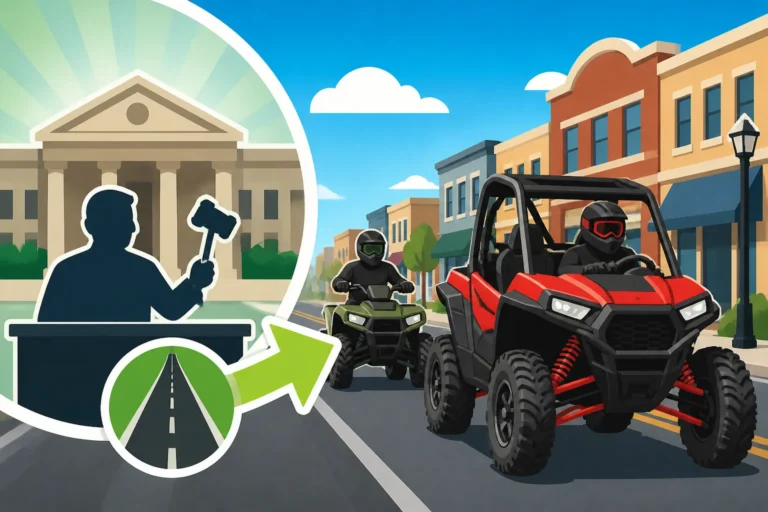
Here's where things get interesting and require some pre-trip homework. While the state generally prohibits ATVs and UTVs on public roads, individual cities and incorporated villages in Nebraska have the authority to pass their own ordinances to allow limited ATV/UTV use on their municipal streets. This is not a statewide permission slip; it's a patchwork of local rules.
What does this mean for you? If you plan to ride your ATV or UTV within the limits of a particular Nebraska town or village, you absolutely must check with that specific municipality's city hall or website beforehand. Do not assume. These local ordinances often come with their own set of requirements, such as a special city registration fee, mandatory liability insurance, specific age limits for operators, and sometimes even helmet requirements that go beyond state law. A good place to start your research would be with [Nebraska Cities That Adopt ATV Ordinances] and understanding [How a Town Ordinance Opens Its Streets to ATVs]. If a town doesn't have such an ordinance, you generally cannot ride your machine on its streets.
Crossing Highways and Other Road-Related Rules
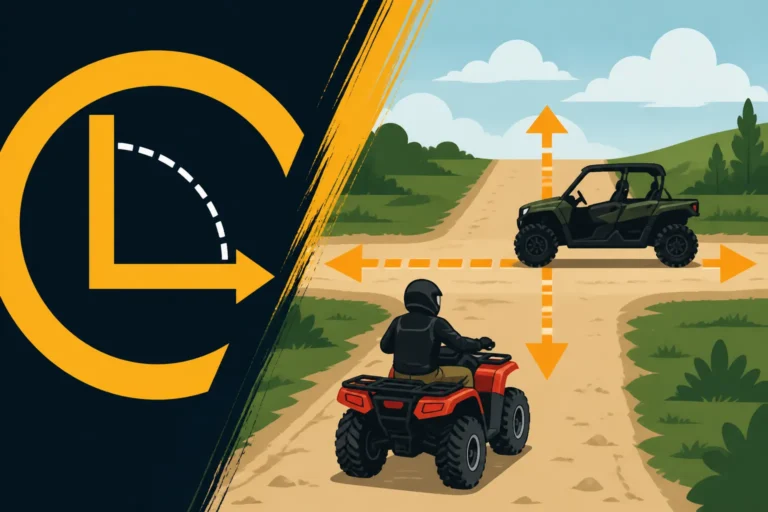
Even when legally operating on a public road under one of the exceptions (like agricultural use or a city ordinance), there are strict rules for how you interact with other traffic and infrastructure. Crossing a state highway, for example, is not as simple as quickly driving across. You are typically required to make a complete stop, yield to all traffic, and cross at a ninety-degree angle to the highway. This minimizes your time in traffic lanes and maximizes visibility.
Furthermore, if you are operating on any public road, even for a short distance, your machine must be equipped with and use its headlights and taillights, even during daylight hours. A critical safety requirement is the display of a safety flag. This flag must be at least five feet above the ground, day-glow in color, and have a minimum surface area to ensure maximum visibility to other motorists. Many riders find aftermarket accessories, like the durable safety flags and lighting kits offered by SuperATV, make it easier to comply with these visibility requirements. These flags are not just a suggestion; they are a legal requirement under specific circumstances. For more on this, check out [Nebraska Crossing Rules at Ninety Degrees] and [Why Road-Legal ATVs Need a 5-Foot Safety Flag].
Where a South Dakota Rider Can Legally Ride in Nebraska
Okay, so if roads are largely out, where can you ride in Nebraska? This is where your focus should be for an enjoyable and legal trip. Nebraska offers some fantastic off-road opportunities, but they are concentrated in specific, designated areas.
Designated OHV Parks and National Forests
For the vast majority of South Dakota riders visiting Nebraska for recreation, designated Off-Highway Vehicle (OHV) parks and national forests are your best bet. These are areas specifically set aside and managed for off-road vehicle use, meaning you can ride without the constant worry of breaking state or local laws regarding road use. Nebraska has a couple of excellent options.
The Bessey OHV Trails at Halsey, located within the Bessey Ranger District of the Nebraska National Forest, offers miles of sandy trails winding through hand-planted forest. It's a unique experience, with designated areas for hill climbs and open riding. This area typically requires a day-use or annual permit, which helps maintain the trails. Another great option is the Cedar Run ATV Trail near Republican City, located by Harlan County Lake. This trail offers a different terrain, often with views of the lake. These parks are designed with riders in mind, often offering staging areas, parking, and sometimes even camping. Always check the specific park's rules and fees before you head out. These are prime examples of legal and exciting riding destinations, and you can learn more by looking up [Bessey OHV Trails at Halsey in Nebraska] and [Cedar Run ATV Trail in Nebraska].
Private Land with Permission
Just like back home in South Dakota, riding on private land in Nebraska is absolutely permissible, provided you have explicit permission from the landowner. This might seem obvious, but it's worth reiterating, especially for visitors who might not know the local landowners. Verbal permission is good, but written permission is always better, especially if you're exploring vast ranches or farmland.
Trespassing laws in Nebraska are taken seriously, and ignorance of who owns the land is not an excuse. If you're riding with friends or family who own land in Nebraska, make sure you understand the boundaries and any specific rules they have for machine use. Always leave gates as you found them, stay on designated paths, and respect the property. Showing up to a ranch with your machine and assuming you can ride because it looks like open space is a surefire way to get into trouble. Being a responsible visitor means respecting private property. For more on this, read [Getting Written Permission From a Ranch Landowner] and be aware of [Nebraska Trespass Law for Riders].
Wildlife Management Areas (WMAs) and Their Limitations
Nebraska's Wildlife Management Areas (WMAs) are managed by the Nebraska Game and Parks Commission and are primarily for wildlife habitat, hunting, and fishing. While you might be able to transport your ATV or UTV on designated access roads within a WMA to get to a hunting spot or specific parking area, general recreational off-road riding is typically not allowed. Think of WMAs as nature preserves, not off-road playgrounds.
There can be limited exceptions, such as operating on frozen lakes within WMAs for ice fishing access, but these are often subject to very specific conditions and signage. It's crucial to check the specific WMA rules before even considering bringing your machine onto one. The general rule of thumb is: if it's not a paved or gravel road explicitly designated for vehicle access, stay off it in a WMA. Always look for signage, and when in doubt, call the local Game and Parks office. More information on these restrictions can be found in [Nebraska WMA Riding Rules] and [Nebraska WMA Designated Roadways Only].
What a South Dakota Rider Should Carry and Consider
Preparedness is key to a smooth and enjoyable trip, especially when venturing into unfamiliar territory. Knowing what documents to have on hand, understanding insurance nuances, and properly outfitting your machine can make all the difference.
Essential Documents and Proof of Ownership
When you're out riding in Nebraska, whether on a designated trail or private land, it's always smart to have a few key documents with you. First and foremost, carry your proof of ownership for your ATV or UTV. This could be your South Dakota title or registration. While Nebraska doesn't have a statewide registration for off-road use, showing that the machine is legally yours and not stolen is paramount.
Additionally, if you ever find yourself operating your machine on a public road under one of the specific exceptions (like agricultural use or within a city with an ordinance), you'll need a valid driver's license. Deputies and state patrol officers have the authority to pull you over and ask for these documents, so having them accessible, perhaps in a waterproof bag on your machine, is highly recommended. It saves time and prevents unnecessary complications. To be fully informed, consider reading [What Paperwork a Deputy Can Ask to See] and [Nebraska Title for a New Resident].
Insurance Requirements and Recommendations
This is another area where state laws can differ significantly. In Nebraska, liability insurance is only legally required if you are operating your ATV or UTV on a public road under an allowable exception (e.g., a city ordinance, agricultural use). If you're sticking strictly to private land or designated off-road parks, the state does not mandate insurance.
However, just because it's not legally required for off-road use doesn't mean it's not a good idea. We strongly recommend carrying comprehensive insurance for your machine. Accidents happen, and machines can be stolen or damaged. A good policy can protect your investment and provide liability coverage even when you're off-road, preventing potentially ruinous out-of-pocket expenses. Think about the value of your machine and any aftermarket accessories you've added. While Nebraska doesn't mandate off-road insurance, protecting your investment with a good policy is smart, especially if you've invested in aftermarket upgrades from companies like SuperATV. For specifics on legal requirements when using roads, check out [Nebraska Requires Liability Insurance on Roads] and [Nebraska Insurance Minimums Today].
Safety Gear and Machine Preparation
No matter where you're riding, safety should always be your top priority. While Nebraska doesn't have a universal helmet law for adult ATV/UTV riders off-road, wearing a helmet is always a smart choice, especially for youth riders. Eye protection, gloves, and sturdy footwear are also highly recommended to prevent injuries. These are standard best practices no matter which state you’re in.
Before you hit the trails in Nebraska, give your machine a thorough once-over. Check your tires, brakes, fluid levels, and ensure all lights are working (especially if you anticipate any road use). Consider carrying a small tool kit, a first aid kit, plenty of water, and a paper map or GPS device, as cell service can be spotty in some of Nebraska's more remote riding areas, especially in the National Forest. Outfitting your machine with robust protection like skid plates or heavy-duty bumpers, often found at retailers specializing in aftermarket parts like SuperATV, can offer peace of mind when exploring new trails. Even if your South Dakota machine is already decked out, checking out SuperATV for any last-minute trail necessities or upgrades before your Nebraska adventure can ensure you're fully prepared. Being prepared means you can focus on enjoying the ride, rather than worrying about breakdowns or getting lost.
| Feature | Nebraska for Visitors (Off-Road) | Nebraska for Visitors (On Road – by specific exception) | Typical South Dakota (General Comparison) |
|---|---|---|---|
| Statewide Reg. | No (for off-road use) | No (for off-road use) | Often required for public land access |
| Title Required | Yes (proof of ownership) | Yes (proof of ownership) | Yes (proof of ownership) |
| Road Use | Generally Prohibited | Allowed only for specific purposes (farm, local ordinance) | Varies, some states allow limited road use or have specific classifications |
| Safety Flag | Not generally required for off-road | Required (5 ft, day-glow) for road exceptions | Varies by state/area, sometimes required on trails |
| Liability Insurance | Not required for off-road | Required for road exceptions | Often required for road use or on public lands |
| Helmet (Adults) | Not generally mandated (recommended) | Not generally mandated (recommended) | Varies by state/age |
| Where to Ride | Designated OHV parks, private land with permission | Specific city streets, farm operations | Designated trails, public lands, private land with permission |
Disclaimer
This article is for general informational purposes only and does not constitute professional advice. Laws, prices and regulations vary by location and change over time. Consult a qualified professional for guidance on your specific situation.