Nebraska Rules for a Child Passenger
It can be incredibly confusing trying to figure out the exact rules for having your kids ride along on your ATV or UTV here in Nebraska. We all want to share the joy of the outdoors with our families, but the last thing any parent wants is to inadvertently put their child at risk or, even worse, run afoul of the law. This guide is here to cut through the noise, clarify Nebraska's stance on child passengers in off-road vehicles, and offer practical advice to keep your little ones safe while enjoying the ride.
The Confusion Around Child Passengers on ATVs and UTVs in Nebraska
When it comes to motor vehicles, most people are used to very clear-cut laws about who can ride where, at what age, and with what restraints. Think about your family car: car seats, booster seats, seatbelt laws, front seat age limits—it’s all laid out in black and white. So, it's totally understandable to assume the same level of detail would apply to ATVs and UTVs, especially when you're considering bringing your precious cargo along for the adventure. But here in Nebraska, the world of off-road vehicle passenger rules, particularly for children, can feel like a bit of a gray area, leading to a lot of head-scratching for responsible parents.
Why State Law Stays Quiet on Specific ATV Passenger Ages
One of the biggest sources of confusion is that Nebraska state law doesn't explicitly dictate a minimum age for a child to be an ATV passenger, nor does it typically specify where they must sit. This isn't because the state doesn't care about kids' safety; rather, it often reflects how these vehicles are intended to be used. Most of the state's ATV laws focus more on operational aspects like speed limits on approved roads, lighting requirements, and safety flags, not intricate passenger seating arrangements. For parents, this can feel frustratingly vague. You might be left wondering if it’s truly safe, or if you’re missing some unwritten rule that everyone else seems to know. It’s a significant difference from how cars are regulated, and it places a much greater emphasis on parental judgment and manufacturer guidelines.
For example, while there are general rules about [Nebraska ATV Age Requirements] for operating a machine, those don't directly translate to being a passenger. This lack of specific legislative guidance means that while you won't find a state statute saying "no child under X age may ride on an ATV," it doesn't give you a free pass to ignore safety. Instead, you're expected to rely on common sense, the vehicle's design, and the manufacturer's recommendations, which are often much more restrictive than any state law.
The Critical Difference Between ATV and UTV Passenger Seating
The distinction between an ATV (All-Terrain Vehicle, commonly known as a quad) and a UTV (Utility Terrain Vehicle, or side-by-side) is absolutely crucial when discussing child passengers. These vehicles are designed with very different philosophies regarding carrying multiple people, and trying to apply UTV passenger logic to an ATV is a recipe for disaster.
An ATV, by its very design, is typically built for a single rider. Its balance, steering, and suspension are calibrated for one person's weight and movements. Adding a second person, especially a squirming child, drastically alters the machine's handling characteristics. It can make steering difficult, shift the center of gravity dangerously, and even impede the operator's ability to react quickly or shift their own weight to maintain control. On the other hand, UTVs are specifically engineered with multiple seats, seatbelts, and often roll-over protection systems, making them far more suitable for carrying passengers, including children, in a much safer environment. Ignoring this fundamental design difference is one of the most common and dangerous mistakes riders make.
Manufacturer Guidelines: Your Best Bet for ATV Child Passenger Safety
Since Nebraska state law offers little specific guidance for child ATV passengers, your most important resource becomes the vehicle manufacturer. They design and test these machines, and their recommendations are based on extensive safety engineering. Ignoring these guidelines isn't just risky; it's a direct disregard for the safety intent of the machine.
Understanding the "One Rider" Rule for Most ATVs
The vast majority of ATVs, especially traditional quad bikes, are designed as "single rider" vehicles. This isn't just a suggestion; it's a fundamental aspect of their engineering and safe operation. You’ll often see this clearly stated on warning labels right on the machine, in the owner's manual, and even molded into the plastics or seat. These vehicles are designed for the operator to actively shift their weight for balance, especially when turning, climbing hills, or navigating challenging terrain. When you add a passenger, even a small child, it prevents the operator from making these crucial weight shifts.
Imagine trying to ride a bicycle with someone sitting on the handlebars; it becomes incredibly unstable and difficult to control. An ATV, while having four wheels, relies on similar principles of rider input for stability. Having a child perched in front of you, behind you, or to the side, severely compromises your ability to operate the machine safely. Their movements, even small ones, can throw off your balance, leading to rollovers or loss of control that would otherwise be avoidable. This is why groups like the ATV Safety Institute strongly advocate for the "one rider, one ATV" rule for machines not specifically designed for multiple riders.
The Risks of Carrying an Extra Rider, Especially a Child
The dangers of carrying an extra rider on a single-rider ATV are numerous and severe, escalating dramatically when that passenger is a child. First and foremost is the increased risk of a rollover. The added weight and higher center of gravity make the ATV much less stable, particularly on uneven terrain, during sharp turns, or when ascending or descending hills. A child's natural instinct might be to grab onto you or shift their weight unexpectedly, further disrupting the ATV's balance.
Beyond rollovers, an extra passenger can interfere with your vision and ability to reach controls like the brakes or throttle effectively. It can also cause the ATV to react unpredictably. For instance, braking distances might increase, and the suspension could bottom out more easily. In an accident, a child passenger, often not wearing appropriate protective gear or lacking the strength to hold on, is at a much higher risk of being ejected, pinned under the machine, or sustaining serious injuries. While the idea of a child sitting snugly between your arms might feel safe, the reality is that in a sudden stop or impact, they could be crushed or thrown forward. For serious riding families, this is where a dedicated youth ATV, appropriately sized and with proper supervision, becomes a much safer alternative. [Nebraska Youth Engine Size Claims] often connect to these safety discussions for young riders.
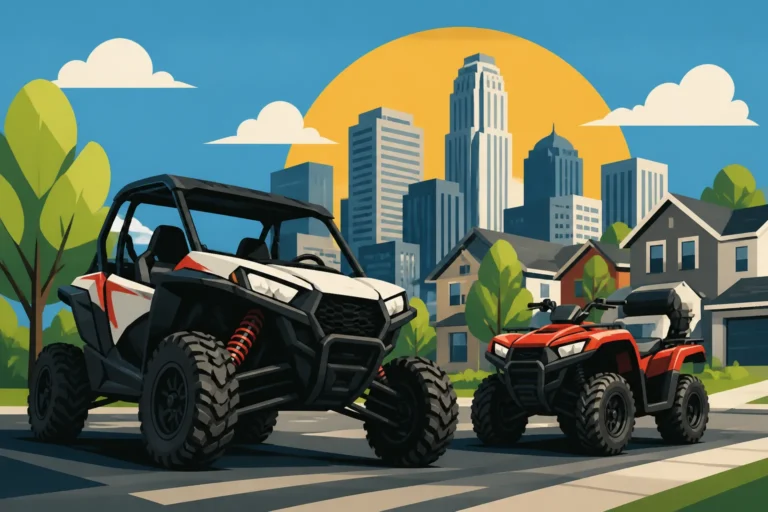
Here's a quick comparison of ATV vs. UTV for child passengers:
| Feature/Consideration | Traditional ATV (Single Rider) | UTV (Side-by-Side) |
|---|---|---|
| Intended Riders | One operator only | Operator + multiple passengers |
| Seating | Saddle-style seat for one | Bucket or bench seats with backrests |
| Restraints | None (rider holds on) | Seatbelts (3-point or 4-point harnesses) |
| Roll-Over Protection | None (rider expected to eject) | Roll-over protective structure (ROPS) |
| Steering | Handlebars, active rider weight shift | Steering wheel, less active rider weight shift |
| Stability with Passengers | Dramatically reduced | Designed for multiple occupants |
| Child Passenger Safety | Extremely high risk, generally not recommended | Much safer if proper restraints and seating are used |
UTVs: The More Family-Friendly Option for Carrying Kids in Nebraska
When it comes to sharing the off-road experience with younger family members, UTVs (Utility Terrain Vehicles or side-by-sides) are overwhelmingly the safer and more appropriate choice in Nebraska. Their design inherently lends itself to carrying passengers in a much more secure manner than a traditional ATV. This isn't to say UTVs are without risk, but they offer features specifically engineered for multiple occupants that ATVs simply do not.
Seating and Restraints for Child Passengers in Side-by-Sides
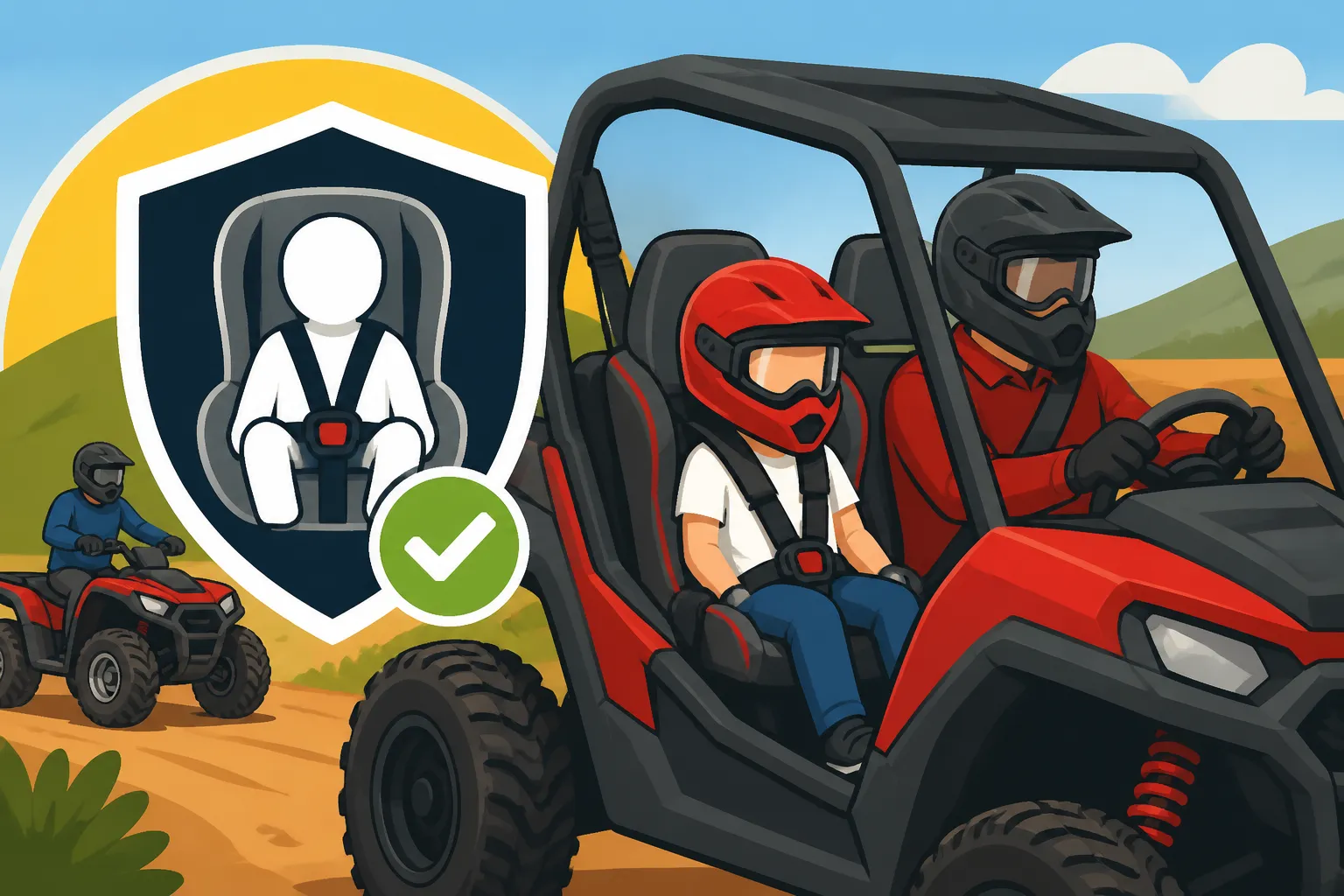
One of the primary reasons UTVs are better for child passengers is their seating and restraint systems. Unlike the saddle-style seat of an ATV, UTVs come equipped with bucket seats or bench seats, complete with backrests and, crucially, seatbelts. These are usually three-point automotive-style belts, though many riders upgrade to four- or five-point harnesses for even greater security, especially when tackling rougher terrain. SuperATV offers a wide range of aftermarket harnesses and seating options designed to keep occupants, including children, snugly secured in their seats. This is paramount because, in the event of a sudden stop, a bump, or even a rollover, a properly restrained child is significantly less likely to be ejected from the vehicle or thrown around inside the cab.
However, simply having a seatbelt isn't always enough. For smaller children, a standard UTV seatbelt might not fit correctly across their chest and lap, potentially riding too high on the stomach or neck. This is where you might need to consider booster seats, similar to what you'd use in a car, or specialized youth seating inserts that ensure the harness sits properly. Always ensure that the child's feet can reach the floor or a sturdy footrest, preventing them from dangling, which can be unsettling and unsafe in rough conditions.
Equipping Your UTV for Enhanced Child Safety
Beyond basic seating and seatbelts, there are several ways to enhance the safety of your UTV for child passengers. The most important is the vehicle's Roll-Over Protective Structure (ROPS). While all modern UTVs come with a factory ROPS, some riders opt for additional cage reinforcements or custom cages for extreme use. For children, ensuring the integrity of this structure is key. Adding a sturdy roof can also provide protection from sun, rain, and minor debris, enhancing comfort and safety.
Windshields and doors are also critical considerations. A full windshield not only protects from wind and dust but also from flying debris that could strike a child's face. Aftermarket doors, like those offered by SuperATV, provide an additional barrier, preventing children from inadvertently reaching outside the vehicle or falling out during a bounce. Grab handles, strategically placed for children to hold onto, can also give them a greater sense of security and stability during the ride. Remember, while Nebraska might have general [Nebraska Rules for Passengers on a Quad] which mainly refers to ATVs, the UTV environment offers many more avenues for active safety enhancements.
Beyond the Law: Practical Safety Tips for Riding with Children
While understanding the letter of the law and manufacturer guidelines is absolutely essential, responsible off-road riding with children goes far beyond simply checking boxes. It’s about cultivating a culture of safety, preparing both your machine and your young passengers, and leading by example every single time you head out.
Essential Safety Gear for Every Young Passenger
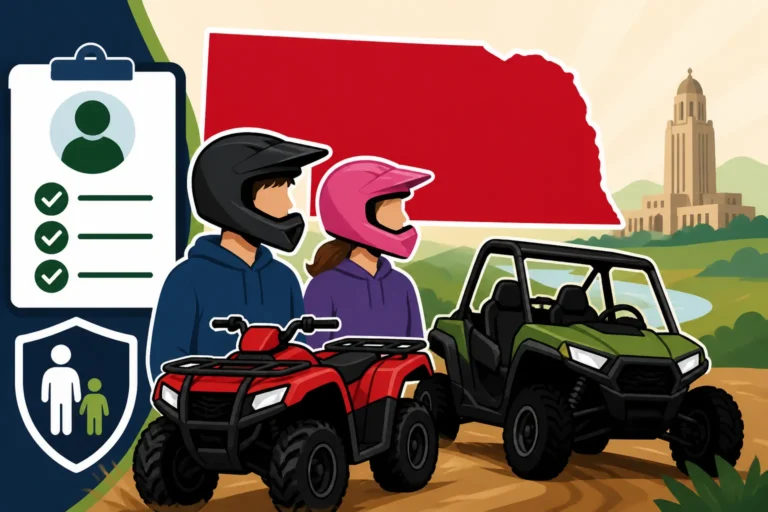
Just as you wouldn't let your child ride a bicycle without a helmet, riding an ATV or UTV requires specific protective gear. This isn't optional; it's non-negotiable for their safety and comfort. First, a properly fitting helmet is paramount. It should be DOT-approved, fit snugly without being too tight, and cover the forehead without obstructing vision. Children should never wear an adult-sized helmet that's too loose, as it won't offer adequate protection. [Nebraska Helmet Rules Riders Ask About] are important, and while state law focuses on motorcycles, the principle of head protection applies universally to off-road riding.
Beyond the helmet, eye protection (goggles or a face shield) is crucial to shield from dust, insects, and debris. Long-sleeved shirts and pants, preferably made of durable material like denim, will protect against scrapes, minor impacts, and sun exposure. Gloves can prevent blisters and offer a better grip, while over-the-ankle boots protect feet and ankles from impacts and keep them securely on the footrests. Investing in good quality, child-specific riding gear is an investment in your child's well-being and allows them to enjoy the ride without discomfort or unnecessary risk. Always ensure that the gear is appropriate for the weather conditions, too – light, breathable fabrics in summer and layers in cooler weather.
Setting Rules and Leading by Example
Kids are sponges, and they will emulate what they see you do. This means that as the adult and operator, you are the primary role model for safe riding. Before every ride, sit down with your child and clearly lay out the rules:
- Stay seated and keep hands and feet inside the vehicle at all times. This is especially critical in UTVs.
- Keep your helmet and all safety gear on until the ride is completely over.
- No horseplay or distracting the driver.
- Point out potential hazards like bumps, dips, or branches as you approach them, teaching them to be aware of their surroundings.
It's also important to lead by example. Always wear your own helmet and protective gear, even for short trips around the property. Obey speed limits, especially when passing others or riding in designated areas. Never operate your ATV or UTV under the influence of alcohol or drugs. Teach them about [Nebraska Rules for Riding Farm Ground] or [Nebraska Rules for Riding a Pasture] if that's where you frequent. By consistently demonstrating safe riding practices, you instill good habits in your children that will last a lifetime, whether they remain passengers or eventually become operators themselves. Finally, regularly inspect your machine to ensure it's in top operating condition. Check tires, brakes, fluid levels, and ensure all belts and harnesses are in good repair. A well-maintained machine is a safer machine for everyone.
Disclaimer
This article is for general informational purposes only and does not constitute professional advice. Laws, prices and regulations vary by location and change over time. Consult a qualified professional for guidance on your specific situation.