Nebraska ATV Age Requirements
Figuring out the legalities of ATV riding for young people in Nebraska can feel like trying to navigate a cornfield in the dark – confusing, full of twists, and you’re never quite sure where you stand. Many parents worry about what their kids can and cannot legally ride, and what rules actually apply. This guide is here to shed some light on the age requirements for ATVs and UTVs in Nebraska, helping you understand the regulations that impact your family's off-road adventures.
The Core Question: Is There a Statewide Age Minimum for ATVs in Nebraska?
It’s easy to assume there’s a blanket minimum age for riding an ATV anywhere in Nebraska, but the reality is a bit more nuanced. Unlike some states that might have explicit age restrictions for all off-highway vehicle (OHV) operation, Nebraska's state laws primarily focus on where and how ATVs and UTVs can be operated, particularly when it comes to public roads. This distinction is crucial because it often means different rules apply depending on whether you're on private land, a designated trail, or attempting to use a public roadway.
What the State Law Says About Public Roads
When we talk about state law regarding age requirements, it’s almost always in the context of public roads. Nebraska Statute 60-6,356 outlines specific conditions under which ATVs and UTVs can operate on public roadways, and these conditions often involve age and licensing. For instance, to legally operate an ATV or UTV on a public road, even if it's just a gravel county road or a city street where allowed, the operator generally needs to possess a valid Class O operator's license. This automatically sets a de facto age minimum, as obtaining a Class O license requires being at least 16 years old.
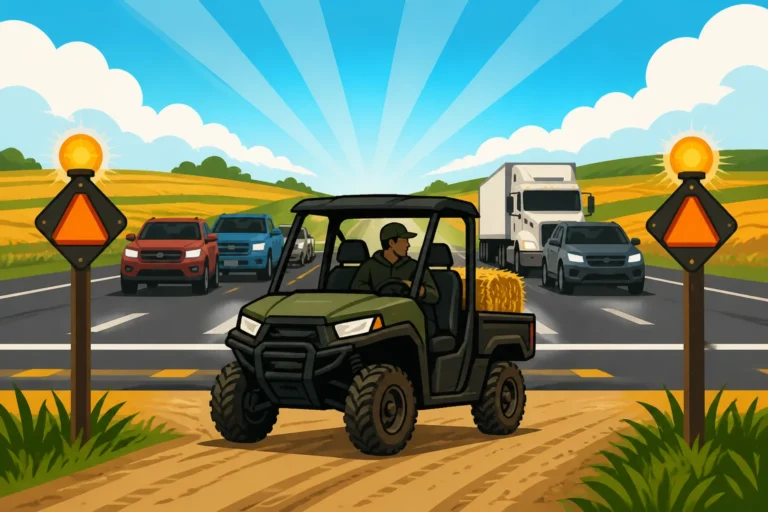
However, there's a significant exception: agricultural use. If a young rider is operating an ATV or UTV for bona fide agricultural purposes, such as checking cattle, hauling feed, or maintaining fences, they might be exempt from the full Class O license requirement. In these cases, a farm permit can sometimes suffice, which can be obtained at a younger age. This is detailed further in [Nebraska's Agricultural Road Exception]. This exception highlights the state's recognition of ATVs as essential tools for farm and ranch work, allowing younger, supervised operators to contribute. It’s important to remember, though, that this exception is specifically for agricultural tasks, not recreational joyrides on public roads.
The Silence on Private Land and Designated Trails
Here's where the state law becomes less prescriptive. For riding on private land that you own or have permission to use, Nebraska state law doesn't impose a specific minimum age for ATV or UTV operation. This means that if you're on your own property, or a friend's farm with their explicit consent, you as the landowner or permission-giver are primarily responsible for setting the age limits and safety guidelines for riders. This flexibility allows families to introduce younger children to riding in a controlled environment, often under direct parental supervision, as discussed in [Nebraska Parent Riding With a Child].
Similarly, designated off-highway vehicle trails and parks, such as the Bessey OHV Trails at Halsey, typically don't have state-mandated age minimums. Instead, the managing entities – often federal agencies like the Forest Service or private park operators – establish their own rules. These rules might include requirements for helmet use, specific riding areas for different skill levels, or mandatory adult supervision for minors. While the state doesn't dictate an age, these venues usually have robust safety guidelines in place to protect all riders. It always pays to check the specific rules of any trail or park before you head out, as they can vary significantly.
Where Age Restrictions Do Apply: City Ordinances and Private Parks
While statewide age restrictions for off-road riding are generally absent, you'll find that age becomes a much more prominent factor when you venture into local jurisdictions or specialized riding areas. This patchwork of regulations can be a source of frustration for riders and parents alike, as what's permissible in one area might be strictly prohibited just a few miles down the road. It's not always about a blanket state rule, but rather a hyper-local approach to safety and community management.
City-Specific Age Requirements
Many Nebraska cities, towns, and even some unincorporated villages have taken it upon themselves to enact local ordinances governing ATV and UTV use within their limits. These ordinances are often designed to address concerns about noise, public safety, and traffic flow. A common component of these local rules is the establishment of minimum age requirements for operating these machines on any city-maintained street or alley that has been designated as open to OHV traffic. For instance, some municipalities might require an operator to be 16 years old, while others might push that up to 18, particularly if they are also requiring a valid driver's license.
Consider a town like Yutan, which has its own set of rules for operating ATVs and UTVs on its streets. Such ordinances often include a minimum age for the driver, in addition to requirements for permits, insurance, and specific safety equipment like flags or lights. This is why it's absolutely crucial for anyone planning to ride an ATV or UTV on public streets to first check with the specific city or county government where they intend to ride. What’s legal in one town might lead to a ticket in another. The best advice is always to call the city clerk or police department and ask for a copy of their current ATV ordinance, or look it up online if available. You can find more guidance on this in [How to Find Your Town's ATV Ordinance Online].
Rules at Private Riding Parks
Private riding parks, like Flat Rock Riders OHV Park near Sutherland, operate on a different set of principles, as they are managed by private entities rather than governmental bodies. These parks have the authority to set their own terms and conditions for entry and riding, and this almost always includes specific age minimums. Often, these parks have tiers of age requirements, perhaps allowing younger riders on smaller, youth-specific machines in designated areas, while requiring older, more experienced riders for larger machines or more challenging trails.
For children under 18, private parks invariably require a parent or legal guardian to sign a liability waiver before the child can ride. They may also enforce rules about direct adult supervision, requiring a parent to be present on the trails or even riding alongside their minor child. Some parks might also mandate that youth riders complete a safety course or wear specific types of protective gear beyond just a helmet. These rules are put in place for the safety of all riders and to protect the park from liability, so they are typically strictly enforced. Parents often look for ways to make a machine more manageable for a smaller rider, and aftermarket solutions from companies like SuperATV can sometimes provide options for added control or protection, helping tailor a quad or side-by-side to a child's needs. Always check the park’s website or call ahead to confirm their specific age, supervision, and machine requirements before you pack up your gear.
Understanding Machine Size and Rider Ability for Young Enthusiasts
Beyond the legal age requirements, there's an equally important discussion to be had about matching a young rider's physical size, maturity, and skill level to the appropriate machine. While Nebraska state law doesn't specify engine sizes by age for off-road use, common sense and industry safety guidelines strongly recommend a measured approach. Pushing a child onto a machine that's too powerful or too large for them is a recipe for an accident, regardless of what the legal age limit might be in a particular area.
The "Right Size" Machine for a Young Rider
When we talk about the "right size" machine, it's not just about engine displacement. It encompasses the physical dimensions of the ATV or UTV – the seat height, handlebar reach, overall weight, and power output. A young rider needs to be able to comfortably reach and operate all controls, maintain their balance, and handle the machine's weight, especially if they need to shift their body to navigate terrain. Industry recommendations often suggest specific engine displacement ranges for different age groups, such as 70cc-90cc for children aged 12 and older, and over 90cc for riders 16 and up. While these are guidelines and not strict legal mandates in Nebraska for off-road use, they provide an excellent framework for making safe decisions.
For example, a 10-year-old might be physically capable of riding a small, youth-specific quad, but a 14-year-old would likely need something more robust. The key is to avoid overpowering a rider. A machine that's too powerful can accelerate unexpectedly or become uncontrollable, leading to spills. It's always better to start smaller and gradually increase power as the rider gains experience and confidence. Ensuring the machine is stable and well-protected is key, and components like skid plates or reinforced bumpers, which you might find from a brand like SuperATV, can give parents peace of mind during those early riding years. Many reputable ATV manufacturers offer youth models specifically designed with lower power, lighter frames, and appropriate ergonomics for younger riders.
The Role of Training and Supervision
Age is just a number; actual riding ability comes from proper training and practice. Even if your child meets a specific age requirement, whether for a city ordinance or a private park, it doesn't automatically mean they're ready to ride safely. That's where comprehensive training and diligent supervision come into play. Nebraska may not mandate a safety course for all ATV riders, but enrolling your child in a voluntary ATV safety course is one of the best investments you can make. These courses teach critical skills like safe starting and stopping, turning, climbing hills, emergency braking, and hazard awareness. You can find more information on these courses in [Nebraska Voluntary Safety Courses].
Beyond formal training, active adult supervision, especially for younger or inexperienced riders, is non-negotiable. This means not just being present, but actively watching, guiding, and correcting as needed. For very young riders, this might mean riding right alongside them, constantly communicating, and always being prepared to intervene. Even if you have a youth-specific machine, ensuring it's in top condition with reliable parts is crucial. Whether it's a new throttle cable or beefier A-arms, exploring options from reputable suppliers such as SuperATV can enhance safety and longevity. Remember, the goal isn't just to meet legal requirements, but to instill lifelong safe riding habits. [Nebraska Rules for a Ten-Year-Old Rider] and [Nebraska Rules for a Fourteen-Year-Old Rider] provide further insights into specific considerations for these age groups.
Key Safety Considerations Beyond Just Age
When we talk about ATV and UTV riding, age requirements are just one piece of the puzzle. A truly safe riding experience, especially for younger enthusiasts, involves a holistic approach that considers equipment, passenger rules, and the fundamental differences between off-road and on-road operation. Overlooking these critical safety factors, even if an age requirement is met, can lead to serious consequences.
Mandatory Safety Gear for All Riders
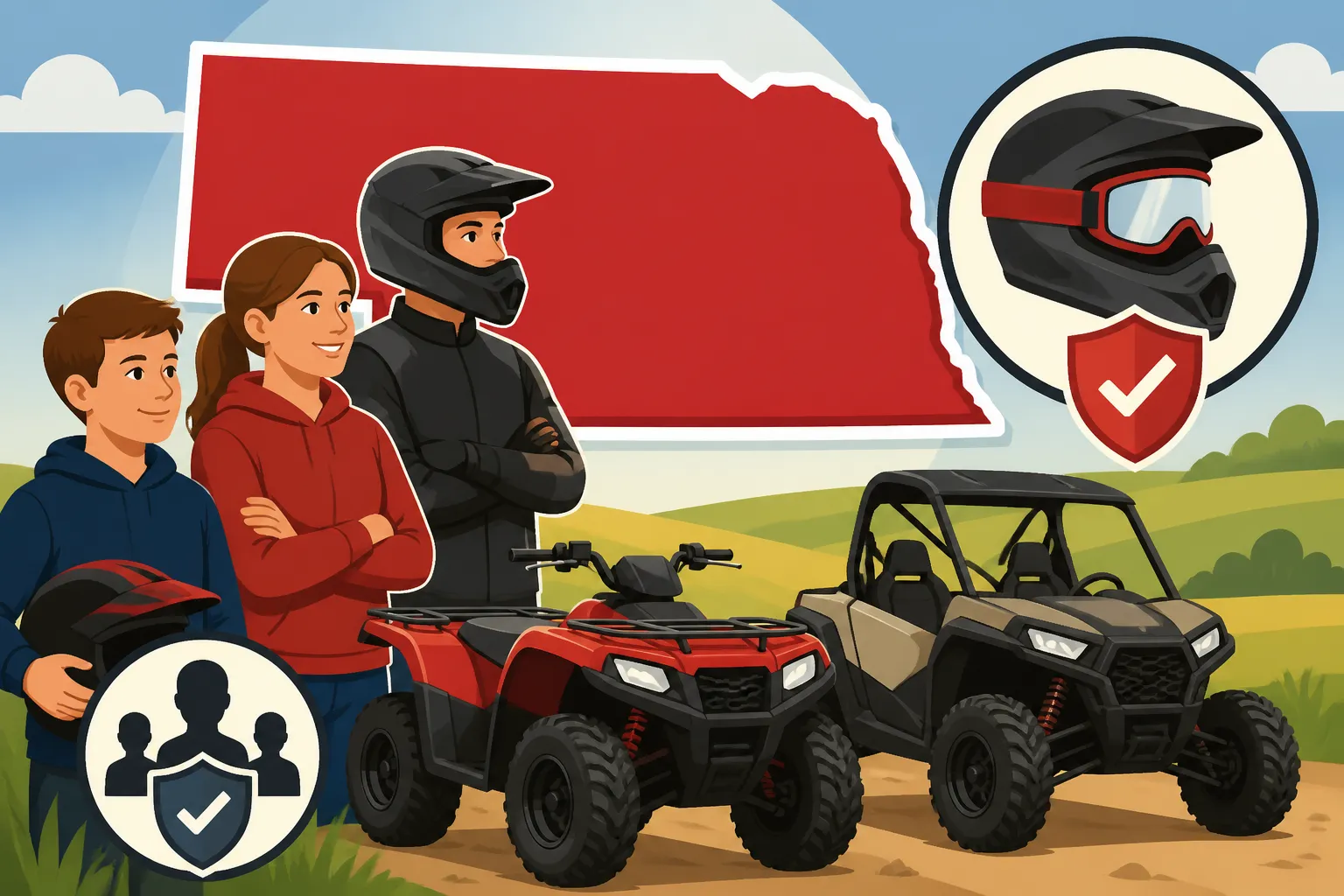
Regardless of age or location, certain safety gear should be considered mandatory for every ATV and UTV rider in Nebraska. While state law for off-road riding doesn't always mandate every piece of equipment, common sense and best practices strongly recommend it. The most critical item is a properly fitted helmet. Although [Nebraska's Helmet Statute Covers Motorcycles, Not ATVs] for specific legal mandates, wearing a DOT-compliant helmet is vital for head protection in the event of a fall or collision.
Beyond a helmet, riders should always wear eye protection (goggles or a face shield), sturdy over-the-ankle boots, long pants, long-sleeved shirts or a riding jacket, and gloves. This gear provides crucial protection against abrasions, impacts, and debris, which are common occurrences during off-road riding. These items can dramatically reduce the severity of injuries. Teaching children from their very first ride that this gear is part of the experience, not optional, helps build good habits that will serve them throughout their riding careers.
Passenger Rules for Youth Riders
One of the most common safety misconceptions, especially with younger riders, revolves around carrying passengers. Most ATVs are designed for a single operator only. They are not built to safely accommodate a passenger, and doing so can drastically alter the machine's balance, steering, and braking capabilities, making it much more prone to tipping or losing control. Attempting to carry a child passenger on a single-rider ATV is incredibly dangerous and is often prohibited by state laws, park rules, and common sense. [Nebraska Rules for Passengers on a Quad] delves deeper into this topic.
UTVs (Utility Terrain Vehicles or side-by-sides) are different. They are specifically designed with multiple seats and seatbelts to safely carry passengers. However, even with UTVs, it's essential to ensure that all passengers are properly seated, buckled in, and meet any age or size requirements set by the manufacturer or specific riding area. Never exceed the manufacturer's recommended passenger capacity, and always ensure children are secured in appropriate seating for their size.
The "Not To Be Registered" Notation and Its Impact on Road Use
Understanding the "Not To Be Registered" notation on a Nebraska ATV title is crucial, especially when considering any type of road use, even by older, more experienced riders. This notation, which you can learn more about in [Why an ATV Title Says Not To Be Registered], fundamentally means that the ATV cannot be licensed or plated for general public road travel like a car or truck. While there are specific exceptions for agricultural use or if a city or county explicitly opens its roads, it is not a free pass.
This notation directly impacts how and where youth riders, even those with a farm permit, can operate. While a younger rider might legally drive an ATV for farm work on a county road adjacent to their property, they cannot simply use that same road for recreational purposes. The intent and context of the ride are paramount. This distinction reinforces that the primary domain for ATVs and UTVs in Nebraska is off-road, on private property, or within designated trail systems. Any road use, particularly for youth, must strictly adhere to the specific, limited exceptions allowed by state law or local ordinance, always keeping safety as the absolute top priority.
Here is a summary of Nebraska's ATV/UTV age considerations:
| Location / Scenario | Typical Age Guideline / Rule | Key Considerations |
|---|---|---|
| Public Roads (General) | 16+ with Class O Operator's License (or appropriate endorsement) | State law requires a valid driver's license. ATV must be legal for road use (limited exceptions). Highly restrictive. |
| Public Roads (Farm Use) | Younger than 16 with Farm Permit (age for permit varies, often 14-16) | Specifically for bona fide agricultural purposes. Rider must meet farm permit requirements. Still subject to road use safety rules (flags, lights, etc.). |
| Private Land | No state-mandated minimum age | Landowner sets rules. Parental discretion and direct supervision are key. Focus on matching machine to rider ability and maturity. |
| Designated Public Trails | No state-mandated minimum age (park rules apply) | Managed by federal/state agencies (e.g., National Forest). Park rules dictate supervision, gear, and potentially restricted areas for youth/beginners. Always check specific park rules. |
| City/Village Streets | Varies by local ordinance (often 16+ with driver's license, sometimes 18+) | Local ordinances must specifically open streets to ATVs. Requires checking with city/village hall for specific age, permit, insurance, and equipment rules. |
| Private Riding Parks | Varies by park (often tiered, e.g., 6+ in youth areas, 16+ for larger machines) | Park sets its own specific age minimums and rules. Requires signed waivers for minors, often adult supervision. May have specific machine size or safety course requirements. |
Disclaimer
This article is for general informational purposes only and does not constitute professional advice. Laws, prices and regulations vary by location and change over time. Consult a qualified professional for guidance on your specific situation.