Nebraska Unincorporated Villages and County Boards
It can feel incredibly frustrating to own an ATV or UTV in Nebraska and constantly wonder where you can legally ride it, especially when local rules seem to change block by block. While state law generally restricts these machines from public roads, there are specific, crucial exceptions, particularly when it comes to unincorporated villages and the actions of your county board. This comprehensive guide will unpack these local provisions, helping you understand how community-level decisions can open—or close—roads to your off-highway vehicle, and what you can do to navigate these often-confusing regulations.
The Complex Landscape of ATV and UTV Road Use in Nebraska
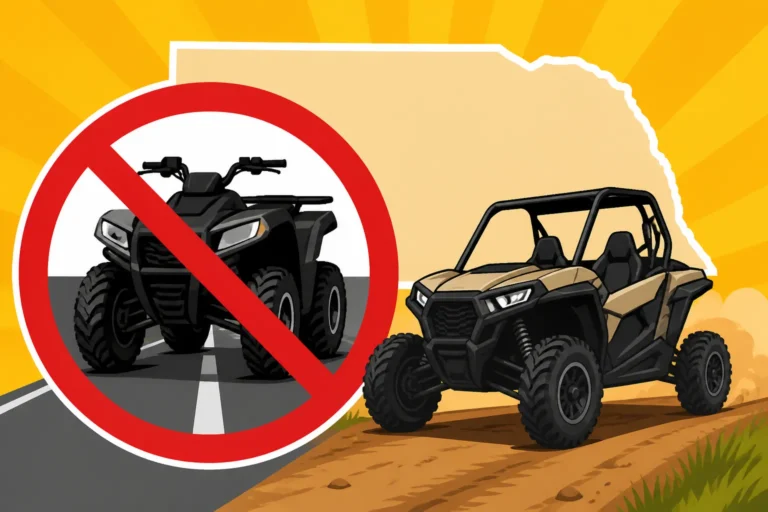
For many ATV and UTV owners in Nebraska, the dream of cruising down a gravel road or easily moving between properties is often met with the harsh reality of state law. Nebraska's statutes are pretty clear: off-highway vehicles, by default, are not allowed on public roads. This can be a huge source of confusion and even anger for riders who see these machines as perfectly capable of handling the terrain, especially in rural areas. But the story doesn't end there; local jurisdictions, particularly unincorporated villages and county boards, have a distinct role in shaping where you can actually ride.
The General Rule: Off-Road Means Off-Road
At the state level, the foundational principle is that ATVs and UTVs are designed and intended for off-road use. They lack many of the safety features, like sealed cabins, crumple zones, and specific lighting requirements, that are mandated for vehicles on public roadways. This is why, generally speaking, you won't see state-issued license plates or registration for these machines for road use. Instead, you'll go through a titling process that acknowledges their off-road nature. If you've ever tried to understand the nuances of [Nebraska Titles ATVs but Does Not Register Them], you know exactly what I mean. This underlying state philosophy is the starting point for all other rules, and it's why any road use is an exception rather than the norm.
Think about it this way: you bought your machine for adventure, for ranch work, or for accessing remote hunting spots, not necessarily for a trip to the grocery store. The state sees it similarly, and its laws reflect that primary purpose. This creates a disconnect for many rural residents who rely on these machines for everyday tasks or short hops between fields. It’s not about joyriding; it’s about practicality, and that’s where the state laws often feel out of step with real-life needs.
Why Riders Face Frustration on Public Roads
The blanket prohibition on road use can lead to immense frustration. Imagine you live in a small, unincorporated community with only a handful of gravel roads connecting homes to a local store or a neighbor’s farm. You might own a UTV that's perfect for hauling feed or checking fences, but technically, taking it even a short distance down that public road could lead to a ticket. This isn't just an inconvenience; it can be a real barrier to productivity and community connection. Riders often feel penalized for simply trying to make their lives easier in areas where traditional vehicles might be overkill or less efficient.
This frustration is compounded by the fact that many other states have more flexible rules, or at least clearer pathways to make ATVs and UTVs street legal. When you move to Nebraska or talk to friends who ride elsewhere, the contrast can be stark. The lack of a clear, statewide framework for conditional road use leaves a vacuum, which then gets filled, sometimes inconsistently, by local ordinances. This patchwork of rules means what's permissible in one county or village might be strictly forbidden just a few miles down the road, making it a headache to simply figure out where you stand. It’s enough to make you scratch your head and wonder, [Can You Drive an ATV on the Road in Nebraska?] at all?
The Role of Local Control in ATV Ordinances
Here’s where it gets interesting and offers a glimmer of hope: Nebraska law does provide avenues for local control. While the state generally says "no" to road use, it carves out specific authority for cities, villages, and crucially, county boards, to enact their own ordinances or resolutions that can allow for limited ATV and UTV use on public roads within their jurisdiction. This local control is a double-edged sword: it means rules can vary dramatically, but it also means that advocacy at the local level can make a real difference.
Instead of a top-down state mandate, you're looking at a bottom-up approach. A city council or a village board, and in some cases a county board, can look at their specific community needs, road types, traffic volumes, and resident preferences, and decide to permit what the state generally prohibits. This requires active participation from the community, presenting a case to local officials, and understanding the specific legal mechanisms they must follow. It’s not just about what you want, but what your community needs and how local leadership can legally facilitate it.
Understanding Unincorporated Villages and Their Unique Status
Unincorporated villages often feel like the forgotten corners of Nebraska’s legal landscape. They lack the full municipal government of an incorporated city or town, yet they are distinct from purely rural, open county land. This unique status has significant implications for how ATV and UTV road access can be granted. It’s less about a direct village vote and more about the county board acting on behalf of these smaller communities.
What Exactly is an Unincorporated Village?
An unincorporated village is essentially a populated area that exists within a county but has not officially incorporated as a municipality. This means it doesn't have its own city council, mayor, or dedicated local government to pass ordinances in the same way an incorporated city would. Instead, the general governance, including road maintenance and law enforcement, falls under the purview of the larger county government. Residents of unincorporated villages pay county taxes and are represented by their county commissioners or supervisors.
You might think of them as clusters of homes, perhaps with a small general store, a church, or a community hall, but without the formal structure of a town. These are often places where ATVs and UTVs are most practical for daily tasks or short trips, precisely because distances are small and road traffic is minimal. The challenge, of course, is that without a direct local legislative body, the process for opening roads to ATVs becomes a bit more indirect, relying on the county to step in.
How Villages Gain the Authority to Regulate ATVs
Because an unincorporated village lacks its own municipal governing body, it cannot independently pass an ordinance allowing ATV and UTV road use. This is a critical distinction from incorporated cities, which have explicit authority to regulate their streets. Instead, for an unincorporated village to permit such use, the county board must take action. The state law grants county boards the power to adopt resolutions that can open roads to ATVs and UTVs within specifically defined unincorporated villages. This means the village itself doesn't "gain authority" in the traditional sense; rather, the county exercises its authority over the village's roads.
This mechanism is a recognition that these small communities often have different needs than bustling cities or vast agricultural tracts. A resident of an unincorporated village might simply need to cross a short stretch of road to get to a neighbor’s property or access a field. Requiring a full-sized vehicle for such a trip might be impractical or uneconomical. The county board, by passing a resolution, acknowledges these unique circumstances and provides a legal framework for local residents to use their machines responsibly on village roads. It's a localized solution to a localized problem.
The Process of Adopting a Village ATV Ordinance
So, how does this actually happen? It's not as simple as a few residents asking nicely. The process typically begins with residents of the unincorporated village, or perhaps a local community group, formally petitioning their county board. This petition should clearly identify the unincorporated village, explain the need for ATV/UTV access on its roads, and ideally, propose specific rules for that access. It’s a good idea to research [What to Ask City Hall Before Riding Streets] and adapt those questions for your county board.
Once the county board receives such a request, they will likely initiate a public hearing process. This is where residents, law enforcement, and other interested parties can voice their opinions for and against the proposed changes. The board will consider factors such as road safety, traffic volume, existing infrastructure, and potential impacts on emergency services. If the board decides to move forward, they will draft and then vote on a formal "resolution" that specifically designates the roads within the unincorporated village where ATVs and UTVs are permitted, along with any conditions, such as hours of operation, speed limits, or equipment requirements. This resolution then becomes the legal basis for road use in that specific unincorporated village. For a deep dive into the specifics, you can look at [How a County Board Opens a Village to ATVs].
The Power of County Boards to Open Roads
County boards are the key players when it comes to opening roads in unincorporated villages or even specific county roads. Their legislative power at the county level is what allows these exceptions to state law to take effect. Understanding how they operate and what their limitations are is crucial for anyone hoping to see more ATV and UTV access.
County Boards and Their Jurisdiction Over Roads
Nebraska's county boards, whether they are called county commissioners or county supervisors, have broad authority over county roads and highways. These are the public thoroughfares that crisscross rural areas, connecting farms, ranches, and small communities, often consisting of gravel or dirt surfaces. Unlike state highways, which are under the jurisdiction of the Nebraska Department of Transportation, or city streets, which are managed by municipal governments, county roads fall directly under the county board's control. This makes them the natural authority to address requests for ATV and UTV access in areas not covered by an incorporated city's ordinance.
It's important to remember that this authority extends only to county roads. A county board cannot, for instance, pass a resolution that allows ATVs on a state highway or within an incorporated city. Their power is geographically and jurisdictionally limited. This distinction is vital because riding an ATV on a state highway is almost universally prohibited in Nebraska, regardless of local county action. Knowing this boundary helps manage expectations and focus advocacy efforts effectively.
The Mechanics of a County Board Resolution
When a county board decides to allow ATV and UTV use on certain roads, they do so by passing a resolution. This is a formal declaration or decision made by the board. It's similar to an ordinance in a city but typically applies to matters of county administration or specific, defined actions. A resolution regarding ATV/UTV use will explicitly identify the roads or the specific unincorporated villages where such use is permitted. It will also outline any accompanying conditions or rules, which are paramount for riders to understand and follow.
These conditions often include specific operating hours (e.g., sunrise to sunset), minimum age requirements for operators, maximum speed limits (often mirroring the [Nebraska's 30 mph Road Limit]), and mandatory equipment, such as headlights, taillights, and a safety flag. The resolution might also stipulate that riders must carry proof of [Nebraska Requires Liability Insurance on Roads] and possess a valid driver's license or farm permit, like a [Nebraska Requires a Class O License or Farm Permit]. Without a clear resolution, or if a rider violates its terms, they could still be subject to a citation for illegal road use.
Navigating County-Level Decision Making
Successfully navigating the county board's decision-making process requires more than just showing up at a meeting. It involves research, preparation, and consistent engagement. First, identify your county commissioners or supervisors and understand their regular meeting schedule. Many counties publish their agendas online. Next, gather support from your community. A petition with numerous signatures from local residents can be a powerful tool, showing the board that there's broad support for your proposal.
When presenting to the board, focus on safety and practicality. Explain why ATV/UTV access is needed in your specific area, perhaps citing agricultural use, elderly residents needing easier mobility, or the absence of alternative routes. Address potential concerns proactively, such as noise, safety, and enforcement. Suggest specific rules that would mitigate these issues. For example, advocating for stricter speed limits or ensuring riders use [Why Road-Legal ATVs Need a 5-Foot Safety Flag] can demonstrate a commitment to safety. Remember, county boards are elected officials, and they respond to the needs and concerns of their constituents. Persistent, polite, and well-reasoned advocacy often yields the best results.
Practicalities of Riding in Approved Unincorporated Areas
Even when your county board or an unincorporated village has passed a resolution or ordinance to open roads to ATVs and UTVs, it's not a free-for-all. There are still strict rules and essential requirements that riders must adhere to. Ignoring these can not only lead to fines but also jeopardize the local access that was hard-won. Safe and responsible riding is key to maintaining these privileges.
Key Road Rules That Still Apply
When an unincorporated village or county board opens its roads, it almost always comes with a specific set of rules that mirror, or even add to, existing state regulations for any permitted road use. These aren't suggestions; they are legal requirements. For example, even if an area is open, you’ll typically be limited to a maximum speed, often 30 miles per hour or less. You'll likely need to operate only during daylight hours, from sunrise to sunset, unless otherwise specified for specific activities like snow removal. Crossing state highways usually remains prohibited, and when crossing other paved roads, you'll need to do so at a 90-degree angle after coming to a complete stop and yielding to all traffic.
Beyond these operational rules, the state's general provisions still apply. For example, while not state-mandated for ATVs, many local ordinances will require you to be 16 years old and hold a valid driver's license. If you're using a UTV, especially one that can carry multiple passengers, ensuring all passengers are seated safely and not exceeding the manufacturer's capacity is paramount. Always remember that these machines are not cars, and they handle very differently on paved or even gravel roads, especially at speed or in emergency braking situations. Always refer to [Nebraska ATV Road Rules Under 60-6,356] for detailed state guidelines.
Essential Equipment for Road-Legal Riding
Just because you're riding in an approved area doesn't mean your machine can be bone stock. Local resolutions and ordinances will almost certainly mandate specific safety equipment to make your ATV or UTV more visible and safer for limited road use. Common requirements include:
- Headlights and Taillights: These must be functional and turned on, even during daylight hours in some areas, to enhance visibility.
- Brakes: Your braking system must be in good working order.
- Mirrors: At least one rearview mirror is often required.
- Safety Flag: A brightly colored, usually day-glow orange or red, triangular flag mounted on a pole, extending at least five feet above the ground, is a very common requirement. This greatly increases your visibility to other motorists, especially over hills or around turns.
- Horn: A working horn is crucial for signaling.
- Spark Arrester: While often an off-road requirement, ensuring your machine has a U.S. Forest Service approved spark arrester is good practice and may be mandated, especially if routes lead near wooded areas.
Brands like SuperATV offer a wide range of accessories, from full street-legal kits with turn signals and horns to robust safety flags, that can help ensure your machine meets these local requirements. Investing in quality equipment isn't just about compliance; it's about your safety and the safety of others sharing the road.
The Importance of Local Ordinance Research
This cannot be stressed enough: you must do your homework. Before you ever ride your ATV or UTV on a public road in an unincorporated village or on a county road, you need to verify that a specific resolution or ordinance is in place, and you need to understand all of its conditions. Don't rely on hearsay or what a friend told you. Laws change, and what was true last year might not be true today.
The best way to do this is to contact your county clerk's office or the county sheriff's department directly. Ask for a copy of any resolution or ordinance pertaining to ATV/UTV use on roads within unincorporated villages or on county roads in your specific area. They should be able to provide you with the exact language of the law. Don't assume that because one village has opened its roads, all nearby villages or county roads are open. Each community's situation is unique, and local boundaries are very important. Being informed is your first line of defense against an unexpected ticket. This is even more critical than knowing [Nebraska City ATV Registration Fees] or other municipal rules.
Advocating for ATV and UTV Access: Your Role in the Process
If you live in an unincorporated village or a rural area where ATV and UTV road access would be beneficial, you don't have to wait for someone else to make it happen. Local advocacy can be incredibly effective. County boards are often receptive to the needs of their constituents, especially when those needs are presented clearly, respectfully, and with a focus on community benefit.
Building a Case for Your Local Officials
To effectively advocate for ATV and UTV access, you need to build a compelling case. Start by identifying the specific problem you're trying to solve. Is it safer access to farmland? Easier travel for elderly residents? Improved mobility for those with disabilities? Connecting parts of a small community? Quantify the need if possible – how many residents would benefit? What are the economic advantages (e.g., reduced fuel costs for farm vehicles)?
Next, research how other counties or even nearby incorporated cities in Nebraska have handled similar requests. Look at their ordinances or resolutions. What rules did they put in place? How did they address safety concerns? Presenting examples of successful implementation elsewhere can show your local officials that this isn't a radical idea, but a proven solution. Emphasize safety by proposing common-sense rules, like speed limits, daylight-only riding, and mandatory safety equipment. Showing that you've thought about how to make it safe and responsible will go a long way.
Community Engagement and Support
You can't do this alone. A single voice, no matter how passionate, is less impactful than a chorus of community members. Start by talking to your neighbors, friends, and local business owners. Explain your proposal and gather their support. A signed petition demonstrating widespread community backing is a powerful tool. Organize a meeting to discuss the issue and coordinate your efforts. The more people who show up to a county board meeting to speak in favor of your proposal, the stronger your message will be.
Consider reaching out to local agricultural groups, hunting organizations, or other community associations that might benefit from increased ATV/UTV access. These groups can lend their institutional support and add weight to your arguments. Remember, local officials are there to serve their community, and a united community voice is difficult to ignore. This kind of grassroots effort is far more effective than simply complaining about existing restrictions; it actively seeks a solution.
Sustaining Your Advocacy Efforts
Advocacy is rarely a one-and-done event. It often requires persistence. County boards have many issues competing for their attention, and the process of drafting, reviewing, and adopting a resolution can take time. Be prepared for multiple meetings, discussions, and potentially some setbacks. If your initial proposal isn't immediately adopted, ask for feedback. What were the board's concerns? What information might they need? Use that feedback to refine your approach.
Maintain a respectful and cooperative attitude throughout the process. Avoid making demands or becoming confrontational. Your goal is to work with the county board to find a solution that benefits the community while addressing any potential concerns. Offer to help with research, public education, or even organizing volunteer safety events if the resolution passes. Showing a willingness to be a partner in implementation can build trust and demonstrate your commitment to responsible riding, ensuring long-term success for local ATV and UTV access.
Potential Pitfalls and Misconceptions for Riders
Even with local permission, navigating the world of ATV and UTV road use in Nebraska can be tricky. There are common misconceptions and easy mistakes that riders can make, leading to unexpected legal trouble or safety hazards. Understanding these potential pitfalls is just as important as knowing the rules.
The Difference Between a Village Ordinance and Statewide Registration
One of the biggest misconceptions is confusing a local village ordinance or county resolution with statewide registration for road use. As we've discussed, Nebraska titles ATVs but does not register them for road use like cars or motorcycles. A local ordinance allowing you to ride your ATV down the main street of an unincorporated village does not mean your ATV is "street legal" in the same way a car is, nor does it grant you permission to ride on any public road statewide. It is a highly specific, geographically limited permission.
Think of it this way: your ATV has permission to use those specific village roads, but it still doesn't have a license plate and isn't recognized for general road travel across the state. This distinction is crucial when traveling. You can't assume that because your machine is legal in one small community, you can then ride it on a state highway to get to another town, or even on a county road in a different county that hasn't passed its own resolution. Always remember the localized nature of these allowances.
Crossing Jurisdictional Lines
This brings us to another critical pitfall: crossing jurisdictional lines. Imagine you're riding legally in an unincorporated village where the county board has passed a resolution. You approach the edge of that village, and suddenly, you're on a county road that has not been opened by a separate county resolution. Or perhaps you're on a county road, and you enter the limits of an incorporated city that does not have its own ATV ordinance. In both scenarios, you could instantly go from legal to illegal.
You need to know exactly where the boundaries of the approved riding area are. This might mean keeping a map handy or paying close attention to road signs. Law enforcement, whether county deputies or city police, will enforce the rules of their jurisdiction. What might be perfectly acceptable in one area could lead to a ticket the moment you cross an invisible line. This is why thorough research on your route and destination is absolutely non-negotiable.
Enforcement and Penalties
Violating ATV and UTV road rules, even if you thought you were in an approved area, can lead to significant penalties. These typically include fines, which can quickly add up, especially if combined with court costs. In some cases, repeated violations could even lead to your machine being impounded, causing considerable expense and hassle to retrieve it. Law enforcement officers are trained to identify illegal road use, and they will enforce the rules as they stand in their jurisdiction.
Beyond legal penalties, there's a broader impact. Every time a rider gets a ticket for illegal road use, it can erode the trust that local officials have placed in the riding community. This makes it harder for others to advocate for expanded access in the future. Responsible riding and strict adherence to all local rules are essential not just for your own legal protection, but for the reputation of all ATV and UTV owners in Nebraska. Showing that riders can be good stewards of road access is key to retaining and even expanding those privileges.
Equipping Your Machine for Local Road Use
Successfully navigating unincorporated village and county roads with your ATV or UTV isn't just about understanding the law; it's also about preparing your machine. Whether you're making basic upgrades for safety or outfitting it for specific tasks, having the right gear is crucial for compliance and a smooth ride.
Safety Enhancements and Accessories
As mentioned before, most local ordinances will require specific safety equipment. Think of these as minimum standards to make your machine more visible and safer for limited road use. Beyond the basics like functioning headlights, taillights, and a horn, consider:
- Turn Signals: While not always explicitly required by every local resolution, adding turn signals is a smart safety upgrade, especially if you anticipate riding on roads with other vehicle traffic. SuperATV offers integrated kits that make adding these much easier.
- Brake Lights: Ensure your brake lights are bright and clearly visible from the rear, especially when you're slowing down.
- Rearview Mirrors: A single mirror might be required, but two, one on each side, will significantly improve your situational awareness.
- Windshield: For UTVs, a windshield can protect riders from wind, dust, and small debris, improving comfort and visibility.
- Fenders/Mudguards: While often just for keeping mud off, some ordinances might have stipulations about preventing debris from being thrown by tires, which mudguards can help with.
The goal here is to make your ATV or UTV as visible and predictable as possible to other road users. Remember, your machine is smaller and less conspicuous than a car or truck, so anything you can do to stand out (like a bright safety flag from SuperATV) is a major plus for safety.
Maintenance for Mixed-Use Riding
Riding your ATV or UTV on roads, even gravel ones, puts different stresses on your machine compared to purely off-road use. This means your maintenance schedule might need adjustments.
- Tires: Road riding can wear down aggressive off-road tires much faster, especially on asphalt (if your local rules ever allow for brief pavement crossings). Consider a more all-terrain tire that offers better wear characteristics for mixed use, without sacrificing too much off-road grip. Always check tire pressure before each ride.
- Brakes: Frequent braking on roads, especially if carrying a load, can lead to faster brake pad wear. Regularly inspect your pads and rotors.
- Suspension: While designed for rough terrain, road driving can highlight worn bushings or shocks, leading to a less stable ride. Ensure your suspension components are in good condition.
- Lights and Electrical: Given the importance of lights for road legality, regularly check all your bulbs, wiring, and electrical connections. A blown fuse or dead bulb could mean an instant ticket.
Regular maintenance isn't just about keeping your machine running; it's about ensuring it remains compliant and safe for the specific type of riding your local resolution allows. Consistent checks can prevent small issues from becoming big problems, keeping you on the right side of both safety and the law.
Preparing for Inspections and Spot Checks
When riding on public roads, even those opened by local action, you should be prepared for potential interactions with law enforcement. This means having all your necessary documentation readily accessible.
- Proof of Ownership/Title: While Nebraska doesn't register ATVs for general road use, you will have a title. Keep a copy (not your original) with you as proof of ownership.
- Proof of Insurance: If your local ordinance or county resolution requires liability insurance for road use, carry proof of that insurance.
- Driver's License/Permit: Have your valid driver's license or farm permit ready to show.
- Copy of the Ordinance/Resolution: This is a fantastic piece of documentation to carry. If you're riding in an area where the rules might be less commonly known, having a physical or digital copy of the specific county resolution or village ordinance can clarify your legal standing for an inquiring officer.
Being prepared, polite, and having all your paperwork in order can make any interaction with law enforcement smooth and stress-free. It shows you are a responsible rider who understands and respects the rules, helping to foster a positive relationship between the riding community and local authorities.
Disclaimer
This article is for general informational purposes only and does not constitute professional advice. Laws, prices and regulations vary by location and change over time. Consult a qualified professional for guidance on your specific situation.