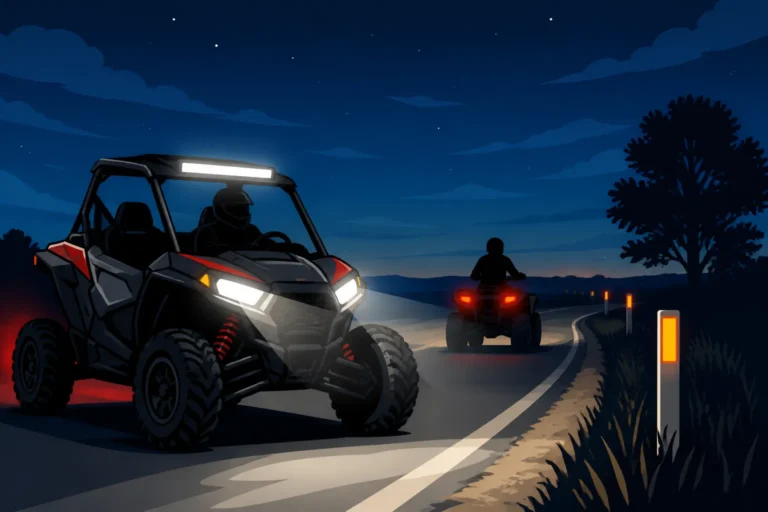
Nebraska Lighting Requirements on a Machine
It's incredibly frustrating trying to figure out what's what when it comes to ATV and UTV rules in Nebraska, especially when you're just trying to enjoy your machine or get some work done. One of the biggest head-scratchers for many riders is exactly what kind of lighting your machine needs, particularly if you ever plan on touching a public road. This comprehensive guide is here to clear up that confusion, diving deep into the specific lighting requirements to keep you safe and legal in the Cornhusker State.
Why Proper Lighting Isnates to the Game in Nebraska
Riding an ATV or UTV in Nebraska can be an absolute blast, whether you're working a ranch, hitting the [Bessey OHV Trails at Halsey in Nebraska], or simply traversing a county road to get from one field to another. However, as soon as your wheels touch a public roadway—even if it's just for a quick crossing—the rules of the game change, and proper lighting becomes non-negotiable. It's not just about avoiding a ticket; it's genuinely about your safety and the safety of everyone else around you. Other drivers, especially those in larger vehicles, aren't always looking for a smaller off-road machine, and clear, functional lighting makes you visible and predictable.
Many riders, especially those new to the state or to owning a machine, assume that if their ATV has some lights, they're good to go. But Nebraska law, specifically Statute 60-6,357, outlines very particular requirements that often go beyond basic factory-installed lights. This distinction is critical because what's fine for tearing up a sandpit might not cut it on a gravel road just outside town. Ignoring these rules can lead to citations, fines, and potentially dangerous situations on roadways. The law is designed to ensure that if you're sharing space with cars and trucks, your machine is just as visible as they are.
The frustration often stems from the fact that ATVs and UTVs aren't treated exactly like cars, but they're not completely unregulated either. It's a bit of a gray area that can feel like a minefield if you don't know the specific statutes. Understanding these lighting requirements helps bridge that gap, giving you the confidence to know when and where your machine is legally equipped to operate. It empowers you to make smart choices about your riding habits and any aftermarket additions you might consider.
Headlights, Taillights, and Brake Lights: The Essentials for Road Use
When it comes to taking your ATV or UTV onto any public road in Nebraska, even for an approved agricultural trip or in a municipality that has opened its streets, certain lighting is not optional. It's foundational to legal operation and, more importantly, to your safety. Think of these as the absolute minimums your machine needs to have and operate correctly. If you're planning any road travel, even short distances, these lights need to be functional and meet specific criteria.
Headlight Requirements: Seeing and Being Seen
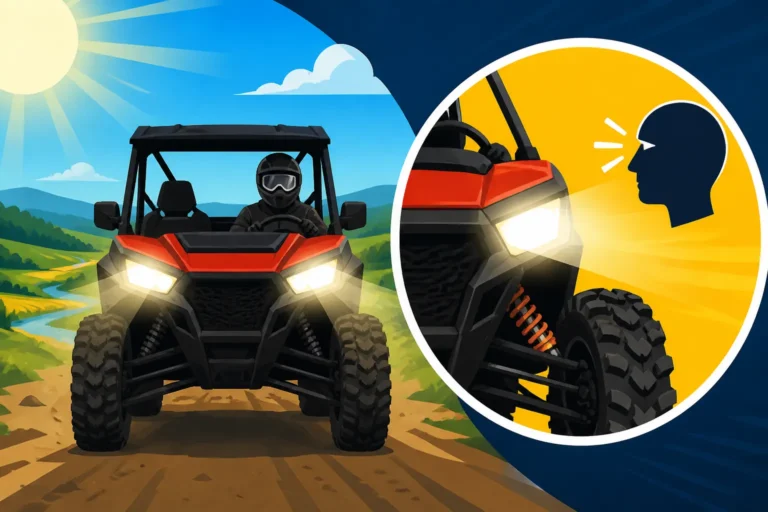
Nebraska law is quite clear about headlights when an ATV or UTV is operated on a public road. Your machine must be equipped with at least one headlight that emits a white light visible from a distance of 500 feet to the front. This isn't just for riding at night; the statute actually specifies that headlights must be on during "daylight hours," which many riders find surprising. This means that if you're on a public road, your headlight should be illuminated, regardless of how bright the sun is shining. It's a significant point of confusion for many because you might think, "It's daytime, why do I need my lights on?" The answer is visibility; a motorcycle-style single headlight on an ATV can easily be overlooked by other drivers, and having it on helps you stand out.
The requirement for a 500-foot visibility isn't just a suggestion; it’s a legal standard. If your machine's factory headlight is dim or aimed incorrectly, it might not meet this standard, making you technically non-compliant. Many older ATVs or those with heavily used halogen bulbs might struggle to project light that far effectively. This is where many riders look to upgrade their lighting. Brands like SuperATV offer brighter LED replacement bulbs or compact LED light bars that can vastly improve your forward visibility, ensuring you not only see where you're going but are also easily seen by oncoming traffic. Remember, the purpose is two-fold: to illuminate your path and to announce your presence to others.
Furthermore, if you are [Nebraska Rules for Plowing Snow at Night], your headlights become even more critical. The law makes an exception for snow removal, allowing operation after dark, but this only underscores the absolute necessity of bright, functional headlights to navigate safely and avoid accidents in low-light conditions. Always ensure your headlight lens is clean and free of mud or snow that could obscure its output.
Taillight and Brake Light Specifications
Moving to the rear of your machine, the requirements for taillights and brake lights are equally important for communicating your presence and intentions to traffic behind you. Nebraska law mandates that your ATV or UTV have at least one taillight that emits a red light visible from a distance of 500 feet to the rear. Just like headlights, this taillight needs to be on whenever you're operating on a public road, regardless of the time of day. This constant illumination provides a critical visual cue for drivers approaching from behind, especially on dusty gravel roads where visibility can drop quickly.
In addition to the basic taillight, your machine must also be equipped with a red stop lamp (brake light) that is activated when you apply the brakes. This brake light needs to be visible from a distance of at least 100 feet to the rear. This is a crucial safety feature, signaling to following vehicles that you are slowing down or stopping, giving them time to react and prevent a rear-end collision. Many factory ATVs and UTVs come with combined taillight/brake light units, but it's vital to ensure both functions are working correctly. A common issue can be a blown bulb or a faulty switch that prevents the brake light from illuminating.
It’s worth noting that if you’ve got a utility trailer hitched up, the trailer itself might have its own lighting requirements, separate from your ATV. While this guide focuses on the machine itself, remember that anything you tow on a public road will also need appropriate rear visibility. Always double-check your connections and ensure all lights are working before you head out on any public thoroughfare. The consequences of a non-functional brake light can be severe, especially on roads with higher speed limits or heavy traffic.
Beyond Basic Lighting: Enhancing Visibility and Compliance
Meeting the minimum lighting requirements is a great starting point, but savvy Nebraska riders often go a step further to enhance their visibility and ensure absolute compliance, especially given the state's unique road-use laws for ATVs and UTVs. Adding auxiliary lighting and other visibility aids can make a significant difference in how safely you can operate your machine on or near public roadways. It's about taking proactive steps to protect yourself and others.
Auxiliary Lights and Reflectors: Boosting Your Presence
While not strictly required by law for road use in most cases, auxiliary lighting can dramatically increase your machine's visibility. Think about adding extra LED cube lights or a small LED light bar to the front of your UTV. These can supplement your main headlight, making your machine appear larger and more prominent to oncoming drivers, particularly at dawn, dusk, or in adverse weather conditions. For example, if you frequently travel [Nebraska Rules for Riding a County Road] where dust can be a major issue, additional forward-facing lights can help cut through the haze and make your presence known from a greater distance. Many riders find that factory headlights, while compliant, just don't offer enough "punch" for true peace of mind on shared roads.
Similarly, reflective tape or additional reflectors can be incredibly effective, especially on the sides and rear of your machine. Even if your lights are off (which shouldn't happen on a public road, but accidents happen), reflectors catch the headlights of other vehicles, providing a passive form of visibility. You can apply reflective tape to fenders, bumpers, or even your helmet. While not a substitute for active lighting, it's an inexpensive and effective layer of added safety. Products like those offered by SuperATV often include reflective elements or are designed with visibility in mind, making it easier to integrate these enhancements into your machine.
Another consideration, especially for UTVs, might be adding turn signals. While not explicitly mandated for ATVs/UTVs by Nebraska's general statute for road use (unlike motorcycles or cars), having functional turn signals vastly improves your ability to communicate your intentions to other drivers. This is particularly useful when making turns off a main road onto a field access or [Nebraska Rules for Riding a Section Line]. Clarity in communication reduces uncertainty for other drivers and lowers the risk of misunderstanding on the road.
The All-Important Safety Flag
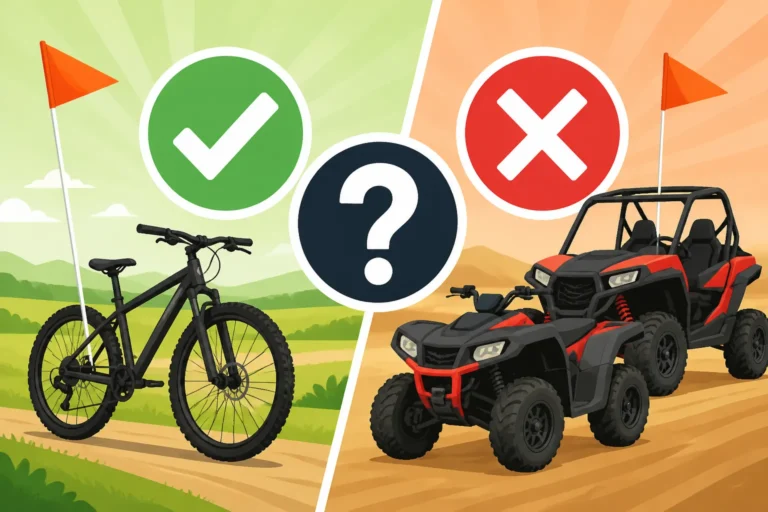
Beyond electrical lighting, Nebraska law has a specific and crucial requirement that acts as a visual beacon for ATVs and UTVs on public roads: the safety flag. When operated on a public road, your machine must display a safety flag that is at least 5 feet above the ground. This flag needs to be triangular in shape, measuring at least 30 square inches, and made of day-glow orange, red, or fluorescent yellow-green material. It’s a very specific set of requirements detailed in [Nebraska Safety Flag Dimensions]. This flag is an essential piece of equipment designed to increase your vertical profile, making your machine more visible over rises in the road, around curves, or above crops and fences.
The requirement for the flag to be at least 5 feet above the ground means it needs to be mounted on a whip or pole sturdy enough to keep it upright at speed. Many riders mount these to the rear of their machine, ensuring maximum visibility. While your headlights and taillights address horizontal visibility, the flag addresses vertical visibility, a unique challenge for low-profile ATVs and UTVs. Imagine cresting a hill on a gravel road; the first thing a driver in an oncoming pickup might see is your bright safety flag, long before they see your machine's body or lights.
This safety flag rule is often overlooked or misunderstood, but it's a critical component of Nebraska's ATV road regulations. Even if you're only planning to [Nebraska Crossing Rules at Ninety Degrees] a highway, that flag needs to be flying high. You can find these safety flags and mounts at many powersports retailers, including online stores like SuperATV, ensuring you meet the specific dimensions and color requirements. Don't underestimate the humble flag; it's a powerful tool in preventing accidents.
Understanding the Legal Context and Avoiding Pitfalls
Navigating Nebraska's ATV and UTV laws, especially regarding road use, can feel like walking a tightrope. It's easy to make assumptions or misunderstand the nuances of the statutes, which can lead to unnecessary trouble. Having a clear grasp of the legal context surrounding these lighting requirements is key to staying out of hot water and enjoying your riding experience without undue stress.
When the Rules Apply: Public vs. Private Land
It's crucial to understand that Nebraska's specific lighting requirements primarily kick in when your ATV or UTV is operated on a "public road." This is a significant distinction. If you're riding exclusively on private land—your own farm, a friend's ranch, or a dedicated private riding park—these state statutes typically don't apply. On private property, the lighting (or lack thereof) is generally at the discretion of the landowner and operator, although for safety, good lighting is always recommended, especially if you're out after dark.
The challenge arises when your riding takes you off private land and onto public thoroughfares. This could be a [Nebraska Farm Trips Outside City Limits] on a county road, crossing a state highway, or even just driving a short distance on a city street in a town that has adopted an ordinance allowing ATVs. In all these public road scenarios, your machine must meet the defined lighting requirements. This means having your headlights on during daylight, ensuring your taillight and brake light are functional, and flying that distinct safety flag. Many riders get caught off guard because they operate their machines primarily on private property and don't realize the rules instantly change the moment they enter public domain.
Consider the scenario of a rancher who uses their UTV daily on their expansive property but needs to cross a county road to get to another pasture. For that brief crossing, they are subject to the same lighting rules as someone joyriding on an approved city street. Deputies are increasingly aware of these regulations, and [Nebraska Equipment Checks by Deputies] can include scrutiny of your lighting setup. It’s always best to prepare your machine for public road access if there’s any chance you’ll be using it that way.
Penalties for Non-Compliance
Ignoring the lighting requirements isn't just a minor oversight; it can lead to legal penalties. If you're stopped by law enforcement and your ATV or UTV doesn't meet the specified lighting standards while on a public road, you could face a citation. These citations typically involve fines, and while they might not be as severe as some traffic violations, they are still an unwelcome expense and hassle. Furthermore, repeated offenses could lead to more significant consequences, though generally the first few times you might just get a warning.
Beyond the immediate financial penalty, there's the much more critical aspect of safety and liability. Operating a machine with inadequate lighting significantly increases your risk of an accident. If you're involved in a collision while your machine is non-compliant, you could face increased liability, regardless of who was primarily at fault. Insurance companies look very closely at whether an operator was meeting all legal requirements at the time of an incident. While [Nebraska Insurance Required Only on Roads], if you're in an accident, having met all legal obligations, including lighting, can be crucial. This potential for enhanced liability is often a more significant deterrent for riders than the initial fine.
Ultimately, ensuring your ATV or UTV meets Nebraska's lighting requirements is about responsible riding. It's about respecting the law, protecting yourself, and ensuring you're a visible and predictable presence on shared roadways. A little preparation and attention to your machine's lighting setup can save you a lot of grief and expense down the road, allowing you to focus on the enjoyment and utility your ATV or UTV brings to your life.
| Lighting Component | Nebraska Requirement (for Public Road Use) | Purpose | Important Considerations |
|---|---|---|---|
| Headlight | At least one white light, visible 500 ft to front. Must be on in daylight. | To illuminate path, and to be seen by oncoming traffic. | Ensure bulb is bright (LED upgrades are popular from brands like SuperATV), clean, and properly aimed. Essential for [Nebraska Daylight Riding Rule] and [Nebraska Rules for Riding After Dark] (for snow removal). |
| Taillight | At least one red light, visible 500 ft to rear. Must be on in daylight. | To indicate presence to following traffic. | Verify functionality, especially if it's a combined unit with brake light. Keep lens clean. |
| Brake Light | At least one red stop lamp, visible 100 ft to rear. Activates upon braking. | To signal slowing or stopping to following traffic. | Crucial for preventing rear-end collisions. Test regularly. |
| Safety Flag | Triangular, 30 sq. inches, day-glow orange/red/yellow-green, 5 ft above ground. | Increases vertical visibility over hills, obstacles, and crops. | Non-negotiable for public road use. Ensure sturdy mounting; available from many accessory providers like SuperATV. |
| Reflectors | Not specifically mandated for road use (but highly recommended). | Passive visibility, especially from sides and rear. | Inexpensive addition for enhanced safety; consider reflective tape on fenders. |
| Turn Signals | Not explicitly mandated by state law for ATVs/UTVs (but highly recommended). | Clearly communicates turning intentions. | Improves safety and clarity for other drivers, particularly in towns with [Nebraska Cities That Adopt ATV Ordinances]. |
Disclaimer
This article is for general informational purposes only and does not constitute professional advice. Laws, prices and regulations vary by location and change over time. Consult a qualified professional for guidance on your specific situation.