Nebraska Rules for a Golf Cart on a Street
It can be incredibly confusing to figure out where you can legally drive your golf cart in Nebraska, especially when you just want to take a short hop to a friend's house or down to the corner store. Many folks assume a golf cart is just for the course or their private property, but depending on where you live, you might have more options than you think. This guide is here to walk you through the nuances of Nebraska's rules for golf carts on streets, helping you understand the state laws, local ordinances, and what you need to do to stay on the right side of the law.
The Basics of Golf Carts on Nebraska Streets
Let's get down to brass tacks: simply owning a golf cart doesn't automatically grant you permission to cruise it down any public street in Nebraska. The state has a general stance on what motorized vehicles are allowed on public roadways, and golf carts, by their very nature, usually fall outside the traditional definition of a "motor vehicle" equipped for highway travel. This means you can't just drive it onto a state highway or a major arterial road like you would a car or truck. However, there's a significant exception to this general rule, and it all boils down to local control and specific equipment.
State Law vs. Local Ordinances
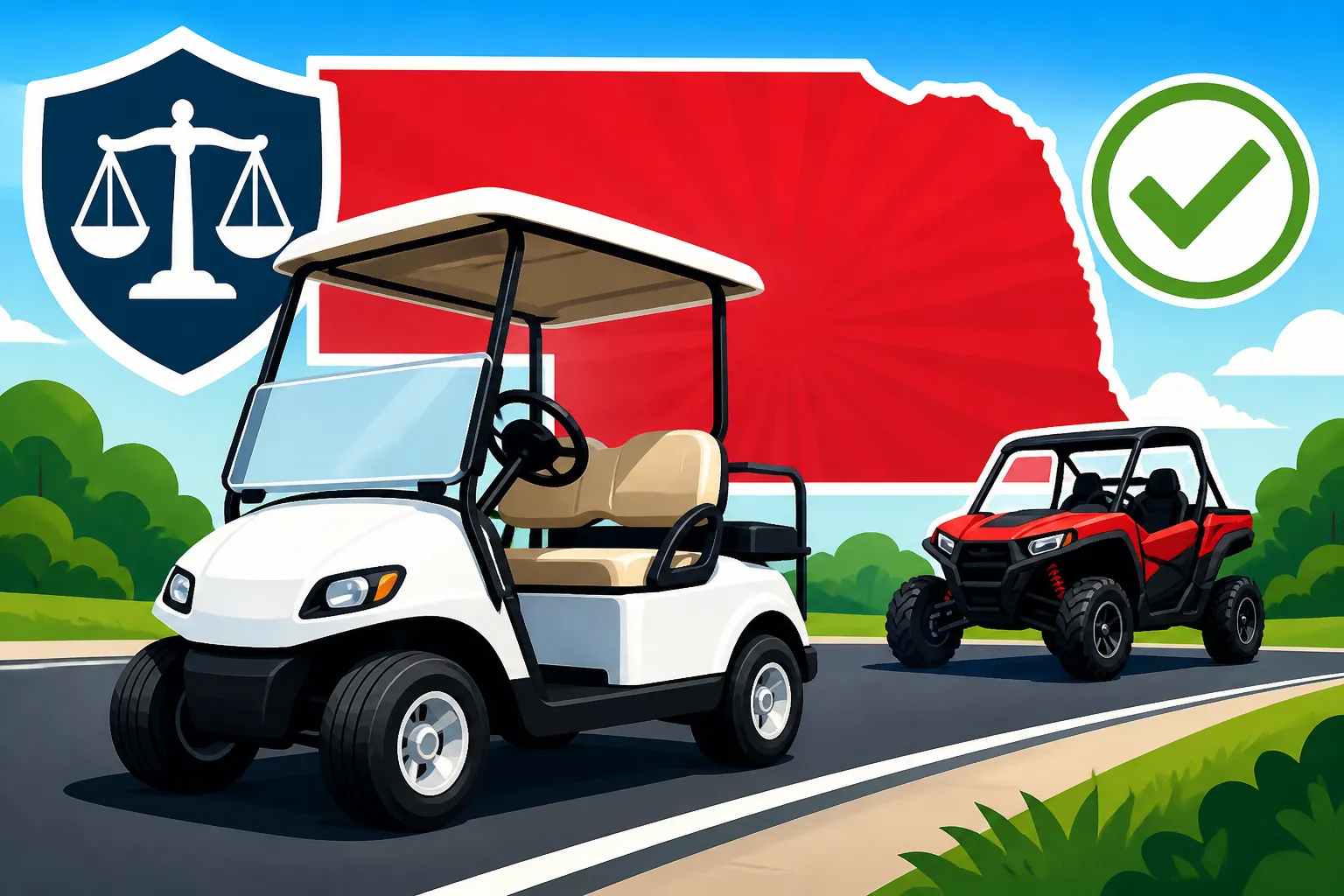
Here's where it gets a little tricky and often causes frustration for golf cart owners. Nebraska state law, specifically Statute 60-6,321, generally prohibits the operation of golf carts on public streets, roads, or highways. This is the overarching rule. But, and this is a big "but," the same statute grants local authorities – meaning cities and villages – the power to create their own ordinances that permit golf cart operation on specific public streets within their corporate limits. This is a crucial distinction. It means that while the state largely says "no," your local town or city council has the power to say "yes," under certain conditions.
This dual layer of regulation means that what's perfectly legal in one Nebraska town might be completely against the rules just a few miles down the road in another. It's not a one-size-fits-all situation, and that's why many residents find themselves scratching their heads. You can't rely on what your cousin in a neighboring county does with their golf cart; you have to check your specific city or village's rules. This local control is similar to how [Nebraska City Ordinances That Open Streets] to ATVs might work.
Equipment Requirements for Street Use
Even if your local municipality has passed an ordinance allowing golf carts on its streets, there are almost always specific equipment requirements that your golf cart must meet to be considered "street legal" for those local roads. These aren't just suggestions; they are mandatory safety features designed to make the golf cart more visible and predictable in traffic. Think about it: a golf cart designed for a smooth course isn't built for sharing space with cars, so these additions are critical.
Common requirements often include:
- Headlights: Functional headlights are a must, ensuring you can see and be seen, especially at dusk or dawn.
- Taillights: Red taillights at the rear are essential for visibility to other drivers approaching from behind.
- Brake Lights: These need to activate when you press the brake pedal, just like on a car, signaling to others that you're slowing down.
- Turn Signals: Front and rear turn signals are usually required to clearly indicate your intentions when turning or changing lanes, preventing confusion and potential accidents.
- Rearview Mirror: At least one rearview mirror, often on the driver's side, is typically necessary to allow you to see traffic behind you.
- Windshield: A non-shattering windshield can protect you from debris and the elements.
- Seat Belts: If your golf cart has an enclosed cabin or even just seats, seat belts might be required for all occupants.
- Horn: A working horn to alert pedestrians or other drivers to your presence.
Some owners turn to aftermarket suppliers like SuperATV for their street-legal kits, which bundle many of these necessary components together. These kits can be a lifesaver for ensuring your golf cart meets all the local requirements without having to source each part individually. It’s always best to check your local ordinance for the precise list of requirements.
Who Can Drive a Golf Cart on Nebraska Streets?
Beyond the equipment, there's also the question of who is actually allowed to operate these vehicles on local streets. This isn't just about age; it often involves licensing and sometimes even insurance. The general expectation is that if you're driving any motorized vehicle on a public street, you should meet certain qualifications.
Typically, most local ordinances allowing golf carts on streets will require the operator to hold a valid Nebraska driver's license. This means that if you're too young to get a regular driver's license, or if your license has been suspended or revoked, you likely won't be able to legally operate a golf cart on public roads, even within a city that permits them. This aligns with general state rules for driving on roads, even for vehicles like ATVs under specific agricultural exceptions where a [Nebraska Requires a Class O License or Farm Permit].
It's crucial to understand that golf carts are not simply toys when they're on public streets. They are operating in traffic and drivers need to be aware of their surroundings, follow traffic laws, and exercise caution. The requirement for a valid driver's license helps ensure that operators have at least a basic understanding of road rules and the responsibility that comes with driving a vehicle.
Navigating Local Regulations and Permissions
The variability between Nebraska cities and villages is probably the biggest headache for golf cart owners. You can't assume that just because your neighboring town allows golf carts, yours does too. This section dives deeper into how these local decisions are made and why it's so important for you to do your homework.
How Cities and Villages Open Their Streets
When a city or village decides to allow golf carts on its public streets, it does so by enacting a specific ordinance. This isn't just a casual decision; it's a formal legislative process at the local level. These ordinances are typically passed by the city council or village board and will outline all the specific conditions under which golf carts can be operated. This is the official document that gives you permission, and without it, the state's general prohibition remains in effect.
These ordinances don't usually open up all streets to golf cart traffic. Often, they will designate specific streets or types of streets where golf carts are permitted. For example, they might allow them on residential streets with speed limits below a certain threshold, but explicitly prohibit them on main thoroughfares, county roads, or state highways that pass through the town. You might find that [Nebraska County Board Resolutions for Villages] also work similarly to establish these rules in unincorporated areas.
The process for getting an ordinance passed often involves public meetings where residents can voice their opinions, safety concerns are discussed, and specific rules are debated. Once passed, the ordinance becomes law within that municipality. It's not uncommon for these ordinances to also specify operating hours (e.g., daylight hours only), speed limits (often 20 or 25 mph, but always check), and sometimes even registration requirements or fees.
Specific City Examples and Their Rules
While I can't give you a real-time, exhaustive list of every city and village in Nebraska that allows golf carts on their streets (since these things can change!), I can tell you that many smaller communities, and even some larger ones, have adopted such ordinances. Communities that are popular tourist destinations, have large retirement communities, or are simply spread out often see the utility of allowing golf carts for local transportation.
For instance, a town might allow golf carts on streets with a speed limit of 30 mph or less, but prohibit them from crossing a state highway except at designated intersections. Some towns might require an annual permit sticker, which typically comes with a small fee, to be displayed on the golf cart. Other places might impose age restrictions beyond just having a driver's license, especially for younger operators. You might also find that, like ATVs, some cities have a form of local registration, even if it's just a permit. This is distinct from a statewide registration, which doesn't exist for ATVs or golf carts. For context, you can read about proposed (but failed) statewide ATV registration in [Lawmakers Proposed Registering Every ATV Statewide].
It's critical to understand that these local rules can be very detailed. They might specify the exact color of your safety flag if one is required, or the precise placement of your turn signals. This level of detail underscores why merely assuming your cart is legal is a risky move.
The Importance of Checking Before You Ride
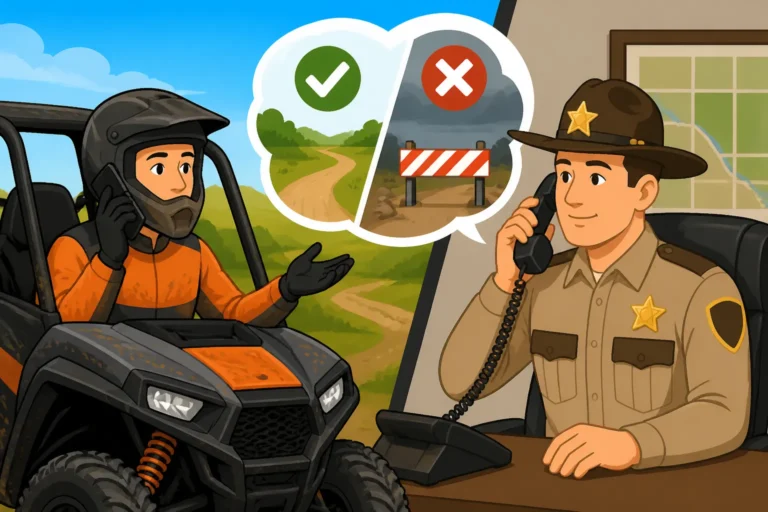
Given the highly localized nature of golf cart street legality, the single most important piece of advice I can offer is this: always check with your specific city or village clerk's office or local law enforcement before you assume you can ride your golf cart on their streets.
Don't just rely on anecdotal evidence from a neighbor or what you read online in a general forum. Laws change, ordinances are updated, and what was true last year might not be true today. A quick phone call or visit to City Hall can save you from a costly ticket or, worse, an accident.
Here's a simple approach:
- Identify your specific municipality: Is it a city or a village?
- Contact the city/village clerk: This office is typically responsible for maintaining all local ordinances.
- Ask for the ordinance regarding golf cart operation on public streets: Specifically inquire about any equipment requirements, licensing prerequisites, designated streets, operating hours, and any local registration or permit fees.
- Get a copy: If possible, ask for a printed or electronic copy of the relevant ordinance. Reading the actual text can clarify any ambiguities.
This proactive step is your best defense against inadvertently breaking the law. It’s the same advice I’d give anyone trying to understand the rules for [Nebraska Rules for Riding a City Street] or [Nebraska Rules for Riding a County Road] on other types of machines. Knowing the rules beforehand ensures a safe and legal ride.
Practical Considerations and Safety Tips
Beyond just knowing the letter of the law, there are practical aspects to consider when operating a golf cart on public streets. Safety should always be your top priority, and understanding potential liabilities can protect you in the long run.
Insurance and Liability Concerns
Even if your town allows golf carts on its streets, the question of insurance is a critical one. Unlike traditional motor vehicles, golf carts are often not covered by standard auto insurance policies when operated on public roads. Your homeowner's insurance might offer some very limited liability coverage if an incident occurs on your property, but this typically does not extend to accidents on public streets.
If you're involved in an accident with your golf cart on a city street and you don't have adequate insurance, you could be personally liable for significant damages, including medical expenses for injuries to others and property damage. This is a huge risk that many golf cart owners overlook.
My strong recommendation is to talk to your insurance agent. Explain exactly how and where you plan to use your golf cart. Many insurance providers offer specific golf cart insurance policies or can add a rider to an existing policy that provides liability coverage for street use. This is especially important as [Nebraska Requires Liability Insurance on Roads] for other vehicles, indicating the state's general expectation for financial responsibility. Don't skimp on this step; the peace of mind alone is worth it.
Here’s a simple comparison of scenarios:
| Scenario | Typical Coverage Implications | Recommendation |
|---|---|---|
| On Golf Course | Often covered by course liability or specific golf cart policy. | Check with course management; may require specific insurance for rentals. |
| On Private Property | Potentially covered by homeowner's insurance (check limits). | Verify with your homeowner's agent; may need an umbrella policy. |
| On Public City Street | Unlikely to be covered by homeowner's or standard auto policy. | Absolutely needs a dedicated golf cart policy or specific rider. |
| Towing/Hauling | May require separate coverage if attached to an insured vehicle. | Discuss with your auto insurer, especially for commercial hauling or long distances. |
Safety Gear and Best Practices
While golf carts might seem innocuous, they are vehicles, and when sharing the road with cars, trucks, and even pedestrians, safety is paramount. The equipment requirements mandated by local ordinances are a starting point, but personal safety gear and responsible driving habits are equally important.
Here are some best practices:
- Helmets: While Nebraska state law doesn't explicitly require helmets for golf cart riders, some local ordinances might. Even if not mandated, wearing a helmet, especially for younger riders or if you're traveling at the upper speed limits of a golf cart (which can still be significant in a collision), is a smart move. Aftermarket suppliers like SuperATV also offer various helmets and safety accessories for off-road vehicles that might be adaptable.
- Eye Protection: Always wear appropriate eye protection to shield your eyes from wind, dust, insects, and road debris.
- Proper Attire: Avoid loose clothing that could get caught in moving parts. Wear closed-toe shoes.
- Obey All Traffic Laws: Treat your golf cart like any other vehicle on the road. This means stopping at stop signs, yielding to pedestrians, signaling turns, and following the posted speed limits. Remember, your golf cart is likely slower than most traffic, so be extra cautious.
- Limit Passengers: Do not overload your golf cart. Adhere to the manufacturer's recommended passenger capacity. Overloading can affect stability and braking.
- Stay Alert: Avoid distractions like cell phones. Pay attention to your surroundings, especially children, pets, and other vehicles.
- Daylight Driving: Many ordinances restrict golf cart use to daylight hours, even with lights. If you must operate at dusk or dawn, ensure all your lights are functional and clean.
- Regular Maintenance: Keep your golf cart in good working order. Check tires, brakes, lights, and steering regularly. A breakdown in traffic can be dangerous.
Understanding Road Limitations and Penalties
Even in cities where golf carts are allowed, there are almost always restrictions on where they can go. As mentioned, state highways or major county roads are typically off-limits. If an ordinance states that golf carts are only permitted on streets with a speed limit of 25 mph or less, venturing onto a 45 mph road, even for a short distance, could lead to a citation. You might also find rules for [Nebraska's 30 mph Road Limit] for other off-road vehicles to be quite relevant here.
The penalties for violating golf cart ordinances or state laws can vary. At the very least, you might receive a traffic ticket and a fine. Repeated offenses could lead to higher fines, impoundment of your golf cart, or even more severe legal consequences depending on the nature of the violation and if an accident occurred. Enforcement can be strict, and local law enforcement officers are typically well-versed in their specific municipal ordinances regarding golf carts.
It's also important to remember that golf carts are not designed for rough terrain or high speeds, even if you’ve added some heavy-duty SuperATV accessories. Taking your golf cart into ditches or off-road areas not designated for such vehicles is generally ill-advised and could lead to damage, injury, or even a citation for trespassing or reckless operation. Stick to the designated streets, follow the rules, and enjoy the convenience and fun your golf cart offers, safely and legally.
Disclaimer
This article is for general informational purposes only and does not constitute professional advice. Laws, prices and regulations vary by location and change over time. Consult a qualified professional for guidance on your specific situation.