Nebraska Rules for Riding a City Street
One of the most confusing aspects of owning an ATV or UTV in Nebraska is figuring out where you can actually ride it, especially when it comes to public roads and city streets. Many folks assume that because they own an off-road vehicle, they can't ever take it on pavement, which leads to frustration and missed opportunities. This guide is here to untangle the complexities of Nebraska's laws regarding ATV and UTV use on city streets, outlining the general prohibitions and crucial exceptions you need to know to ride legally and safely.
The General Rule: Nebraska's State Ban on City Street Riding
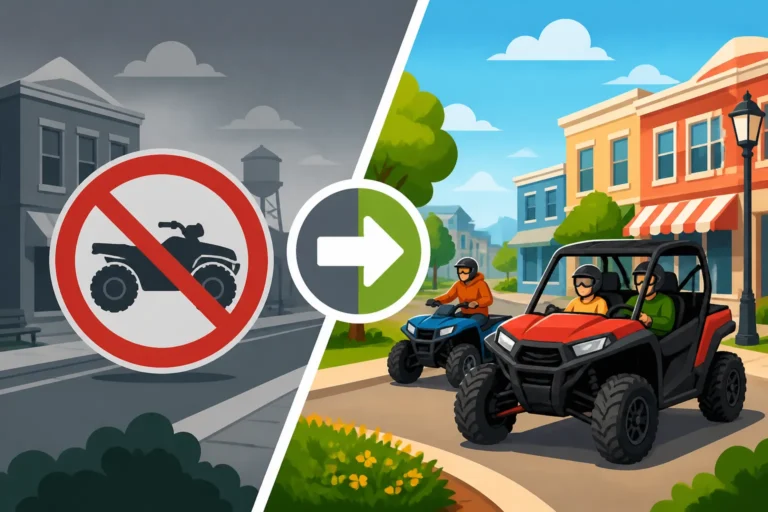
Let's cut right to the chase: in Nebraska, as a general rule, you cannot ride your ATV or UTV on city streets or public roadways. This isn't just a suggestion; it's enshrined in state law, specifically Nebraska Revised Statute 60-6,356. For many new ATV owners, or those moving into the state from places with different regulations, this can come as quite a shock. They've just bought this powerful machine, eager to ride, only to find out the paved roads leading to their favorite trails or even just to a neighbor's house are off-limits.
This statewide prohibition is rooted deeply in safety concerns. ATVs and UTVs are designed for off-road environments – think dirt, mud, sand, and rough terrain. Their suspension, tires, and steering are optimized for agility and traction in unpredictable conditions, not for high-speed stability or precise handling on hard, paved surfaces. The knobby tires that grip so well in the mud can actually reduce traction on asphalt, especially when braking or turning quickly. Furthermore, many off-road machines lack standard safety equipment typically found on street-legal vehicles, such as turn signals, certified headlights, or side mirrors. The state's position is clear: these machines, by their very nature, aren't built for the rigors of public road travel, and allowing them on city streets generally poses an unacceptable risk to both the rider and other motorists.
This foundational rule is important because it means you can't just assume you can take your quad down Main Street in any Nebraska town. Unless there's a specific, localized exception, that road is forbidden territory. It's a common misunderstanding that can lead to significant penalties, not to mention dangerous situations. Remember, the state law is the default; any deviation from it has to be explicitly granted by a local authority.
How Cities Can Open Streets: Local Ordinances and Resolutions
Now, here's where things get a bit more nuanced and, frankly, a lot more hopeful for riders. While Nebraska state law generally bans ATVs and UTVs from public roads, it also provides a critical loophole: cities, towns, and even unincorporated villages (via county boards) have the authority to create their own ordinances or resolutions that specifically allow these machines on certain public roads within their jurisdiction. This means that while you might be prohibited from riding on a city street in Omaha or Lincoln, a smaller community like Yutan, David City, or even a tiny village in the Sandhills, might have decided to open its streets.
This power is not taken lightly by local governing bodies. When a city council or a county board considers allowing ATVs and UTVs on their streets, they typically weigh a variety of factors. They look at traffic volume, road design, community needs (especially in rural areas where these machines are vital for farming or transportation), and, of course, public safety. The process usually involves public hearings, debates, and eventually, a formal vote to pass an ordinance or resolution. It's a democratic process, and it's why you see such a patchwork of rules across the state. Some communities embrace ATV use on their streets, seeing it as a way to allow residents easier access to services or recreation, while others remain strictly against it. Understanding [How a Town Ordinance Opens Its Streets to ATVs] is key to navigating this landscape. Similarly, [Nebraska County Board Resolutions for Villages] can provide access in less populated areas.
If a city or village does decide to open its streets, it almost always comes with a strict set of conditions. These conditions are put in place to mitigate the safety concerns that prompted the state's general ban. Local ordinances don't just throw open the gates; they establish a framework for safe and responsible riding. They might specify which streets are allowed (often secondary roads, not state highways passing through town), what hours you can ride, and what equipment your machine must have. This is where companies like SuperATV come in handy, offering a wide range of aftermarket accessories like mirrors, turn signal kits, and DOT-approved tires that can help bring an off-road vehicle into compliance with local street-legal requirements.
Essential Requirements for Legal City Street Riding (When Permitted)
So, your city or village has an ordinance allowing ATVs and UTVs on its streets – fantastic! But don't just jump on and ride off. These local permissions always come with a list of "must-haves" and "must-dos." Ignoring these specific requirements can quickly turn a legal ride into an illegal one, leading to fines and headaches. It's crucial to understand that even with a local ordinance, your ATV or UTV isn't suddenly a fully street-legal car; it's a conditionally permitted off-road vehicle.
Local Registration and Fees
First and foremost, if your local community has an ordinance, it will almost certainly require you to register your ATV or UTV with the city or village. This isn't the same as a state registration or license plate (which Nebraska does not have for ATVs in general). Instead, it's a local permit, often issued yearly, and it usually comes with a fee. This fee helps the city cover the administrative costs of managing the program and sometimes contributes to local road maintenance. [Nebraska City ATV Registration Fees] can vary significantly from one town to the next, so always check with your specific city hall. You'll likely receive a sticker or decal to place on your machine, signifying that you've complied with the local rules. Don't skip this step; riding without the required city registration is an easy way to get a ticket.
Insurance and Licensing
Another critical component of riding legally on city streets is insurance and proper licensing. Just like driving a car, operating an ATV or UTV on public roads means you need to be covered. Nebraska state law, even for farm-use exceptions, generally requires liability insurance when an ATV is operated on a public road. Your city ordinance will almost certainly echo this, requiring proof of current liability insurance that meets minimum state requirements. This protects you and others in the event of an accident. [Nebraska Requires Liability Insurance on Roads] is a serious requirement, not a suggestion.
As for the driver, you can't just be any age or have any permit. Generally, anyone operating an ATV or UTV on a public street must possess a valid driver's license. This typically means a Class O operator's license (the standard driver's license for cars). However, some agricultural exceptions might apply if you hold a farm permit. It’s imperative to confirm [Nebraska Requires a Class O License or Farm Permit] for road use. Don't let a minor or an unlicensed friend take the controls on a city street, even if you're riding legally.
Equipment Standards
This is often the area where riders have to make some modifications to their machines. Local ordinances will mandate certain equipment to make your ATV or UTV more visible and safer for street use. Common requirements include:
- Headlights and Taillights: Your machine needs to have functional headlights and taillights, and these often must be on even during daylight hours for increased visibility. Check [Nebraska Lighting Requirements on a Machine] for details.
- Brakes: Effective braking systems are a given, but they need to be in good working order.
- Mirrors: At least one rearview mirror, typically on the left side, is usually required, much like a car or motorcycle. Many riders opt for quality aftermarket mirrors from brands like SuperATV for better visibility and durability.
- Horn: A working horn or warning device is essential for alerting pedestrians or other vehicles.
- Safety Flag: Many ordinances, mirroring state law for certain road uses, require a high-visibility safety flag. [Nebraska's 5-Foot Safety Flag Rule] is often incorporated into local requirements. This flag typically needs to be fluorescent orange or red, at least 30 square inches in size, and mounted at least 5 feet above the ground on the machine. This greatly enhances your visibility to other drivers, especially on dusty roads or over hills.
- Muffler: A properly functioning muffler that keeps noise levels within acceptable limits.
- Tires: While not always explicitly stated, some ordinances may imply or prefer tires that are less aggressive than extreme off-road tires for better road handling.
Before you ever hit the pavement, get your machine equipped properly. A quick search for "Nebraska Safety Flag Requirements" will give you the specifics, and you can easily find compliant flags, mirrors, and lights from retailers specializing in ATV/UTV accessories, including SuperATV.
Operational Restrictions
Even when riding is permitted, it's not a free-for-all. There are strict rules about how you operate your machine on city streets:
- Speed Limit: The maximum speed for ATVs and UTVs on public roads in Nebraska, including those opened by local ordinance, is usually limited to 30 mph. This [Nebraska's 30 mph Road Limit] is critical for safety and adherence to the spirit of the law. You cannot go faster, even if the posted speed limit for cars is higher.
- Daylight Hours: Most ordinances will restrict riding to daylight hours, generally from sunrise to sunset. There can be an exception for snow removal operations at night, but this is specific and rare.
- Crossing Rules: When crossing a highway or a more major road, you must do so at a 90-degree angle, make a complete stop, and yield to all other traffic. You cannot ride along the highway or on the shoulder.
- Lane Position: You might be required to ride as far to the right as practicable, or within a specific part of the road.
Always obtain a copy of the specific ordinance from your city or village clerk's office. Don't rely on hearsay or what a friend told you. The official document is your best resource for staying compliant.
What Happens If You Ride Illegally
Riding an ATV or UTV on a city street in Nebraska without proper authorization or without meeting the specific requirements of a local ordinance carries significant risks and penalties. It's not just a slap on the wrist; these are serious violations that can hit you in the wallet and potentially impact your ability to ride in the future.
Penalties and Fines
If you're caught riding your ATV or UTV on a city street where it's not permitted, or if you fail to comply with the requirements of a local ordinance (like not having a city permit or lacking required equipment), you're likely to receive a citation. [Nebraska Penalties for Illegal Road Riding] can vary, but generally involve fines. These fines can be substantial, often comparable to other traffic violations. Depending on the specific infraction and whether it's a first offense or a repeat, you could be looking at hundreds of dollars in fines and court costs. It's a costly lesson to learn, especially when a little research could have helped you avoid the situation entirely.
Beyond the initial fine, such a citation could also lead to points on your driving record, potentially affecting your car insurance rates. While an ATV isn't a car, operating it illegally on a public road is still considered a traffic offense.
Impoundment and Liability
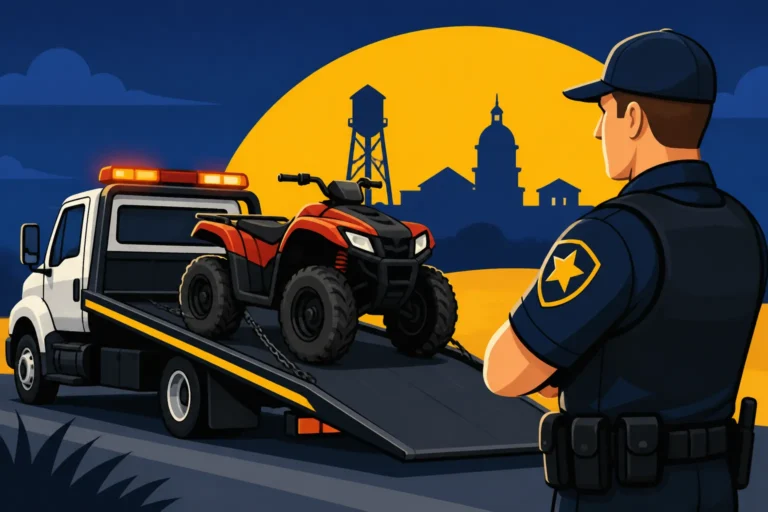
Even more severe than a fine, your ATV or UTV could be impounded if you're found operating it illegally on a city street. This means your machine will be towed away, and you'll be responsible for all towing and storage fees before you can get it back. These costs can quickly add up, often exceeding the cost of the fine itself. An impounded machine is a huge inconvenience and an unexpected drain on your finances.
Perhaps the most critical risk, however, is the increased liability you face if you're involved in an accident while riding illegally. If you're on a city street where you shouldn't be, or if your machine isn't equipped as required, your insurance company might deny coverage. This means you could be personally responsible for all damages, including property damage to other vehicles or infrastructure, and, more significantly, medical costs for anyone injured in the accident, including yourself and any passengers. Imagine totaling your ATV and a car, injuring another driver, and then finding out your insurance won't cover any of it because you were violating the law. This can lead to financial ruin. It's a stark reminder that the laws are there not just to restrict, but to protect.
Staying informed and compliant is always the best course of action. Before you even think about putting tires on city pavement, do your homework, check with local authorities, and ensure your machine and your riding habits meet every single requirement.
Navigating Nebraska's City Streets: A Quick Comparison
To help clarify the differences between state law and potential city ordinance requirements, here's a quick comparison. Remember, specific city ordinances will have their own detailed rules, so always verify with your local municipality.
| Feature | Nebraska State Law (General Rule) | Potential City Ordinance Requirements (When Permitted) |
|---|---|---|
| Road Use | Generally prohibited on public roads and city streets. | May be permitted on specific city streets within defined limits. |
| Registration | No state registration/plate required for ATVs. | Often requires a local city permit/sticker, usually renewed annually with a fee. |
| Driver's License | Class O (standard car) license or farm permit generally required for road use. | Class O license or farm permit almost always required. |
| Liability Insurance | Required for operation on public roads. | Proof of state-minimum liability insurance is universally required. |
| Headlights/Taillights | Required for any road use. | Functional headlights and taillights, often required to be on during daylight. |
| Mirrors | Not generally required by state law for all ATVs. | Typically requires at least one functional rearview mirror (left side common). |
| Safety Flag | Required for certain road exceptions (e.g., farm use). | Often required: 5-foot height, 30 sq. in. orange/red day-glow flag. |
| Speed Limit | N/A (generally prohibited). | Strictly limited, commonly 30 mph, regardless of posted speed for cars. |
| Operation Hours | N/A (generally prohibited). | Mostly restricted to sunrise to sunset, with rare exceptions for snow removal. |
| Crossing Roads | N/A (generally prohibited). | Must stop, yield, cross at 90-degree angle, only at intersections. |
This article is for general informational purposes only and does not constitute professional advice. Laws, prices and regulations vary by location and change over time. Consult a qualified professional for guidance on your specific situation.