Adding Reflective Tape to an ATV for Road Use
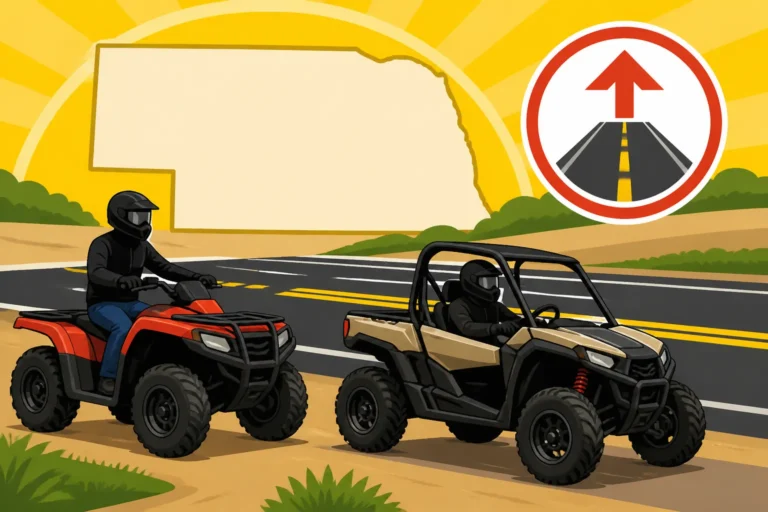
It's a common scenario for many Nebraska ATV and UTV owners: you're wrapping up a long day of work on the farm, checking fences, or heading back from a hunting spot, and suddenly the sun is dipping below the horizon. The visibility drops fast on those wide-open county roads, and the last thing you want is for a motorist to not see you. This guide is all about giving you the practical know-how to significantly boost your machine's visibility, making those trips safer for everyone with the simple, yet effective, addition of reflective tape.
Why Reflective Tape is Crucial for Nebraska Road Use
Driving an ATV or UTV on Nebraska's public roads, even when legally permitted, means accepting a significant responsibility for your own safety and the safety of others. While your machine might be equipped with headlights and taillights, these are often designed for off-road conditions and can be easily missed by other drivers, especially on dusty gravel roads or during twilight hours. Reflective tape isn't just a suggestion; it's a vital layer of protection that can literally mean the difference between being seen and being invisible.
Think about those vast, open stretches of Nebraska roads, where distances can be deceiving and speeds can be high. A motorist coming over a rise might not register your machine's lights as quickly as they should, particularly if your machine blends into the background landscape. Reflective tape works by bouncing light directly back to its source, meaning even a small amount of light from an oncoming vehicle can make your ATV or UTV stand out like a beacon. This active reflection is far more effective than passive colors and provides a continuous, unmistakable presence, whether your lights are on or not. It’s an inexpensive addition that drastically increases your machine’s conspicuity.
The Realities of Low Visibility in Nebraska
Nebraska's weather and terrain often conspire against good visibility. Early morning fog can blanket low-lying areas, dust clouds can be kicked up by passing vehicles on gravel roads, and the glare of a setting sun can make it almost impossible to see what's ahead. These conditions don't just happen occasionally; they're a regular part of life for many who use their ATVs or UTVs for work or recreation around the state.
Imagine you're pulling a small trailer of tools or feed across a county road near Grand Island, and a patch of dust is hanging heavy in the air. Your taillights might cut through it, but reflective tape on the back and sides of your machine, and even on the trailer, provides a much larger, more discernible target for drivers approaching from behind. It's a layer of passive safety that works around the clock, enhancing your visibility even when your engine isn't running or your battery is low. For anyone considering taking their machine onto public roads, especially as outlined in [Nebraska Rules for Riding a County Road], this extra measure is simply non-negotiable for peace of mind.
Legal and Safety Implications of Being Seen
While Nebraska law doesn't explicitly mandate reflective tape for ATVs or UTVs on public roads, it does require certain lighting and safety equipment. For example, [Nebraska Lighting Requirements on a Machine] dictate the necessity of head and tail lights, and [Nebraska's 5-Foot Safety Flag Rule] applies to specific road uses. However, the spirit of these laws is clearly about visibility. If you're involved in an incident and it's determined that your machine was difficult to see, even if you met the minimum requirements, the lack of additional visibility aids like reflective tape could become a point of contention.
Beyond legalities, there's the moral and practical aspect of personal safety. You don't want to rely on the hope that other drivers are always alert and attentive. By adding reflective tape, you're taking proactive steps to make your presence undeniable. It signals to other road users that you're a legitimate, albeit slower-moving, vehicle. This can help prevent drivers from misjudging your speed or position, reducing the risk of a dangerous encounter. It’s all part of being a responsible rider who takes seriously the privilege of using public access.
Choosing the Right Reflective Tape for Your ATV/UTV
Not all reflective tapes are created equal, and when it comes to your ATV or UTV, you need something that can withstand the harsh realities of Nebraska riding – dust, mud, water, sun, and temperature swings. Picking the right type of tape is crucial for longevity and effectiveness. You want a product that not only reflects light well but also stays put through all the abuse your machine can dish out.
There are various grades of reflective tape, generally categorized by their reflectivity and durability. For road use on an ATV or UTV, you'll want something robust. Look for tapes specifically designed for vehicle conspicuity or industrial applications, as these tend to have stronger adhesives and more durable reflective properties than craft or general-purpose tapes. The material construction, typically retro-reflective sheeting, determines how effectively it bounces light back to the source.
Types of Reflective Tape and Their Durability
When you're shopping for reflective tape, you'll likely encounter a few common types, each with different performance characteristics:
- Engineer Grade: This is often the most basic type, offering good reflectivity for up to 5-7 years. It's suitable for general use but might not hold up as well under extreme off-road conditions or constant exposure to mud and pressure washing.
- High-Intensity Prismatic (HIP) Grade: A step up from engineer grade, HIP tape uses prisms for enhanced reflectivity, offering brighter light return and longer durability, often 7-10 years. This is a solid choice for ATVs and UTVs, providing excellent visibility.
- Diamond Grade (DG³): This is the top tier, offering the highest level of reflectivity and durability, often lasting 10+ years. It's extremely bright, even at wide angles, making it ideal for maximum safety on public roads. It's often seen on emergency vehicles and large trucks for a reason.
Beyond the grade, consider the adhesive. For an ATV or UTV, you'll want a strong, permanent, pressure-sensitive adhesive that can bond securely to various surfaces (plastic, metal, painted finishes). Many quality tapes are also weather-resistant and designed to flex with the vehicle's surfaces without cracking or peeling. When looking for tough, reliable tapes that can handle the rigors of off-road life and then transition to road use, exploring options from brands like SuperATV can often lead you to products that prioritize durability and adhesion in challenging environments.
Colors and Placement Considerations
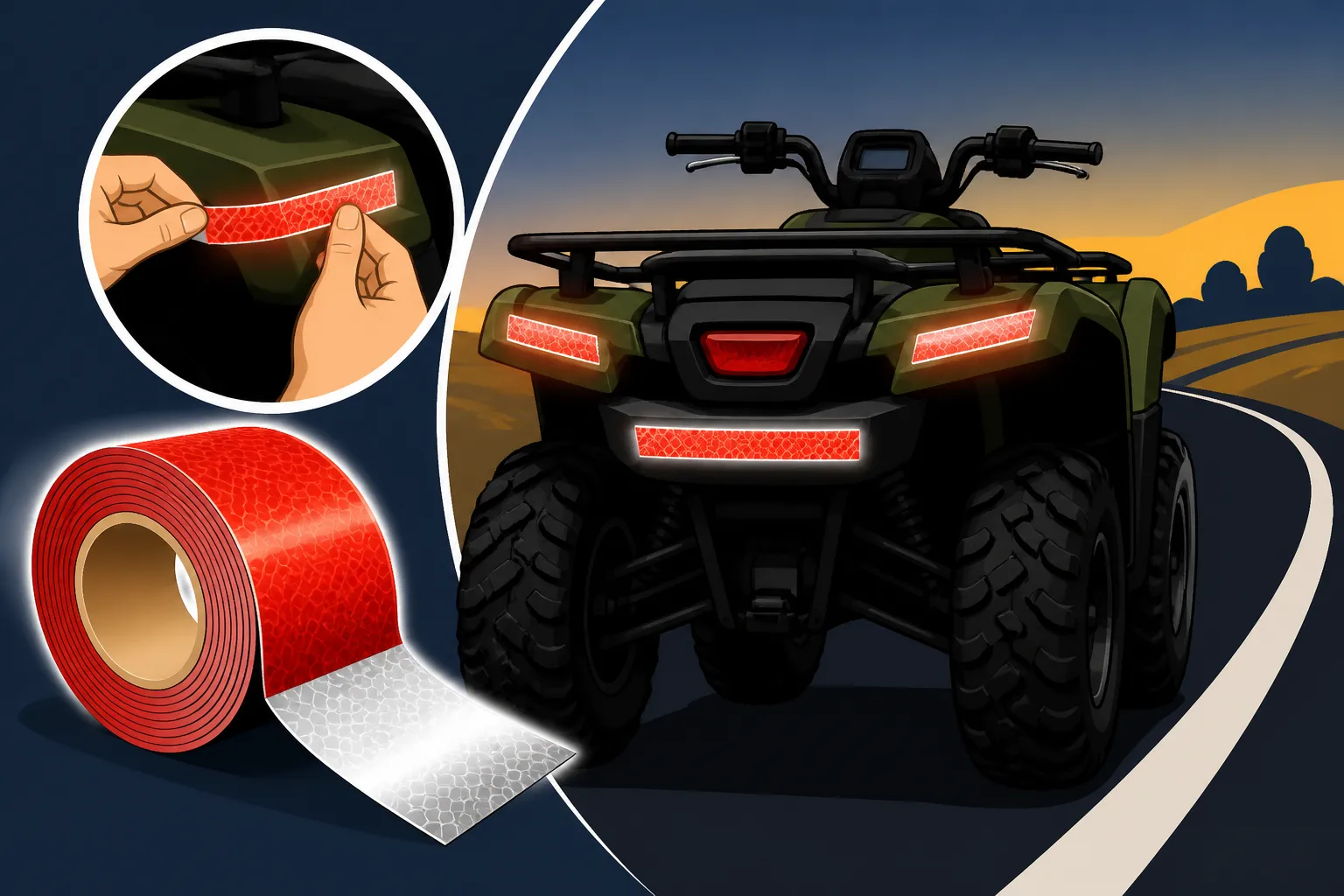
While various colors of reflective tape exist, white and amber (yellow/orange) are generally considered the most effective for visibility, especially for forward-facing and side applications. Red is excellent for rear-facing applications, mimicking taillights. The contrast these colors provide against most vehicle or natural backgrounds is strong, making them easier to spot.
When it comes to placement, think about where light hits your machine from all angles:
- Front: Apply strips to the leading edges of your fenders, the front bumper, and around the headlight bezels. Amber or white works best here.
- Sides: Extend strips along the fenders, the side panels, and any hard boxes or accessories. This is crucial for cross-traffic situations, like at intersections on a county road. Again, amber or white is ideal.
- Rear: This is arguably the most critical area. Use red reflective tape on the back of your fenders, around your taillights, on the tailgate of your UTV, and on any rear-mounted accessories. If you're towing, apply tape to the back of the trailer as well.
The goal is to create a clear, unmistakable outline of your machine. Don't just put one small piece; apply multiple, strategically placed strips to cover a significant surface area without interfering with your machine's function or aesthetics. When you're driving in a line of dust on a long gravel road, you'll want every bit of help you can get to be seen.
Best Practices for Applying Reflective Tape
Applying reflective tape isn't just about slapping it on; proper preparation and technique are key to ensuring it adheres well and lasts for years, not just weeks. A poorly applied strip of tape will peel, crack, and lose its effectiveness, defeating the entire purpose. Taking your time with the application process will save you frustration and money in the long run.
The most common reasons for reflective tape failure are improper surface cleaning and rushing the application. Dirt, grime, wax, or even invisible oils from your hands can prevent the adhesive from forming a strong bond. Furthermore, applying tape in less-than-ideal environmental conditions, like extreme cold or humidity, can also compromise its long-term adhesion.
Preparing Your Machine's Surface
Before you even unroll the tape, you need to thoroughly clean and prepare the surfaces where the tape will be applied. This step is critical for maximum adhesion.
- Wash the Machine: Start by giving your ATV or UTV a complete and thorough wash. Use a good quality automotive soap to remove all dirt, mud, and grime. Pay extra attention to the areas where you plan to apply the tape. Rinse thoroughly and let the machine dry completely.
- Degrease and De-wax: Even after washing, there might be waxes, silicones, or oil residues that prevent proper adhesion. Use an automotive degreaser or isopropyl alcohol (rubbing alcohol) to wipe down the specific areas. Apply the alcohol with a clean microfiber cloth, allow it to flash off (evaporate), and then wipe with another clean, dry cloth. Do this multiple times until the cloth shows no residue.
- Temperature Matters: For best results, apply reflective tape when the ambient temperature is moderate, typically between 60°F and 80°F (15°C and 27°C). The adhesive works best at these temperatures, allowing it to flow and bond properly. Avoid applying in direct sunlight if the surface is too hot to touch.
Here’s a quick checklist for surface preparation:
| Step | Action | Notes |
|---|---|---|
| Clean Thoroughly | Wash with automotive soap, rinse completely. | Focus on target areas. |
| Degrease/De-wax | Use isopropyl alcohol or automotive degreaser. | Multiple wipes until no residue. |
| Dry Completely | Ensure surfaces are bone dry before proceeding. | Trapped moisture will prevent adhesion. |
| Optimal Temperature | Apply between 60°F and 80°F (15°C and 27°C). | Adhesive bonds best in this range. |
| Test Adhesion (Optional) | Use a small scrap of tape on an inconspicuous area to check adhesion. | Ensures surface is truly ready. |
Precise Application and Curing
Once your surface is pristine, the application process requires a steady hand and some patience.
- Measure and Cut: Before removing the backing, measure the lengths of tape you need and cut them to size. For longer runs, consider applying tape in manageable sections rather than one giant strip. Use a sharp utility knife or scissors for clean edges.
- Avoid Stretching: When applying, try not to stretch the tape. Stretching can cause the tape to shrink back over time, leading to lifting edges or bubbles. Apply it gently, letting it lay naturally on the surface.
- Use a Squeegee or Roller: Once the tape is in position, use a plastic squeegee, a rubber roller, or even a credit card wrapped in a soft cloth to firmly press the tape onto the surface. Start from the center of the strip and work your way outwards, pushing out any air bubbles and ensuring full contact of the adhesive. Overlapping strokes are good.
- Edge Sealing (Optional but Recommended): For maximum durability, especially in areas prone to mud and water, you can use an edge sealer liquid specifically designed for reflective tapes. This creates a barrier against moisture and dirt trying to get under the edges, preventing premature peeling.
- Curing Time: After application, the adhesive needs time to fully cure or bond with the surface. This can take anywhere from 24 to 72 hours, depending on the tape and environmental conditions. During this time, avoid washing the machine, exposing it to extreme temperatures, or putting excessive stress on the taped areas. Let it sit in a garage or sheltered area if possible. This patience will pay off, ensuring the tape stays securely attached even after countless trips through the Nebraska landscape.
Remember that taking your time with each step, from cleaning to pressing, ensures that your investment in reflective tape truly enhances your machine's visibility and longevity.
Beyond Tape: Other Ways to Boost Visibility
While reflective tape is an excellent and cost-effective way to boost your ATV or UTV's visibility on Nebraska roads, it's just one tool in your safety arsenal. To truly maximize your presence and reduce the risk of accidents, especially when riding on county roads or crossing highways, a multi-faceted approach is always best. Combining reflective tape with other safety measures creates a more robust and unmistakable profile for your machine.
Riding legally on public roads in Nebraska requires adherence to several guidelines, including specific lighting, signaling, and safety equipment. The more visible you are, the safer you and others will be. For example, [Being Seen After Dark on a County Road] is a significant concern for many riders, and lights alone might not always cut it.
Auxiliary Lighting and Safety Flags
Adding extra lighting to your ATV or UTV can significantly improve your visibility, especially during low-light conditions or nighttime rides.
- LED Light Bars: These provide a much broader and brighter beam of light than standard headlights. While primarily for off-road visibility for you, a well-placed, low-power LED bar can make your machine more noticeable to oncoming traffic (just be mindful not to blind others). Many riders also add smaller, amber or red LED auxiliary lights to the sides or rear, specifically for conspicuity. Quality options from companies like SuperATV are popular choices for their robust construction and bright output, designed to endure the rough conditions an ATV or UTV might encounter.
- Whip Lights: Especially popular in sand dune areas, LED whip lights extend high above your machine, making it visible over crests and from a greater distance. While not explicitly required for general road use, they provide an unmistakable presence, particularly in areas with varied terrain or low sightlines.
- Safety Flags: Nebraska law specifically addresses safety flags for certain types of road use. [Nebraska's 5-Foot Safety Flag Rule] is crucial to understand. A bright, day-glow orange or red triangular flag mounted on a 5-foot or taller pole makes your machine much more visible, especially behind hills or in tall crops, alerting other drivers to your presence. The flag should be easily seen and not obscured by cargo or passengers. This simple addition is a critical safety component that works in conjunction with your lights and reflective tape.
Personal Protective Equipment and Road Rules
Your personal attire also plays a vital role in your visibility. Wearing brightly colored or reflective gear can make you stand out, even when you're off the machine or if a part of your machine is obscured.
- High-Visibility Clothing: Jackets, vests, and helmets in neon colors (fluorescent yellow, green, orange) significantly increase your daytime visibility. For nighttime riding, look for gear with integrated reflective materials that will catch headlights. Many riders opt for construction-grade safety vests over their riding gear for an extra layer of conspicuity.
- Helmet with Reflective Decals: Your helmet is often the highest point of your body, making it an ideal place for reflective decals. Even small strips can make a big difference, especially for drivers approaching from the rear or side.
- Understanding Road Rules: No amount of reflective tape or bright lights can compensate for ignoring the rules of the road. Ensure you are fully aware of Nebraska's specific statutes regarding ATV and UTV use on public roads. This includes speed limits, crossing procedures, and specific times of day for riding. For instance, [Nebraska Rules for Crossing a Highway] lays out crucial guidelines. Always assume other drivers may not see you, even with all your safety measures in place, and ride defensively. Carrying relevant documentation, as described in [What Paperwork a Deputy Can Ask to See], is also a smart habit.
By combining well-applied reflective tape with auxiliary lighting, a visible safety flag, bright personal protective equipment, and a thorough understanding of local road laws, you create a comprehensive safety strategy. This integrated approach ensures that you're doing everything possible to be seen and stay safe while enjoying the utility and freedom your ATV or UTV offers on Nebraska's roads.
Disclaimer
This article is for general informational purposes only and does not constitute professional advice. Laws, prices and regulations vary by location and change over time. Consult a qualified professional for guidance on your specific situation.