Sharing a Gravel Road With Grain Trucks at Harvest
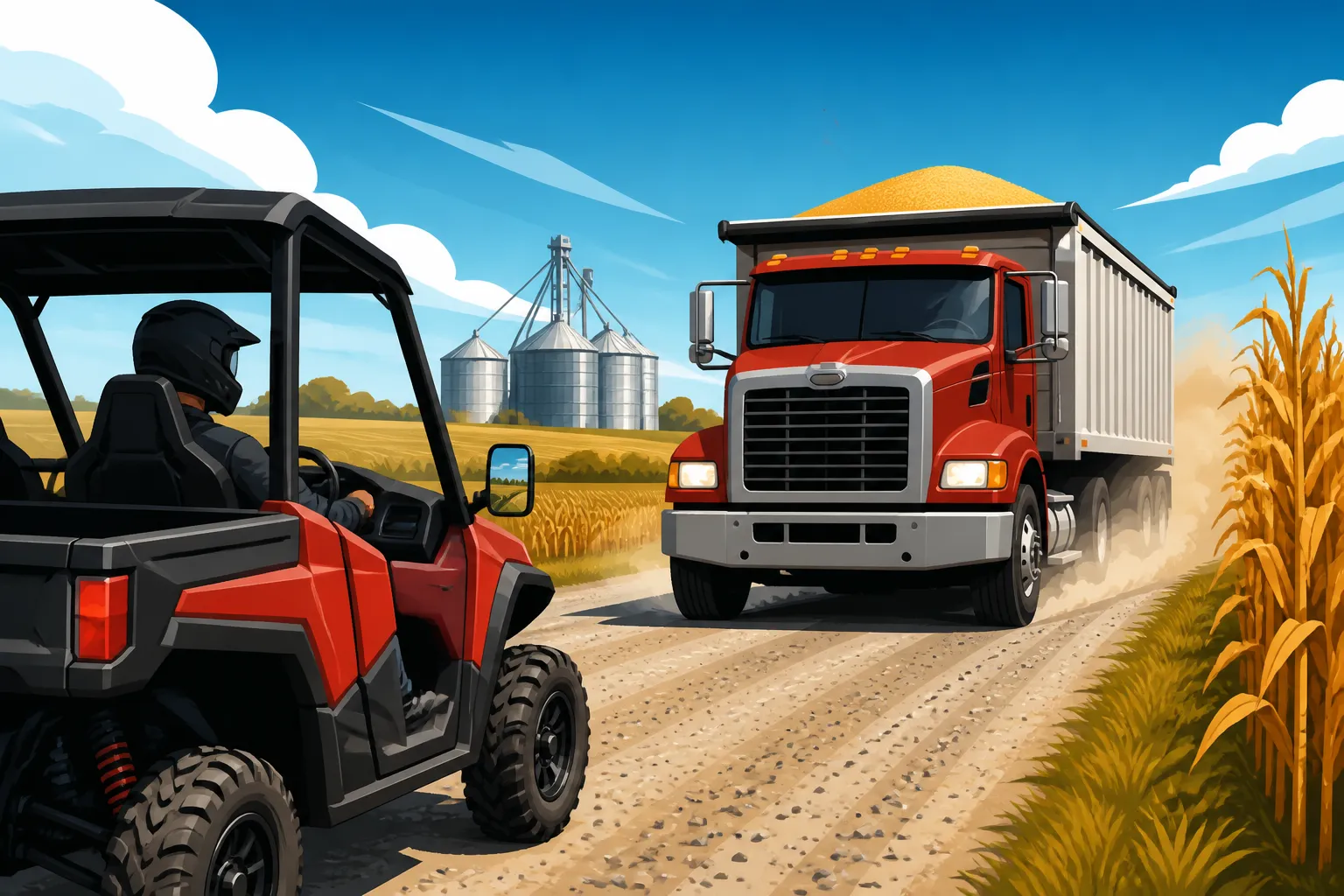
There's a specific kind of white-knuckle moment that any Nebraska ATV or UTV rider knows well, especially if you spend time on our beautiful, often dusty, gravel roads during late summer and fall. Suddenly, you're cresting a hill, and there it is: a colossal grain truck, loaded to the brim, barreling down the road in the opposite direction. Or worse, you’re behind one, disappearing into a cloud of talcum-fine dust. These encounters can be jarring, dangerous, and downright terrifying if you're not prepared. This guide is all about giving you the tools, knowledge, and strategies to confidently and safely share those vital rural arteries with the giants of the harvest season, ensuring your ride stays fun and collision-free.
The Unseen Dangers of Nebraska's Harvest Roads for ATV & UTV Riders
Riding an ATV or UTV on a gravel road in Nebraska during harvest season isn't just a leisurely cruise; it's an exercise in situational awareness. Our rural roads become highways for commerce, bustling with massive agricultural equipment, and the contrast in size, speed, and maneuverability between your machine and a loaded grain truck couldn't be starker. It’s easy to feel invisible, and that feeling isn't entirely unfounded.
The Sheer Scale of Agricultural Traffic
Think about the physics for a moment. A typical ATV or UTV might weigh a few hundred pounds, maybe a thousand. A fully loaded grain truck can easily weigh tens of thousands of pounds. This enormous difference in mass means a grain truck has significant momentum, takes much longer to stop, and often requires wide turns that might not seem obvious from your perspective. Drivers of these trucks are usually focused on their destination, their load, and the clock, often pushing their vehicles to their limits on roads that are far from perfect. They might be driving a familiar route for the tenth time that day, and while they're professionals, their perception of smaller vehicles can sometimes be skewed, or you might simply be in a blind spot they haven't checked recently. Understanding [Nebraska Rules for Riding a County Road] involves recognizing these inherent challenges.
Dust Clouds, Blind Spots, and Road Degradation
One of the biggest culprits in rural road accidents during harvest is dust. A single grain truck can kick up a plume so thick it creates an instant, impenetrable fog, reducing visibility to zero for anyone behind or approaching. Imagine riding along, enjoying the scenery, only to suddenly be enveloped in a dust cloud that lasts for what feels like an eternity. This isn't just annoying; it's incredibly dangerous. You can disappear from view, and so can the truck. Furthermore, the sheer volume and weight of these trucks take a toll on gravel roads. You'll find washboards, deep ruts, unexpected soft spots, and sharp-edged rocks that can all be hazards to smaller, lighter ATVs and UTVs. What was a smooth stretch yesterday could be a minefield today, demanding constant attention and adjustments to your riding.
The Vulnerability of Smaller Machines
As an ATV or UTV rider, you are inherently more vulnerable. You lack the protective cage of a car or the sheer mass of a truck. A collision with a grain truck, even at low speeds, can have catastrophic consequences. This isn't meant to scare you, but to instill a healthy respect for the conditions and the need for proactive, defensive riding. Your machine, while capable, is small in comparison, and your reactions need to be sharp. Being aware of [Nebraska Rules for a Child Passenger] or [Nebraska Rules for Passengers on a Quad] also plays into this, as extra passengers can sometimes distract from the critical task of maintaining situational awareness.
Proactive Riding Strategies to Avoid Collisions with Grain Trucks
Since the onus of safety largely falls on the smaller, more nimble vehicle, it's crucial to adopt a proactive mindset when riding Nebraska's gravel roads during harvest. You can't control the truck, but you can control your actions and your visibility.
Making Yourself Unmistakably Visible
Visibility is your absolute best defense. Assume you are invisible until proven otherwise. This means running your headlights and taillights even in broad daylight. Nebraska law requires [Nebraska Requires Head and Tail Lights] for road use, and there’s a good reason for it. Consider auxiliary LED lighting, especially on the front and rear, to punch through dust and catch a driver's eye. Bright, high-visibility clothing – think neon orange, yellow, or green – is a must. Don't rely on drab colors that blend into the landscape.
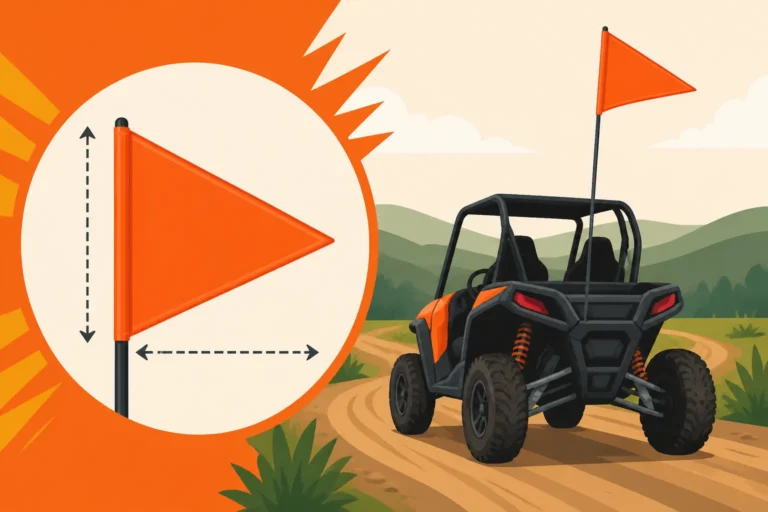
Another non-negotiable item is a safety flag. Nebraska's specific rules for road use include [Nebraska's 5-Foot Safety Flag Rule], which means a bright, triangular flag mounted high on your machine. This flag can be seen over hills, around curves, and above dust clouds where your machine itself is obscured. For added visibility, especially if you ride a UTV with a cab, consider adding reflective tape to the flag pole, the back of your machine, or even your helmet. [Adding Reflective Tape to an ATV for Road Use] can make a huge difference, particularly in dusty conditions or at dusk.
Mastering Defensive Maneuvers and Yielding Rules
Defensive riding is about anticipating hazards and giving yourself options. When you see a dust cloud ahead, slow down immediately. Prepare to pull over or stop completely if visibility drops too low. If you're approaching a crest or a blind curve, assume there's a truck coming the other way and hug your side of the road, reducing your speed significantly.
Always be prepared to yield. Grain trucks are heavy, long, and can't stop or swerve easily. If you encounter a truck, especially on a narrow section of road, it's usually best practice to slow down, move as far to the right as safely possible, and even stop if necessary to let the truck pass. Don't try to "beat" them or assume they see you. When crossing a highway from a gravel road, remember [Nebraska Crossing Rules at Ninety Degrees], which involves a full stop and yielding to all traffic.
Effective Communication and Anticipation
While you can't talk to a truck driver over the roar of their engine, your actions communicate. A deliberate, controlled slowdown and clear movement to the side of the road sends a strong signal that you're aware and yielding. Avoid sudden, erratic movements that might confuse a driver.
Anticipation comes from understanding the harvest cycle. If it's prime harvest time, expect heavy truck traffic on all rural roads, especially those leading to grain elevators or processing plants. Plan your routes to potentially avoid the busiest stretches during peak hours, often mid-morning to late afternoon. Look for signs of recent truck traffic—fresh tire tracks, spilled grain, heavy dust in the air—as indicators of increased activity. Knowing [Nebraska Rules for Riding After Dark] is also critical, as many harvest operations run well into the night.
Essential Gear and Vehicle Modifications for Enhanced Safety
While riding smart is paramount, equipping your ATV or UTV with the right gear can significantly boost your safety margins when sharing roads with massive machinery. Think of it as investing in your peace of mind and, more importantly, your well-being.
Upgrading Lighting and Signaling Systems
The stock lighting on many ATVs and UTVs is designed for off-road use, not necessarily for piercing through dense dust clouds or making you stand out against the backdrop of a vast Nebraska field. Consider upgrading to brighter LED headlights and taillights. You might also add auxiliary fog lights or light bars that are specifically designed to enhance visibility in challenging conditions. Brands like SuperATV offer a wide array of aftermarket lighting solutions, from LED light bars to cube lights, that can make your presence known from a much greater distance. These aren't just for seeing the path ahead; they're vital for being seen.
Beyond basic lights, functional turn signals are incredibly useful. While not universally required for all ATV road use in Nebraska, having clear, bright turn signals can communicate your intentions to other drivers, whether you're pulling over or making a rare turn onto another road. And don't forget mirrors! Wide-angle mirrors, especially on a UTV, can help you keep tabs on what's happening behind you without constantly twisting around, crucial when a grain truck might be approaching rapidly.
Protecting Your Machine and Yourself from the Elements
Dust isn't just a visibility issue; it's an enemy of your machine's engine and your lungs. For UTV riders, a good quality windshield and even a full cab enclosure can make a massive difference, keeping dust and debris out of your eyes and the cabin. SuperATV, for instance, offers various windshield options, from full to half, and even flip-up designs, allowing you to adapt to conditions. For both ATVs and UTVs, upgrading your air filter to a heavy-duty, pre-filter equipped system can protect your engine from ingesting fine dust particles, extending its life and preventing costly repairs down the line.
For yourself, beyond bright clothing, consider a full-face helmet with a good visor or goggles to protect your eyes from dust and flung gravel. A bandana or neck gaiter can also help filter the air you breathe, making a long dusty ride more comfortable and safer for your lungs.
Pre-Ride Inspections and Emergency Preparedness
Before every ride, especially one involving gravel roads during harvest, perform a quick but thorough pre-ride inspection. Check your tires for proper inflation and any damage, ensure your brakes are functioning perfectly, and verify all your lights (headlights, taillights, brake lights, and any auxiliary lights) are operational. Check your safety flag to ensure it's securely mounted and not frayed.
Carrying emergency gear is also a smart move. A basic tool kit for minor repairs, a tire repair kit and air pump, a first-aid kit, and a fully charged cell phone (though cell service can be spotty in some rural Nebraska areas) are all essential. Consider a small, high-powered air horn to get attention in an emergency. Being prepared for a flat tire or a minor breakdown can prevent a bad situation from becoming much worse when traffic is heavy. For more detailed checks, consider [Nebraska Equipment Checks by Deputies] to know what might be expected if you encounter law enforcement.
Navigating the Legal Landscape and Local Etiquette on Nebraska's Rural Roads
Understanding the rules of the road, both written and unwritten, is vital for safe riding in Nebraska's agricultural heartland. It's not just about avoiding a ticket; it's about being a responsible, considerate member of the rural community.
Understanding Nebraska's ATV/UTV Road Use Regulations
Nebraska's laws regarding ATV and UTV use on public roads can be a bit nuanced. Generally, ATVs are not "street legal" in the same way cars are, meaning they can't be registered for general road use. However, there are significant exceptions, particularly for agricultural purposes and in certain jurisdictions. [Nebraska ATV Road Rules Under 60-6,356] outlines many of these provisions. For instance, ATVs and UTVs can often be operated on county roads for agricultural work, moving between fields, or accessing farm operations. Some cities and counties also have ordinances that permit limited road use within their boundaries. Always check local ordinances for the specific areas you plan to ride. Remember that even when legally on a road, you'll still need appropriate lighting, a safety flag, and often, liability insurance. [Nebraska Requires Liability Insurance on Roads] is a critical requirement for any road-legal machine. It's also worth knowing [Sunrise to Sunset Only] is generally the rule for non-agricultural road use, with some specific exceptions like snow removal.
The Unwritten Rules of the Gravel Road
Beyond the statutes, there's a strong sense of informal etiquette on Nebraska's rural roads. Farmers and truck drivers are often rushing, but they also appreciate riders who are visible and courteous. If you see a truck approaching, a slight wave or nod to acknowledge their presence can go a long way. When pulling over to let a truck pass, do so safely and clearly. Don't pull into soft shoulders where you might get stuck, and avoid sudden movements that could be misinterpreted.
When passing parked farm equipment or a slower-moving tractor, give them a wide berth. These machines are often wider than they appear, and their drivers may be less aware of traffic behind them, especially if they're focused on field operations. Patience is a virtue. If you're behind a grain truck, maintain a safe following distance—far enough back to avoid the worst of the dust and have time to react if they brake suddenly. Never try to pass on a blind hill or curve.
Reporting Incidents and Protecting Yourself After a Close Call
Even with the best precautions, close calls can happen. If you have an incident or a near-miss with a grain truck, it's important to document what you can. Note the time, location, direction of travel, and any distinguishing features of the truck (color, company name, license plate if possible). This information can be valuable if you need to report the incident to local authorities. For more serious incidents, [Nebraska Accident Reporting for an ATV Crash] details the process.
If you are involved in a collision, prioritize safety first. Move yourself and your machine to a safe location if possible, and check for injuries. Call emergency services immediately. Remain calm and cooperate with law enforcement. Having your [Carrying Your Title Copy on a Ranch Road] or other proof of ownership readily available can also expedite the process with deputies. Protecting yourself means not only riding safely but also knowing what steps to take if something goes wrong.
Here's a quick comparison of key visibility enhancements for riding on dusty rural roads:
| Visibility Enhancement | Description | Benefits | Considerations |
|---|---|---|---|
| Head/Taillights | Bright, functioning lights, often LED upgrades. | Required by law, makes you seen from front and rear, especially in low light/dust. | Check aiming, ensure they're always on. |
| Safety Flag | 5-foot pole with a day-glow triangular flag. | Visible over hills, around curves, and above dust clouds where your machine is hidden. | Ensure secure mounting, check for fraying, replace as needed. |
| Reflective Tape | Applied to flag pole, helmet, or rear of machine. | Enhances visibility in low light or when headlights hit it. | Needs to be clean to reflect effectively. |
| High-Vis Clothing | Neon colors (orange, yellow, green) for jacket, helmet, vest. | Makes your body stand out against natural backgrounds. | Keep clean, as dirt reduces effectiveness. |
| Auxiliary Lights | LED light bars, cube lights, fog lights (e.g., from SuperATV). | Extra brightness to cut through dust and catch attention. | Ensure legal for road use in your area, avoid blinding others. |
Disclaimer
This article is for general informational purposes only and does not constitute professional advice. Laws, prices and regulations vary by location and change over time. Consult a qualified professional for guidance on your specific situation.