Nebraska Trail Fees Worth Checking
Nebraska riders can plan a trail day, load the machines, and still get surprised by a parking charge, a required vehicle permit, or a fee that applies only at one trailhead. This guide explains the kinds of costs to check before you tow, where they may apply, and how to confirm what a specific riding area requires before you arrive.
How Nebraska trail fees work
A state sticker is not the same as a trailhead fee
Nebraska does not have a general statewide OHV permit or sticker that every ATV and UTV must display just to ride off-road. That does not mean every place is free to use. A riding area may charge for parking, camping, access, or use of privately managed facilities, and each charge has its own rules. [Nebraska Has No OHV Permit or Sticker]
A fee can also be connected to a vehicle other than the ATV or UTV. For example, a forest recreation area may collect a parking fee from the truck or trailer bringing the machines. That is different from buying a registration decal for each ATV. Before you pay, check what the fee covers, which vehicle it applies to, and whether it is required for the activity you plan to do.
It is easy to mix trail costs up with Nebraska park permits. A state park entry permit is a separate requirement associated with permitted park use, while Nebraska state parks are generally closed to ATVs. Do not assume a state park permit gives you permission to ride a machine there, or that having no ATV sticker means every public recreation area is free. The access rule and the fee rule both matter.
Fees are set by the place managing the riding area
There is no single Nebraska trail-fee schedule that covers every place where riders can go. The person or agency managing the property sets the applicable access conditions. A national forest recreation site, a local trail area, a private riding park, and a campground can each have different payment arrangements—even if all are part of the same weekend itinerary.
For riders, this means checking the precise destination rather than searching only for “Nebraska ATV fees.” A general answer may describe state-level rules but miss a fee at a particular parking lot, a private park’s admission charge, or a campground reservation cost. If you are traveling to the Bessey area near Halsey, for instance, make sure the information you find refers to the trailhead and parking arrangement you intend to use. [Which Bessey District Trailheads Charge You to Park]
Ask what the fee is for before treating it as an ATV riding charge. A parking payment may support use of a recreation complex or its facilities, but it does not necessarily cover camping, access to a different trailhead, or entry to a separate private facility. [What the Bessey Parking Fee Covers]
Fees to check before towing to a Nebraska riding area
Start with the trailhead, not just the trail name
A trail system may have more than one place to stage, and the fee can depend on where you park. Check the exact access point you plan to use, including its parking area and the road leading to it. A result for the overall riding area may not spell out whether one lot charges, whether another lot has a different arrangement, or whether parking is available at all for a trailer.
For Bessey OHV trails at Halsey, identify the particular trailhead you expect to use and confirm its parking instructions before leaving home. Some riders make the understandable mistake of reading about a general annual pass or a daily fee and assuming it applies identically across every access point. The safer approach is to check the trailhead-specific details, then confirm whether the pass is accepted there. [Two Trailheads With No Fee]
If you are using a mapping app such as onX Offroad to plan a route, treat the map as a navigation aid—not proof that an access point is open, free, or suitable for your trailer. Confirm fee and access details with the land manager or facility. A pin on a map can help you find the right place, but current signs and official instructions determine what you can do when you arrive.
Separate parking, riding, camping, and vehicle-entry costs
Before the trip, make a short list of possible charges by category. That helps avoid paying for the wrong thing or arriving without a required payment method.
| Possible charge | What it may apply to | What to confirm |
|---|---|---|
| Trailhead parking | The truck, trailer, or vehicle parked at a designated lot | Which lot charges, how payment works, and whether a pass is accepted |
| Riding-area access | Use of a particular managed or private riding facility | Whether the fee is per rider, machine, group, or visit |
| Camping | A campsite, campground, or overnight stay | Reservation rules, extra vehicle charges, and whether trail access is included |
| State park entry | Entry by a vehicle to a state park where permitted | Whether the permit applies to the vehicle and whether the planned activity is allowed |
| Private-park admission | Access to a privately operated riding area | Waivers, rider requirements, operating rules, and payment arrangements |
Do not assume that paying to park includes riding, or that paying for a campsite includes every trail or facility nearby. Likewise, a trail fee does not automatically pay for a night’s camping. If you will ride, camp, and park in different places, ask each manager what the payment covers.
This is particularly useful for a family trip. One adult may be thinking about the machines, another about the campsite, and a teenager may be looking up trail directions. A quick check of each category helps make the total trip cost less surprising—and can catch a more important issue, such as a facility rule that excludes a machine type or limits access to certain hours.
Planning around Bessey, Cedar Run, and other areas
Bessey OHV trails and parking arrangements
Bessey’s trail network near Halsey is a popular destination to research when planning an off-highway trip in Nebraska. The important budgeting question is not simply whether Bessey has “a fee.” Find out which parking area you will use, what the payment covers, and whether a daily or annual option fits your plans. A pass that makes sense for repeated visits may be unnecessary for a one-day ride. [When an Annual Parking Pass Beats Paying Daily]
Check the details before loading. If you are taking a truck and a long trailer, verify that the chosen staging area can accommodate your setup and that the payment instructions are clear. Do not count on being able to change plans easily after arriving with a full trailer, especially if you have limited daylight or are meeting other riders. A short call or official-area check before departure can save a frustrating detour.
Also look for camping information separately. Some riders assume that an overnight stay at or near a recreation area changes the parking fee, but that depends on the site’s rules. Check whether campers have a different arrangement and whether it applies to your specific campground and vehicle. [Campers Who Pay No Trail Fee]
Cedar Run and other places may have different cost structures
Cedar Run ATV Trail near Republican City is another destination riders may compare with Bessey. Do not assume the same parking or access rules apply at both places. They are separate riding areas with different management arrangements, so check the facility-specific information for the exact trailhead, parking, facilities, and any seasonal conditions before you make a long drive.
It is also worth separating a riding area’s access costs from the broader cost of a weekend nearby. If you plan to stay at a campground, eat in town, or use a boat launch or other recreation facility, those charges may be administered separately. A trail map can help organize the route, but an app such as onX Offroad cannot replace confirming the local fee and access rules with the relevant manager.
Smaller or privately managed areas can have their own admission, waiver, vehicle, age, or machine requirements. Check whether the fee is charged per person, per machine, or per group, and whether the facility expects advance arrangements. [Nebraska Private Park Waivers and Rules] For details about trail surfaces, access, and conditions that can affect your plans, see [Nebraska Trail Conditions Before You Tow].
A practical fee-checking routine
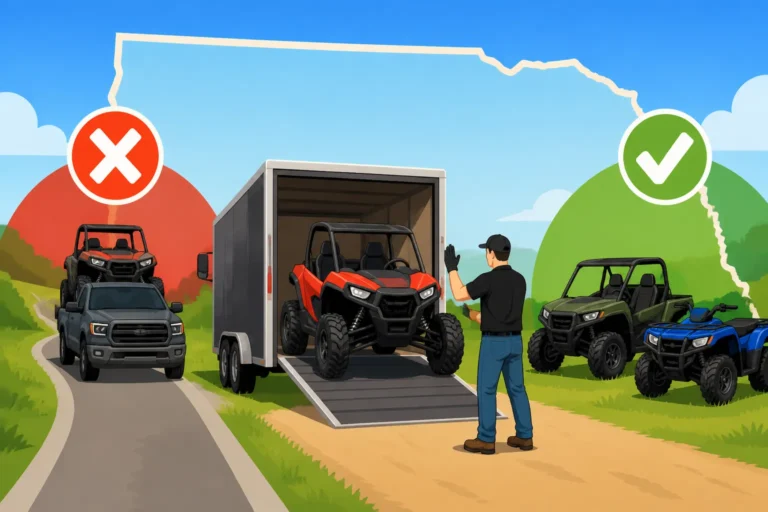
Confirm details before loading the trailer
A little preparation can spare you the classic trail-day headache: arriving at the lot with everyone ready to ride, then discovering you brought the wrong payment method or parked at an access point with different rules. Before departure, confirm the specific destination and trailhead, then ask about fees, parking, and access in the same conversation.
Use this checklist:
- Name the exact riding area and access point. “Bessey” or “near the lake” may not be specific enough if the area has multiple trailheads or facilities.
- Ask what the fee covers. Clarify whether it is for parking, riding access, camping, or another use.
- Check which vehicle or people are covered. A parking fee may relate to the tow vehicle, while a riding-area charge may have a different basis.
- Confirm the payment method and location. Find out whether payment is made at a kiosk, online, at an office, or through another process.
- Ask whether passes are accepted at your chosen lot. Do not assume a pass for one location applies everywhere.
- Verify current access conditions. Weather, maintenance, seasonal closures, or local notices can affect whether the planned route is usable.
- Save the details. Keep the facility’s instructions handy in case you need to refer to them on the road.
If a detail is unclear, ask the managing office directly rather than relying on an old forum post or a secondhand social media comment. Fees and procedures can change, and a post may describe a different trailhead or a past visit. If you are traveling from Omaha or Lincoln, resolving that question before the drive is far easier than trying to troubleshoot it at the trail entrance.
Build a realistic trip budget
A useful riding budget includes more than the visible trail fee. Think about the full outing: parking, any riding-area admission, camping, fuel, food, and the cost of hauling the machine. If you are taking several machines or multiple vehicles, find out whether each one changes the fee. That is particularly important for group rides, where one person’s assumption about the cost can quickly become everyone’s problem.
For a one-day ride, compare the total cost of the access option you actually plan to use. For repeated trips, check whether an annual option is accepted at your preferred locations and whether it applies to your typical use. An annual pass is not automatically the better deal just because you ride often; it only helps if it covers the places and visits you expect to make.
Leave room in the budget for an unexpected change of plan. If a lot is full, a route is closed, or your group decides to camp, you may need another staging location or facility. Checking [Nebraska Trailheads With Trailer Parking] and reading [Nebraska Trail Etiquette Locals Expect] can help you plan responsibly for the practical side of staging, especially when you are riding with a group.
Common fee mistakes and how to avoid them
Assuming public land always means free access
Public ownership does not guarantee that every service or parking area is free. A public recreation site may have a fee for parking or facilities, while another access point nearby may have a different arrangement. The reverse mistake is just as common: seeing one fee mentioned online and assuming it applies to the whole trail system or every visit.
Keep the distinction clear: permission to ride, permission to park, and permission to camp are separate questions. A fee payment may address one of them without granting the others. Always read posted signs when you arrive, and follow the instructions for the exact lot or facility you are using.
A second source of confusion is seeing a trail mapped and assuming it is open to motorized use. Maps are useful for planning, but access can depend on land ownership, designated routes, seasonal restrictions, and local rules. Use a mapping tool like onX Offroad to orient yourself, then verify that the route is open and appropriate with the land manager before riding it.
Treating old fee information as a guarantee
An online post can be helpful for finding a lead, but it may not reflect the instructions at the site today. It may refer to a previous season, a different parking area, or a fee that applied to camping rather than trail access. If a page says “free,” check whether that means free riding, free parking, or simply no charge for a specific activity.
It is also easy to make a plan based on a pass without checking how it is used. Confirm where it must be displayed or presented and whether it applies to the vehicle you are bringing. Keep receipts or confirmation details available, and follow posted directions once you arrive. If payment is required at a self-service station, do not assume that a lack of staff means the area is fee-free.
Finally, leave the site as you found it. Use designated parking, keep trailers from blocking access, pack out trash, and respect other visitors. A low-cost or no-cost day still depends on responsible use of the area. If you are unsure about a fee, a pass, or a trailhead, pause and confirm before unloading. That small check can turn a confusing arrival into a smooth start to the ride.
Disclaimer
This article is for general informational purposes only and does not constitute professional advice. Laws, prices and regulations vary by location and change over time. Consult a qualified professional for guidance on your specific situation.