How to Unload and Stage Without Blocking Anyone
Arriving at a Nebraska trailhead with a trailer full of machines can get awkward fast when the lot is busy, the turnaround is tight, or another rider is waiting behind you. A little planning helps you unload safely, keep access lanes open, and get your group ready to ride without turning the parking area into an obstacle course.
Plan Your Trailhead Arrival Before You Leave
Check access, parking, and conditions
Before hitching up, look into where you can park and whether the riding area is open to your type of machine. Trailhead layouts differ: one may have room to pull through, while another may have a small lot where backing and unloading take more care. Check current information from the land manager or riding area, and follow posted signs when you arrive. A map or app can help you plan, but it does not replace local rules or on-site directions.
If you’re headed toward Halsey, review Nebraska Trailheads With Trailer Parking and Hauling a Machine to the National Forest at Halsey. For other destinations, Nebraska Trail Conditions Before You Tow can help you think through conditions before committing to a long drive. The goal is to avoid discovering at the entrance that the lot is full, muddy, closed, or unsuitable for your trailer.
onX Offroad can be useful for looking over a route and identifying nearby roads or mapped access points before you leave. Treat map details as a planning aid, not a promise that a particular spot is open or large enough for your rig. Confirm access with the official land manager, especially if recent weather or seasonal closures could affect your plans.
Choose a parking and unloading setup
Think about the whole sequence, not just where the truck will fit. You need room to park, lower ramps, unload machines, move them away from the trailer, and secure the ramp again. If your group has several vehicles, decide in advance who will park where and who will guide the trailer into position.
A simple arrival plan can prevent a lot of last-minute shuffling:
| Before you pull in | What to consider |
|---|---|
| Trailer length and turning room | Can you enter and exit without blocking the lot or road? |
| Unloading space | Is there room to lower ramps and roll machines off safely? |
| Other users | Could your setup obstruct cars, horse trailers, emergency access, or trail traffic? |
| Group size | Can everyone stage without spreading into another parking space? |
| Exit plan | Can you leave without needing several riders to move machines first? |
If you’re unfamiliar with the area, use onX Offroad or another mapping tool to check your approach, then verify that the location is a designated place to park. A shoulder that looks convenient on a screen may be private property, soft ground, or an unsafe place to unload.
Unload Without Creating a Bottleneck
Position the truck and trailer first
When you reach the lot, pause and look around before committing to a parking position. Watch for marked spaces, one-way traffic patterns, posted restrictions, and vehicles already maneuvering. If there is a designated unloading area, use it as directed. Otherwise, choose a position that leaves the entrance, exit, access lane, and neighboring spaces usable.
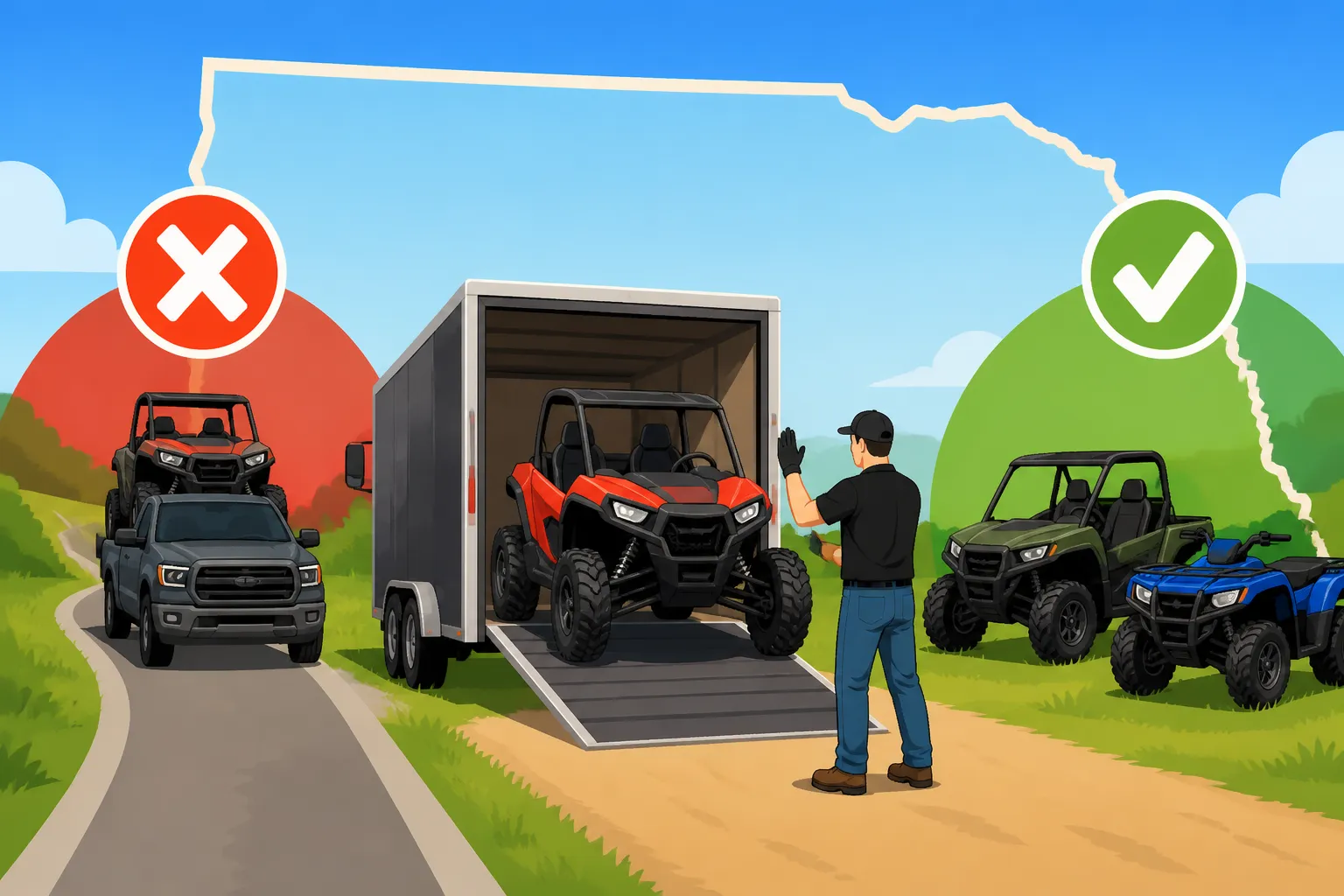
Avoid stopping across the lot while the group debates where to park. If the area is busy, have one person step out safely and help guide the driver, rather than having several people gather behind the trailer. Use a spotter where visibility is limited, and agree on simple hand signals before backing. Keep the spotter in the driver’s view and out of the trailer’s path.
Do not assume that a wide-looking patch of ground is available for parking. It may be a fire lane, a route for maintenance or emergency vehicles, a turnaround, or an area that must remain clear. If you cannot tell where parking is allowed, ask the responsible staff member or choose a clearly marked legal space rather than improvising.
Unload in a deliberate order
Once parked, set the vehicle securely and check that the ramp is stable before anyone rides or walks a machine down it. Keep bystanders away from the ramp area, and have one person manage the unload while others wait in a safe spot. Follow the machine and trailer manufacturers’ instructions, and avoid unloading on a slope or loose surface if the trailer could shift.
A steady sequence works better than everyone moving at once:
- Park fully and make sure the vehicle and trailer are secure.
- Check the area behind and beside the ramp for people, traffic, and obstacles.
- Lower and secure the ramp according to its design.
- Unload one machine at a time, with a clear path away from the trailer.
- Move each machine to a designated staging spot, not into a travel lane.
- Close or secure the ramp and put away straps, tools, and loose gear.
- Recheck that the truck and trailer are within the permitted parking area.
Keep the engine off unless it is needed for the manufacturer-approved unloading procedure. A running machine can startle someone walking nearby, obscure instructions, and add unnecessary noise to a shared trailhead. If a machine will not start or a strap is tangled, step out of the traffic flow and sort it out without leaving equipment spread across the lot.
Stage Your Group and Gear Considerately
Keep machines, people, and supplies contained
Staging means getting ready to ride without taking over the entire parking area. Keep machines close to your vehicle or in an area clearly intended for staging. Keep helmets, coolers, fuel containers, tools, and riding gear together rather than scattering them across nearby spaces. Leave room for someone to open a car door or maneuver a trailer next to you.
If another group arrives while you’re gearing up, make space as soon as it is safe. That may mean moving machines closer together, putting gear back into the truck, or asking one rider to guide a vehicle into a space. A trailer that is technically parked but blocks the only practical turning path can still create a problem for everyone else.
For a larger group, choose a meeting point that does not occupy the unloading area. Where to Stage a Big Group at Bessey is a useful topic to review when organizing a ride there. For general shared-space habits, see Nebraska Trail Etiquette Locals Expect. The same courtesy applies at small trailheads, forest access points, and busy riding areas: keep the entrance clear, follow signs, and make room for the next person.
Assign simple roles for group arrivals
Groups often lose time because everyone assumes someone else is watching the trailer, holding a ramp, or checking for traffic. Before arrival, assign a driver, a spotter, and a person who keeps riders and gear out of the unloading zone. These do not need to be formal jobs; they simply make the first few minutes more predictable.
A practical plan might look like this: the driver parks while the spotter watches the backing path; the other riders wait at the edge of the designated area; one person checks that the unload path is clear; and everyone moves machines directly to the agreed staging spot. Once the trailer is secured, the group can sort helmets, water, and route plans without standing in the way of incoming vehicles.
If your group includes children or new riders, tell them where to wait before you arrive. A child darting behind a trailer while adults are backing or unloading is a serious risk. Keep pets leashed and away from ramps and moving machines, and do not let anyone stand between a trailer and a fixed object while the vehicle is maneuvering.
Finish the Setup and Leave the Lot Clear
Do one final check before riding
Before heading onto the trail, look back at the parking area. Make sure the ramp is secured, straps and tools are put away, trash is collected, and your trailer is not crossing a line or blocking a route. Check that no machine is parked where it could be struck by a backing vehicle. If the lot has a posted requirement about where trailers or vehicles must remain, follow it even if another arrangement seems more convenient.
Confirm your route and access information before setting off. onX Offroad can help you review a planned route, but cell coverage may be limited in some riding areas. Save the information you need ahead of time and consider carrying a paper map where appropriate. Planning for No Cell Service on a Forest Ride covers why it’s smart not to rely on a live connection once you’re away from town.
Do not use a trailhead parking area as a repair bay if the work will spread tools or parts into shared space. For a quick check, keep everything within your parking footprint. For a larger mechanical problem, move to a suitable location if one is available and permitted, or arrange help without blocking access.
Leave room for the next arrival
Before pulling out, make sure the route out is clear and that no person or machine is behind the trailer. Use a spotter if backing is necessary, and avoid asking another driver to move just so your group can take a more convenient position. If the lot has become crowded, get loaded and leave promptly rather than lingering in a high-traffic area.
A considerate setup is not just about avoiding a complaint. Clear lanes help emergency responders and land managers get through, reduce the chance of a backing accident, and make the trailhead less stressful for families and first-time riders. When everyone can unload, gear up, and leave without weaving around someone else’s trailer, the ride begins on a better note.
Disclaimer
This article is for general informational purposes only and does not constitute professional advice. Laws, prices and regulations vary by location and change over time. Consult a qualified professional for guidance on your specific situation.