Nebraska Trails That Allow Side-by-Sides
A side-by-side can be a great way to explore Nebraska, but finding a trail that actually accepts your machine takes more than spotting an “OHV” label on a map. Width limits, seasonal closures, parking rules, and different land managers can all affect your plans. This guide covers promising riding areas and the checks to make before loading up.
Where to look for side-by-side trails in Nebraska
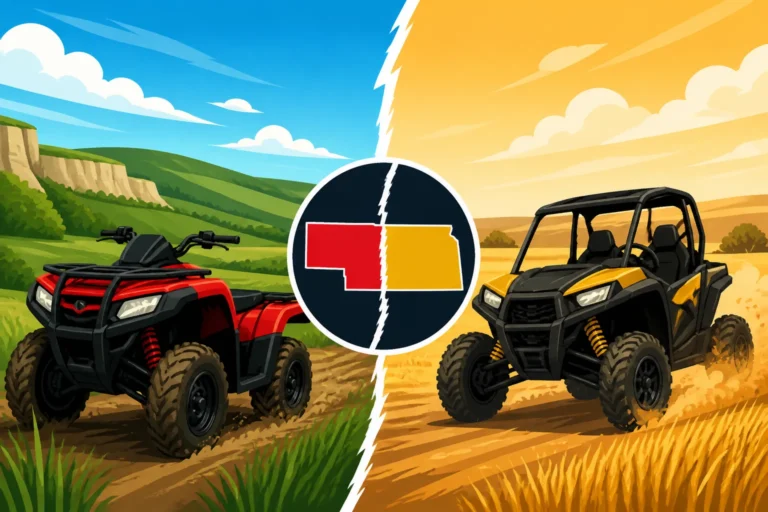
Nebraska has fewer public off-highway riding areas than many riders expect. The most useful starting points are designated OHV areas and established riding parks—not state parks, wildlife areas, or ordinary forest roads unless their rules specifically allow your vehicle.
An OHV designation is a starting clue, not a guarantee that every UTV can use every trail. A narrow trail might suit a quad but not a full-size side-by-side, and a route that is open to one type of vehicle may have separate restrictions for another.
Bessey OHV trails near Halsey
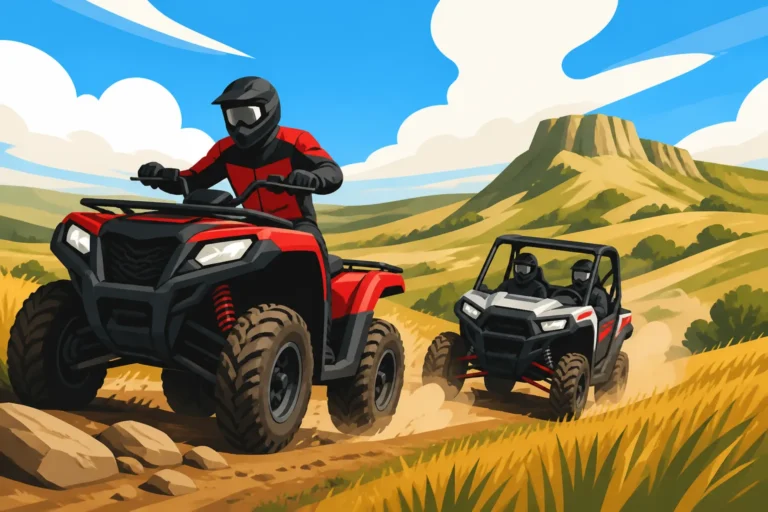
The Bessey Recreation Complex, in the Bessey Ranger District of Nebraska National Forest near Halsey, is one of the first places many riders investigate. The area has designated OHV riding opportunities, but you should confirm that the specific trail or riding area you plan to use accepts your side-by-side. Vehicle width, route designation, closures, and local operating rules can make a difference.
Before leaving, check the latest information from the Bessey Ranger District and ask directly about your machine. Give them its width and type—such as a two-seat UTV or a wider four-seat model—rather than asking only whether “UTVs” are allowed. That can help you avoid hauling to a trailhead only to learn that your vehicle does not fit the permitted routes. For more background, see [Bessey OHV Trails in Nebraska] and [Nebraska Riding Near Halsey].
Bessey’s forest setting also means riders should think beyond access. Weather, trail conditions, parking arrangements, and services can affect a day out, particularly if you are towing from a distance. Use [Nebraska National Forest Riding] as a companion when planning a visit, and check current district guidance before you go.
Cedar Run near Republican City
Cedar Run ATV Trail is another area to investigate, near Harlan County Lake and Republican City. Its name and location make it a natural option for off-highway riding, but do not assume that every section is open to every size of side-by-side. Ask the managing agency whether UTVs are allowed, whether any width limits apply, and whether access is affected by trail conditions or seasonal restrictions.
It is also worth asking where UTVs may be unloaded and staged. A trail can be open to a machine while the nearby parking area has different arrangements, or the staging area may be busy during a popular weekend. Confirming those details ahead of time can save you from arriving with a trailer and having nowhere suitable to park. See [Cedar Run ATV Trail in Nebraska] and [Nebraska Riding Near Republican City] for related area information.
When contacting the site manager, be specific: mention your vehicle’s width, whether it is a two- or four-seat model, and the date you hope to ride. “Can I ride my side-by-side there?” may not get you a useful answer if the person responding needs to know which type of UTV you have.
Private riding areas and state land are not interchangeable
Private riding parks may offer marked tracks or riding areas, but their rules are set by the operator. A park might accept side-by-sides only on certain routes, set its own vehicle-size limits, or require riders to follow admission, waiver, age, or equipment rules. Check directly with the park before making the drive, especially if you have a wide machine or are bringing passengers.
Do not assume that a state recreation area or wildlife management area is an alternative just because it has open space. Nebraska state parks and recreation areas have restrictions on ATVs and similar machines, while wildlife management areas may limit motorized use to designated roadways or specific exceptions. Read [Nebraska State Parks Ban ATVs] and the relevant site rules before planning a ride on public land.
| Riding option | Why riders investigate it | What to confirm before towing |
|---|---|---|
| Bessey OHV area near Halsey | Designated OHV riding opportunities in a forest setting | UTV access on your intended route, width limits, closures, staging, and parking |
| Cedar Run near Republican City | Established OHV trail area near Harlan County Lake | Whether side-by-sides are permitted, route limits, current conditions, and unloading arrangements |
| Private riding park | Rules and facilities are managed by the operator | Vehicle eligibility, allowed routes, fees, waivers, hours, and passenger rules |
| State park or wildlife management area | Public land may look suitable on a general map | Whether motorized riding is allowed at all, and which roads or exceptions apply |
How to confirm a trail allows your side-by-side
The most important detail is not simply whether a trail permits “OHVs.” It is whether your particular vehicle is allowed on the route you intend to ride. A smaller two-seat model and a wide four-seat UTV can face different access limits.
Check vehicle width and route restrictions
Measure your machine at its widest point, including tires or accessories if those affect its overall width. Have the make and model available when you contact the land manager. If your side-by-side has been modified with larger tires, wheel spacers, or other accessories, mention that too; the factory specification may not match the machine you will bring.
Ask whether the area has a posted maximum width, whether that limit applies to the whole riding area or only particular trails, and whether there are routes set aside for narrower machines. If you cannot get a clear answer, treat access as unconfirmed rather than assuming the vehicle will fit. A map line can show where a trail goes, but it generally does not tell you whether your UTV meets the local vehicle rules.
Check closures and conditions shortly before departure
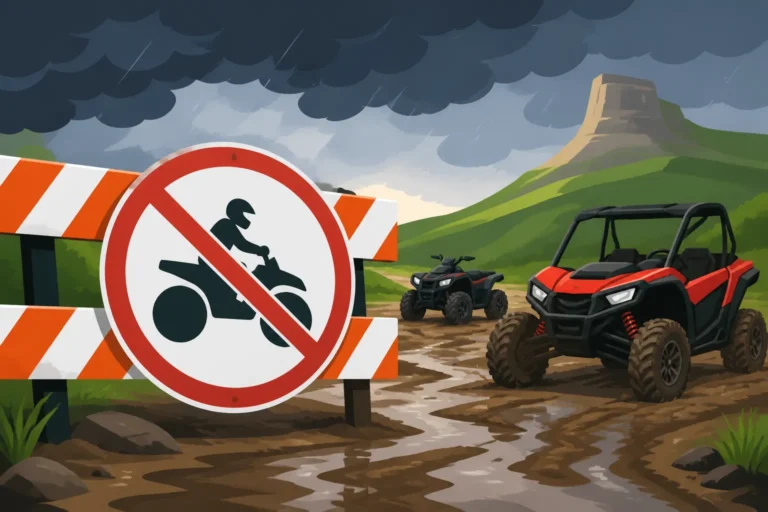
A route that was open during your last visit may be closed or affected by maintenance, weather, fire restrictions, or seasonal conditions. This is especially frustrating when you have already loaded the machine and organized a group, so make a final check close to your departure date.
Use official land-manager updates as the primary source for closures and access rules. Mapping tools such as onX Offroad can help you review route layouts and organize a trip, but a map app should not replace confirmation from the agency or private park responsible for the land. For a broader planning checklist, see [Nebraska Trail Conditions Before You Tow] and [Nebraska ATV Trail Map Downloads].
Ask questions that produce a clear answer
A short call or message can prevent a long, wasted tow. Explain which area you want to visit, what kind of UTV you have, and when you plan to ride. Then ask whether your specific machine may use the intended route, where to park and unload, and whether anything is closed.
It helps to write down the name of the office or staff member you contacted and the date of the conversation. Keep any posted rules or official messages easy to access on your phone. If information on a general map conflicts with instructions from the land manager, follow the land manager’s directions and ask for clarification before riding.
Plan the trip before loading your machine
Once you have confirmed access, plan the practical details around the ride. Nebraska’s riding locations can be spread out, and a good trail day depends on more than reaching the entrance. Fuel, weather, trailer space, communication, and the needs of your group all matter.
Map the route and prepare for limited service
Look at the route before you arrive, including where you expect to unload, where trails begin, and how you will return to the trailer. Save useful maps or directions in advance in case mobile service is weak. onX Offroad may be useful for reviewing mapped routes and saving trip information, but compare its details with current official information. A mapped route is not proof that riding is currently allowed.
A paper map or written directions are a sensible backup, especially if your group plans to split up. Agree on a meeting point and what to do if someone gets separated. For a longer or unfamiliar ride, tell someone who is not joining you where you plan to go and when you expect to return.
Prepare the UTV and trailer
Before departure, check basic items such as tires, brakes, lights, fuel, and any recovery gear appropriate to your route. Secure loose cargo, confirm that passengers have suitable protective equipment, and make sure the trailer and tie-downs are ready for the trip. If you are heading into a remote area, carry water and a first-aid kit, and do not rely on a phone as your only way to navigate.
Respect the staging area when you arrive. Park where directed, leave room for other trailers, and avoid blocking access roads or trail entrances. If the site is crowded, wait for a safe unloading space rather than backing into a travel lane. Good staging habits make the visit easier for everyone, particularly at smaller trailheads.
Ride with changing conditions in mind
A route can feel very different after rain, in strong wind, or when dust and traffic reduce visibility. Ride at a pace that suits the conditions and your group’s experience. Keep space between vehicles, give other trail users room, and avoid making a muddy or damaged section worse by trying to push through it.
Stay on permitted routes and leave gates, signs, and barriers as you find them. Follow posted instructions even when a route appears passable. [Nebraska Trail Etiquette Locals Expect] offers more context for sharing riding areas responsibly, while [Nebraska Trail Conditions Before You Tow] can help you build a habit of checking before each trip.
A practical checklist for Nebraska UTV riders
A little preparation can turn an uncertain plan into a much smoother day. Before you commit to a destination, make sure you have answers about access, route suitability, and logistics—not just a pin on a map. If you are traveling with a group, share those answers so nobody arrives with a different understanding of the rules.
Use this checklist before you tow:
- Choose a specific riding area. Start with a designated OHV area or a private park that you can contact directly.
- Confirm UTV access. Ask whether side-by-sides are allowed on the intended route, not merely whether the area is open to off-highway vehicles.
- Give your machine’s details. Share its width, seating configuration, and any modifications that could affect its size.
- Check closures and conditions. Review official updates close to your travel date and confirm anything unclear with the manager.
- Ask about staging and parking. Find out where you can unload and whether the space can accommodate your trailer.
- Review the land’s rules. Check any applicable equipment, passenger, age, fee, waiver, or operating requirements.
- Prepare maps and backups. Save directions ahead of time, consider carrying a paper map, and agree on a meeting point.
- Leave room for a change of plan. If access cannot be confirmed or a closure is posted, choose another verified location rather than riding an unauthorized route.
A route-planning app such as onX Offroad can help you organize possible routes and keep trip details handy. Use it as a planning aid alongside information from the people who manage the trail. For an unfamiliar destination, that final confirmation is often the difference between a good day of riding and a frustrating trip spent sorting out access at the trailhead.
Nebraska riders may also want to distinguish an OHV trail from legal road use. A machine being allowed on a designated off-road route does not automatically make nearby public roads legal for riding. If your plan involves any road travel, check [Can You Drive an ATV on the Road in Nebraska?] separately and follow the rules that apply to the specific road and community.
Disclaimer
This article is for general informational purposes only and does not constitute professional advice. Laws, prices and regulations vary by location and change over time. Consult a qualified professional for guidance on your specific situation.