Nebraska Trail Etiquette Locals Expect
A good Nebraska ride can go sideways quickly when someone blocks a trailhead, ignores a closure, or charges past other riders in a cloud of dust. The best way to avoid those awkward—and sometimes unsafe—moments is to know the local habits that keep trails open and riders welcome. This guide covers practical etiquette for Nebraska’s public riding areas, from staging to passing and packing out.
Prepare before you leave home
Check access, closures, and trail conditions
A trail shown on a map is not automatically open to every machine, every day. Access can depend on the land manager, the trail system, the type and size of your vehicle, seasonal restrictions, and posted signs. Before towing to places such as the Bessey Recreation Complex near Halsey or Cedar Run ATV Trail, confirm the area’s current access information with the managing agency. A route app such as onX Offroad can help you plan and understand the surrounding area, but it should not replace official notices or signs at the site.
Conditions matter as much as access. Nebraska trails can change after rain, wind, snow, or heavy use. Muddy ground may rut easily, while loose sand and dry dust can affect visibility and traction. Check [Nebraska Trail Conditions Before You Tow] and make a backup plan in case a route is closed or unsuitable when you arrive. If you find a closure, don’t ride around a gate or invent a detour across adjacent land. Turn around and use an authorized route.
It also helps to understand what a route will feel like before bringing a beginner or a less capable machine. Read [Nebraska Trail Difficulty Ratings] and match your group’s experience, ground clearance, and vehicle width to the trail. A capable machine doesn’t make every route appropriate: narrow turns, steep sections, soft ground, or limited room to pass can catch a new rider off guard. If you use onX Offroad to review a planned route, treat that as preparation—not permission to enter land or travel beyond a signed boundary.
Arrive ready to stage without crowding others
At a busy trailhead, unloading is often the first test of trail manners. Park and position your trailer so other visitors can enter, turn around, unload, and leave safely. Don’t occupy several spaces with gear or leave a truck and trailer across an access lane while the group finishes getting ready. If your party needs extra time, choose a spot that doesn’t prevent other riders from using the area.
A little preparation keeps the staging area calmer. Secure loose equipment before you unload, keep children close to your group, and give others enough space to back trailers and move machines. If you need to adjust a strap or check tire pressure, move out of the main traffic flow when possible. [How to Unload and Stage Without Blocking Anyone] offers more practical guidance for a smooth arrival.
Bring what your group needs to manage the ride without relying on strangers to solve avoidable problems. That might include water, basic tools, a first-aid kit, and a paper map for areas where service is unreliable. Check [Planning for No Cell Service on a Forest Ride] before heading into a remote area. Planning well isn’t just about convenience; it helps prevent a small issue from turning into a rescue or a long delay for everyone sharing the route.
Share the trail safely and courteously
Slow down for people, dust, and limited visibility
Speed should suit the conditions and the people around you, not just the machine beneath you. Ease off near trailheads, campsites, blind corners, narrow stretches, and groups that may include children or inexperienced riders. Slow down well before passing, and leave enough distance that the person ahead isn’t forced to ride through a wall of dust.
Dust is a familiar frustration on dry Nebraska routes. Tailgating makes it harder for the rider behind to see the trail and can make a group uncomfortable or unsafe. Let the dust settle by creating more space, especially when the ground is loose and visibility is poor. If you’re leading, make sure the group stays together without pressuring slower riders to go faster than they can safely manage.
Keep noise and speed in check near other visitors. A trail is shared space, not a private course, and a quiet approach near a campground or staging area can make a big difference to people who are resting or unloading. If a person is walking near the route, stop or move by slowly once you have a clear path. Don’t assume they can hear you coming or know which way you intend to go.
Pass with patience and agree on who yields
On a narrow two-way trail, slow down when you meet another rider and communicate clearly. Don’t squeeze past at speed or assume the other person can immediately move onto a safe shoulder. If the trail is too tight, one rider may need to back up carefully to a wider spot. [Who Yields on a Narrow Two-Way Trail] is useful background for thinking through those encounters before they happen.
Groups should make space for oncoming riders rather than bunching together and taking over the whole trail. A leader can signal the group to stop in a safe, visible place, leaving room for others to pass. If you’re riding with several machines, keep the line orderly and avoid blocking a junction while the last rider catches up. Be especially careful at blind turns, where a fast approach can leave little room to react.
Passing a slower rider deserves the same patience. Give a friendly signal from a respectful distance, wait until there’s enough room, and pass without cutting them off or throwing debris toward them. If someone is stopped, ask whether they need help before crowding their machine. A quick, considerate check-in can be welcome; surrounding them or blocking the route while you do it usually isn’t.
| Situation | Considerate response | Avoid |
|---|---|---|
| You meet a rider on a narrow trail | Slow down, communicate, and use a safe wider spot to pass | Forcing past or assuming the other rider must move |
| You catch up to a slower group | Leave space and pass only when the route is clear | Tailgating or passing into a blind turn |
| Dust reduces visibility | Increase following distance and ease your pace | Riding close enough to lose sight of the trail |
| You encounter cattle or a gate | Slow down, follow posted directions, and leave the gate as found | Chasing livestock or leaving an opened gate unsecured |
| The trail is muddy or closed | Turn around and follow official guidance | Making a new route around the closure |
Respect land, wildlife, and other visitors
Stay on authorized routes and leave gates as you find them
The easiest way to damage a relationship with local landowners and land managers is to treat a boundary or gate as a suggestion. Stay on designated routes, obey signs, and don’t cut across private ground to shorten a ride. Permission to ride one area doesn’t automatically include nearby fields, ranch roads, or access tracks. When you’re unsure whether a route is open, stop and check rather than relying on someone else’s tire tracks.
If a gate is part of an authorized route, follow the sign or instructions at the site. Where you are expected to open a gate, leave it in the position you found it. An unlatched gate can allow livestock to wander, creating real trouble for a rancher and possible danger for the animals. Keep your machine under control around cattle, give them room, and don’t honk, chase, or deliberately drive toward them. For more on this situation, see [Sharing a Forest Road With Cattle].
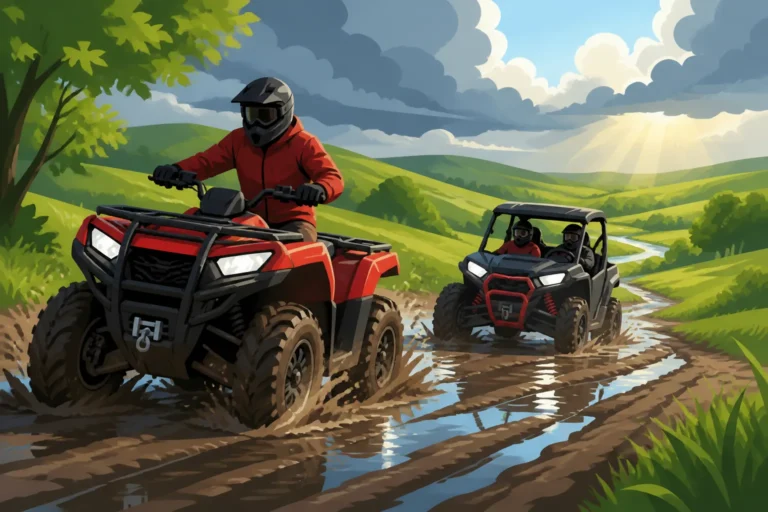
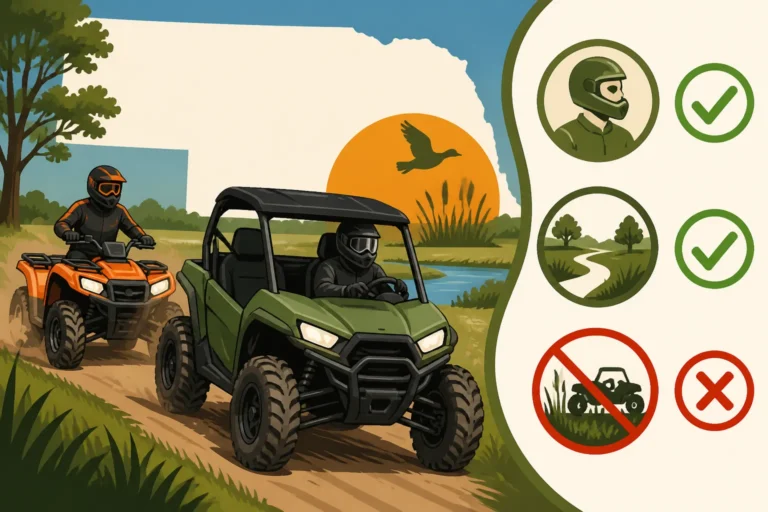
Respect wildlife and vegetation, too. Avoid riding through areas that are posted as closed or environmentally sensitive, and don’t widen a trail by driving around a muddy patch. That shortcut can create a second track that invites more riders to leave the route, increasing damage over time. If the official route is too wet or difficult, turn back or choose another open option instead of making your own.
Leave the place cleaner and quieter than you found it
Take out everything you bring in, including food wrappers, broken straps, empty bottles, and trash from repairs. Don’t leave a damaged part at a trailhead because you plan to replace it later. A small bag in a truck or machine makes it easier to carry litter out, even when a bin is full or unavailable. [Hauling Out Trash From a Forest Trailhead] covers the simple habits that help keep shared riding areas pleasant.
Keep camp and staging areas orderly. Don’t dump wastewater or leave food where it can attract animals. If you’re camping near a riding area, follow posted quiet hours and be considerate when starting machines early or returning late. A little courtesy matters when people are trying to sleep, especially at a shared campground where riders and non-riders may be staying side by side.
When you find litter or damage, don’t make it worse by leaving your own mess or creating another route around it. If a sign is down, a gate is damaged, or a trail appears blocked, report the issue to the appropriate land manager when practical. Avoid confronting other riders aggressively. A calm reminder may help, but safety comes first; if a situation feels tense, give people space and contact the responsible authority instead.
Make the ride work for the whole group
Set expectations before the first mile
A group ride is more enjoyable when everyone knows the basic plan. Before unloading, confirm the route, expected pace, planned stops, and how the group will handle a machine problem or a rider who needs a break. Agree on a simple regrouping routine, such as stopping at trail junctions and waiting for the last machine. That prevents riders from feeling abandoned or rushing to catch up.
Be honest about the least experienced rider’s comfort level. If someone is new, let them know that stopping to ask a question is welcome and that nobody should feel pressured to keep up. Put a confident, patient rider near the back of the group so a slower person has support without being crowded. If the route becomes more challenging than expected, turn around together rather than splitting the group without a clear plan.
It can help to review your intended route with onX Offroad or another planning tool before the ride, then confirm it against official access information at the trailhead. Agree on a backup route, too. If the planned loop is closed, flooded, too difficult, or taking longer than expected, the group can make a calm decision instead of arguing at a junction or pushing onward because everyone assumed somebody else had checked.
Handle delays, breakdowns, and closures with care
If a machine breaks down, move it out of the main travel path if it’s safe and possible. Let other riders pass, then assess the problem without blocking a junction or narrow section. Keep the group together, check that everyone is safe, and use the tools and communication plan you prepared. If you need help, give other trail users room to continue; don’t turn a repair stop into a crowd around the machine.
A closure or sudden change in conditions can be frustrating, especially after a long tow. Still, riding around a barrier or continuing onto a closed section can put access at risk for everyone. Follow instructions from the land manager and choose another authorized option. Check [Nebraska Trail Closures After Rain] when planning around weather-related changes, and confirm the situation locally before committing to a long haul.
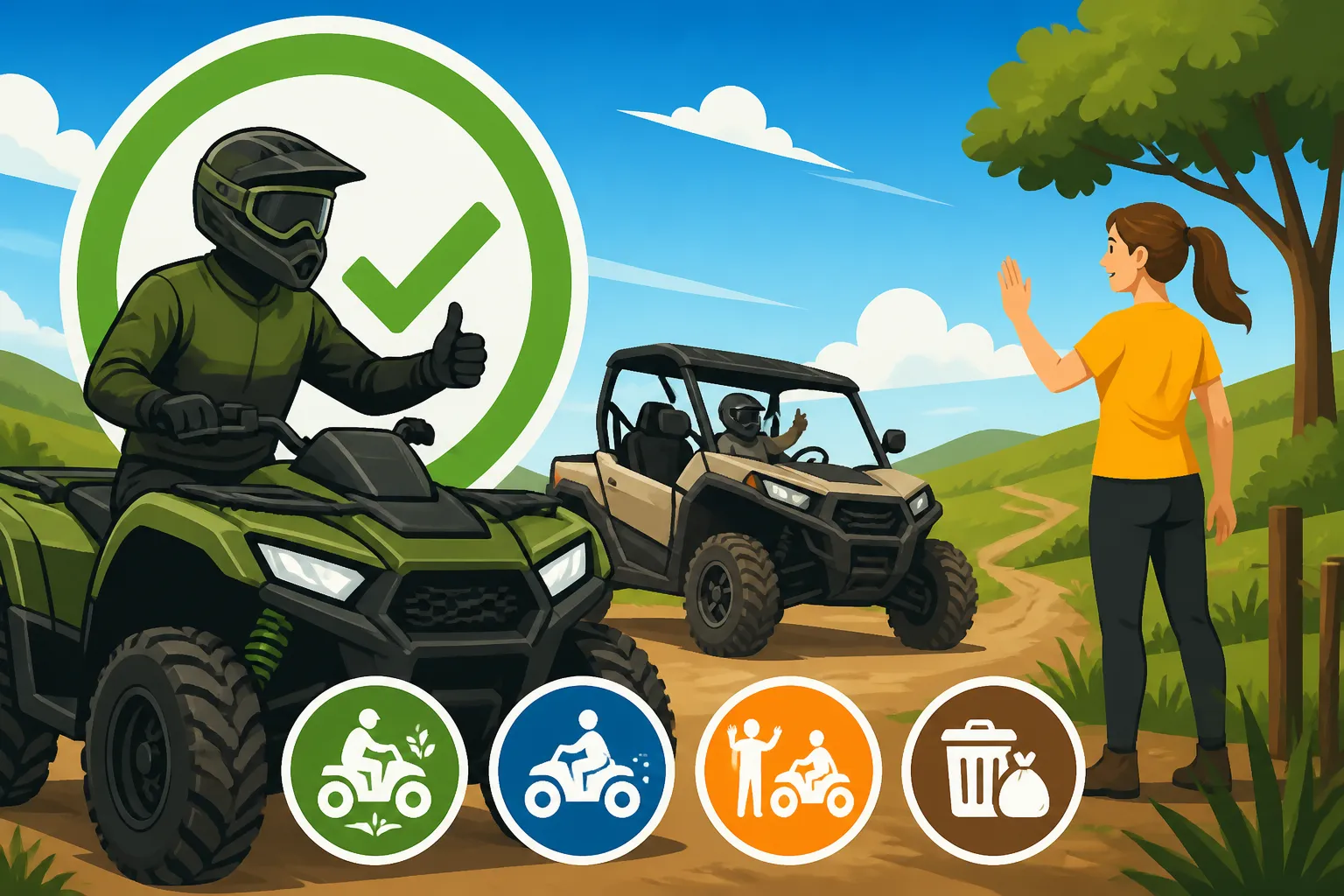
For a straightforward etiquette checklist, remember: stay on open routes, ride at a pace that lets others feel safe, keep distance in dust, share narrow sections patiently, respect gates and livestock, and pack out your waste. Those habits help protect the riding area and make it more likely that the next group arrives to find a welcoming place to ride.
Disclaimer
This article is for general informational purposes only and does not constitute professional advice. Laws, prices and regulations vary by location and change over time. Consult a qualified professional for guidance on your specific situation.