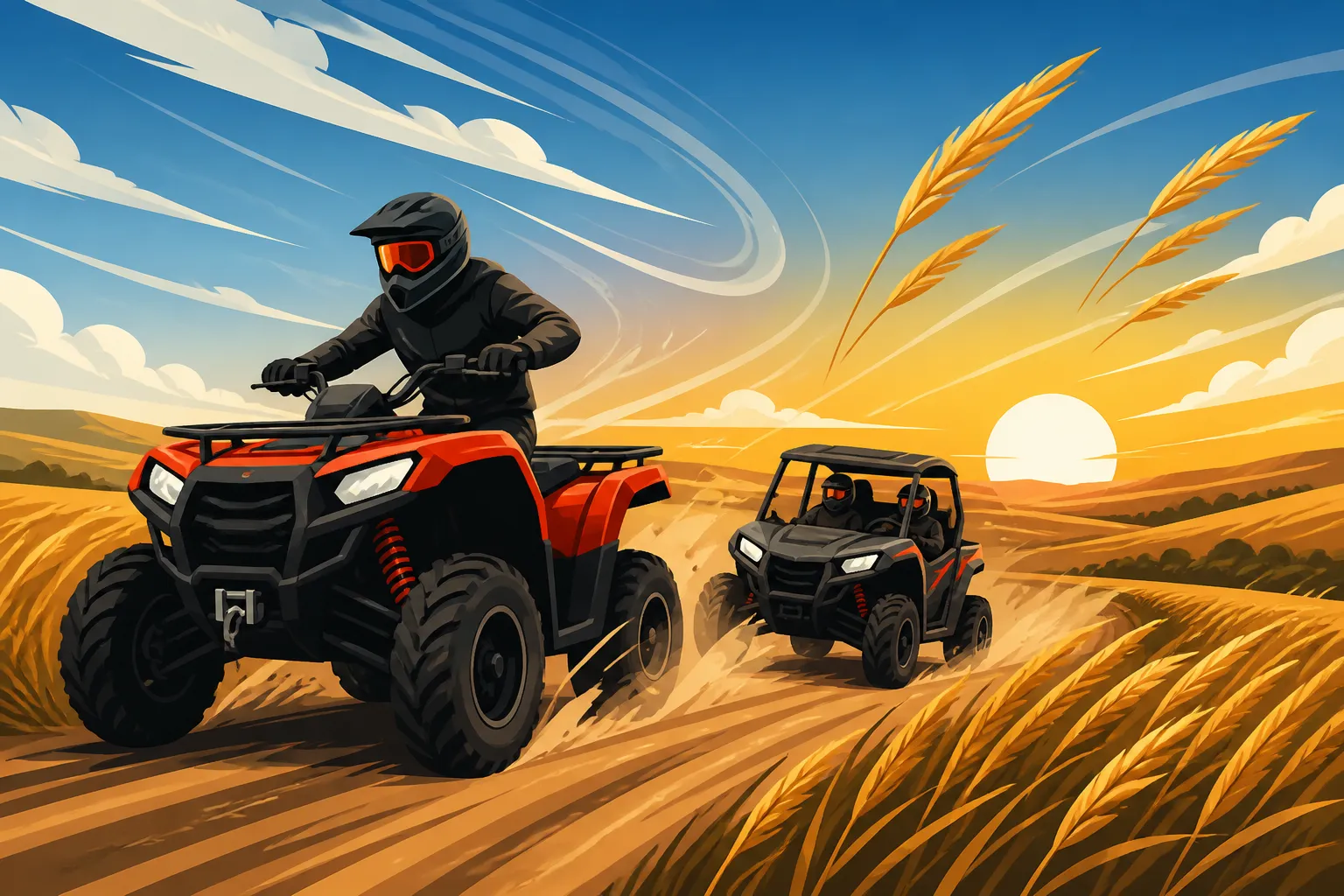
Nebraska Wind and Long Riding Days
A long Nebraska ride can feel comfortable at the trailhead and exhausting a few hours later, especially when steady prairie wind, blowing dust, heat, or cold air sap your energy. This guide explains how wind changes an ATV or UTV day, how to plan a route and pack for it, and when to shorten the ride before fatigue starts affecting your judgment.
Why Nebraska wind changes a long ride
Wind can make easy terrain feel harder
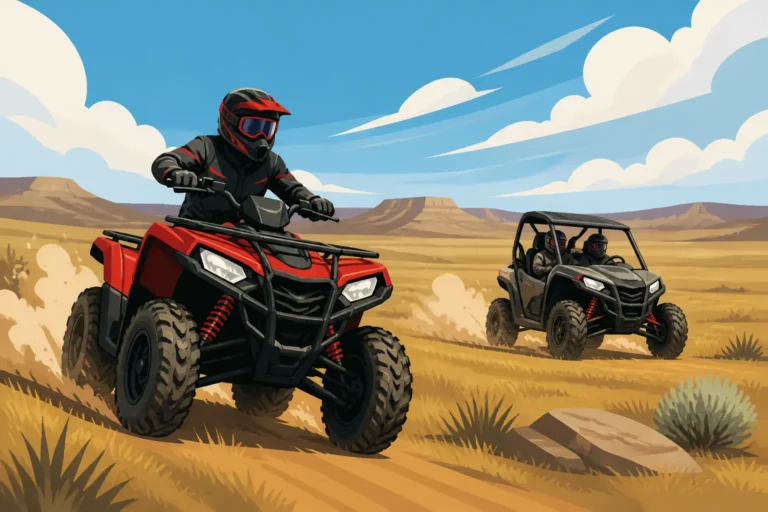
Wind is more than an annoyance when you’re riding for hours. It can push against your body and machine, dry your eyes and mouth, and make it harder to hear a riding partner or notice what’s happening around you. In an open area, gusts may also shift loose dust or sand across the route, reducing visibility at the exact moment you need to read a turn or spot another rider.
The effect depends on the terrain. A wooded stretch near Bessey Recreation Complex at Halsey may offer some shelter, while an exposed route can leave you feeling the wind continuously. Sand can be especially tiring because you’re concentrating on changing ground conditions while also managing gusts. For a closer look at the region’s riding options, see Nebraska Riding Near Halsey only if this were a URL—but internal links here are plain-text titles, so use the exact title format below: [Nebraska Riding Near Halsey].
Wind direction matters, too. Riding with a tailwind can feel deceptively easy; turning around may mean facing a headwind for the return leg. A route that seemed manageable at the start can become a draining ride back to the staging area. Build your plan around the whole loop, not just the first few miles.
Dust, blowing debris, and visibility deserve attention
On dry trails, wind can lift loose dirt and make it harder to see the surface ahead. That’s a concern on a narrow track, near other riders, or where a trail has a blind bend. Increase following distance when dust hangs in the air, and ease off the throttle if visibility drops. If you can’t see far enough to respond safely, stop somewhere secure and let the dust settle rather than pressing on.
Eye protection matters on windy days. Goggles or well-fitting glasses can help keep grit out of your eyes, while a face covering can make dusty stretches more comfortable. Check that your gear stays in place when you turn your head; a loose strap or fogged lens can become a distraction. If you ride with others, agree on simple hand signals and a regrouping plan before leaving the trailhead.
A wind gust can also carry branches, chaff, or other debris across a route. Stay alert near tree lines and agricultural areas, and don’t assume a trail is clear just because it was clear a few minutes earlier. For broader route and surface checks before a drive, use [Nebraska Trail Conditions Before You Tow] as a reminder to verify local conditions before setting out.
Wind can disguise heat or cold stress
A breeze may make a hot day feel less intense, but it doesn’t remove the need to drink water and take breaks. Wind can dry sweat quickly, so you may not notice how much fluid you’re losing. On the other hand, a cool breeze can make a mild day feel surprisingly cold once you’re moving, especially if your clothing is damp or you’re exposed for a long stretch.
This is one reason long riding days can be harder to judge than short outings. Riders often focus on how they feel at the beginning and forget that exposure accumulates. Check in with yourself and your group at regular intervals: Are people unusually quiet, squinting, shivering, getting irritable, or having trouble concentrating? Treat those as reasons to pause, drink, add or remove layers, or head back.
Seasonal planning helps, too. If heat is part of the forecast, [Nebraska Riding in Summer Heat] can help you think through the extra demands of a hot outing. If you’re heading out during a colder stretch, compare your plans with [Nebraska Riding in Winter Wind] and dress for the conditions you could encounter on the return ride, not only at departure.
Plan a route that works with the wind
Think through the return leg before you leave
Before unloading, look at the route as a complete outing: distance, expected riding time, exposed sections, rest opportunities, and the point where you’ll turn back if conditions worsen. A loop is not automatically easier than an out-and-back route. Loops can keep you from riding directly into the wind on the return, but they may also take you farther from your starting point if someone gets tired or a machine needs attention.
For a longer ride, agree on a turnaround time as well as a turnaround location. A clear time limit prevents the familiar “just one more section” decision from pushing the group into late-day fatigue. If the wind is stronger than expected, you can shorten the plan without debating the entire route in the moment.
At Bessey or another forest riding area, confirm which designated routes are open and appropriate for your machine before you head out. Conditions, access rules, and closures can change. A trail that looks close on a map may not offer a convenient exit or quick return to your vehicle. Keep the day’s route within the limits of the group’s experience and the machines you brought.
Match the outing to the group
A route that works for experienced adults may be too much for a mixed group with children, new riders, or passengers. Newer riders often use more energy because they’re concentrating intensely on steering and terrain. Add wind, dust, and long stretches without a break, and they may tire before they recognize it.
Keep the plan flexible. Choose a shorter first loop, then decide whether to continue after everyone has had water and a rest. Don’t treat turning back as a failure; it’s a sensible call when the group’s condition or the weather changes. If riders are separated, agree on where to stop and regroup rather than allowing everyone to push ahead at different speeds.
Local trail etiquette matters especially when visibility is reduced. Slow down around other riders, avoid crowding someone through a dusty section, and leave room for people to pull over safely. [Nebraska Trail Etiquette Locals Expect] is useful context for thinking about shared routes, particularly when a busy trail or staging area makes communication harder.
Check the forecast and trail information close to departure
A forecast is a planning tool, not a guarantee of what you’ll feel on the trail. Conditions may differ between a sheltered parking area and an exposed route. Check wind, temperature, and precipitation before you leave, then compare those conditions with what you observe at the trailhead. If gusts are already making it difficult to stand steadily, talk clearly, or control loose gear, reconsider a long outing.
Also confirm access and trail information with the responsible land manager or riding area before towing. Rules and closures are not the same everywhere, and a trail network may have restrictions that affect the route you planned. [Nebraska National Forest Riding] and [Nebraska Trails Near Water] can help orient your planning around different kinds of riding areas, but verify the specific location’s current access details before you go.
If you use onX Offroad to organize a route, set it up before you leave coverage and treat it as one planning aid rather than a substitute for official access information. Mark the staging area, planned turnaround point, and likely regrouping locations. For any map app, check that your phone is charged and that you know how to use the map without relying on a strong signal.
Pack and pace yourself for a long riding day
Carry water where you can reach it
Don’t wait until you feel thirsty to think about drinking. Take regular sips during breaks and carry enough water for the planned outing, with extra capacity for an unexpectedly slow return or a route change. The right amount depends on temperature, exertion, ride length, and the needs of each rider; a group should not assume one shared container will cover everyone.
Make water easy to access. If you have to unpack a cooler or dig under riding gear every time you want a drink, you may put off drinking. Secure bottles or hydration equipment so they won’t shift around on rough ground, and keep a separate reserve in the vehicle when practical. For a hot, exposed ride, [How Much Water to Carry on a Summer Ride] and [What to Pack for a Hot Dry Riding Day] offer useful reminders for building a more complete plan.
Food matters on a long outing as well. Bring simple snacks that are easy to eat during a proper stop, and don’t rely on a full meal hours before the ride as your only fuel. If anyone starts feeling weak, shaky, nauseated, or unusually tired, stop and assess the situation rather than assuming they just need to ride through it.
Use layers and protective gear that suit changing conditions
A wind-resistant outer layer can make a noticeable difference on an exposed ride, while breathable layers underneath help you adjust as temperatures change. Avoid dressing only for the parking lot. Once you’re moving, the wind against your body can make a warm day feel cooler; when you stop, the opposite may happen. A removable layer gives you options without requiring a complete gear change.
Secure loose clothing, straps, and items attached to your machine. Flapping material is distracting, and anything that comes loose can become a hazard for your group or other trail users. Wear eye protection that suits dusty conditions, and make sure your helmet and other protective gear fit properly before the ride begins. Recheck your gear after a break, especially if wind has been pushing at it.
The same principle applies to equipment: pack for the route, not for the most optimistic version of the day. A basic first-aid kit, tools suited to your machine, a charged phone, and a way to navigate are all worth considering. If the ride may take you beyond reliable service, review [Planning for No Cell Service on a Forest Ride] and [Why You Still Carry a Paper Trail Map] before you leave.
Build breaks into the ride rather than waiting for trouble
A break is useful before anyone feels exhausted. Stop in a safe place away from active traffic, give riders time to drink and stretch, and ask how everyone is doing. On a windy day, choose a sheltered spot when available so the group can hear one another and take a more comfortable pause.
Use each stop to notice practical issues: fogged or dusty eye protection, a loose strap, a machine that feels different, or a rider who has stopped communicating normally. These details are easier to address before they turn into a bigger problem. If a rider is cold, overheated, or unsteady, don’t send them ahead alone to “catch up.” Adjust the whole group’s plan.
A steady pace is usually more sustainable than frequent bursts of speed followed by long recovery stops. Leave enough time to ride cautiously when dust or gusts reduce visibility. A relaxed outing with a planned early finish is often more enjoyable than a longer ride where everyone is watching the clock and pushing through discomfort.
When to shorten or cancel the ride
Use clear reasons to turn back
Deciding in advance what would make you change plans helps take the pressure out of the choice. Turn back or stop if visibility becomes poor, gusts make riding difficult to control, the route is more exposed than expected, or a member of the group is showing signs of fatigue or distress. The same applies if you lose track of a rider, have a machine issue, or discover that the route is closed or unsuitable.
A simple group rule can help: anyone can call for a stop without having to prove they’re in serious trouble. Riders sometimes stay quiet because they don’t want to disappoint friends or slow the group. Make it clear before departure that speaking up early is part of riding responsibly.
If wind makes communication difficult, gather the group in a safe place and reassess together. Don’t attempt to solve a visibility problem by riding faster or following closely. The goal is to return safely, not to complete every planned mile.
Make a backup plan before you unload
Before the ride, decide what you’ll do if the route is too windy, dusty, or tiring. That could mean riding a shorter loop, staying on more sheltered designated trails, taking a longer break, or postponing the outing. A backup plan is especially useful for a group that has driven a long way and feels tempted to ride simply because they’re already there.
Use onX Offroad or another navigation aid to note your intended route and staging point, but don’t let a digital route override local signs, closures, or land-manager instructions. Keep the group together when changing plans, and make sure everyone knows where the vehicles are. If the phone signal is unreliable, have a non-digital backup plan for finding your way back.
A long Nebraska riding day is most enjoyable when the route, weather, gear, and group are working together. Wind may be part of the experience, but you don’t have to let it dictate the day. With a realistic turnaround plan, accessible water, flexible layers, and permission to head back early, you can make better decisions before a demanding ride becomes an unpleasant one.
Disclaimer
This article is for general informational purposes only and does not constitute professional advice. Laws, prices and regulations vary by location and change over time. Consult a qualified professional for guidance on your specific situation.