Nebraska Riding With a Group of Ten
Taking ten ATVs or UTVs to a Nebraska riding area can turn a fun day into a parking and communication headache if everyone arrives at once or assumes the same trails are open to every machine. This guide helps your group plan a practical meeting point, check access, manage the ride, and handle common problems without leaving anyone behind.
Plan the route and confirm access before you leave
Match the riding area to your group
For a group of ten, the best destination is not automatically the one with the most trail miles. Think about the mix of machines, rider experience, trailer space, fuel range, and the kind of terrain everyone wants. A group with several side-by-sides needs to check that the route allows those vehicles, while a mixed group may need to choose a pace and terrain that work for the least experienced riders.
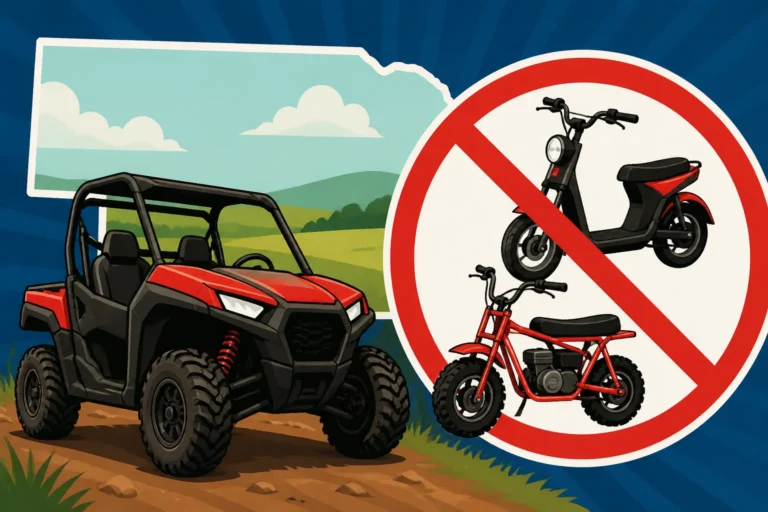
Nebraska destinations can offer very different outings. Bessey OHV Trails near Halsey, Cedar Run near Republican City, and Flat Rock Riders near Sutherland are examples worth researching when you are comparing locations. Check each site’s current rules, trail access, parking arrangements, and any restrictions that could affect your group. The article [Nebraska Trails That Allow Side-by-Sides] is a useful starting point if UTV access is part of the plan.
Don’t assume that ten riders can simply follow one route together. Trail width, traffic, skill differences, and stopping space can all affect whether a large group moves smoothly. If your group includes both fast and cautious riders, plan a route with natural regrouping points instead of expecting everyone to stay packed together.
Verify trails, restrictions, and conditions
Before setting a destination, confirm that the riding area is open and that your machines are permitted. Look for official information about vehicle types, trail closures, parking, fees, and any seasonal rules. Trail conditions can change after rain or other weather, so a route that looked straightforward when you planned it may not be suitable on the day. For a refresher on what to check, see [Nebraska Trail Closures After Rain].
Be specific when checking access. Ask whether the rules differ by trail, whether a side-by-side is allowed on the route your group wants, and whether there are posted limits that could affect a larger machine. If you cannot confirm a detail online, contact the managing office or the riding area directly before towing several machines across the state.
A mapping app can help everyone understand the intended route before the ride. If your group uses onX Offroad, review the route together in advance and check that the information you plan to rely on is available for your destination. Don’t treat any app as a substitute for current local rules or posted signs. Keep a backup plan, such as a paper map or written directions, especially if cell service may be limited.
Choose a realistic day plan
Agree on a start time, ride length, fuel plan, and turnaround point before departure. A group of ten usually takes longer to unload, make decisions, and regroup than a couple of riders do. Build that time into the schedule rather than trying to make up for it by riding faster.
It also helps to agree on what counts as a successful day. Perhaps the goal is a moderate loop, a few scenic stops, and getting back to the trailers before dark. If some riders want a longer or more challenging outing, discuss whether the group will stay together or split into smaller parties with separate leaders and clear meeting times.
Organize parking, unloading, and group roles
Confirm there is room for trailers and machines
Ten machines can mean a substantial parking footprint, particularly when several arrive on trailers. Call ahead or check the riding area’s official information to confirm where trailers can be parked and whether the staging area can accommodate your group. A place with suitable trails may still be a poor fit if unloading would block other visitors or crowd a narrow access road.
Map out the parking approach before the convoy arrives. Decide who will pull into the staging area first, where each trailer should go, and where machines can be unloaded without crossing through moving traffic. The guide [Nebraska Trailheads With Trailer Parking] can help you think through this part of the search, but verify the exact conditions at your chosen destination.
Have one person coordinate the convoy’s arrival. If everyone follows their navigation app to the same entrance without discussing a parking plan, vehicles can bunch up or stop in an unsafe spot while the group tries to decide what to do. A short message before arrival can prevent a lot of backing, blocking, and frustration.
Assign simple responsibilities
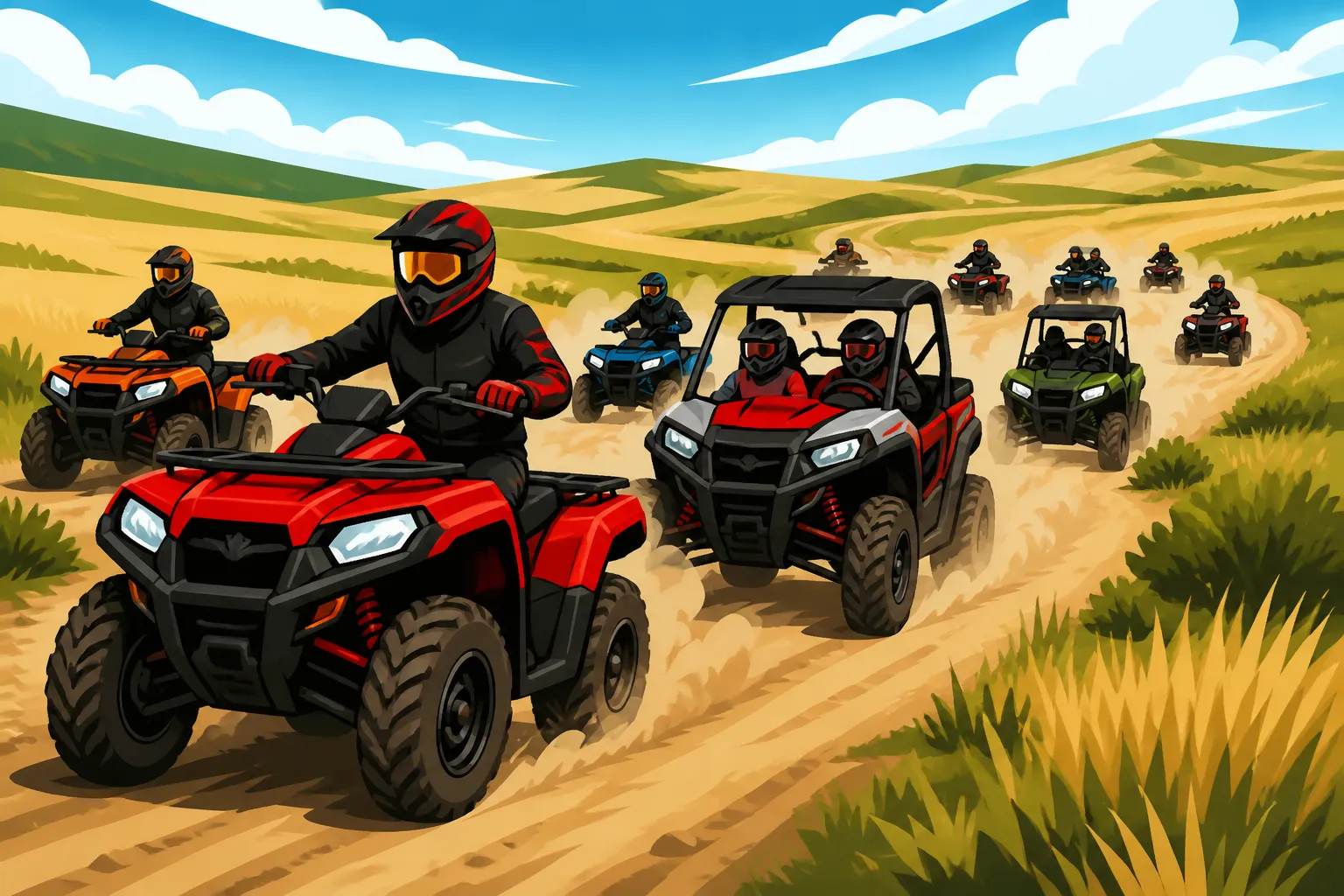
A large group does not need a complicated command structure, but a few clear roles make the day easier. Choose a ride leader who knows the planned route, a sweep rider who stays behind the last machine, and someone who can handle basic communication and head counts. If there are enough experienced riders, add a second leader for a shorter sub-group when skill levels vary.
Before starting, confirm who has a first-aid kit, basic tools, tire-repair supplies, and a way to contact help if cell coverage drops. The person carrying a tool kit should know what it contains, and the group should know where it is stored. A kit that stays buried in a trailer is less useful during a trail-side problem.
These roles are practical, not ceremonial. If one rider needs to stop, the leader can find a safe place to pull off, while the sweep confirms that everyone is accounted for. That avoids the familiar group-ride confusion where riders at the front assume the person at the back is still following, while the back riders do not know where the group turned.
Unload without creating a bottleneck
Ask everyone to arrive with machines ready to unload, but leave enough space for safe movement. Keep loading ramps, tow vehicles, and people clear of the route other visitors need to use. One person should guide a trailer into position if visibility is limited, and the group should avoid crowding around a machine while it is being unloaded.
Give each rider time for a basic check before the ride: fuel, tires, brakes, lights where relevant, and secure cargo. A loose cooler, poorly fastened tool bag, or low tire can turn into a delay once the group is underway. For more staging tips, read [How to Unload and Stage Without Blocking Anyone].
Keep ten riders together without riding in a traffic jam
Use a leader, a sweep, and planned regrouping points
Agree on the order of riders before leaving the staging area. Keep the ride leader at the front and the sweep rider at the back. Riders should know who is in front of them and behind them, and should not assume that the group will wait at every turn unless that is part of the agreed plan.
Set regrouping points at safe, obvious locations with room to stop. Avoid stopping around blind corners, on narrow trail sections, or where parked machines could block other riders. At each stop, do a quick head count before moving on. A count takes only a moment and can catch a missed turn before it becomes a long search.
If the group splits, establish a specific meeting point and time before anyone rides ahead. “We’ll meet somewhere near the lot” is not a useful plan if riders have different maps or lose service. A shared map can help everyone follow the same route, and onX Offroad may be useful for reviewing the planned path with your group before leaving. Save or print backup information rather than depending entirely on phone reception.
Set a pace that accommodates the least experienced rider
A ten-person ride tends to stretch out naturally. Dust, different machine speeds, cautious riders, and trail obstacles create gaps. The answer is not to pressure slower riders to keep up. Instead, choose a pace that feels manageable for the group and make sure the leader knows when the line has become too spread out.
A staggered approach can help on wider routes, but riders should leave enough room to react and avoid crowding one another. On narrow trails, ride in single file and allow space for other trail users to pass where it is safe. If a rider is uncomfortable with a section, stop in a safe place and discuss options rather than letting the group disappear ahead.
Agree on a simple signal or communication method for stops and problems. Radios can be helpful if the group already uses them, but make sure everyone knows what to do if a radio fails. On a ride with patchy service, the group should understand in advance how far anyone may go ahead and what the sweep rider will do if a machine breaks down. See [Planning for No Cell Service on a Forest Ride] for more preparation ideas.
Practice trail etiquette as a group
A large group is more noticeable than a pair of riders, so courtesy matters. Keep noise and speed under control near campsites and trailheads, yield where required, and avoid blocking the route when stopping. If you meet other riders, give them room to pass instead of forming a wall across the trail.
Respect signs, closures, private property boundaries, and landowner instructions. A route shown on a map does not grant permission to ride wherever it leads. Stay on authorized trails and leave gates as you found them. The principles in [Nebraska Trail Etiquette Locals Expect] are especially important when your group’s behavior can shape how other visitors and local land managers view riders.
Dust can also affect other people in your party. Leave space between machines, especially on dry stretches, and slow down if visibility gets poor. Don’t let the pressure to keep the group moving lead to riding beyond what you can safely see.
Prepare for problems and make the ride more comfortable
Pack for weather, repairs, and a delayed return
Nebraska weather and trail conditions can change during a riding day. Bring water, weather-appropriate layers, basic first aid, and a way to keep essential items secure. Consider the length of the route and how long it could take to return if a machine develops a problem. A short outing can take much longer when ten riders need to stop and regroup.
Make sure each machine has enough fuel for the planned ride, with a sensible reserve. Don’t assume every rider has the same range or that fuel will be available near the trailhead. If the group includes machines with different fuel capacities, let the rider with the shortest range shape the plan.
For a larger outing, carry basic repair items that match the machines in the group. A tool that fits one model may not help another, so ask riders what their machines need before the trip. Keep emergency supplies accessible and tell the group who has them. If a problem cannot be fixed safely on the trail, follow the group’s plan for getting the machine and rider back.
Have a plan for a separated rider or breakdown
Decide in advance what the group will do if someone becomes separated. A simple rule might be that riders stop at the next agreed regrouping point, while the sweep checks the last known location. Avoid sending several people in different directions without a shared plan; that can create more confusion and leave the rest of the group unsure what to do.
For a mechanical issue, move to a safe location if possible and keep other riders clear of the trail. The leader and sweep can account for the group while one or two people assess the problem. If the machine cannot continue, decide whether the whole group will return together or whether a small support group will help the rider while the others wait at a defined meeting point.
Share the route and estimated return time with someone who is not riding. Give that person the destination and a contact plan if the group is overdue. This is particularly useful when riding in a location where cell service may be unreliable.
Make the day welcoming for different riders
A group of ten may include friends who ride every weekend and people who are trying an ATV trail for the first time. Ask about experience before choosing a route, and explain the plan without making anyone feel pressured to admit they are nervous. A short conversation at the staging area can prevent an uncomfortable surprise on a difficult section.
If riders have different comfort levels, split into smaller groups only when everyone understands the route and meeting arrangements. The faster group should not disappear beyond communication range, and the slower group should not feel rushed. Consider choosing an easier route for the full group and saving more technical riding for another day with a smaller party.
When selecting a destination, use local details to shape expectations. For example, [Bessey's 36 Miles of Forest Trail at Halsey] can prompt questions about route length and how much your group wants to cover, while [Cedar Run's 9 Miles in Nebraska] is a reminder to check the scale of an area against the kind of outing your riders expect. Confirm current conditions and access before you go, and keep your schedule flexible enough to enjoy the ride rather than race through it.
Disclaimer
This article is for general informational purposes only and does not constitute professional advice. Laws, prices and regulations vary by location and change over time. Consult a qualified professional for guidance on your specific situation.