Washing Sand Out of an ATV After a Ride
Washing sand from an ATV requires cooling the engine, removing dry grit, and rinsing gently from top to bottom.
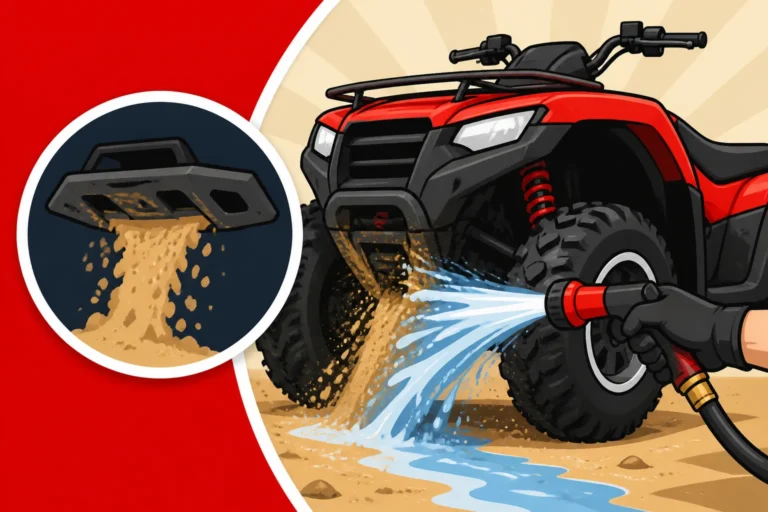
Washing sand from an ATV requires cooling the engine, removing dry grit, and rinsing gently from top to bottom.

Radiator screens block crop chaff from clogging Nebraska machine cooling systems during field rides, preventing dangerous overheating.

Winch recovery in loose sand explains when a winch helps, how to set up a safer recovery, and what to check on Nebraska trails.
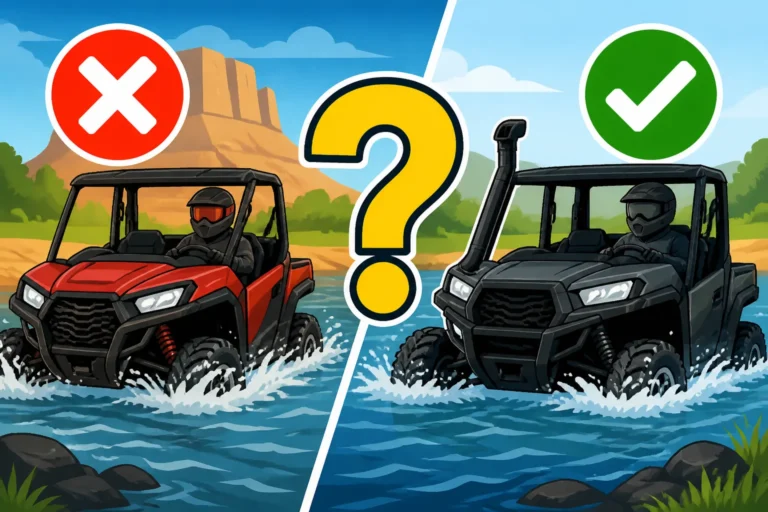
An ATV or UTV snorkel raises the engine air intake to cut the chance of water ingestion, but it does not make a machine waterproof or a crossing safe.

ATV and UTV skid plates shield engine cases and frame rails on rocky trails, depending on machine model, terrain, and materials.

ATV and UTV tire selection for deep loose sand explains paddle setups, flotation, tread styles, and steering control.

Lowering ATV and UTV tire pressure in deep sand improves traction, but reducing it too much risks a rolled bead.
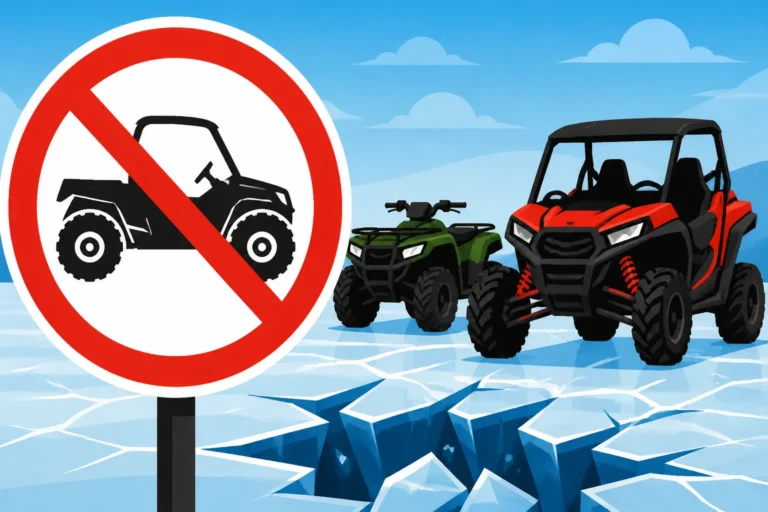
Nebraska ice area closure signs and public land rules explain how riders must check lake boundaries before unloading ATVs.
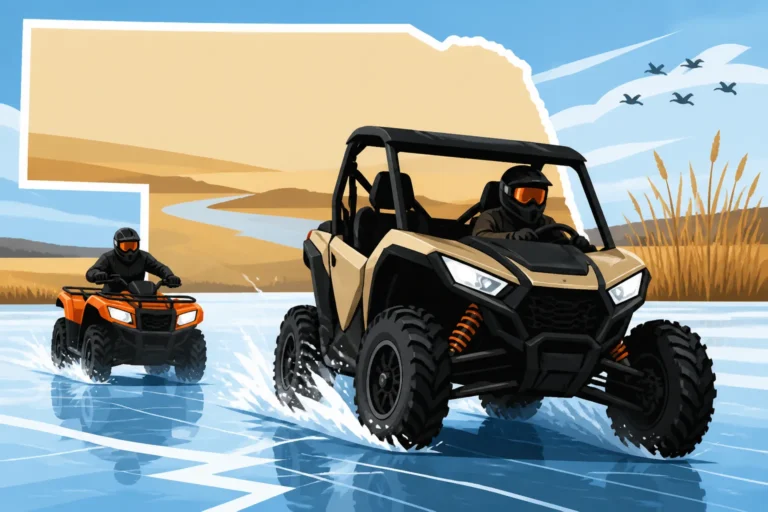
Nebraska wildlife management area vehicle rules explain ice riding restrictions for ATVs and UTVs on frozen lakes.

Nebraska Wildlife Management Area frozen lake riding rules, ice exceptions, property checks, and lawful routes for motorized vehicles.