When a Winch Saves a Machine Buried in Sand
Deep, loose sand can turn a fun Nebraska ride into a frustrating recovery surprisingly quickly. Spinning the throttle usually digs the tires in farther, while pushing or towing without a plan can damage a machine or injure someone. This guide explains when a winch is useful, how to set up a safer recovery, and what to check before heading onto sandy trails.
Why a machine gets buried in sand
Spinning tires make a small problem worse
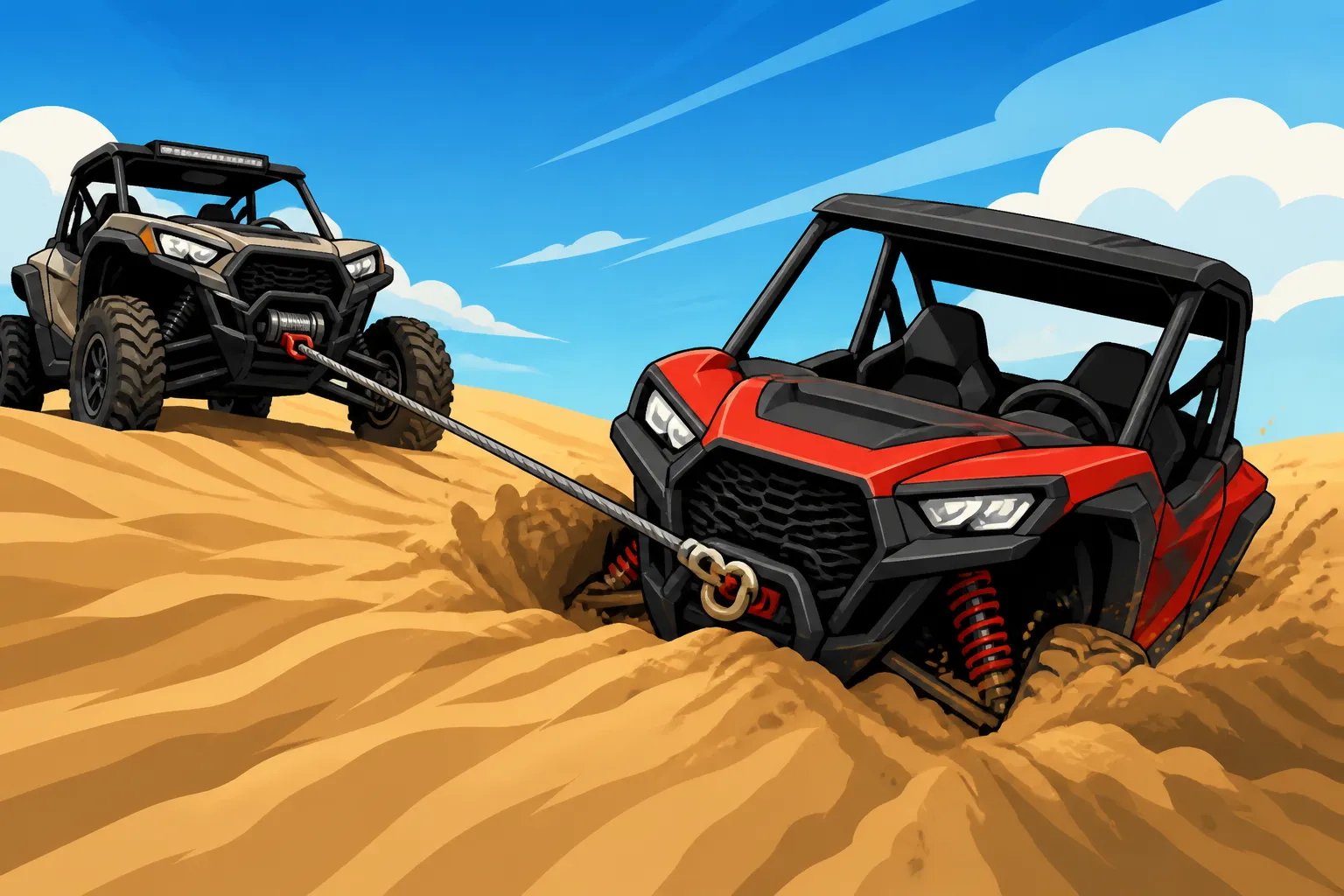
A quad or side-by-side can lose momentum in soft sand even when the trail looks manageable. Once the tires start digging instead of rolling forward, they can scoop out a hole beneath the machine. The frame or belly may settle onto the sand, leaving the tires with less traction and less ability to move the vehicle.
The instinctive response is often to give it more throttle. That can work briefly if the machine is only losing momentum, but sustained wheelspin tends to deepen the holes and bury the chassis. Sand thrown behind the tires is a good sign to ease off, stop, and take a look rather than keep digging.
Before you reach for the winch, check what is actually stuck. If the tires are only partly sunk and the chassis is clear, gentle rocking, a shovel, or traction boards may be enough. If the frame is resting on the sand, the tires are deeply dug in, or the machine cannot move without aggressive throttle, a winch may help pull it onto firmer ground.
Know when a winch is the right tool
A winch is most useful when you have a solid, suitable anchor in the direction you need to travel and can make a steady, controlled pull. It is not a magic fix for every stuck machine. If the only possible anchor is unstable, the route is closed, the vehicle is at risk of tipping, or the winch line would pull across people or other machines, stop and reassess.
Think about the terrain around the stuck vehicle as well as the vehicle itself. A machine nose-down in a sandy hollow may need to be pulled back along its own tracks, while a side-by-side with one wheel near a steep edge may need a different recovery plan—or professional help. Pulling at a sharp sideways angle can shift the vehicle unexpectedly.
| What you see | A sensible first move | When a winch may help |
|---|---|---|
| Tires slipping but chassis clear | Ease off, straighten the wheels, and try a gentle, controlled movement | If it cannot regain traction and a suitable anchor is available |
| Tires sunk in loose sand | Shovel sand away and consider traction boards | If the machine still cannot move without spinning |
| Chassis resting on sand | Clear sand from underneath and around the tires | If a steady pull can move it without dragging the frame dangerously |
| Machine leaning near a drop or steep bank | Keep people clear and assess stability before touching the controls | Only with a safe plan that avoids pulling the machine farther off balance |
| No secure anchor or unclear recovery direction | Stop and look for another option or call for help | Do not winch from an improvised, questionable anchor |
If you ride places such as the Sandhills, conditions can vary from one stretch to the next. Read Nebraska Trails With Sand and check Nebraska Trail Conditions Before You Tow before loading up. A sandy trail that was easy on a firm day may feel very different after weather, heavy use, or a route change.
Prepare before you need the winch
Check the machine, winch, and recovery points
A winch is only as useful as the setup around it. Before riding, check that the winch is mounted securely and that its cable or synthetic rope, hook, remote, wiring, and controls appear to be in sound condition. Follow the machine and winch manufacturers’ instructions for inspection, operation, and maintenance. If something is frayed, bent, loose, or behaving oddly, address it before the ride rather than discovering the problem under load.
Identify the recovery points approved for your particular machine. A bumper may look sturdy but not be designed to take a winch pull. Never attach a recovery line to a tow ball, a random frame component, or an accessory whose rating and purpose are unclear. Use only suitable, rated recovery gear and connection points, and check that the chosen configuration is compatible with the machine.
It also helps to practise using the winch somewhere controlled before a real recovery. Learn how to operate the remote, engage and release the clutch as directed, and keep the line organized on the drum. A first-time lesson in deep sand, with the group waiting and the machine buried, is a stressful way to learn.
Pack for recovery, not just for the ride
A shovel is one of the simplest tools for getting a machine out of sand. Clearing material from around the tires and beneath the belly can reduce the force needed to move it. Traction boards may give the tires a surface to climb onto. Gloves help protect your hands when handling recovery equipment, and a dampener or other line-safety device should be used as directed by its maker.
A winch needs power, and repeated attempts can strain the electrical system and heat components. Keep pulls controlled and allow equipment to rest according to the manufacturer’s instructions. If the winch slows, the battery weakens, or something begins to smell hot, stop and investigate instead of continuing to load the system.
For a longer ride, make sure someone in the group knows where you are going and has a way to contact help. In areas with limited reception, an offline map or saved route in a navigation tool such as onX Offroad can help your group keep track of its location. Do not treat a phone map as proof that a route is open or suitable for riding; check official information and posted signs. For more preparation ideas, see Planning for No Cell Service on a Forest Ride and Why You Still Carry a Paper Trail Map.
How to winch a machine out of sand more safely
Set up the pull before putting tension on the line
First, stop wheelspin and get everyone out of the immediate recovery area. Ask passengers and bystanders to stand well clear of the winch line, the anchor, and the likely path of the machine. A loaded line or piece of recovery gear can move suddenly if equipment fails. Keep hands, clothing, and loose gear away from the winch drum and line while it is under tension.
Choose a pull direction that moves the machine toward firm, stable ground without creating a sharp sideways pull. If the machine is buried along its own tracks, retracing them may be the simplest route. Clear sand from in front of the tires and beneath the chassis where practical. Straighten the wheels if doing so supports a controlled path, and make sure no one is standing in the route the vehicle may take once it starts moving.
Use a secure anchor and appropriate rated equipment. A properly installed tree saver may be suitable around an appropriate tree when the terrain and local rules allow it. A purpose-built ground anchor may be an option where there is no suitable natural anchor, but it must be used as designed and placed securely. Never assume that a tree, another vehicle, or an object buried in the sand can safely take the load. If the anchor shifts, bends, or begins to pull free, stop.
Pull steadily and stop if the setup changes
Once the winch line is connected and everyone is clear, operate it according to the manufacturer’s directions. Use a slow, steady pull rather than jerking the machine forward. If the driver is controlling the stuck vehicle, their movements should be gentle and coordinated with the person operating the winch. Agree on simple signals before starting so both people know when to pause or stop.
Watch the machine, anchor, line, and recovery gear throughout the pull. Stop immediately if the anchor moves, the line twists or bunches, the vehicle begins to tip, or the pull direction changes in an unsafe way. Do not walk over a tensioned line or step into the space between the machine and its anchor. If the machine does not move with a controlled pull, do not respond by increasing force without understanding why it is stuck.
Once the vehicle is free, keep it moving slowly onto stable ground if the route is clear. Then release the line safely and inspect the equipment. A recovery that ends with a damaged winch, bent mounting point, or injured bystander is not a successful recovery. Keep the group’s habits aligned with Nebraska Trail Etiquette Locals Expect, especially when other riders are waiting or using the same staging area.
Reduce the odds of getting stuck again
Adjust your riding before the tires dig in
Momentum matters in sand, but that does not mean riding fast or charging blindly into soft sections. Smooth, steady throttle and a predictable line can help the machine carry forward without digging. Look ahead for softer patches, ruts, and places where the trail narrows. If a route becomes uncertain, stop somewhere stable and assess it rather than committing the whole group to a questionable crossing.
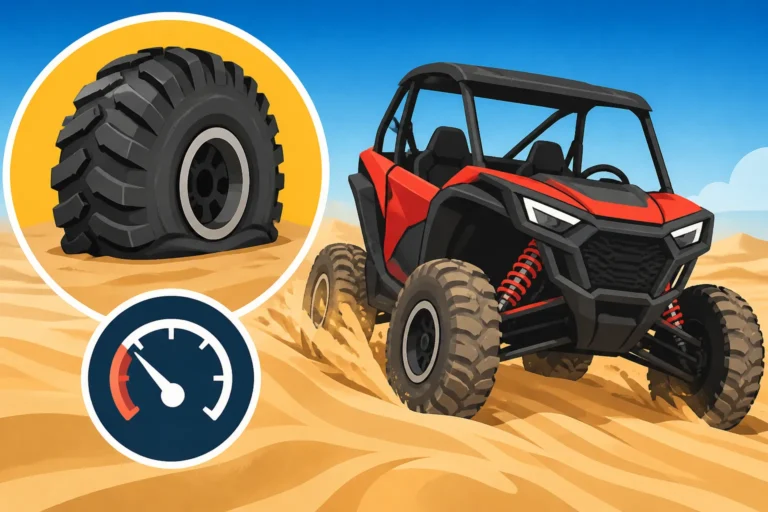
Tire pressure can affect how a machine floats over loose sand, but the right adjustment depends on the tires, wheels, load, and manufacturer guidance. Avoid copying a pressure number from another rider without checking whether it is appropriate for your setup. If you air down, stay within the safe limits for your equipment and reinflate as needed before riding on surfaces where higher pressure is required. What Tires Work Best in Deep Loose Sand and How Far to Air Down Tires in Deep Sand offer useful related reading.
If you are riding near Halsey or planning a trip to Bessey, check the route, access information, and conditions before towing out. An app such as onX Offroad can help you organize a route and keep your group oriented, but confirm trail access with official local information. Nebraska Riding Near Halsey and How to Unload and Stage Without Blocking Anyone can help with the practical details around reaching and using a riding area.
Inspect the machine after the recovery
After a pull, look over the winch rope or cable, hook, mounting area, wiring, and any recovery straps or connectors. Check for cuts, kinks, deformation, loose fasteners, or other signs of strain. Follow the manufacturer’s instructions for cleaning, rewinding, and servicing the winch. If you are unsure whether a component is safe to reuse, do not rely on it for the next recovery.
Also check the machine itself. Sand can collect around moving parts and heat-sensitive areas, and the pull may have exposed a weak mounting point or damaged an accessory. Look for unusual noises, loose panels, shifted cargo, or anything that was scraped while the chassis was buried. Clear sand where appropriate and address problems before continuing.
Finally, talk through what happened while the details are fresh. Was the trail softer than expected? Did the machine lose momentum on a turn? Was the anchor difficult to find? A short conversation can help the group change its approach, redistribute equipment, or choose a safer route next time. When a winch saves a machine buried in sand, preparation and a careful plan usually matter as much as the winch itself.
Disclaimer
This article is for general informational purposes only and does not constitute professional advice. Laws, prices and regulations vary by location and change over time. Consult a qualified professional for guidance on your specific situation.