Photographing a VIN in a Feedlot
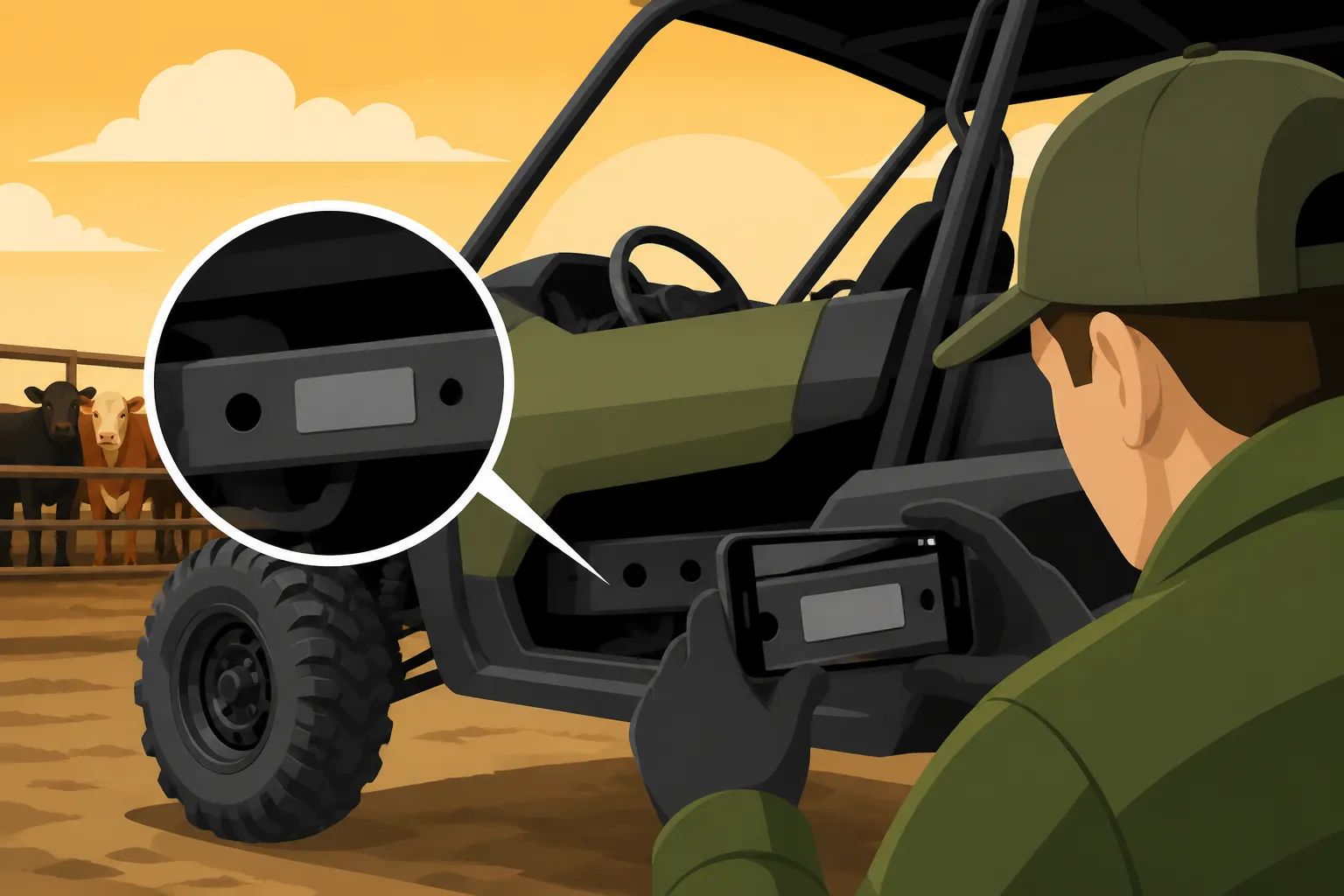
Let's be honest, trying to get a clear, legible photograph of your ATV or UTV's Vehicle Identification Number (VIN) when that machine spends its life working hard in a Nebraska feedlot can feel like trying to find a needle in a haystack—a very dusty, grimy, and often manure-covered haystack. Whether you're heading to the county treasurer's office to get your machine titled, trying to sell it, or just updating your insurance, getting that VIN photo is often a crucial step. This guide is all about giving you the real-world tips and tricks you need to successfully capture that elusive VIN, even in the most challenging feedlot conditions.
Why That VIN Photo is a Big Deal for Your Feedlot Machine
You might think, "It's just a number, why does it matter so much?" But for folks in the feedlot business, that VIN is more than just a string of characters; it's the unique identifier for your hard-working ATV or UTV, and getting a clear photo of it can save you a world of headaches down the road. This little detail connects your specific machine to all its official records.
Proving Ownership and Identity
Imagine you've just bought a used quad from a neighbor down the road, and it's going straight into daily feedlot duty. When you go to title that machine at the county treasurer's office, they're going to want to see proof of that VIN. A clear photo, along with the bill of sale, helps establish that the machine you're titling is indeed the one you bought. It’s not just a formality; it’s a critical piece of the puzzle that proves ownership and prevents fraud.
Without a good VIN photo, you might find yourself making multiple trips back and forth, trying to get the right documentation. And let's be real, time spent driving to the courthouse is time not spent managing the herd or checking fences. A clear photo on your phone can often be the quick answer the clerk needs to verify details without you having to drag the whole machine down to the office. This is especially true if you are dealing with a situation like [Nebraska Title Without a Bill of Sale], where other forms of proof become even more critical.
Facilitating Sales and Transfers
When it's time to upgrade your fleet or sell off an older machine, having an accessible, clear VIN photo simplifies the process immensely. Potential buyers, especially if they're serious, will want to verify the VIN themselves to run their own history checks or simply to ensure they’re buying a legitimate, titled machine. A quick text or email with a clear photo can build trust and speed up the sale.
Furthermore, when you prepare official documents for a sale, whether it's a simple handwritten bill of sale or a more formalized one, the VIN is paramount. If you're looking for help drafting legal documents for the sale, services like LawDepot can provide templates that ensure all the necessary information, including the VIN, is correctly documented, giving both buyer and seller peace of mind. A proper bill of sale is crucial for the new owner to avoid issues when they go to the treasurer's office to get their own [Nebraska Titles After a Private Sale].
Insurance and Legal Matters
In the unfortunate event of theft or an accident, your insurance company will absolutely need that VIN. It's how they track the machine, verify coverage, and process claims. A clear, easily accessible photo means you're not scrambling to find the number during a stressful time. It’s also vital for reporting the machine as stolen to law enforcement, ensuring they have the correct identifier for their database.
Similarly, if you ever need to demonstrate proof of ownership for a lien, or for any other legal purpose, the VIN is the cornerstone. Having a photo stored safely can expedite these processes significantly. Even for minor issues, like a warranty claim, the manufacturer will often ask for the VIN to verify the machine's model year and specifications.
Pre-Photo Prep: Getting Your Feedlot Machine Ready for Its Close-Up
Before you even think about snapping a photo, you’ve got to do a little grunt work. Feedlot machines, by their very nature, are exposed to some of the toughest conditions imaginable. Dirt, dust, mud, and manure aren't exactly conducive to clear photography, and they often obscure that vital VIN plate.
Locating the VIN and Initial Cleaning
First things first, you need to know where to look. VINs on ATVs and UTVs are typically stamped into the frame itself, often on the left-hand side, near the front suspension, or sometimes beneath the seat, or even on a small plate attached to the frame. It's usually in a fairly robust location designed to withstand abuse, but that doesn't mean it's immune to becoming completely caked in feedlot grime. For many machines, it's often close to the engine, making it susceptible to oil and grease, too. If you're struggling to find it, consult your owner's manual or do a quick online search for your specific make and model.
Once you’ve located it, the real work begins. You're not trying to win a car show, but you need to make those numbers visible. Start with a stiff brush – a wire brush works wonders on dried mud and rust, but be careful not to damage the underlying metal or paint around the VIN. Then, grab a bucket of soapy water and a rag. Scrub away as much of the caked-on dirt, manure, and feed dust as possible. For stubborn grease and oil, a degreaser can be your best friend. A small utility brush or even an old toothbrush can help get into the grooves of the stamped numbers. Rinse thoroughly, but remember, you're not detailing the machine, just getting the VIN area clear enough to read.
Ensuring Good Lighting
Lighting is absolutely critical for a clear photo, especially when dealing with embossed or stamped numbers that can cast tricky shadows. Natural daylight is almost always your best bet. Try to photograph the VIN in the middle of the day, when the sun is brightest and directly overhead, minimizing harsh shadows that can make the numbers illegible.
If you're stuck doing this in a barn or on a cloudy day, you’ll need artificial light. A powerful flashlight or the flashlight function on your smartphone can help. Position the light source to shine directly onto the VIN from a slight angle. This can help highlight the raised or indented numbers, making them pop out from the background. Experiment with different angles of light to see what makes the numbers most distinct. Avoid shining the light directly at the camera lens, as this can cause glare and wash out the photo.
Gathering Your Tools
Beyond a clean machine and good lighting, a few simple tools can make your life much easier:
- Your Smartphone: Most modern smartphones have excellent cameras capable of capturing high-resolution photos.
- A Flashlight: Even if you're using your phone's flash, an additional, dedicated flashlight can provide more versatile lighting, especially if the VIN is in a dark, recessed area.
- Cleaning Supplies: As mentioned, a stiff brush, soapy water, a rag, and possibly a degreaser.
- Gloves: Feedlot work is messy; your hands don't need to be messier than they have to be.
- Patience: This isn't always a quick job. Some VINs are just plain stubborn to photograph.
Sometimes, if the VIN is very hard to read due to rust or wear, you might even consider rubbing a little chalk or a light-colored crayon over the numbers to make them stand out. Just be sure to clean it off afterwards.
Mastering the Shot: Techniques for Photographing the VIN in Tricky Conditions
Now that your machine is prepped and ready, it's time to actually take the picture. This is where many folks get frustrated, especially with the awkward angles and challenging environments found in a working feedlot.
Angles and Stability
The VIN is rarely in a perfectly accessible spot. It's often tucked away behind a tire, under a fender, or deep within the frame. You’ll probably need to get down low, kneel, or even lay on the ground. Don't be afraid to contort yourself a bit to get a good line of sight.
- Get Eye-Level: Try to get your camera lens as parallel as possible to the VIN plate or stamping. Shooting at a sharp angle can distort the numbers, making them hard to read in the photo.
- Mind the Obstacles: Tires, suspension components, hoses, and wiring can all get in the way. Use your body to create an opening or carefully move anything flexible out of the shot if it doesn't cause damage.
- Stability is Key: A shaky hand leads to a blurry photo. Brace your elbows against your knees, against the machine, or against any stable surface nearby. If you have a small tripod or even just a sturdy rock, use it to stabilize your phone. Blurry photos are almost as useless as no photo at all when it comes to official documentation.
If the VIN is in a particularly cramped spot, you might need to try a macro mode on your phone camera if it has one, or simply zoom in slightly to fill the frame with the VIN numbers themselves. Just be sure not to zoom in so much that the image becomes pixelated and unclear.
Battling Glare and Shadows
Even with good lighting, glare from shiny metal or deep shadows in recesses can ruin a photo. This is where that extra flashlight comes in handy.
- Adjust Light Angle: If you see glare, shift your flashlight (or your body if relying on natural light) until the glare disappears. You want the light to illuminate the numbers without reflecting directly into your camera lens.
- Fill Shadows: If the numbers are deep-stamped and casting shadows, use your flashlight to "fill" those shadows. Angle the light so it bounces into the recesses, making the numbers brighter and more distinct. Sometimes, holding the light slightly above and to the side works best.
- Multiple Photos: Don't just take one shot. Take several from slightly different angles and with varying light positions. This increases your chances of getting at least one perfectly clear, usable photo. You'll thank yourself later when you're not having to repeat the whole process.
Remember, the goal is to have every single character in the VIN clearly visible and readable in the photograph. You might need to experiment a bit, but with patience, you’ll find the sweet spot.
Checking for Clarity and Completeness
After you take the photos, immediately zoom in on your phone screen and scrutinize them.
- Read Every Character: Can you clearly read every single letter and number? Is an "8" unmistakably an "8" and not a "B"? Is a "0" a "0" and not a "D"? This distinction is paramount for accuracy.
- Full VIN Visible: Make sure the entire VIN (typically 17 characters) is visible in at least one of your photos. A partial VIN is not going to cut it for official purposes like titling or insurance claims.
- No Obstructions: Double-check that no stray cables, leaves, or blobs of mud are obscuring any part of the VIN. Sometimes what looks clear in the small preview can be obstructed when zoomed in.
If anything is unclear or incomplete, don't hesitate to go back and take more photos. It's much easier to do it right the first time than to realize you need to go back out to the feedlot after you've already driven to the county treasurer's office. You want to make sure the photo you have is sufficient for requirements outlined in guides like [What to Bring to the County Treasurer's Window] to ensure a smooth visit.
What to Do After You Have the VIN Photo
Okay, you've battled the grime, found the perfect angle, and captured a crystal-clear image of your feedlot machine's VIN. Success! But the job isn't quite done. Now you need to make sure that photo is accessible and ready for whatever purpose you need it for.
Storing Your VIN Photo Safely
Having the photo on your phone is a great start, but what if your phone gets lost, damaged, or upgraded? You want to have that VIN photo backed up in multiple places.
- Cloud Storage: Upload the photo to a cloud service like Google Photos, iCloud, Dropbox, or OneDrive. This ensures you can access it from any device, anywhere, anytime. It's a lifesaver if you're out in the field and need to quickly reference the VIN.
- Email It to Yourself: Send the photo as an attachment to your own email address. This creates another easily searchable and accessible backup. You can even include key details in the email subject, like "ATV VIN [Machine Model] – [Year]".
- Physical Copy: For ultimate peace of mind, print out a copy of the photo and keep it with your other important machine documents, like the bill of sale, title, or maintenance records. A physical copy can be particularly useful if you are working on something like [Nebraska Assembled Machine Title Paperwork], where you might need to present a lot of documentation. This stack of papers might be in a file folder in your office, or even in the glove box of your truck, just in case.
Having these redundant backups means you'll never be scrambling when you need that VIN in a hurry.
Using the Photo for Paperwork and Verification
Once stored, that photo becomes a valuable asset for various tasks.
- Titling and Registration: When you head to the county treasurer's office to get your machine titled, they'll appreciate a clear photo if they need to verify the VIN quickly. This helps ensure the VIN you write on official forms, such as [Nebraska Form 6ATV Explained], matches exactly what's on the machine. It can speed up the process considerably, allowing you to get your [How to Title an ATV in Nebraska] done efficiently.
- Sales and Purchase Agreements: If you're selling the machine, you can easily share the photo with potential buyers to verify the VIN. If you're using a service like LawDepot to draft your bill of sale, you can cross-reference the photo to ensure every character is accurately transcribed into the legal document. This attention to detail can prevent future disputes, especially when navigating [Selling a Titled Machine in Nebraska].
- Insurance Updates: If you need to add your machine to an existing policy or update its details, you can send the photo directly to your insurance agent. This helps them confirm the exact machine they are insuring.
Why This Level of Detail Matters for Feedlot Operations
In the demanding environment of a Nebraska feedlot, where ATVs and UTVs are critical tools, paperwork can often feel like an afterthought. However, neglecting these details can lead to bigger problems. A missing or unreadable VIN can hold up a sale, delay an insurance claim, or even create questions about legal ownership. For machines that are often bought, sold, and traded within the agricultural community, maintaining clear records with verifiable VINs is just good business practice. Whether you're dealing with [Nebraska Titles for a Farm Machine] or just moving a piece of equipment between family members, clear documentation is paramount.
By taking the time to properly photograph and store your VIN, you're not just completing a task; you're safeguarding your investment and streamlining future administrative needs. It’s a small effort with a big payoff in peace of mind and efficiency for your busy feedlot operations.
Disclaimer
This article is for general informational purposes only and does not constitute professional advice. Laws, prices and regulations vary by location and change over time. Consult a qualified professional for guidance on your specific situation.