When Farm Use Makes an ATV Road Trip Legal
It can feel incredibly frustrating to own an ATV or UTV in Nebraska and constantly wonder where you can and cannot legally ride it. Many folks purchase these machines with the intent of using them for work, especially on farms and ranches, only to be met with a confusing patchwork of regulations about public roads. This guide aims to clear up the muddy waters, focusing specifically on how and when farm use legitimately makes an ATV or UTV road trip legal in the Cornhusker State.
The General Landscape of ATV and UTV Road Use in Nebraska
Let's face it, the default assumption for many off-road vehicle owners is that their machine isn't designed for or allowed on public roads. In Nebraska, that assumption is largely correct, which can be a real headache when you just need to get from one field to another, or check fences across a county line. The state's primary legal framework, particularly Statute 60-6,356, generally prohibits the operation of all-terrain vehicles and utility-type vehicles on any public street, road, or highway. It's a broad ban designed to keep these vehicles, which aren't built to highway safety standards, off pathways shared with cars and trucks.
The Core Prohibition and Its Exceptions
When you dig into the specifics, the blanket ban isn't absolute. There are indeed some very specific exceptions carved out, and understanding these is crucial for any Nebraska ATV or UTV owner. Without these exceptions, many agricultural operations would grind to a halt or require constant loading and unloading of machines onto trailers, which is simply not practical for daily tasks. These exceptions aren't loopholes, but rather intentional acknowledgements of how these machines are vital tools in certain sectors of our state's economy and lifestyle.
The main gist is that your quad or side-by-side isn't meant for a leisurely cruise down Main Street or a high-speed jaunt on a state highway. They lack the turn signals, mirrors, specific tire ratings, and other safety features required for conventional road vehicles. This is why the state has put these rules in place. However, the law understands that for specific, defined purposes, these vehicles are indispensable and a more flexible approach is needed. This is where the exceptions come into play, allowing for their careful and regulated use in limited circumstances. For a deeper dive into the broader rules, you can check out [Nebraska ATV Road Rules Under 60-6,356].
Why the Rules Exist
The core reason for these restrictions boils down to safety and vehicle design. ATVs and UTVs are engineered for off-road environments – for uneven terrain, mud, sand, and pastures, not smooth asphalt or high-speed traffic. Their suspension, tires, and steering are optimized for agility and traction in rugged conditions, which can make them less stable and predictable on paved roads, especially at higher speeds. When you combine that with the lack of standard road safety features like crumple zones, advanced braking systems, and comprehensive lighting, it becomes clear why lawmakers have separated them from typical road traffic.
Think about it: a side-by-side hitting a deer at 55 mph on a highway is a vastly different scenario than a pickup truck doing the same. The risks of serious injury are exponentially higher for the occupants of the off-road vehicle. These regulations are not just about inconveniencing owners; they are genuinely about protecting riders, passengers, and other motorists on Nebraska's roads. It's about finding a balance between allowing useful tools to be used and ensuring public safety in a state where these machines are everywhere.
Unpacking Nebraska's Agricultural Road Exception
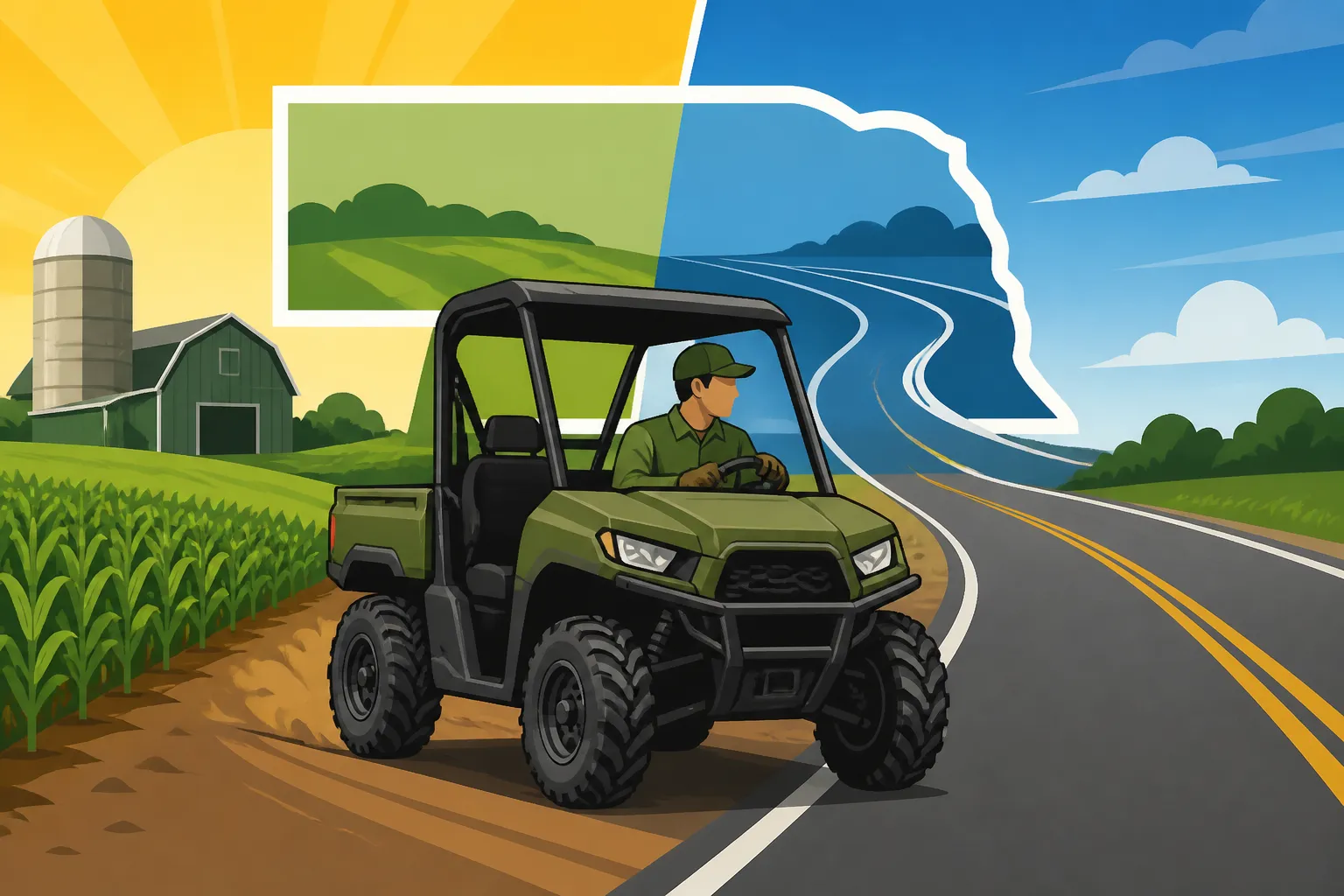
This is where the rubber meets the road, quite literally, for many rural Nebraskans. The agricultural exception is a lifeline for farmers, ranchers, and anyone engaged in legitimate agricultural pursuits. It acknowledges that an ATV or UTV isn't always a recreational toy; often, it's a piece of essential farm equipment, just like a tractor or combine. You can't reasonably expect a farmer to load a side-by-side onto a trailer every time they need to cross a county road to check a pivot or feed cattle in another pasture.
Defining "Agricultural Purposes"
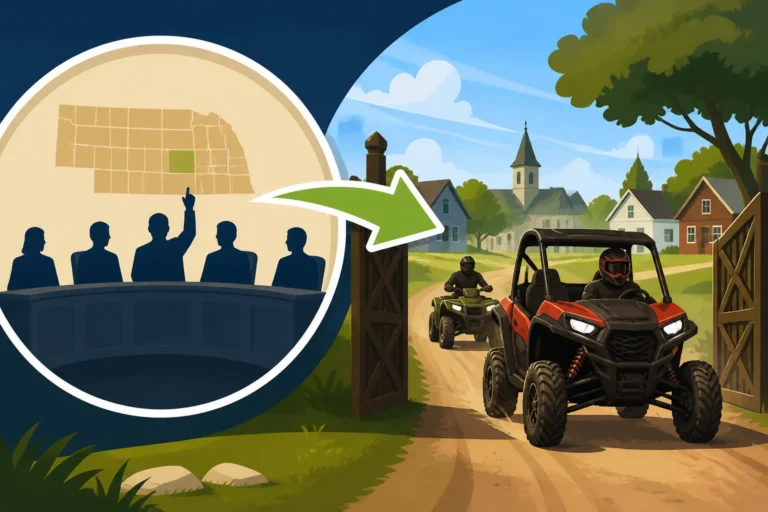
So, what exactly counts as "agricultural purposes" under Nebraska law? This is perhaps the most critical question, and it's where misunderstandings often arise. The law is designed to permit the operation of ATVs and UTVs on public roads only when directly engaged in activities related to farming, ranching, or other agricultural operations. This means things like traveling between fields, checking fences, moving equipment, tending to livestock, or transporting supplies directly related to the farm's daily function. It's about efficiency and necessity for the agricultural enterprise.
It is absolutely crucial to understand that "agricultural purposes" does not extend to running personal errands, going to the gas station for a snack, or simply taking a joyride down a gravel road, even if you happen to live on a farm. The intent of your trip must be solely and directly connected to the agricultural operation. If you're questioning whether your trip falls under this umbrella, chances are it might not. The spirit of the law is to facilitate farm work, not to open up public roads for general ATV/UTV use. Many people wonder if checking cattle counts as an agricultural trip; it absolutely does, and this is a prime example of the type of activity this exception is designed for. For more details on this specific exemption, check out [Nebraska's Agricultural Road Exception].
The Intent Behind the Law
The legislative intent behind creating the agricultural exception was quite clear: to support Nebraska's agricultural backbone. Lawmakers understood that the prohibition on road use, while sensible for recreational purposes, would place an undue burden on farmers and ranchers. These vehicles have become indispensable for quick, efficient travel across large land holdings, making chores faster and less strenuous. Without the ability to use them on limited public roadways to connect different parcels of land, the logistical challenges for agricultural operations would increase significantly.
Essentially, the law recognizes the unique role ATVs and UTVs play in modern farming. They're not luxury items; they're workhorses. Therefore, the exception allows them to function as such, within defined parameters, without compromising the overall safety goals of the state's vehicle codes. This specific piece of legislation was carefully crafted with the unique needs of Nebraska's rural communities in mind. It's a testament to how deeply ingrained agriculture is in our state's identity, and how important it is to keep farmers moving efficiently. For an in-depth look at this legislative reasoning, you can read [Why the ATV Road Law Was Written Around Farming].
Practical Application: When Can You Use Your ATV/UTV for Farm-Related Road Trips?
Now that we understand the "why," let's get into the "how" and "where." The agricultural exception isn't a free pass to drive anywhere, anytime. There are very specific boundaries and conditions you must adhere to to ensure your road trip remains legal under the agricultural exemption. Ignoring these can quickly turn a lawful farm trip into a costly citation. It's about precision and adherence to the spirit of the law.
Permitted Roadways and Speed Limits
When operating an ATV or UTV for agricultural purposes, you are generally restricted to county roads and other lower-classified public roads. This usually means your typical gravel roads, unpaved roads, and sometimes paved county roads. State highways and controlled-access highways (like interstates) are almost always off-limits, even for farm use, because the speeds and traffic volumes on those routes pose too great a risk. The idea is to keep these machines on roads where traffic is slower and less dense, minimizing potential hazards.
Furthermore, a critical aspect of this exception is the speed limit. When using an ATV or UTV on a public road for agricultural purposes, you must not exceed 30 miles per hour. This speed limit is paramount. It reflects the design limitations of these vehicles for road use and significantly reduces the severity of potential accidents. Even if the posted speed limit for cars on a gravel county road is 50 mph, your ATV or UTV must still adhere to the 30 mph maximum. This is one of those rules where common sense and safety override the typical road signs. To understand the specifics of this limit, refer to [Nebraska's 30 mph Road Limit].
Distance and Destination Limitations
The agricultural exception is not intended for long-distance travel. It’s designed for short, direct trips necessary to connect different parts of a farm operation or access adjacent properties. Think of it as a bridge between your fields, not a highway to the next town. You might be crossing a road to get from a pasture on one side to a cultivated field on the other, or moving a machine between two nearby farmsteads. The key word here is "necessary."
Crucially, your destination must be directly related to the agricultural purpose. Driving your side-by-side to the local co-op to pick up a part is generally acceptable if it's the most practical way and falls within the scope of farm operations. However, driving it into the nearest city for groceries or to meet friends for coffee is absolutely not. The rule is about enabling farm work, not personal convenience. If your trip takes you outside the immediate vicinity of your farm operations and into urban or suburban areas, you are almost certainly outside the bounds of the agricultural exception. You can find more information about these specific restrictions in [Nebraska Farm Trips Outside City Limits].
Distinguishing Farm Use from Personal Use
This is where many riders get into trouble, often unintentionally. The line between farm use and personal use, even when living on a farm, can blur if you're not careful. Consider this scenario: you're driving your UTV down a gravel road to check on a herd of cattle in the next section over—that's clear agricultural use. But if, on that same trip, you decide to swing by your neighbor's house for a quick chat about personal matters, or stop at a roadside stand to buy produce for dinner, you might be veering into personal use territory.
The law isn't looking for minor detours, but rather the primary intent of your journey. If the core reason for being on the road is agricultural work, minor incidental interactions might be overlooked. However, if the agricultural task becomes a pretext for personal errands or recreation, you're exposing yourself to potential legal issues. It’s about maintaining the integrity of the agricultural purpose throughout your entire trip. Always ask yourself: "Am I doing this because of my farm, or just while I'm on my farm?" This distinction is critical for staying on the right side of the law when riding [Nebraska Rules for Riding a County Road] or even [Nebraska Rules for Riding Farm Ground].
Essential Equipment and Rider Requirements for Farm Road Use
It's not enough to simply be engaged in farm work. Even under the agricultural exception, Nebraska law mandates specific equipment and rider qualifications to ensure a baseline level of safety for anyone operating an ATV or UTV on public roads. These requirements are in place to make sure that even a slow-moving farm vehicle is as visible and safely operated as possible, minimizing risks to both the operator and other motorists.
Visibility and Lighting
Visibility is paramount, especially for vehicles that aren't typically expected on public roads. If you're using your ATV or UTV for agricultural purposes on a public road, it absolutely must be equipped with a headlight and a taillight. These lights need to be operational and on, especially during dawn, dusk, or any period of reduced visibility. While the agricultural exception generally assumes daylight operations, having functional lights at all times is a smart safety measure, as conditions can change rapidly. For robust lighting solutions that can handle the rigors of farm work, many riders turn to brands like SuperATV for their durable LED light bars and accessory lights.
Beyond basic lighting, you are also required to display a five-foot high safety flag that is day-glow orange or another highly visible color, measuring at least 30 square inches. This flag serves as an additional visual cue for other drivers, indicating the presence of a slower-moving, off-road vehicle. Imagine a UTV coming over a hill on a gravel road; that bright flag can be the first thing a driver sees, giving them precious extra seconds to react. These seemingly small details make a huge difference in preventing accidents. For a full breakdown of lighting rules, see [Nebraska Lighting Requirements on a Machine], and for flag requirements, check [Nebraska Safety Flag Requirements].
Driver Licensing and Insurance
This is another area where the agricultural exception provides some flexibility, but it's not a complete waiver. Generally, to operate an ATV or UTV on public roads for agricultural purposes, the operator must hold a valid Class O operator's license (the standard driver's license). However, there's a significant exception for individuals engaged in farm or ranch operations who might not have a full Class O license: a farm permit. A farm permit allows younger operators (typically 14 and 15-year-olds) to drive agricultural machinery, including ATVs and UTVs, on public roads for farm-related activities. This is critical for many farm families where younger members play active roles in daily operations.
In addition to licensing, liability insurance is required whenever you operate an ATV or UTV on a public road, even under the agricultural exception. Just like with a car or truck, this insurance protects you financially in case you are at fault in an accident causing injury or property damage to others. The minimum coverage requirements are similar to those for other vehicles. It’s a non-negotiable safety net. If you're on a public road for farm work, you need to be covered. You can learn more about specific license requirements in [Nebraska Requires a Class O License or Farm Permit] and insurance requirements in [Nebraska Requires Liability Insurance on Roads].
Passenger and Cargo Considerations
When using your ATV or UTV for farm-related road trips, the rules around passengers and cargo are pretty straightforward: stick to the manufacturer's recommendations. Most ATVs are designed for a single rider, and carrying a passenger on a single-rider ATV on a public road, even for farm use, is generally frowned upon and often illegal. UTVs, on the other hand, are built with multiple seats and often have a cargo bed, making them much more suitable for carrying additional farmhands or equipment.
For UTVs, ensure all passengers are seated properly within the designated seating areas, wearing seatbelts if available, and that the total weight of passengers and cargo does not exceed the vehicle's gross vehicle weight rating (GVWR). When hauling cargo, secure it properly to prevent shifting or falling off the vehicle, which could create a road hazard. Whether it's tools, feed, or fencing materials, make sure it's lashed down tight. Many agricultural UTV owners enhance their machines with durable storage racks and bed extenders, often sourced from companies like SuperATV, to safely transport farm essentials. The goal is to avoid creating an unsafe situation for yourself or others on the road.
Common Misconceptions and Staying Compliant
Despite the clarity of the law, misunderstandings about the agricultural exception persist. It's easy to assume things or bend the rules slightly, but these assumptions can lead to tickets, fines, or worse, accidents. Being proactive in understanding and adhering to the specific details of the law is your best defense.
The "Quick Trip to Town" Trap
This is arguably the most common pitfall for rural riders. You're out in the fields, the combine breaks down, and you realize you need a specific wrench or a new bolt from the hardware store in the nearest small town. It's just a couple of miles down the road, and your UTV is right there, loaded with tools. "It's for farm work," you might think. "This is an emergency." But generally, this "quick trip to town" for a part or a bag of feed, if it takes you into a city or village's main thoroughfare, usually falls outside the agricultural exception.
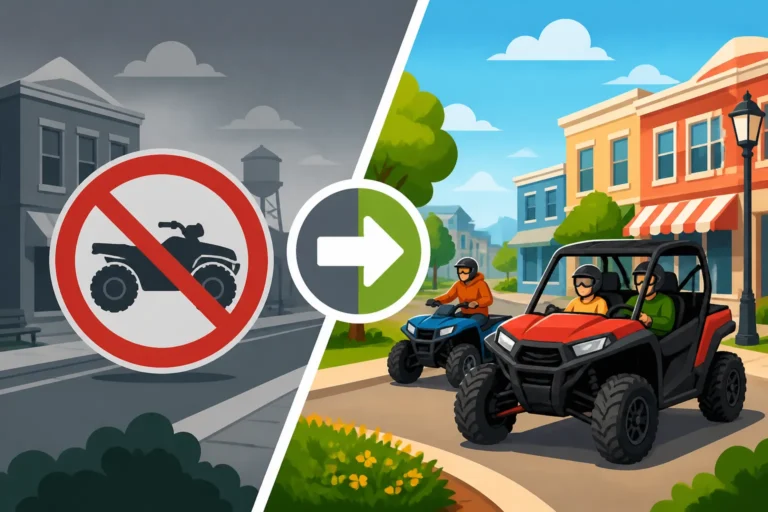
The exception primarily covers travel between parts of a farm operation, often on less-trafficked county roads. Once you enter the jurisdiction of an incorporated city or village, their own local ordinances often take precedence, and many explicitly prohibit ATVs and UTVs on their streets, regardless of farm use. Unless that specific city or village has an ordinance allowing ATVs/UTVs on certain streets for agricultural purposes (which is rare), your "quick trip" could result in a citation. It’s a frustrating reality, but the law aims to keep non-standard vehicles off busy community streets.
Documentation and Proof
Imagine this scenario: you're driving your ATV down a county road to check a fence line, well within the agricultural exception's bounds. A county deputy pulls you over. They see an ATV on a public road and might not immediately know you're engaged in farm work. How do you prove your legitimate purpose? While Nebraska law doesn't explicitly require carrying specific "farm use" documentation, it's wise to be prepared.
Having a clear explanation of your purpose, the location of your farm, and what specific agricultural task you're performing is essential. Being able to articulate that you're traveling between two parcels of your farm, or heading to a specific field for livestock management, can go a long way. Some farmers even keep a copy of their land deeds or a map of their farm properties in their UTV's glove compartment, just in case they need to demonstrate their connection to the land they're working. Being polite, cooperative, and knowledgeable about the law will always serve you best in these interactions.
Varying Interpretations
While Nebraska state law provides the framework, how it's interpreted and enforced can sometimes vary slightly from one county sheriff's department to another, or even between individual deputies. What one officer considers clearly "agricultural" another might view with skepticism if not adequately explained. This isn't necessarily due to malice, but rather the nuances of law enforcement and the vastness of the state.
This variability emphasizes the importance of knowing the rules yourself and being able to explain your situation calmly and clearly. If you have concerns about specific routes or activities in your area, it's always a good idea to contact your local county sheriff's office. A brief, polite phone call to ask about their specific enforcement policies for the agricultural exception can save you a lot of hassle and anxiety down the road. They are there to serve the community and can offer guidance specific to your locale.
Farm Use Road Rules Checklist
To help you keep track of all the details, here's a quick checklist for ensuring your ATV or UTV road trip for farm use remains compliant in Nebraska:
| Requirement | Description | Status for Farm Use |
|---|---|---|
| Purpose of Travel | Directly engaged in farming, ranching, or other agricultural operations. | REQUIRED |
| Roadways Allowed | Primarily county roads, lower-classified roads. State highways generally NOT. | YES (Limited) |
| Speed Limit | Must NOT exceed 30 mph. | 30 mph Max |
| Headlight | Must be functional and on. | REQUIRED |
| Taillight | Must be functional and on. | REQUIRED |
| Safety Flag | 5-foot high, day-glow orange/visible color, at least 30 sq. inches. | REQUIRED |
| Driver's License | Valid Class O or Farm Permit. | REQUIRED |
| Liability Insurance | Minimum state-required coverage. | REQUIRED |
| Passenger Seating | Adhere to manufacturer's recommendations; no passengers on single-rider ATVs. | Manufacturer Spec. |
| Cargo Securement | All cargo must be properly secured. | REQUIRED |
| Entry into Cities/Towns | Generally NOT allowed unless specifically permitted by local ordinance. | Generally PROHIBITED |
Beyond Farm Use: Other Legal Road Options
While the agricultural exception is a huge relief for many, it's not the only way an ATV or UTV might legally touch a public road in Nebraska. It's worth briefly mentioning these other avenues, as they might apply to your situation, though they often have their own sets of limitations and requirements. Knowing all your options ensures you're riding legally and safely.
City and Village Ordinances
Some incorporated cities and villages in Nebraska have passed their own local ordinances that permit ATVs and UTVs on certain designated streets within their boundaries. These are always highly specific: they might allow riding on certain days, during certain hours, on specific streets, or only for residents, often requiring a local permit and fee. This is entirely separate from the state's agricultural exception.
It's critical to understand that these city ordinances only apply within that specific municipality's limits. You cannot assume that because one town allows it, the next one does. Always check with city hall or the local police department in each community before attempting to ride your ATV or UTV on their streets. Without a specific local ordinance, the state's general prohibition still applies.
Snow Removal Exceptions
Nebraska law does provide a specific exception for the use of ATVs and UTVs on public roads and highways when plowing snow. This exception usually applies during declared snow emergencies or significant snowfall events, allowing residents to clear snow from roads, driveways, and parking areas. Even with this exception, common sense and extreme caution are paramount, as road conditions will be hazardous, and visibility often poor. This is a very targeted, temporary exception, not an open invitation for general road use in winter.
Ultimately, understanding the nuances of Nebraska's ATV and UTV laws is about more than just avoiding a ticket; it's about staying safe and being a responsible member of the riding community. The agricultural exception is a vital tool for our state's farmers and ranchers, but it comes with clear responsibilities. By adhering to the spirit and the letter of the law, you can continue to use your machines as the indispensable workhorses they truly are, while keeping Nebraska's roads safe for everyone.
Disclaimer
This article is for general informational purposes only and does not constitute professional advice. Laws, prices and regulations vary by location and change over time. Consult a qualified professional for guidance on your specific situation.