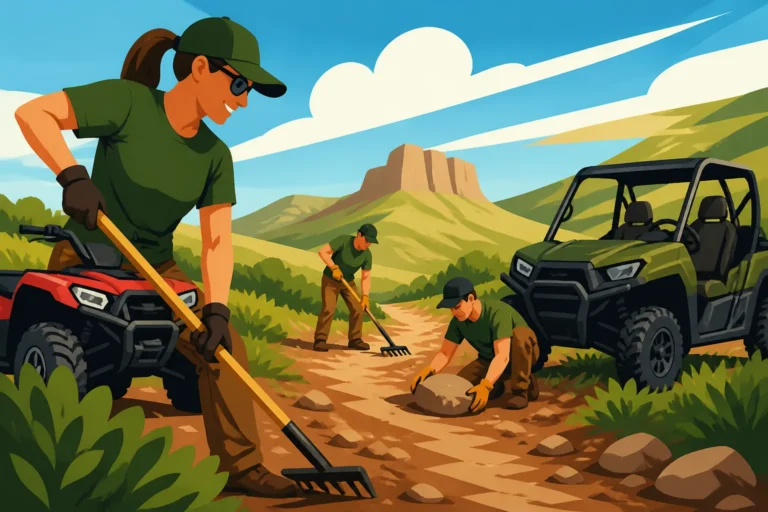
9 Miles of Lakeside Trail
A nine-mile lakeside ride sounds simple until you’re towing to an unfamiliar trailhead, trying to confirm what’s open, and wondering whether the route suits your machine or your group. Cedar Run ATV Trail near Harlan County Lake offers a chance to ride beside the water, but a little planning makes the outing smoother, safer, and more enjoyable.
What to Expect From Cedar Run’s Nine Miles
A lakeside route, not a promise of an uninterrupted shoreline ride
Cedar Run is known for roughly nine miles of trail near Harlan County Lake. The lakeside setting is part of its appeal: riders can enjoy a change of scenery from inland tracks, with the reservoir and surrounding landscape adding a sense of space to the outing. For an overview focused on the route’s distance, see [Cedar Run's 9 Miles in Nebraska].
It’s still wise to think of “lakeside” as a description of the riding area, not a guarantee that every stretch runs directly beside the water. Trails can turn inland, follow terrain, or pass through areas where sightlines and access differ. Keep to marked routes, and don’t leave the trail to reach the shore unless signs and local rules clearly permit it.
The riding area is part of a larger recreation setting around Harlan County Lake. The trail’s location and the broader landscape are discussed in [Cedar Run's 470 Acres in Nebraska] and [Nebraska Riding at Harlan County Lake]. Those overviews can help put the trail into context, but they don’t replace checking the latest information for the specific route you plan to ride.
How to think about distance when planning a ride
Nine miles is a useful planning figure, but it doesn’t tell you exactly how long your outing will take. A steady rider on a familiar machine may cover a route differently from a family group stopping often, a mixed-experience crew, or riders negotiating unfamiliar turns. Surface conditions, recent weather, and the pace of your group all matter.
For a relaxed visit, plan more time than the distance alone suggests. You may want to pause at the staging area, check your equipment, take a break, or let a newer rider get comfortable before the group continues. If you have children or first-time riders with you, a shorter outing with room to turn back can be more enjoyable than trying to ride every available mile.
It can also help to agree on a simple group plan before unloading: who leads, who rides at the back, where you’ll regroup, and what everyone should do if the group gets separated. On an unfamiliar trail, even a short pause to confirm that everyone is together can prevent a minor mix-up from turning into a stressful search.
Why the surrounding recreation area matters
Cedar Run is not just a trail line on a map. Its relationship to the lake and nearby public recreation areas affects how visitors plan parking, access, and time at the site. Different agencies may have roles in the surrounding area, so a rule that applies to one part of a recreation complex might not apply in the same way to another. For background, read [Three Agencies Built the Cedar Run ATV Trail] and [What the Army Corps Manages Around Harlan County Lake].
Before your trip, identify the trail’s designated entrance and the place where you’re expected to unload or stage. Don’t assume that a boat ramp, campground road, shoreline access point, or other nearby facility is an ATV trail entrance. If directions are unclear, check with the relevant land manager or local recreation office rather than following a vehicle track that simply looks convenient.
A useful rule of thumb: treat the marked trail as the riding area, and treat other nearby facilities as separate places with their own access rules. That distinction helps avoid accidental trespassing, conflicts with other visitors, and confusion about where riding is allowed.
Plan Your Cedar Run Visit Before You Tow
Confirm access, conditions, and permitted machines
A trail can be listed in a guide and still be affected by temporary closures, weather, maintenance, or local restrictions. Before loading up, check current trail status and make sure the area is open to the type of machine you plan to bring. If you’re travelling a long distance, confirm the information close to departure rather than relying on a months-old post or a route saved on your phone.
The machine you own may also be wider or longer than the trail comfortably accommodates. Side-by-sides and ATVs don’t always have the same access conditions, and trails can have restrictions based on vehicle size or other local rules. Confirm the requirements for your specific vehicle before you set out, especially if you’re bringing a larger UTV or a machine you haven’t ridden at Cedar Run before.
Digital maps are useful for building a general sense of the area. Some riders use onX Offroad to review mapped routes and orient themselves before leaving home. Treat any app map as a planning aid rather than proof that a route is open or authorized; posted signs and instructions from the responsible land manager take priority. For another perspective on checking conditions before a haul, see [Nebraska Trail Conditions Before You Tow].
| Before leaving home | What to confirm | Why it matters |
|---|---|---|
| Trail access | Whether Cedar Run is open and which entrance to use | Avoids arriving at a closed or unsuitable access point |
| Machine rules | Which ATV or UTV types and sizes are allowed | Helps prevent bringing a machine that cannot use the route |
| Weather and surface | Recent rain, wind, or other conditions that could affect the ride | Conditions can change traction and the comfort of the trip |
| Staging | Where to park, unload, and prepare machines | Keeps trailers and vehicles out of travel lanes |
| Group readiness | Fuel, water, protective gear, and a basic ride plan | Reduces avoidable stops and helps the group stay together |
Make the staging area part of the plan
Getting to the trailhead is only half the preparation. Once there, you’ll need space to park, unload, check your machine, and organize your group without blocking other visitors. Learn what facilities are available before you arrive by reviewing [Cedar Run's Staging Area, Picnic Shelter and Grill]. Don’t assume that every visit will have the same services or that every amenity is available whenever you arrive.
Unload in a deliberate order. Park the tow vehicle and trailer where directed, keep access clear, and secure loose ramps and tie-downs before anyone starts a machine. A busy or cramped staging area is an easy place for a quick mistake: someone backs a trailer into the flow of traffic, a child steps behind a machine, or a helmet gets left on the tailgate. Taking a few unhurried minutes to set up makes the start of the ride less hectic.
Do a quick pre-ride check while the machines are still parked. Look at tires, controls, lights, fuel, and anything that may have shifted during the drive. Make sure riders have helmets and clothing suited to the weather and terrain. Pack water and basic supplies where they’ll stay secure over bumps, and take all trash with you when you leave.
Choose a pace that works for the least experienced rider
A group’s speed is not set by its fastest rider. It’s set by what the least experienced person can manage safely and comfortably. That might mean keeping the first section slow, stopping to explain trail signals, or choosing a conservative turnaround point. Those choices aren’t a compromise; they’re how you give everyone a chance to enjoy the ride.
If children are joining, keep expectations realistic. A child may be excited to ride but still need frequent breaks, reminders to stay with the group, or an adult close by. Check the route and site rules that apply to young riders before the trip, and review [Where Kids Ride at Cedar Run Trail] for details focused on children and the riding area.
Before starting, agree on what to do if someone has a problem. Pick a regrouping point, make sure everyone knows who is leading and who is last, and keep riders within a distance where the group can communicate. If a machine develops a mechanical issue, stop somewhere safe and move the group out of the way of other trail users.
Ride the Trail With Care
Follow signs and stay on designated routes
On a lakeside trail, it can be tempting to take a shortcut toward an appealing view or follow a track that seems to lead closer to the water. Resist that impulse unless access is clearly permitted. A visible tire track is not necessarily an authorized trail, and riding off-route can damage vegetation, disturb wildlife, or put you in an area where motorized use is prohibited.
Pay attention to signs at the entrance and along the route. They may explain permitted uses, closures, direction of travel, or other restrictions. If a sign conflicts with what an app or downloaded map appears to show, follow the sign and ask the land manager for clarification. Conditions and official directions on the ground matter more than an old route record.
Good trail etiquette also makes the experience better for everyone. Slow down around other visitors, avoid spraying dust or mud toward people, and leave room when passing. For more practical guidance, see [Nebraska Trail Etiquette Locals Expect]. These habits are especially helpful when riders share access areas with walkers, campers, boaters, or people working nearby.
Prepare for changes in weather and trail surface
A route that feels manageable in dry weather can become much more challenging after rain. Mud, standing water, loose ground, and changing traction can affect both control and stopping distance. Don’t assume that because the trail was comfortable on a previous visit, it will be the same on your next one. Check conditions before departing and be willing to change your plan if the surface looks unsafe.
Wind and sun can also make a ride more tiring than expected. Carry water, dress for the forecast, and protect yourself from sun and dust. If the day turns hot or a rider feels uncomfortable, take a break rather than pushing through just to finish the route. A shorter, pleasant ride is usually better than completing every planned mile while someone in the group is overheated or worn out.
After the ride, take a moment to check your machine and your gear. Remove mud and debris where appropriate, look for new damage, and make sure tie-downs and ramps are ready for the drive home. If you discover a closure, washout, or other issue on the trail, report it through the appropriate local contact rather than trying to fix it yourself.
Keep the lake and other visitors in mind
The reservoir draws people for different reasons, and not everyone is there to ride. Noise, dust, and careless parking can affect visitors using nearby facilities. Be courteous around shared areas, keep machines on designated routes, and avoid revving engines unnecessarily near campsites or other places where people are trying to relax.
Respect the landscape as well. Don’t leave litter, disturb wildlife, or enter areas marked closed. If you stop for a break, choose a spot where you are permitted to be and where your machines won’t block access or create a hazard. These small choices help protect the setting that makes a lakeside trail appealing in the first place.
For broader trip planning across the state, [Nebraska ATV Trails: Where to Ride] can help you compare other riding options. Cedar Run may be a good fit when you want a relatively focused outing near Harlan County Lake, but the best choice depends on your machine, your group, and the conditions on the day you visit.
A Practical Checklist for the Day
Before you leave
Confirm that the trail is open, check the rules for your vehicle, and identify the correct staging area. Make sure your trailer, ramps, tie-downs, and tow vehicle are ready for the drive. If you’re using a navigation app such as onX Offroad, download or review what you need before you reach areas where service may be limited, and remember that the map does not replace official signs.
Tell someone where you’re going and when you expect to return, particularly if you’re travelling with a small group or are unfamiliar with the area. Bring water, basic first-aid supplies, and whatever tools are sensible for your machine. Keep emergency items accessible rather than buried beneath riding gear.
At the trailhead
Read the posted information before unloading or riding. Park and stage where directed, keep the area clear for other visitors, and check that every rider has suitable protective gear. Set a pace, choose a regrouping plan, and confirm that everyone knows how to stop or signal if there’s a problem.
If the trail conditions or access rules don’t match what you expected, pause and ask for clarification. It’s frustrating to tow a long way and discover a problem at the entrance, but riding when access is uncertain can create a much bigger problem. When in doubt, don’t proceed until you’ve confirmed what is allowed.
On the ride and afterward
Stay on designated routes, respect closures, and adapt the plan to the group’s energy and the trail surface. Be courteous around other visitors and leave the area as you found it. When you’re back at the staging area, check that everyone is accounted for, secure the machines properly, and take any rubbish with you.
A little preparation turns Cedar Run’s nine-mile lakeside setting into a more relaxed outing. Confirm access, choose a realistic pace, and treat the signs and local rules as part of the route—not an afterthought.
Disclaimer
This article is for general informational purposes only and does not constitute professional advice. Laws, prices and regulations vary by location and change over time. Consult a qualified professional for guidance on your specific situation.