Does a Frozen WMA Lake Need a Park Permit?
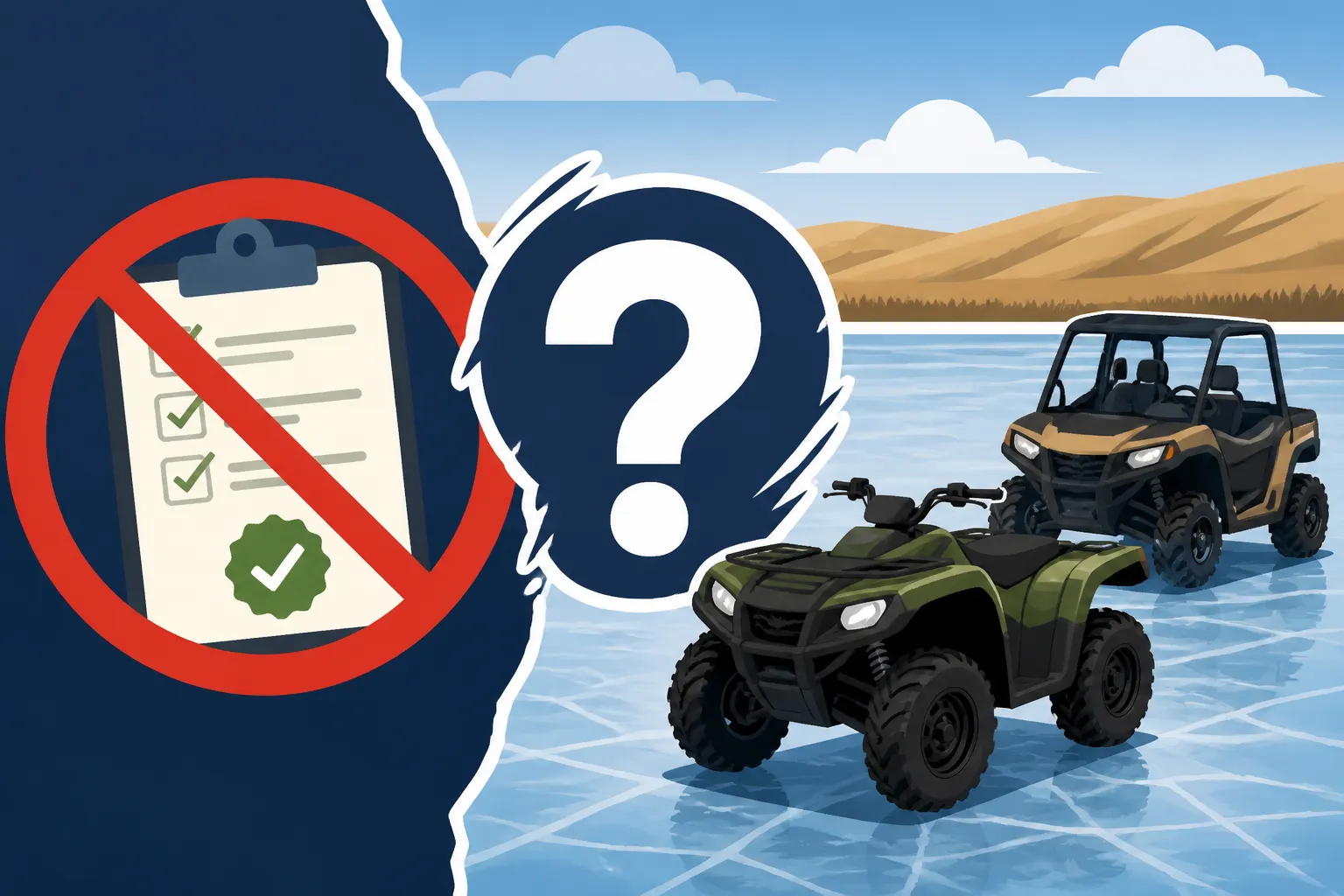
A frozen lake on a Nebraska wildlife management area can look like an open riding spot, but ice and land-use rules are separate questions. In many cases, a state park entry permit is not the issue; the important checks are whether the area allows riding, whether the lake is open to motor vehicles, and whether conditions are safe.
A park permit and permission to ride are different things
A Nebraska state park entry permit applies to access at state parks and recreation areas. A wildlife management area, or WMA, is a different type of public property, so a state park permit generally is not what determines whether you can ride there. Nebraska also does not have a general state OHV permit or sticker for ATVs and UTVs.
That does not mean you can ride anywhere on a WMA without restrictions. Access rules for vehicles still apply, and the frozen-water exception is not blanket permission to use every frozen lake. A particular lake may be closed to motorized vehicles, reached only through an allowed route, or subject to posted restrictions. Start with Nebraska WMA Access for a Quad and Nebraska WMA Roadway Rules to understand the broader limits.
| Question | What it tells you |
|---|---|
| Is this a WMA rather than a state park or recreation area? | Helps determine whether a state park entry permit applies |
| Is motorized riding allowed on this WMA’s frozen water? | Confirms whether the lake itself is an allowed riding area |
| Are there signs, closures, or seasonal restrictions? | Identifies limits that may apply to this lake or access route |
| Is the ice safe for your machine and route? | Helps you decide whether to ride at all |
| Can you reach the lake without riding on a closed road or area? | Keeps the trip within the rules before you get to the ice |
The key distinction is between a permit to enter a park and permission to operate a machine in a specific place. A park permit does not make a closed WMA lake open to ATVs. And not needing a park permit does not make a WMA open for unrestricted riding. For a fuller comparison of permits and riding access, see Nebraska Park Rules for ATVs and Which Public Land a Visitor Can Ride in Nebraska.
Check the specific lake before unloading
Do not assume every WMA lake follows the same conditions. Before you tow out, confirm that the exact management area and lake are open to motorized use on frozen water. Check the current information from the agency managing the area, and look for signs at entrances, parking areas, access roads, and the lake itself. If information is unclear, contact the relevant office before riding rather than treating the absence of a sign as approval.
Nebraska’s frozen-water allowance is an exception to ordinary limits on motorized travel in these areas, not a general right to ride across WMA property. The exception can depend on the water being frozen and the area being open for that use. For details on this distinction, read Nebraska WMA Ice Riding Rules and Frozen Water as an Exception.
Pay close attention to signs that close a lake or restrict vehicles. A closure may apply to the water, an approach route, a parking area, or the whole management area. Follow the posted restriction even if other riders are on the ice or tracks are visible. Reading the Signs That Close a Frozen Lake explains why a visible route or prior use is not a reliable substitute for checking current access.
Also verify how you are allowed to reach the lake. The machine may need to stay on an established roadway until you reach an area where frozen-water riding is allowed. A route that crosses a closed field, shoreline, or other restricted ground can make the trip unlawful even if the lake itself is open. If you are unsure, ask the area manager which route is permitted.
A practical check before the trip
- Identify the exact WMA and lake, not just the nearest town or access point.
- Confirm the area’s current rules for motorized vehicles and frozen water.
- Check for closures, seasonal limits, and posted signs along the route and at the lake.
- Confirm where you may park, unload, and travel to reach the allowed area.
- If the information conflicts or is unclear, ask the managing agency before riding.
- Recheck conditions when you arrive, since access or ice conditions can change.
A little preparation matters especially when a WMA has multiple access points or nearby public areas with different rules. An ATV might be allowed on frozen water at one location and prohibited at another. You cannot transfer permission from one lake to another.
Ice safety is separate from permit rules
Even when riding is allowed, permission does not mean the ice is safe. Ice thickness can vary across a lake, including near shorelines, inlets, outlets, springs, vegetation, and areas affected by moving water. Snow can hide cracks, weak spots, open water, or changes in surface conditions. A route that looked solid earlier may not remain safe as temperatures shift.
Use current local ice-safety information and make your own decision about whether conditions can support your machine and everyone traveling with you. Do not rely on a single measurement from another person or assume that an ATV or UTV can safely cross because a smaller vehicle has been on the lake. Different machines carry different loads, and conditions can change over short distances.
Think through the whole route, not just the open stretch of ice. Consider how you will get from the parking area to the lake, whether you can turn around safely, and what you will do if a route is blocked or the ice looks questionable. Keep riders together, tell someone where you plan to go, and avoid pushing forward simply because you have already unloaded.
A closed or unsafe section is a reason to stop, not to search for a way around the restriction. Riding around a closure can put you on private land, sensitive habitat, or another part of the WMA where motorized travel is not allowed. If you cannot confirm that an area is open and safe, choose another activity or location.
What to bring and what to confirm
A park permit may not be needed just to ride a WMA lake, but you still need to plan for the machine, the route, and the land rules. Bring the ownership information you normally keep with the ATV or UTV, and follow any requirements that apply to the access road or the area. Nebraska has no statewide OHV permit or sticker, but that does not replace local permission or proof of ownership. See Nebraska Has No OHV Permit or Sticker for that distinction.
Before leaving, make sure your plan accounts for:
- The name and location of the WMA and the specific lake
- Current rules for riding on frozen water at that location
- Any signs or closures that affect the lake, parking, or approach route
- A legal route from the access point to the permitted riding area
- Ice conditions appropriate for your machine and intended route
- A way to communicate your location and plans if you need help
If you are visiting from another state, do not assume that a registration or permit from home settles the question of where you may ride in Nebraska. Public-land access rules are separate from vehicle paperwork. Nebraska Has No Registration to Reciprocate and Do Out-of-State Riders Need a Permit to Ride? address the state-level distinction; the WMA’s own rules still matter.
If you are trying to decide whether a park permit is the only thing standing between you and a ride, the short answer is no. A frozen WMA lake generally is not made accessible by buying a state park permit, and lack of a park permit is not usually the central issue on a WMA. Verify that the specific lake is open to motorized use, follow posted restrictions and access routes, and make a separate, cautious decision about the ice.
Disclaimer
This article is for general informational purposes only and does not constitute professional advice. Laws, prices and regulations vary by location and change over time. Consult a qualified professional for guidance on your specific situation.